Healthy Quinoa Stuffing With Apple, Celery and Sage, About 240 Calories a Cup
In this article:
- Sage, Celery and Apple Do the Talking
- Rinse It, Toast It: Quinoa That Never Tastes Bitter
- The Numbers, Said Plainly: 240 Against 370
- Ingredients for Healthy Quinoa Stuffing
- Cooking the Quinoa and Finishing the Stuffing in the Oven
- Mushy, Dry or Bland: Reading the Pan and Fixing It
- Wednesday Prep, Thursday Table: The Thanksgiving Timeline
- Walnuts, Pears and Other Quiet Swaps
- The Bowl That Comes Back Empty
- Questions Cooks Ask About Healthy Quinoa Stuffing
Stuffing is the one dish I will not skip at Thanksgiving, and it is also the one that usually costs the most on the plate. Bread cubes soaked in butter are delicious, but they land heavy, and the second helping lands heavier.
This healthy quinoa stuffing keeps the whole flavor architecture of the classic. Onion, celery and fresh sage do the seasoning, apple brings the gentle sweetness, mushrooms bring the depth, and quinoa simply takes the place of the bread.
The number to remember is about 240 calories a cup, against roughly 370 for a classic bread and butter stuffing. It is naturally gluten free, it holds well on a buffet, and nobody at the table needs to know it was the lighter bowl.
Sage, Celery and Apple Do the Talking
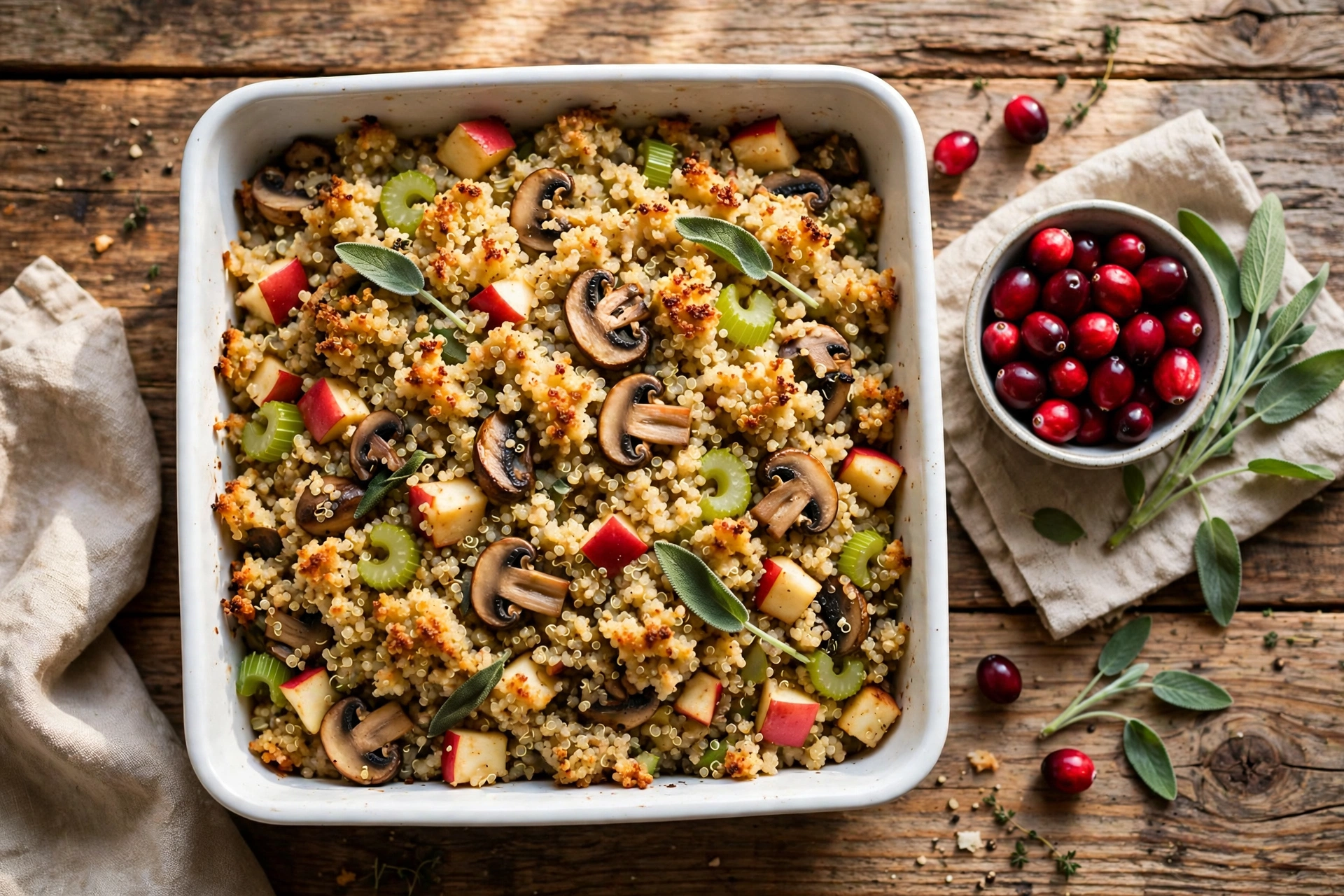
Healthy quinoa stuffing succeeds or fails on its aromatics, because quinoa itself is mild. The recipe therefore borrows the exact opening of a traditional stuffing: onion and celery softened slowly in olive oil until sweet, with garlic at the very end.
Fresh sage is non negotiable here. Its piney, slightly peppery flavor is the scent most people actually mean when they say a dish tastes like Thanksgiving, and dried sage cannot fully imitate it in a dish this simple.
Apple is the quiet replacement for the sweetness bread crusts used to give. A firm, tart apple, diced small and cooked only until it softens at the edges, keeps tiny pockets of freshness inside the warm, savory grains.
Mushrooms earn their place by browning. Cooked until their liquid leaves and their edges color, they give the stuffing the deep, savory base that sausage provides in richer versions, at a fraction of the cost.
A small handful of dried cranberries and toasted walnuts finishes the picture. One adds a tart sparkle, the other a crunch, and both stay measured so the stuffing remains a side dish rather than becoming a trail mix.
Rinse It, Toast It: Quinoa That Never Tastes Bitter
Most disappointing quinoa carries a faint bitterness, and the cause is simple. Quinoa seeds wear a natural coating called saponin, which protects the plant in the field and tastes soapy in the kitchen when it survives cooking.
Rinsing under cold water for a full minute, rubbing the grains lightly in a fine mesh strainer, removes that coating completely. It is the least glamorous minute of the recipe and the one that decides whether people ask for seconds.
Toasting comes next. The drained quinoa goes into the pot dry, over medium heat, for two to three minutes, until it smells faintly nutty and the last water has steamed away.
That small step does two jobs. It deepens the flavor so the grains taste like a grain, and it helps them cook up separate and fluffy instead of clumping into porridge, which is the texture that gives quinoa stuffing a bad name.
Cook it in low sodium vegetable broth rather than water. The grains absorb seasoning from the inside, which matters because a stuffing is eaten by the spoonful, not dressed at the end like a salad.
The Numbers, Said Plainly: 240 Against 370
A cup of classic bread stuffing, built on white bread cubes, a generous hand with butter and often sausage, lands around 350 to 390 calories. This bowl lands at about 240, with the ingredients listed below and the portions measured honestly at one full cup.
The savings come from structure, not from tricks. Quinoa replaces butter soaked bread, two tablespoons of olive oil replace the usual stick of butter, and mushrooms replace sausage without removing the savory depth they were hired for.
What the cup keeps is just as important. Quinoa brings about 7 grams of protein and 5 grams of fiber per serving, numbers bread stuffing rarely reaches, and the apple and vegetables keep the portion feeling generous rather than reduced.
Sodium stays near 320 milligrams because the broth is low sodium and the salt is added by hand, to taste. One well known competitor version of quinoa stuffing runs past 650 milligrams, which is where a light side quietly stops being light.
The full breakdown sits on the recipe card below, calculated from these exact ingredients using reference values from USDA FoodData Central. Your brands will shift the totals slightly; the shape of the comparison will not move.
Ingredients for Healthy Quinoa Stuffing
- 1 3/4 cups quinoa, rinsed well and drained
- 3 cups low sodium vegetable broth
- 2 tablespoons olive oil
- 1 large yellow onion, finely diced
- 3 celery stalks, finely diced
- 8 ounces cremini mushrooms, finely chopped
- 1 firm tart apple, such as Granny Smith, cored and diced small
- 3 garlic cloves, minced
- 2 tablespoons fresh sage leaves, finely chopped
- 1 teaspoon fresh thyme leaves
- 1/3 cup reduced sugar dried cranberries
- 1/3 cup walnuts, toasted and roughly chopped
- 1/4 cup fresh parsley, chopped
- 1 teaspoon apple cider vinegar
- 3/4 teaspoon fine sea salt, plus more to taste
- 1/2 teaspoon black pepper
Cooking the Quinoa and Finishing the Stuffing in the Oven
- Rinse the quinoa in a fine mesh strainer under cold running water for 1 minute, rubbing the grains with your fingers. Drain well, then place it in a medium saucepan over medium heat and toast, stirring often, for 2 to 3 minutes, until dry and faintly nutty.
- Pour in the vegetable broth, bring to a boil, then reduce to a gentle simmer. Cover and cook for 15 minutes, until the grains are tender and their little tails have unfurled.
- Remove the pot from the heat and let the quinoa stand, covered, for 10 minutes. Fluff with a fork and spread it on a rimmed sheet pan so the steam escapes and the grains stay separate.
- Meanwhile, warm the olive oil in a large skillet over medium heat. Add the onion and celery with a pinch of the salt and cook, stirring now and then, for 6 to 7 minutes, until soft and sweet.
- Add the mushrooms and cook for 6 to 8 minutes, until their liquid has evaporated and the pieces are browning at the edges. Add the apple and cook 2 minutes more, until it softens slightly but still holds its shape.
- Stir in the garlic, sage and thyme and cook for 30 seconds, until the pan smells like Thanksgiving. Take the skillet off the heat.
- Fold the hot vegetables into the fluffed quinoa along with the dried cranberries, walnuts, parsley, apple cider vinegar, remaining salt and the pepper. Taste and adjust the seasoning; the grains should be well seasoned before they bake.
- Transfer everything to a lightly oiled 9 by 13 inch baking dish and spread it in an even layer. Bake at 375°F for 10 to 12 minutes, until the top is lightly golden and just crisp at the edges. Rest 5 minutes and serve warm.
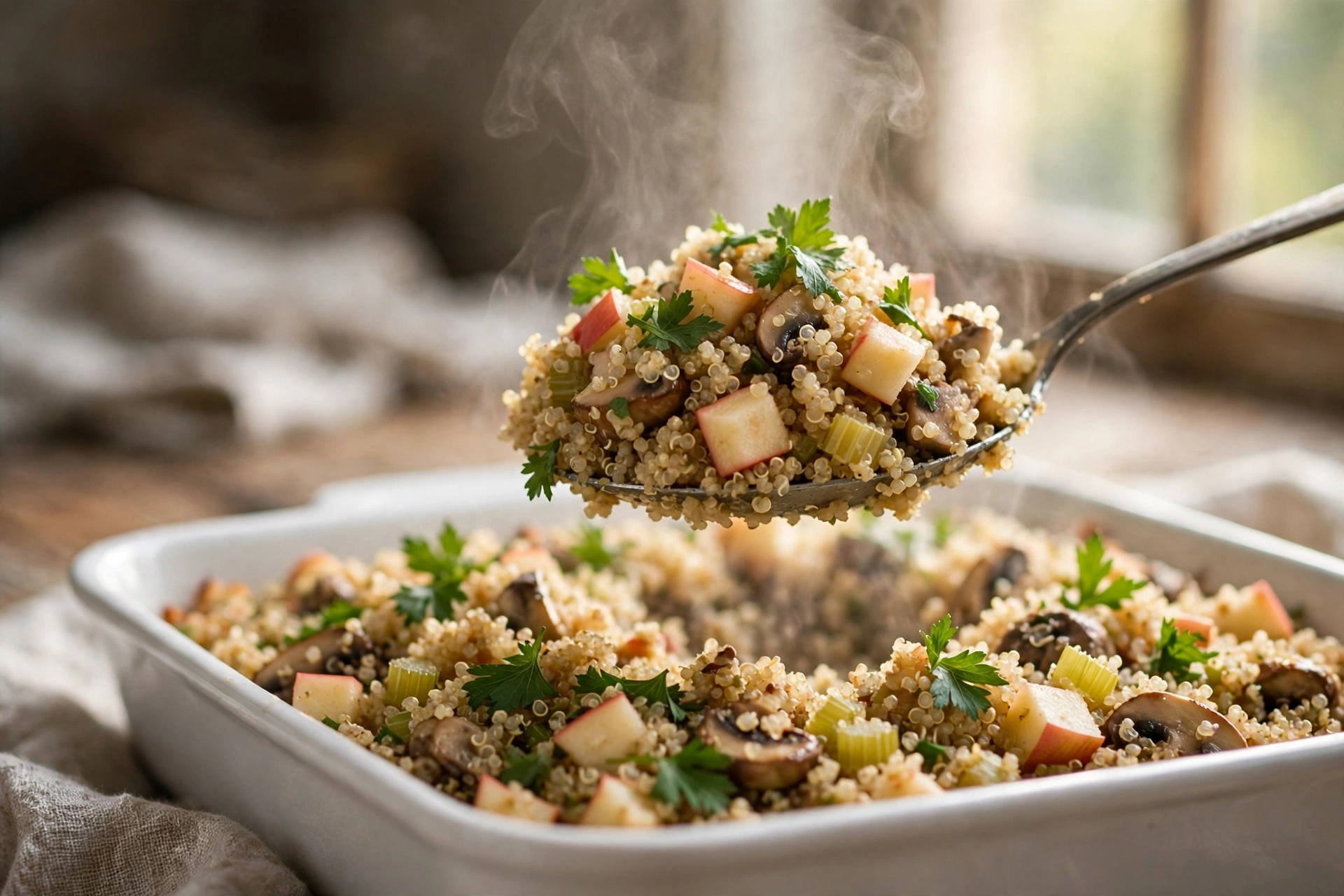
That short bake is what separates this dish from a quinoa salad wearing a costume. The grains dry at the surface, the top takes on the texture people expect from stuffing, and the flavors marry in a way a mixing bowl cannot manage.
Serve it beside slices of healthy herb roasted turkey breast and it behaves exactly like the classic side. It also takes gravy gracefully, especially a spoonful of healthy turkey gravy warmed until it pours.
If bread stuffing must also appear for the traditionalists, our healthy cornbread stuffing covers that base with the same restraint, and the two bowls look handsome side by side.
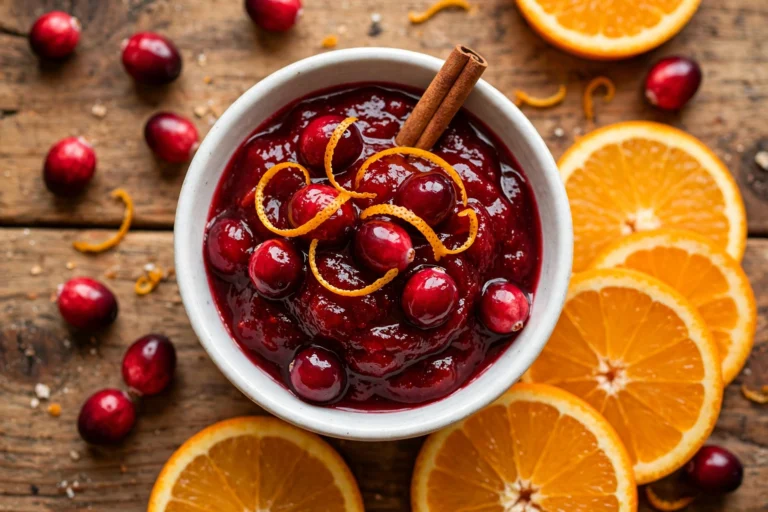
For a brighter plate, a spoonful of healthy cranberry sauce next to the stuffing gives the tart contrast that makes guests go back for one more scoop of everything.
Mushy, Dry or Bland: Reading the Pan and Fixing It
Mushy stuffing almost always traces back to wet quinoa. If the grains look porridge soft before the vegetables go in, spread them on the sheet pan longer, and let the oven finish dry them for five extra minutes before serving.
Dry stuffing is simpler. Warm a quarter cup of broth, drizzle it over the dish, cover with foil and give it ten minutes in a low oven. The grains drink it up without turning soggy, which water alone never achieves as gracefully.
Bland stuffing needs acid before it needs salt. The teaspoon of apple cider vinegar in the recipe is measured for balance; if your apples were sweet rather than tart, a second small splash wakes up the sage and mushrooms immediately.
One more quiet cause of flat flavor is undercooked mushroom. Pale, steamed mushrooms taste like packing material, while browned ones taste like the savory base of the dish. Give them their full time in the skillet and the stuffing thanks you.
Wednesday Prep, Thursday Table: The Thanksgiving Timeline
Wednesday afternoon, cook the quinoa, cool it and refrigerate it in a covered container. Dice the onion and celery, chop the mushrooms, and keep them in a second container, ready for the skillet.
Thursday morning, run the skillet steps and fold everything together, then move the stuffing into its baking dish. Covered and refrigerated, it waits calmly for up to eight hours without losing its texture.
Forty minutes before the meal, the dish goes into a 375°F oven for 20 to 25 minutes from cold, until the center is steaming and the top is golden. From warm, the ten to twelve minutes in the recipe is all it needs.
Leftovers keep for four days in the refrigerator and reheat best in a skillet with a spoonful of broth. The grains also freeze well for a month, which makes this an honest candidate for a healthy wild rice pilaf style weeknight side long after the holiday ends.
Walnuts, Pears and Other Quiet Swaps
Pecans can stand in for the walnuts at the same measure, toasted the same way. The flavor turns a little sweeter and more buttery, and the calorie count rises only slightly, which is worth knowing rather than worrying about.
A firm pear, diced like the apple, makes the stuffing gentler and more floral. Choose one that still feels hard at the store; a ripe pear disappears into the grains and leaves only sweetness behind.
Butternut squash, diced small and roasted until caramelized, can replace the apple for a more savory bowl. It pushes the dish toward the style many competitors serve, and it pairs especially well with extra sage.
For a nut free table, toasted pumpkin seeds give the crunch without the allergen. Scatter them over the top after baking so they stay crisp, and mention the swap when you serve, because guests plan around nuts.
The Bowl That Comes Back Empty
Every Thanksgiving table has one dish that surprises people, the one they taste politely and then quietly refill. In my kitchen, this stuffing became that dish, usually somewhere between the turkey and the second glass of water.
It works because it respects the original. The sage is there, the celery is there, the top crisps, the spoon stands up in it, and the lighter structure is something you notice at the end of the meal, not during it.
Make the full dish even for a small table. It reheats like a champ, it fills a lunch bowl the next day with leftover turkey, and it proves the point this site exists to make: lighter never has to mean lesser.
Questions Cooks Ask About Healthy Quinoa Stuffing
Can I cook the quinoa in turkey or chicken broth instead of vegetable broth? Yes, and the flavor deepens nicely. Choose a low sodium version so you keep control of the salt, and know that the dish is no longer vegetarian, which matters at some Thanksgiving tables.
Does this stuffing work inside the turkey? It is safer and better baked in its own dish. A grain stuffing packed inside a bird cooks unevenly, and food safety guidance favors reaching temperature evenly, which the baking dish guarantees while also giving you the crisp top.
My quinoa still tasted bitter. What went wrong? The rinse was too short, or the strainer mesh was wide enough to rush it. Rinse for a full minute under running water, rubbing the grains, and the soapy coating that causes bitterness washes away.
Can I make it in a slow cooker like some recipes suggest? You can hold it warm in one, but cook it on the stove and in the oven first. Slow cookers trap steam, and trapped steam is exactly what turns quinoa stuffing soft and porridge like.
What can replace the dried cranberries? Chopped dried cherries or golden raisins both work at the same measure, though raisins run sweeter. If you prefer no dried fruit at all, extra diced apple and a squeeze of lemon keep the brightness.
Print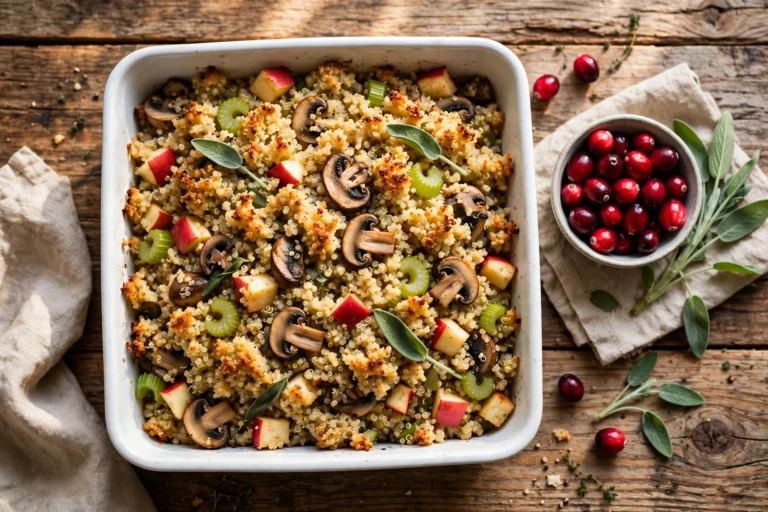
Healthy Quinoa Stuffing With Apple, Celery and Sage, About 240 Calories a Cup
A Thanksgiving stuffing with every classic flavor, sage, celery, sweet onion and browned mushrooms, built on fluffy toasted quinoa instead of butter soaked bread. Diced apple, dried cranberries and toasted walnuts finish it, and a short bake gives the crisp top people expect. About 240 calories a cup against roughly 370 for the classic, and naturally gluten free.
- Total Time: 50 minutes
- Yield: 8 servings 1x
Ingredients
- 1 3/4 cups quinoa, rinsed well and drained
- 3 cups low sodium vegetable broth
- 2 tablespoons olive oil
- 1 large yellow onion, finely diced
- 3 celery stalks, finely diced
- 8 ounces cremini mushrooms, finely chopped
- 1 firm tart apple, such as Granny Smith, cored and diced small
- 3 garlic cloves, minced
- 2 tablespoons fresh sage leaves, finely chopped
- 1 teaspoon fresh thyme leaves
- 1/3 cup reduced sugar dried cranberries
- 1/3 cup walnuts, toasted and roughly chopped
- 1/4 cup fresh parsley, chopped
- 1 teaspoon apple cider vinegar
- 3/4 teaspoon fine sea salt, plus more to taste
- 1/2 teaspoon black pepper
Instructions
- Rinse the quinoa in a fine mesh strainer under cold running water for 1 minute, rubbing the grains with your fingers. Drain well, then toast it in a dry medium saucepan over medium heat, stirring often, for 2 to 3 minutes, until dry and faintly nutty.
- Pour in the vegetable broth, bring to a boil, then reduce to a gentle simmer. Cover and cook for 15 minutes, until the grains are tender and their little tails have unfurled.
- Remove the pot from the heat and let the quinoa stand, covered, for 10 minutes. Fluff with a fork and spread it on a rimmed sheet pan so the steam escapes and the grains stay separate.
- Meanwhile, warm the olive oil in a large skillet over medium heat. Add the onion and celery with a pinch of the salt and cook, stirring now and then, for 6 to 7 minutes, until soft and sweet.
- Add the mushrooms and cook for 6 to 8 minutes, until their liquid has evaporated and the pieces are browning at the edges. Add the apple and cook 2 minutes more, until it softens slightly but still holds its shape.
- Stir in the garlic, sage and thyme and cook for 30 seconds, until fragrant. Take the skillet off the heat.
- Fold the hot vegetables into the fluffed quinoa along with the dried cranberries, walnuts, parsley, apple cider vinegar, remaining salt and the pepper. Taste and adjust the seasoning.
- Transfer everything to a lightly oiled 9 by 13 inch baking dish and spread it in an even layer. Bake at 375°F for 10 to 12 minutes, until the top is lightly golden and just crisp at the edges. Rest 5 minutes and serve warm.
- Prep Time: 15 minutes
- Cook Time: 35 minutes
Nutrition
- Serving Size: 1
- Calories: 240
- Sugar: 7
- Sodium: 320
- Fat: 8
- Saturated Fat: 1
- Unsaturated Fat: 7
- Trans Fat: 0
- Carbohydrates: 38
- Fiber: 5
- Protein: 7
- Cholesterol: 0