Healthy Wild Rice Pilaf (Nutty, Herby and Festive)
In this article:
Why This Pilaf Earns a Spot on the Thanksgiving Table
Healthy wild rice pilaf works because it brings something the Thanksgiving table actually needs: a side dish with real texture, deep nutty flavor and enough substance to hold its own next to the turkey. The grains stay separate and chewy, the cranberries pop sweet and tart, and the toasted pecans land like little bites of crunch in every forkful.
The flavor base is built like a good stuffing. Onion, celery, carrot and mushrooms cook down in olive oil until sweet and golden, then sage, thyme and rosemary bloom in the warm fat before the rice goes in. Toasting the grains for two minutes in that aromatic base gives the finished pilaf a depth that plain boiled rice never reaches.
Unlike many pilaf recipes, this one skips the wine entirely. A spoonful of lemon juice and a little zest at the end deliver the same bright lift, which keeps the dish friendly for every guest at the table. Nobody tastes anything missing; they just taste a pilaf that feels clean and balanced instead of heavy.
It also respects the cook. The rice can be made a day ahead, reheats in the oven while the turkey rests, and stays warm and fluffy on the table without turning gummy. Next to our healthy cranberry sauce, it is the make ahead partner that makes Thanksgiving morning feel almost calm.
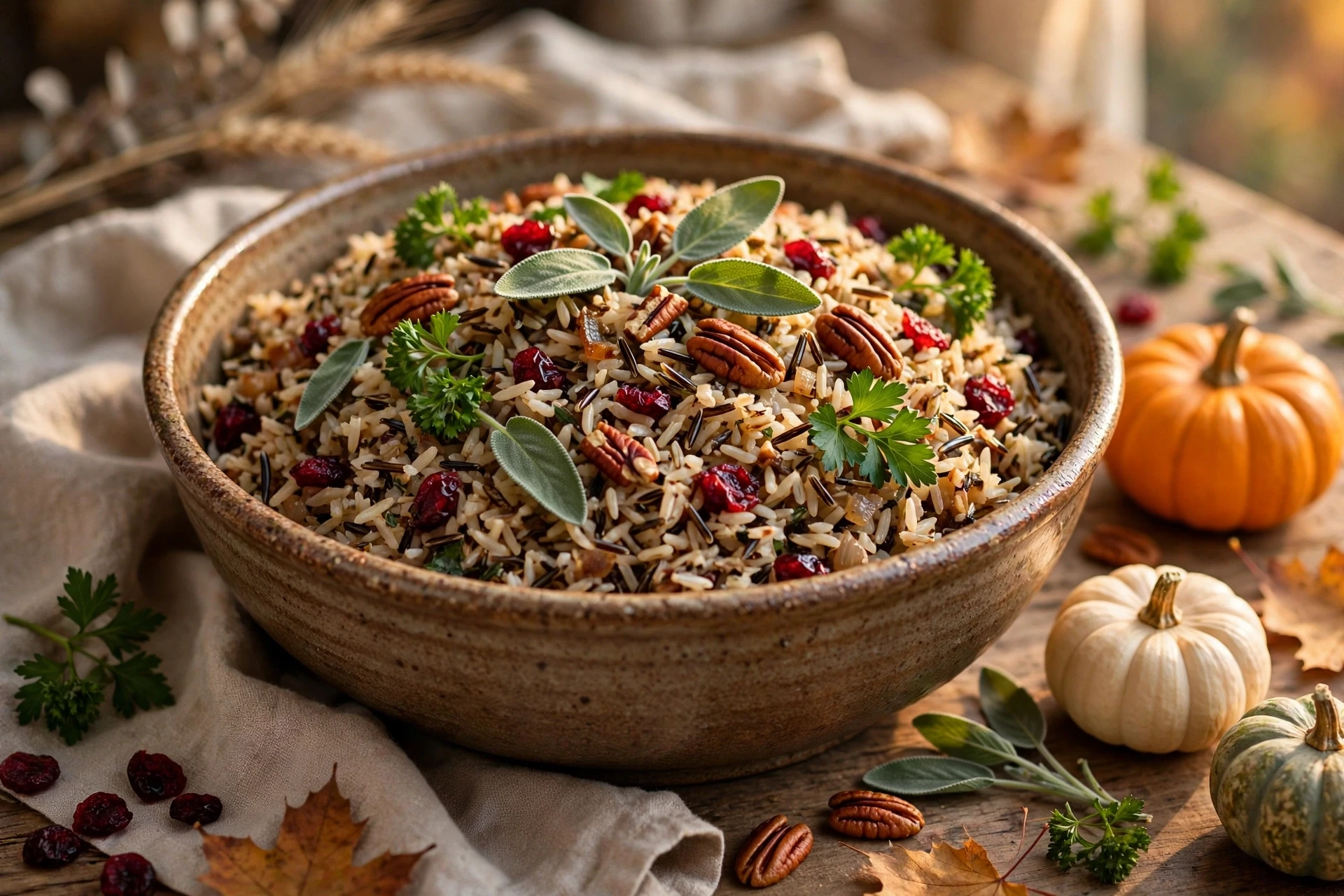
Healthy wild rice pilaf is the side dish that quietly upgrades the whole plate. It looks like a celebration, with dark wild rice grains curled open like tiny flowers, ruby cranberries scattered through, and flecks of green herbs everywhere. Set the bowl down next to the turkey and the table suddenly looks like a magazine cover.
It also fills a real gap in the classic menu. Mashed potatoes, sweet potatoes and stuffing are all soft and rich, which is wonderful until every bite blurs together. This pilaf brings chew, crunch and brightness, the contrast that makes you go back for one more spoonful of everything else too.
Leftovers might be the best part. A scoop of cold pilaf beside sliced turkey makes a next day lunch that needs nothing but a fork. Warm it in a skillet with a handful of greens and a fried egg, and it becomes a completely new meal on Friday.
Flavor Profile: Nutty, Herby and Bright
Wild rice is not true rice at all, but the seed of an aquatic grass, and its flavor explains why cooks love it. It tastes earthy and nutty, with a gentle chew that stands up to bold herbs and rich gravies. Blended with brown rice, it gives the pilaf body without the long cooking time of pure wild rice.
The herbs do the Thanksgiving work. Sage brings the warm, almost peppery note everyone associates with stuffing, thyme adds an earthy sweetness, and rosemary contributes a pine like depth that whispers holiday. Fresh parsley at the end keeps everything tasting alive instead of stewed.
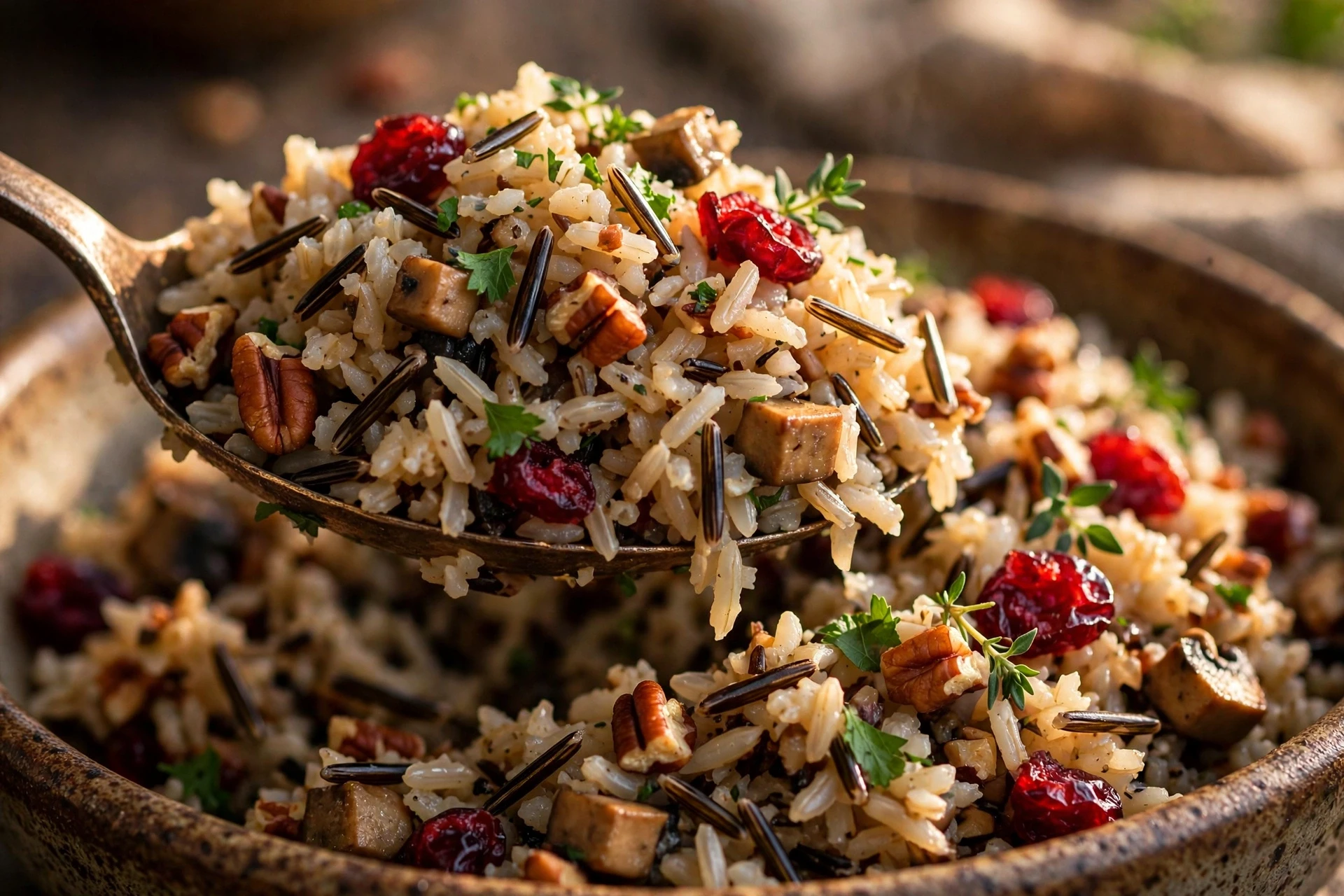
Mushrooms are the quiet heroes here. Cooked until their liquid evaporates and their edges turn golden, they add a savory richness that makes the pilaf taste meaty without a single piece of meat. Their chew echoes the wild rice, so every bite feels layered rather than one note.
The finish is what ties it together. Dried cranberries plump in the warm grains and release little bursts of sweetness, lemon zest lifts the whole bowl, and the toasted pecans go on last so they stay crisp. Sweet, tart, nutty, herby: the pilaf hits every corner of the palate in one spoonful.
Built for a Busy Holiday Kitchen
Thanksgiving cooking is a scheduling puzzle, and this recipe is designed to remove stress instead of adding it. The pilaf cooks entirely on the stovetop, which leaves the oven free for the turkey, the pies and the casserole rotation. One pot, one burner, no juggling of sheet pans.
The hands on time is only about fifteen minutes: chopping the vegetables and stirring the base. After that, the lid goes on and the rice simmers quietly for forty five minutes while you do literally anything else. A timer is the only supervision it needs.
It is also forgiving about timing in a way most sides are not. Finished pilaf holds happily, covered and warm, for up to an hour while the rest of dinner catches up. A splash of broth and a quick fluff bring it right back to freshly made texture.
Serve it in the pot it cooked in, or move it to your prettiest bowl and garnish at the table. Alongside healthy herb roasted turkey breast and a pan of green beans, it makes a smaller Thanksgiving feel complete without a week of cooking. That is holiday math every home cook appreciates.
Wholesome by Design
Wild rice pulls serious nutritional weight. Compared with white rice, it brings roughly double the protein, far more fiber, and meaningful amounts of magnesium, zinc and B vitamins, as you can compare in the USDA FoodData Central database. It also sits lower on the glycemic scale, so a serving keeps you full instead of sleepy.
Fiber is the quiet star of this side dish. Between the wild rice blend, the vegetables and the cranberries, each serving delivers the kind of fiber that supports digestion and steadier blood sugar, benefits outlined by MedlinePlus. On a table famous for excess, that balance genuinely matters.
The recipe stays light by design rather than by sacrifice. Olive oil replaces butter, low sodium broth keeps the salt in your control, and reduced sugar cranberries keep the sweetness in check. The pecans contribute healthy fats and crunch, so a modest portion feels rich and satisfying.
It is naturally gluten free and easily vegan when you choose vegetable broth, which makes it the rare Thanksgiving side that nearly every guest can eat. Put it next to our healthy green bean casserole and the special diet guests stop feeling like an afterthought. Everyone eats the same beautiful food.
Ingredients
- 1 1/2 cups wild rice blend (wild rice and brown rice), rinsed well
- 2 tablespoons olive oil
- 1 medium yellow onion, finely diced
- 2 celery stalks, finely diced
- 2 medium carrots, finely diced
- 8 ounces cremini mushrooms, diced
- 3 garlic cloves, minced
- 1 teaspoon fresh thyme leaves (or 1/2 teaspoon dried)
- 1 teaspoon rubbed sage
- 1/2 teaspoon fresh rosemary, finely chopped
- 3 cups low sodium vegetable broth (or chicken broth)
- 1 bay leaf
- 3/4 teaspoon fine sea salt, plus more to taste
- 1/2 teaspoon black pepper
- 1/2 cup dried cranberries, reduced sugar if possible
- 1/2 cup pecans, toasted and roughly chopped
- 1/4 cup fresh parsley, chopped
- 1 teaspoon lemon zest plus 1 tablespoon lemon juice
Step by Step Instructions
- Rinse the wild rice blend in a fine mesh strainer under cold water for about 30 seconds, until the water runs mostly clear. Set it aside to drain.
- Toast the pecans in a dry Dutch oven or deep pot over medium heat for 3 to 4 minutes, stirring often, until fragrant and a shade darker. Move them to a plate so they stop cooking.
- Add the olive oil to the same pot over medium heat. Stir in the onion, celery and carrots with a pinch of the salt, and cook for 5 to 6 minutes, until softened and sweet at the edges.
- Add the mushrooms and cook for 5 to 6 minutes more, stirring now and then, until their liquid evaporates and they turn golden in spots. This step builds the deep savory base, so do not rush it.
- Stir in the garlic, thyme, sage and rosemary and cook for 30 seconds, until the herbs smell intensely fragrant. Add the drained rice and stir for 2 minutes, toasting every grain in the aromatic oil.
- Pour in the broth, then add the bay leaf, the remaining salt and the black pepper. Bring to a boil, cover with a tight lid, and reduce the heat to low.
- Simmer gently for 45 minutes without lifting the lid. Then check a few grains: they should be tender with a pleasant chew, and many wild rice grains will have split open and curled. If they still feel firm, add a splash of water and cook 5 to 10 minutes more.
- Remove the pot from the heat and let it rest, covered, for 10 minutes. This steaming finish is what keeps the grains separate instead of sticky.
- Remove the bay leaf and fluff the pilaf gently with a fork. Fold in the cranberries, lemon zest and lemon juice, then taste and adjust the salt. Scatter the toasted pecans and parsley over the top and serve warm.
Secrets to Fluffy, Never Mushy Pilaf
Healthy wild rice pilaf turns mushy for one main reason: too much liquid and too much stirring. Grains release starch every time they are disturbed, so once the lid goes on, leave the pot alone. Measure the broth carefully, keep the simmer gentle, and let time do the work.
The doneness test matters more than any timer. Wild rice blends vary by brand, and the grains finish at different speeds, which is why a clock alone can betray you. Bite a few grains: you want tender with a gentle chew, and the dark outer grains should look split and curled like little butterflies.
The ten minute rest is not optional decoration. Off the heat, the grains absorb the last of the steam and firm up into separate, glossy strands. Skip it and the pilaf eats wet; honor it and the fork lifts clean, distinct grains every single time.
Garnish discipline keeps the texture perfect at the table. Pecans stirred in early go soft in the steam, and parsley folded in hot turns dark and tired. Both go on at the very end, over the fluffed and seasoned pilaf, so the crunch and the color survive until the first serving.
Variations for Every Table
The apple version is a Thanksgiving favorite in its own right. Fold in one diced Granny Smith apple with the cranberries at the end; its raw crunch and tartness wake up the whole bowl. Swap the pecans for slivered almonds and you have the classic orchard style pilaf many families grew up with.
For a stuffing style pilaf, transfer the dish to a buttered baking dish, sprinkle the top with some whole wheat panko mixed with a teaspoon of olive oil, and bake at 375 degrees F for 15 minutes. The crisp top over the tender grains mimics everything people love about dressing, in lighter form than our healthy cornbread stuffing.
Turn leftovers into a stuffed vegetable dinner by spooning the pilaf into halved roasted acorn squash, the same spirit as our quinoa stuffed acorn squash. Add a crumble of feta or goat cheese on top if dairy works for your table. It looks like a brand new recipe and uses every last scoop.
For a main dish variation, fold in two cups of shredded leftover turkey or a can of drained chickpeas while the pilaf rests. The grains absorb the savory juices and the side becomes a complete one bowl dinner. A handful of baby spinach stirred in at the end wilts into the heat and adds color.
Make Ahead and Storage Guide
Healthy wild rice pilaf might be the best make ahead side on the whole Thanksgiving menu. Cook it completely one day in advance, let it cool, and refrigerate it in an airtight container without the pecans and parsley. The flavors actually deepen overnight as the herbs settle into the grains.
To reheat, move the pilaf to an oven safe dish, sprinkle it with two to three tablespoons of broth or water, cover tightly with foil, and warm at 325 degrees F for 20 to 25 minutes. Fluff with a fork, then add the pecans and parsley. It comes out tasting freshly made, never dried or tired.
Leftovers keep for four days in the fridge and reheat well in a skillet with a splash of water. The pilaf also freezes for up to three months; thaw it overnight in the fridge before reheating. Frozen cranberries in the mix hold up fine, but always add the nuts after reheating so they stay crisp.
Conclusion
Healthy wild rice pilaf brings the chew, crunch and color that the Thanksgiving table has been missing. It is wholesome without tasting like a compromise, and organized enough to make the cook’s day easier instead of harder. It also happens to be beautiful enough to sit at the center of the table.
Make it once this season and it will claim a permanent spot next to the turkey. A side dish that feeds everyone, reheats like a dream and turns leftovers into lunch is not a side dish at all. It is a strategy, and a delicious one. Your future self, the one reheating leftovers on Friday, says thank you.
FAQ
Is wild rice actually healthy?
Yes. Wild rice is technically the seed of an aquatic grass, and it outperforms white rice on nearly every measure: roughly double the protein, several times the fiber, and more magnesium, zinc and B vitamins per cup. It also has a lower glycemic impact, so it keeps you full longer. Blended with brown rice in this pilaf, you get those benefits with a friendlier cooking time and a softer chew.
How do I know when wild rice is done cooking?
Ignore the clock and bite a few grains. Done wild rice is tender with a gentle, pleasant chew, never crunchy in the center and never falling apart. The dark grains also split open and curl slightly, like tiny butterflies, which is the clearest visual sign. Blends vary by brand, so start checking at 40 minutes and allow up to 55 minutes, adding a splash of water if the pot dries out first.
Can I make healthy wild rice pilaf the day before Thanksgiving?
Absolutely, and it tastes even better the next day. Cook the pilaf completely, cool it, and refrigerate it without the pecans and parsley. Reheat it covered with foil at 325 degrees F for 20 to 25 minutes with a few tablespoons of broth sprinkled over the top. Fluff with a fork, add the garnishes, and it will taste freshly made.
Can I freeze wild rice pilaf?
Yes, it freezes very well for up to 3 months. Cool it completely, pack it in airtight containers, and thaw overnight in the fridge before reheating with a splash of broth. Leave the pecans and parsley out before freezing and add them fresh after reheating, since nuts lose their crunch and herbs darken in the freezer. Freeze in portion sized containers and leftovers become instant lunches.
What can I substitute for the pecans, or to make this pilaf nut free?
Toasted pumpkin seeds are the best nut free swap, with the same crunch and a lovely green color. Sunflower seeds and roasted chickpeas also work well. If nuts are fine but pecans are not, walnuts or slivered almonds fold in beautifully. Whatever you choose, toast it first and add it at serving time so it stays crisp against the warm grains.
Healthy Wild Rice Pilaf
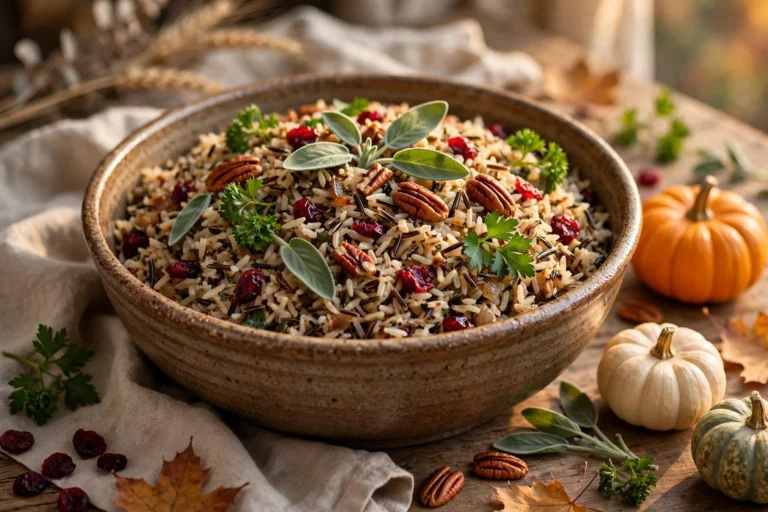
A wholesome wild rice pilaf with sweet cranberries, toasted pecans, golden mushrooms and fresh Thanksgiving herbs. Naturally gluten free, no wine, fluffy never mushy grains, and a complete make-ahead plan for a calm holiday kitchen.
- Total Time: 1 hour 15 minutes
- Yield: 8 servings 1x
Ingredients
- 1 1/2 cups wild rice blend (wild rice and brown rice), rinsed well
- 2 tablespoons olive oil
- 1 medium yellow onion, finely diced
- 2 celery stalks, finely diced
- 2 medium carrots, finely diced
- 8 ounces cremini mushrooms, diced
- 3 garlic cloves, minced
- 1 teaspoon fresh thyme leaves (or 1/2 teaspoon dried)
- 1 teaspoon rubbed sage
- 1/2 teaspoon fresh rosemary, finely chopped
- 3 cups low sodium vegetable broth (or chicken broth)
- 1 bay leaf
- 3/4 teaspoon fine sea salt, plus more to taste
- 1/2 teaspoon black pepper
- 1/2 cup dried cranberries, reduced sugar if possible
- 1/2 cup pecans, toasted and roughly chopped
- 1/4 cup fresh parsley, chopped
- 1 teaspoon lemon zest plus 1 tablespoon lemon juice
Instructions
- Rinse the wild rice blend in a fine mesh strainer under cold water for about 30 seconds, until the water runs mostly clear. Set aside to drain.
- Toast the pecans in a dry Dutch oven over medium heat for 3 to 4 minutes, stirring often, until fragrant. Move them to a plate.
- Add the olive oil to the same pot over medium heat. Cook the onion, celery and carrots with a pinch of the salt for 5 to 6 minutes, until softened and sweet at the edges.
- Add the mushrooms and cook for 5 to 6 minutes more, until their liquid evaporates and they turn golden in spots.
- Stir in the garlic, thyme, sage and rosemary and cook for 30 seconds. Add the drained rice and stir for 2 minutes, toasting every grain in the aromatic oil.
- Pour in the broth, then add the bay leaf, the remaining salt and the black pepper. Bring to a boil, cover, and reduce the heat to low.
- Simmer gently for 45 minutes without lifting the lid. Check a few grains: they should be tender with a pleasant chew, and many wild rice grains will have split open and curled. If still firm, add a splash of water and cook 5 to 10 minutes more.
- Remove the pot from the heat and let it rest, covered, for 10 minutes so the grains finish steaming and stay separate.
- Remove the bay leaf and fluff gently with a fork. Fold in the cranberries, lemon zest and lemon juice, taste and adjust the salt, then scatter the toasted pecans and parsley over the top and serve warm.
- Prep Time: 15 minutes
- Cook Time: 50 minutes