
Whipped Sweet Potatoes with Greek Yogurt, Silky and Bright
In this article:
- Why This Whip Works at a Lighter Table
- A Cloud on the Fork
- What the Oven Does That a Pot Cannot
- The Numbers Behind the Swap
- Setting the Bowl on the Table
- Choosing the Right Potatoes
- Ingredients
- Roasting, Scooping and Whipping
- Two Mistakes That Make the Whip Heavy
- Swaps for Every Table
- Make It Wednesday, Serve It Thursday
- Passing the Bowl Around
- FAQ
Whipped sweet potatoes with Greek yogurt are the bowl I carry to the Thanksgiving table when I want the comfort of the classic casserole without its sugar crash. The mash comes out of the oven orange and steaming, then turns silk under the beaters.
A thread of maple moves through it like light through amber. Orange zest lifts the top note before anyone tastes anything. There is no marshmallow cap and no stick of butter hiding underneath. What you get instead is a whip that sits tall, tastes like itself, and leaves room for pie.
One bowl, one sheet pan, and about fifteen minutes of actual work stand between you and the side dish people will ask about on the drive home.
Why This Whip Works at a Lighter Table
This whip works because roasting does the sweetening that brown sugar usually fakes. A full hour in a hot oven pulls the natural sugars of the flesh toward caramel, so the recipe needs only one measured spoon of maple.
Greek yogurt replaces butter with tang and body at once, and its protein keeps the whip structured instead of soupy. Roasted flesh also holds far less water than boiled flesh, which means the beaters build volume instead of splashing.
The orange is not decoration here. Its acid brightens a root vegetable that can taste flat once it is mashed. Warm yogurt folds in without shocking the potatoes cold, and the whole bowl keeps the deep color that makes people reach for it first.
A Cloud on the Fork: Texture and Flavor of the Whip
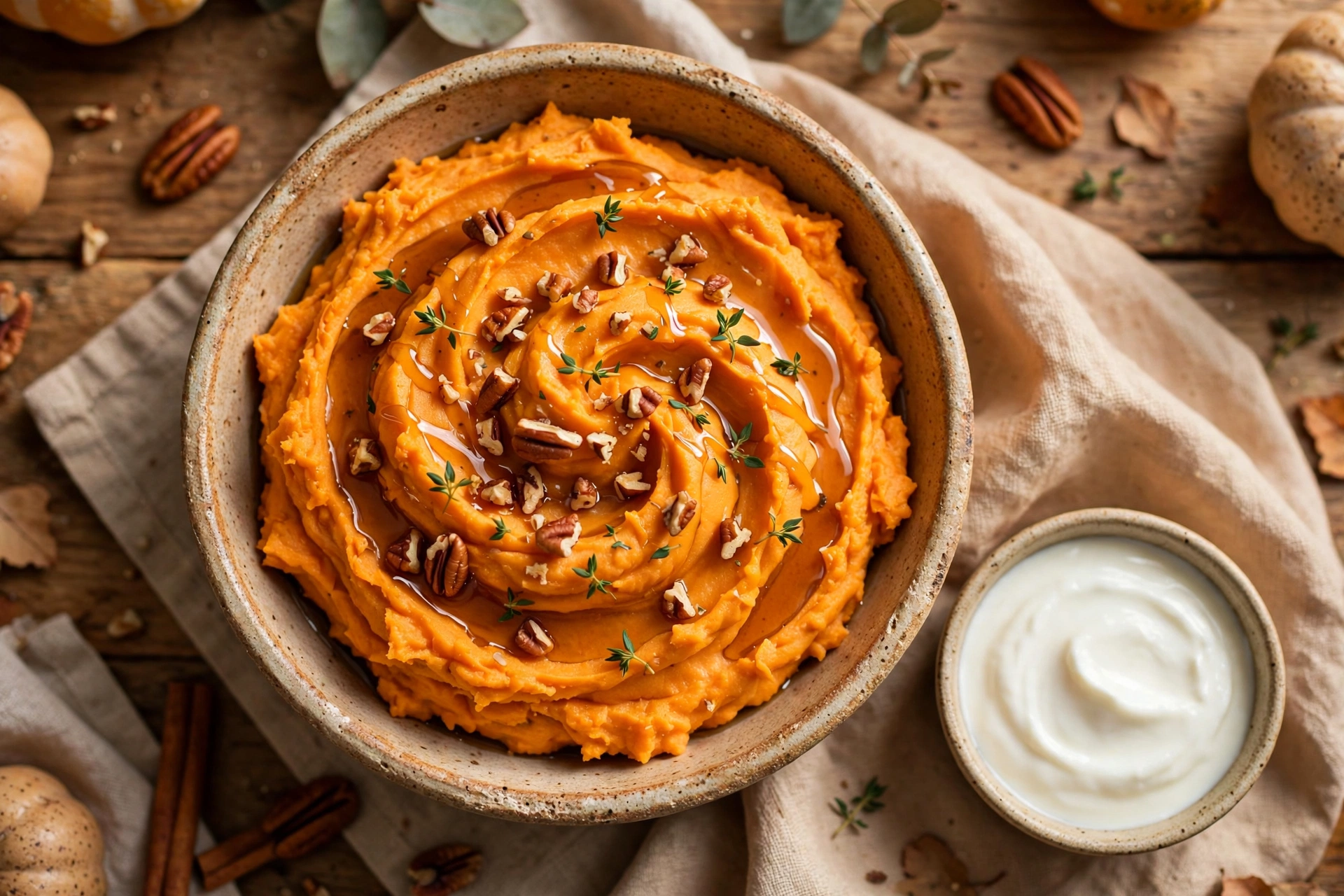
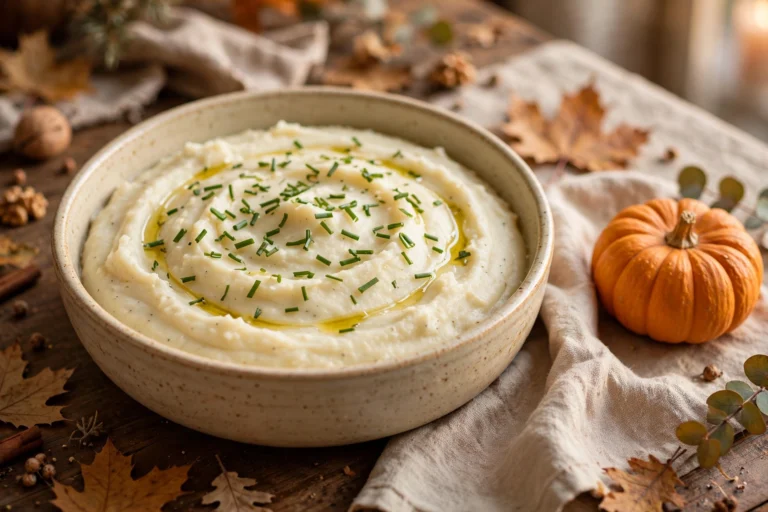
The first spoonful should stand in soft peaks, like a mousse that remembers it was once a vegetable. Roasting concentrates the flesh, so the whip feels dense and light at the same time. The yogurt adds a gentle tang right at the end of each bite.
Cinnamon stays in the background, warming rather than announcing itself. Nutmeg is a whisper, one pinch, nothing more. The toasted pecans on top break the smoothness with a small, deliberate crunch. Eaten warm, the bowl smells faintly of orange peel and browned edges.
Eaten at room temperature beside cold turkey the next day, it turns almost into a spread. Both versions earn their place.
Serving Temperature Changes Everything
Served hot, the whip reads as comfort food, round and mellow, the cinnamon closer to the front. Served barely warm, the orange steps forward and the tang of the yogurt sharpens, almost like a savory citrus cream. I prefer it hot from the oven beside the turkey, then cold on toast the following morning.
The leftovers may honestly be the better argument for making a full batch. Temperature is the last seasoning here, and it costs nothing.
What the Oven Does That a Pot of Water Cannot
A pot of boiling water works against this recipe in two ways. It fills the flesh with water the mash never asked for, and it washes away surface sugars that took the whole growing season to build. The oven moves in the opposite direction.
Dry heat pulls moisture out through the skin, concentrating flavor in a smaller, richer package. The flesh near the skin browns lightly, and that browning carries a depth no spice rack can imitate. This is why the recipe can sweeten a three pound batch with a single spoon of maple.
The concentration happened before any sweetener arrived. Roasting also keeps the flesh firm enough to hold air. Waterlogged flesh collapses under the beaters, while roasted flesh traps tiny pockets and stands up in peaks. The method is the recipe, more than any ingredient on the list.
The Numbers Behind the Swap
Here is the arithmetic that built this recipe. A classic sweet potato casserole with a marshmallow top lands near 380 calories a serving, most of it from butter, brown sugar and the topping itself. This whip lands near 180 calories a serving, and we can point to every gram of the difference.
The butter alone in a classic recipe adds roughly 800 calories to the pan. The brown sugar adds another 600 before the marshmallows arrive. Roasting the potatoes instead of boiling them protects the vitamin A and potassium that make sweet potatoes worth eating in the first place, according to the nutrient profile published in USDA FoodData Central.
Each serving here still brings about 5 grams of fiber and close to 5 grams of protein. The yogurt does quiet work in that protein number. Nothing was removed that you will miss at the table. What left was only the heaviness.
One more number matters on a holiday plate: staying power. The fiber and protein in this bowl slow down the whole meal, so the famous post dinner slump arrives softer. A marshmallow topped serving pushes blood sugar up fast and drops it just as fast.
This whip climbs gently and comes down gently, which is exactly what a long afternoon needs. The Harvard T.H. Chan School of Public Health makes the same point about fiber rich vegetables in its Nutrition Source guides to healthy holiday eating.
Setting the Bowl on the Table
Presentation does half the persuading with a lighter recipe. Choose a bowl with some depth, warm it with hot water while the potatoes roast, and dry it before the whip goes in. The swirl matters more than it should: a spoon drawn in one slow spiral makes the surface look like it was piped.
Keep the pecans in a small cluster at the center rather than scattered to the edges, so each serving can choose crunch or not. A few thyme leaves add the green note that tells the eye this bowl belongs beside the turkey.
Carry it to the table while the top still shines. The shine fades in ten minutes, and first impressions at Thanksgiving are permanent.
Choosing the Right Potatoes at the Market
Start with weight. Three pounds should feel like four medium potatoes, each heavy for its size, with tight unbroken skin. Avoid any with soft spots, white mold near the eyes, or long sprouts, all signs of age that turn into stringy flesh later.
Copper and red skinned varieties roast up moist and sweet, with the deep color this bowl is known for. Tapered ends are fine, but very thin tails scorch before the centers soften, so choose evenly shaped roots when you can.
If the store sells them loose and mixed, pick by hand rather than by bag. Ten extra seconds at the bin is the cheapest quality control in this entire recipe. Store the potatoes in a cool dark cupboard, never the fridge, where cold turns their starch grainy.
Ingredients for Whipped Sweet Potatoes with Greek Yogurt
- 3 pounds sweet potatoes, about 4 medium, scrubbed
- 3/4 cup plain Greek yogurt, 2 percent, at room temperature
- 1 tablespoon pure maple syrup
- 2 tablespoons orange juice, freshly squeezed
- 1 teaspoon orange zest, finely grated
- 2 tablespoons warm milk, 2 percent, plus more as needed
- 3/4 teaspoon fine sea salt
- 1/2 teaspoon ground cinnamon
- 1 pinch ground nutmeg
- 2 tablespoons chopped pecans, toasted, for serving
- Fresh thyme leaves, for serving, optional
Roasting, Scooping and Whipping, Step by Step
- Heat the oven to 400 degrees Fahrenheit (204 degrees Celsius). Line a rimmed sheet pan with parchment paper for an easier cleanup.
- Prick each sweet potato several times with a fork. Set them on the pan with space between them so the heat can circulate.
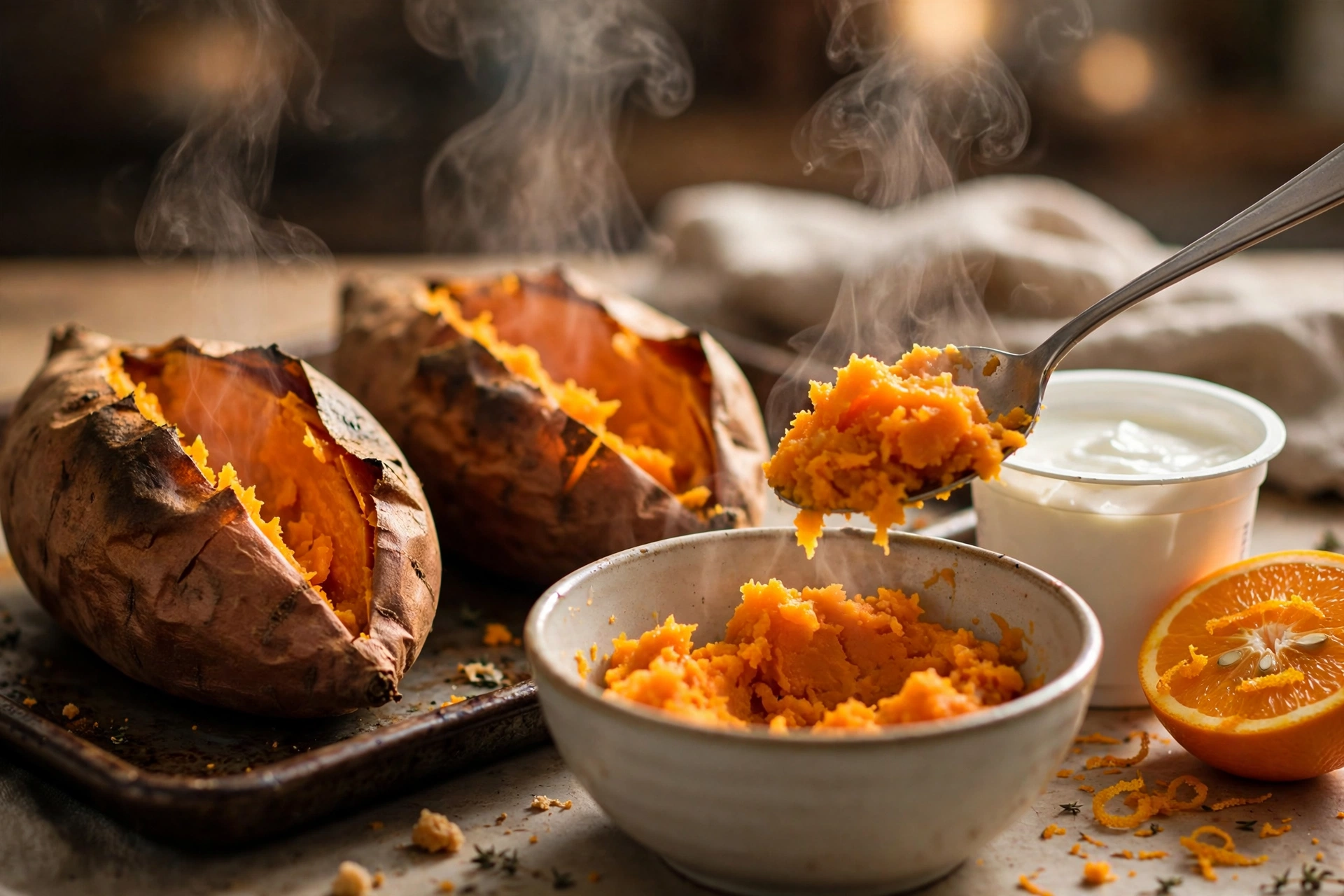
- Roast for 55 to 65 minutes, turning once halfway, until a knife slides to the center without resistance and the skins look slightly collapsed.
- Rest the potatoes for 10 minutes, until they are cool enough to hold. Halve them lengthwise and scoop the flesh into a large warm bowl, leaving the skins behind.
- Add the salt, cinnamon and nutmeg to the hot flesh. Mash roughly with a fork so the spices bloom in the heat.
- Spoon in the Greek yogurt, maple syrup, orange juice and orange zest. None of these should be cold from the fridge, or the whip will turn stiff and dull.
- Whip with a hand mixer on medium speed for 60 to 90 seconds, drizzling in the warm milk, until the mash turns glossy and holds soft peaks.
- Taste and adjust the salt. The whip should taste bright first and sweet second.
- Spoon into a warm serving bowl, swirl the top with the back of the spoon, and scatter the toasted pecans and thyme.
- Serve immediately, or hold it covered in a low oven at 200 degrees Fahrenheit for up to 30 minutes.
Two Mistakes That Make the Whip Heavy
The first mistake is boiling. Boiled sweet potatoes drink water, and that water comes back out in the bowl as a loose, pale mash no beater can rescue. Roasting is slower, and it is the entire reason this recipe can skip the butter.
The second mistake is cold yogurt. Yogurt straight from the fridge drops the temperature of the mash and tightens it, so the whip reads dense instead of airy. Set the yogurt on the counter when the potatoes go into the oven.
A third quieter error is over-whipping: past ninety seconds the starch turns gluey. Stop while the peaks still look soft. If the whip does go gummy, fold in two more spoonfuls of warm milk by hand and serve it as a rustic mash. It will still taste right.
Swaps for Every Table
For a dairy free bowl, replace the Greek yogurt with a thick unsweetened coconut yogurt and the milk with warm almond milk; the texture holds and the calories stay close. If maple is not your note, a teaspoon of honey does the same work, though the flavor turns floral instead of woodsy.
A quarter teaspoon of smoked paprika instead of nutmeg tilts the bowl savory, which suits grilled mains better than turkey. The pecans can leave entirely for a nut free table, replaced by toasted pepitas the way we finish our roasted delicata squash with crispy sage and maple.
Readers who like heat can whip in a pinch of cayenne and serve the bowl beside something mild. Every one of these swaps keeps the recipe inside its promise: sweet potatoes first, everything else in a supporting role.
Doubling the recipe for a crowd works cleanly, with one caution. Whip in two batches rather than one enormous one, because a crowded bowl defeats the beaters and the texture suffers. The seasoning also needs a gentler hand at scale: one and a half times the salt and spices for twice the potatoes, then correct at the end.
Taste from the second batch, not the first, since palates adjust as you cook. A doubled batch holds beautifully in a slow cooker on warm for two hours, stirred once at the halfway point.
Make It Wednesday, Serve It Thursday
This is a make ahead recipe in the truest holiday sense. Whip the potatoes completely on Wednesday, press a sheet of parchment against the surface, and refrigerate for up to two days. On Thursday, scrape the whip into an oven safe dish, cover it, and warm it at 325 degrees Fahrenheit for 25 to 30 minutes.
Stir in two tablespoons of warm milk, then re-whip for twenty seconds so the texture comes back to life. Leftovers keep four days in the fridge and freeze well for a month in a flat container. Thaw overnight, reheat covered, and whip briefly again before serving.
The orange zest is the one thing to add fresh if you freeze the batch, since its brightness fades in the cold. Set the pecans aside until the moment of serving so they stay crisp.
Passing the Bowl Around
Whipped sweet potatoes with Greek yogurt have become my answer to the heaviest corner of the Thanksgiving table. They keep the color, the warmth and the gentle sweetness everyone expects, and they drop the part nobody actually misses.
Make them once and watch who asks for the recipe before dessert. At our table, it is usually the person who swore they only eat the classic. That conversion is the best review a lighter recipe can get.
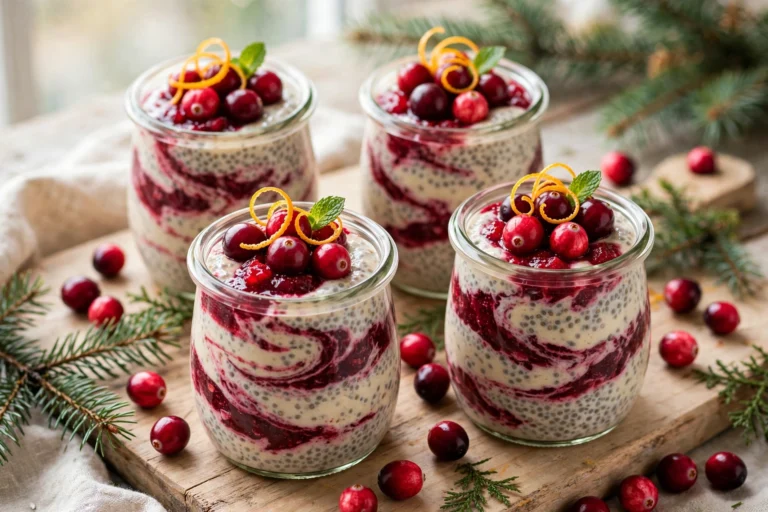
If your holiday table needs one more light companion, our cranberry orange chia pudding waits in the fridge for Christmas morning, and the healthy gingerbread oatmeal bake covers the slow morning after.
Questions About These Whipped Sweet Potatoes with Greek Yogurt
Why did my Greek yogurt curdle in the hot sweet potatoes?
Yogurt splits when it meets potatoes that are steaming hard straight out of the oven. Rest the roasted flesh for ten minutes, bring the yogurt to room temperature, and fold it in before whipping. If a few white flecks appear, keep whipping: they usually smooth out as the temperature evens.
Can I use fat free Greek yogurt instead of 2 percent?
Yes, and the calories drop a little further. Fat free yogurt is tangier and slightly less rich, so add the milk one spoon at a time and stop as soon as the whip turns glossy. A tiny extra pinch of salt balances the sharper tang.
Which sweet potato variety whips the smoothest?
Orange fleshed varieties with copper or red skins, sold as garnet or jewel, whip the silkiest because their flesh is moist and low in fiber strings. Pale Japanese sweet potatoes roast up drier and make a denser, more rustic mash.
My whip looks watery. What went wrong?
Watery whip almost always means the potatoes were boiled, or roasted potatoes sat in their own steam after scooping. Roast until the skins collapse, scoop the flesh while hot, and let the bowl steam off for two minutes before adding the yogurt. A very wet batch can be saved by stirring it over low heat for three minutes.
Can I freeze whipped sweet potatoes with Greek yogurt?
Yes, for up to one month in a flat, well sealed container. The yogurt can look slightly grainy after thawing, but a twenty second re-whip with two tablespoons of warm milk brings the texture back. Add fresh orange zest after reheating for the brightest flavor.

2 Comments
Comments are closed.