
Roasted Delicata Squash with Crispy Sage and Maple
In this article:
- Why This Roasted Delicata Squash Needs No Butter
- The Honest Numbers: About 105 Calories a Serving
- The Squash You Never Have to Peel
- Ingredients for the Roasted Delicata Squash
- How to Roast Delicata Squash at 425 Degrees
- Crispy Sage in Thirty Seconds
- Pale, Soggy or Scorched: Delicata Fixes
- Air Fryer, Warm Spice and the Seed Saving Trick
- Roast It in the Morning, Re-Crisp It While the Turkey Rests
- The Side Dish That Tastes Like You Used Butter
- Questions Home Cooks Ask About Roasting Delicata Squash
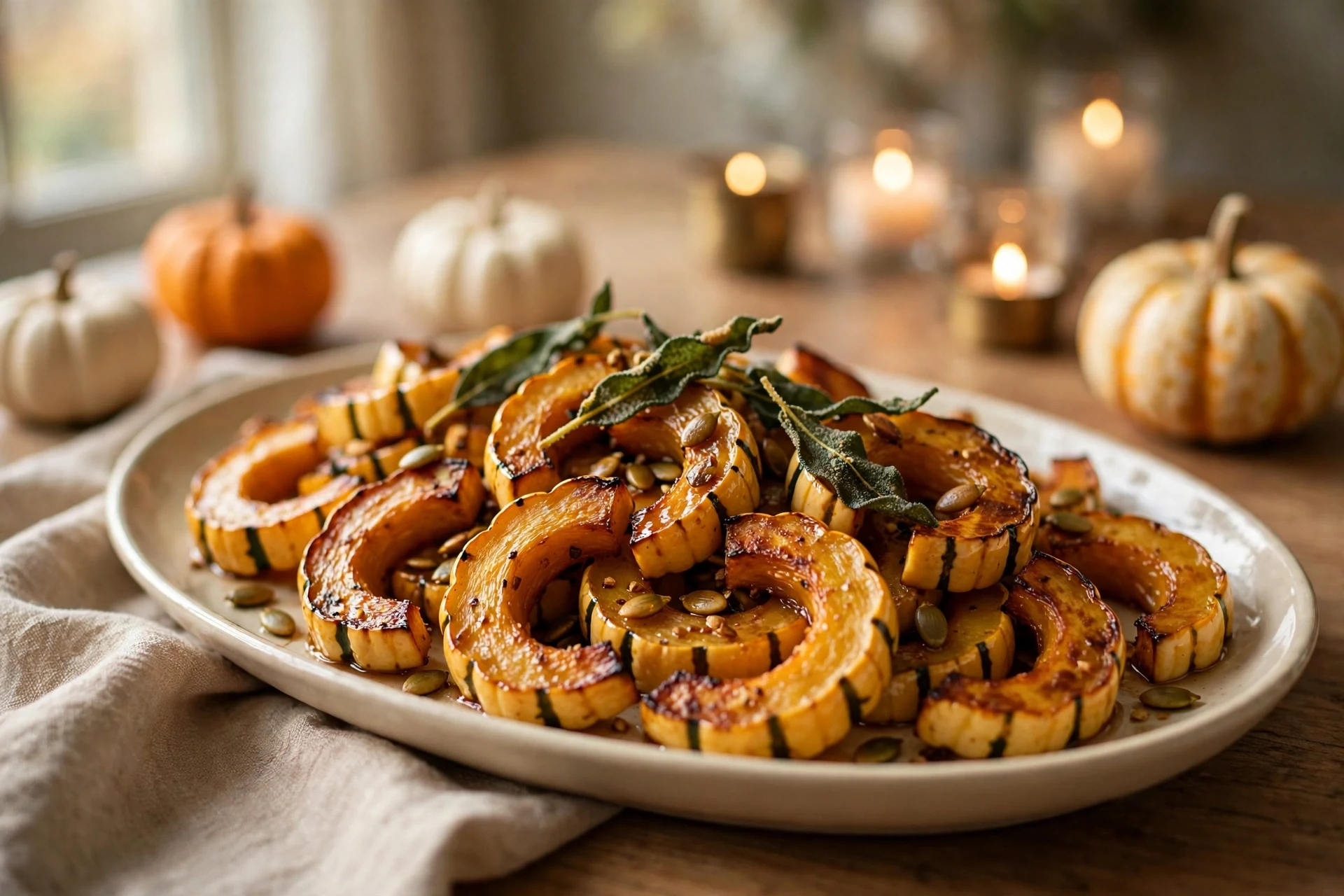
This roasted delicata squash is the Thanksgiving side that eats like a candied classic and lands like a vegetable: caramel edged crescents, a measured whisper of maple, crispy sage and toasted seeds, at about 105 calories a serving.
There is no butter in the pan and no brown sugar anywhere. The sweetness is already inside the squash, and a hot oven coaxes it to the surface, where it browns into something that tastes far richer than the ingredient list suggests.
Best of all, delicata asks almost nothing of the cook. The skin is edible, so there is no peeling, no wrestling a raw squash into submission, just a scrub, a slice and a single sheet pan that feeds the whole table.
Why This Roasted Delicata Squash Needs No Butter
Roasted delicata squash works without butter because the squash brings its own dessert. The flesh is naturally sweet and dense, closer to a sweet potato than to a watery zucchini, so high heat concentrates the sugars instead of diluting them.
The cut does half the job. Half moons a half inch thick give every piece two flat faces, and flat faces are what brown. More surface on the hot pan means more caramel, and caramel is the flavor people usually credit to butter.
Maple is used the way salt is used, as a seasoning rather than a sauce. Two tablespoons across eight servings is enough to gloss the edges and help them color, never enough to turn the pan into a candy coating.
The finish carries the luxury. Crispy sage, toasted pepitas and a pinch of flaky salt land at the table, so the first bite crackles and the last one still tastes seasoned, long after a butter glaze would have gone greasy and flat.
The Honest Numbers: About 105 Calories a Serving
Here is the arithmetic, because this site always shows its work. Three delicata squash give about 400 calories of flesh, the two tablespoons of olive oil add 240, the maple adds 104 and the pepitas about 100, for a pan total near 845.
Divided by eight servings, that is about 105 calories a serving, with roughly 16 grams of carbohydrate, 4 grams of fiber, 2 grams of protein and 5 grams of fat. The same squash roasted the classic way, with butter and a brown sugar glaze, lands near 165.
The squash itself does serious nutritional work. Delicata is rich in vitamin A and a good source of vitamin C and potassium, in line with the values the USDA database lists for winter squash, so the lightest side on the table is also one of the most useful.
Portion honesty matters too. A serving here is a generous pile of crescents, about a heaped cup, not the three polite bites some light recipes use to make their numbers behave. You will go back for seconds feeling fed, not managed.
The Squash You Never Have to Peel
Delicata skin is thin, tender and completely edible, and roasting turns it supple with slightly crisped edges. Leaving it on also holds each crescent together, so the pieces keep their pretty striped shape from pan to platter instead of slumping into mash.
Choosing a good one is simple. Look for deep yellow skin with green stripes, a rind that resists a fingernail, and real heft for the size. Soft spots, mold near the stem or a hollow sound when you knock are all reasons to pick another.
Whole delicata keeps for three to four weeks in a cool, dry corner of the kitchen, which makes it the calmest Thanksgiving purchase on the list. Buy it the weekend before, and it will wait patiently while the fridge fills with everything else.
Wash it well, since the skin stays on. A firm brush under running water is enough, then dry it thoroughly: surface water is the enemy of browning, and this recipe lives or dies on dry squash meeting a hot pan.
Ingredients for the Roasted Delicata Squash
- 3 medium delicata squash, about 2 1/2 pounds total
- 2 tablespoons olive oil, divided
- 2 tablespoons pure maple syrup
- 3/4 teaspoon fine sea salt
- 1/4 teaspoon black pepper
- 1/4 teaspoon ground cinnamon
- 12 fresh sage leaves, whole, plus 1 tablespoon chopped fresh sage
- 2 tablespoons pepitas (pumpkin seeds)
- Flaky sea salt, for finishing
Every quantity here is deliberate. The oil is measured because it is the biggest calorie line in the recipe, and two tablespoons is genuinely enough when the squash is tossed in a bowl rather than drizzled hopefully over a crowded pan.
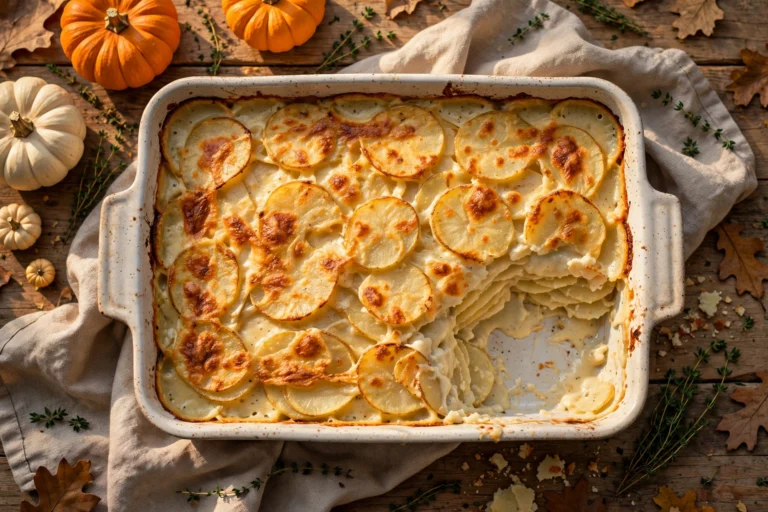
The cinnamon is a background note, there to deepen the maple rather than announce itself. Readers building the whole light table will find the same measured approach in our healthy scalloped potatoes, which keep their gratin soul on a milk based sauce.
How to Roast Delicata Squash at 425 Degrees
- Heat the oven to 425 degrees Fahrenheit (218 degrees Celsius). Line a large rimmed sheet pan with parchment paper, or use two pans if the pieces will not fit in one uncrowded layer.
- Scrub the squash and pat them dry. Trim off the ends, halve each squash lengthwise, and scoop out the seeds with a spoon.
- Slice the halves crosswise into half moons about 1/2 inch thick, keeping the pieces as even as you can so they finish together.
- In a large bowl, toss the squash with 1 1/2 tablespoons of the olive oil, the maple syrup, fine salt, pepper, cinnamon and the chopped sage until every piece glistens.
- Spread the squash on the pan in a single layer with space between the pieces, flat sides down where they fall that way. Roast for 15 minutes without touching them.
- Flip each piece with tongs or a thin spatula. Roast 10 to 15 minutes more, until the edges are deeply golden and a knife slides into the thickest piece without resistance.
- While the squash finishes, heat the remaining 1/2 tablespoon of oil in a small skillet over medium heat. Fry the whole sage leaves for 20 to 30 seconds, until crisp and bright green, then drain them on a paper towel with a pinch of salt.
- Toast the pepitas in the same dry skillet for 1 to 2 minutes, shaking the pan, until they puff and pop.
- Pile the squash onto a warm platter. Drizzle over any pan juices, scatter the pepitas and crispy sage on top, finish with flaky salt, and serve warm.
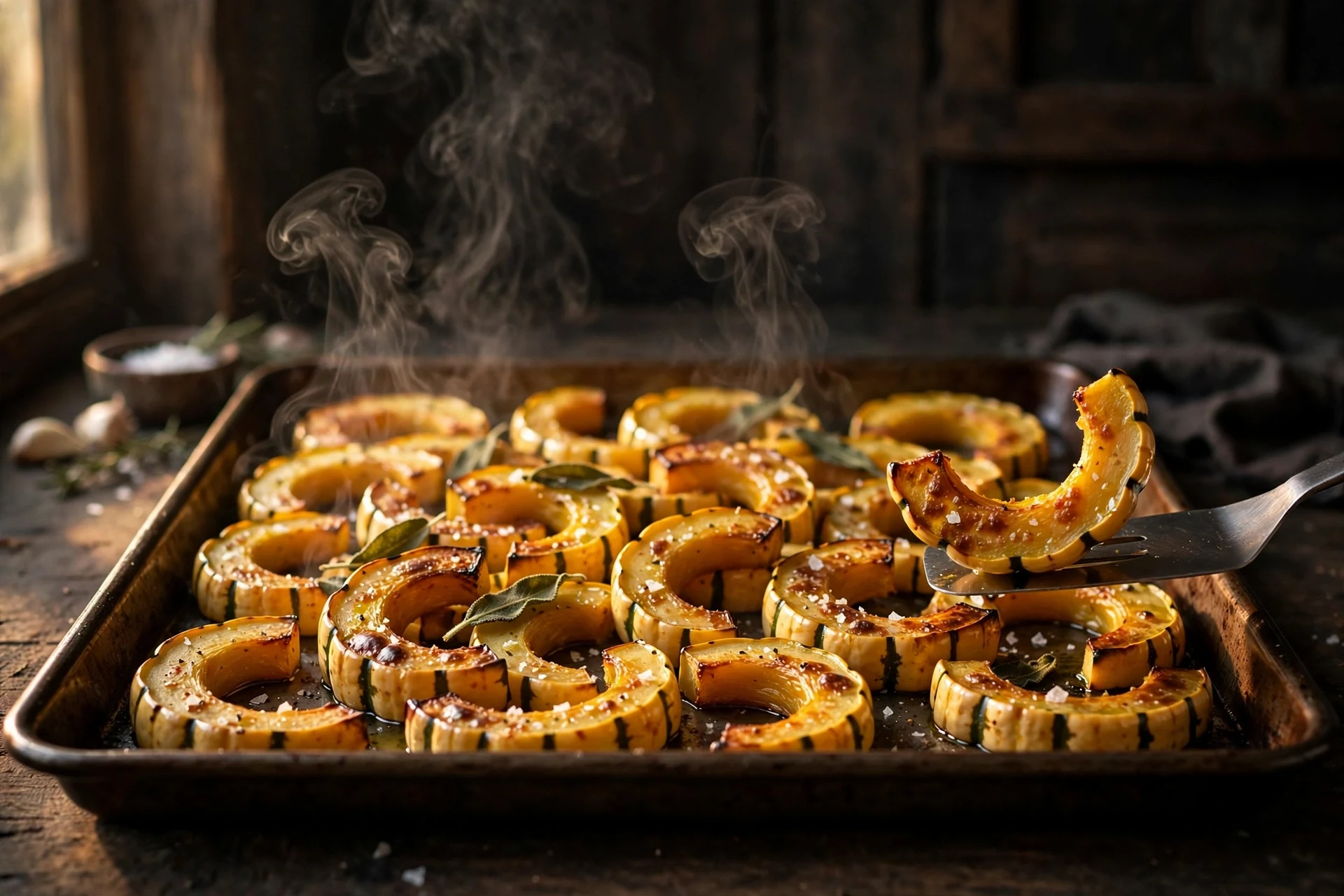
Do not rush the first fifteen minutes. The squash needs undisturbed contact with the pan to build its crust, and turning it early tears the very browning you have been waiting for. Patience here is the whole recipe.
Crispy Sage in Thirty Seconds
Crispy sage is the garnish that makes this roasted delicata squash taste finished, and it borrows its oil from the recipe’s own allowance. Half a tablespoon, already counted, is plenty for twelve leaves in a small skillet.
The leaves must be dry and the oil properly hot. Lower them in one at a time, and they will sizzle, curl and go glassy in about half a minute. Pull them the second they turn bright and crisp; ten extra seconds takes sage from fragrant to bitter.
Raw chopped sage stirred into a roast reads grassy and a little medicinal. The same leaves, fried, turn nutty and delicate, with a shattering texture that stands in for the crunch people expect from nuts or breadcrumbs on a holiday side.
Pale, Soggy or Scorched: Delicata Fixes
Pale and soggy almost always means a crowded pan. When the pieces touch, the squash steams in its own juice instead of roasting. Use two pans, rotate them between racks halfway, and give every crescent its own patch of hot metal.
Scorched edges with a firm center point to uneven slicing. Pieces a half inch thick finish together; the odd thick chunk will always lag. A quick sort on the pan, thickest pieces toward the outer edges where the heat runs stronger, evens things out.
If the squash tastes sweet but flat, it is under salted, not under sugared. Salt before roasting, not after, so it seasons through the flesh as it cooks, and keep the flaky salt for the table where it lands as a bright finish.
Leftovers reheat beautifully if you treat them like the roast they were. Eight to ten minutes in a 400 degree oven on a bare pan brings the edges back; the microwave returns them to softness and is best saved for soup bound squash.
Air Fryer, Warm Spice and the Seed Saving Trick
For the air fryer, work in two batches so the basket stays uncrowded. Cook the tossed crescents at 400 degrees for 10 to 12 minutes, shaking the basket once, until the edges caramelize. The sage still wants its thirty seconds in a skillet.
A warm spice variation suits the December table as well as the November one: replace the cinnamon with a half teaspoon of smoked paprika and a pinch of cayenne. The method is the same one behind our maple roasted brussels sprouts with cranberries, hot air, dry surfaces, spice with a job to do.
Save the seeds you scooped out. Rinsed, dried and roasted at 325 degrees with a pinch of salt for about 12 minutes, they become the same crunchy garnish as the pepitas, at no cost and with a very satisfying thrift to them.
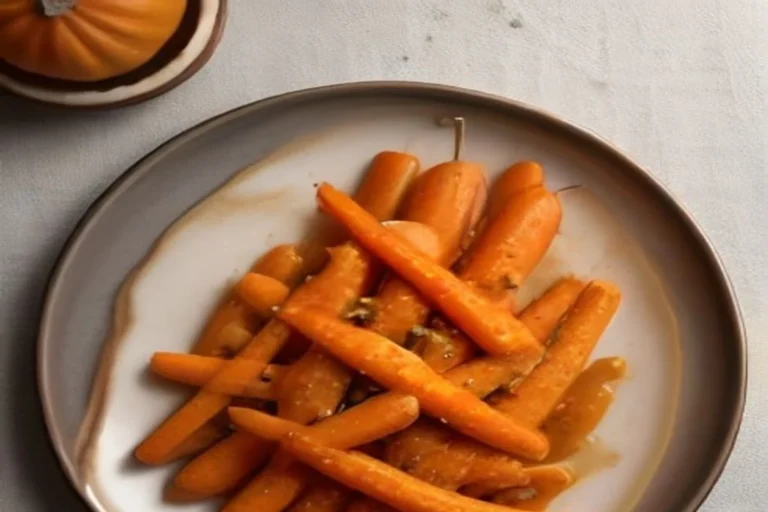
For a second vegetable on the same pan plan, our healthy honey glazed carrots roast at the same temperature and keep this side company in the oven, which on Thanksgiving is worth almost as much as the food.
Roast It in the Morning, Re-Crisp It While the Turkey Rests
Thanksgiving oven space is a negotiation, and this dish negotiates well. Roast the squash fully in the morning, cool it on the pan, and hold it covered in the fridge. The edges soften, but that is a temporary condition, not a loss.
When the turkey comes out to rest, the oven is hot and empty: the exact moment this side was designed for. Spread the squash on its pan and give it 8 to 10 minutes at 400 degrees, and the edges crisp again as if nothing had happened.
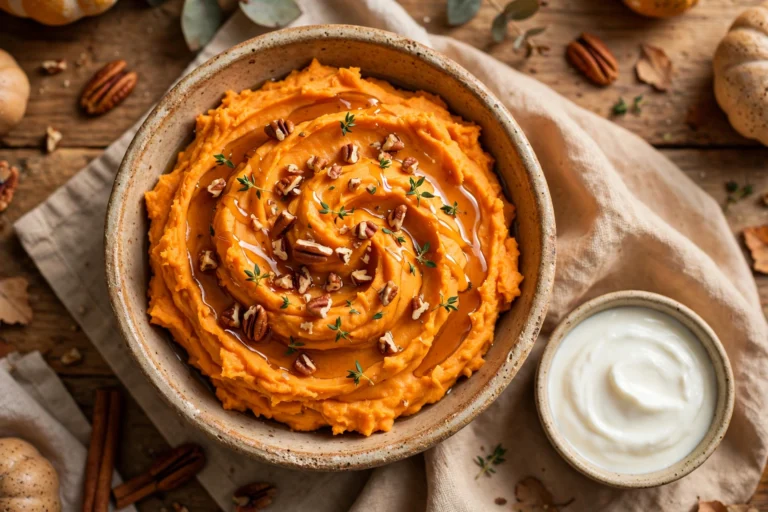
Keep the finishes back until serving. Crispy sage and toasted seeds go on at the table, over the reheated squash, next to our healthy herb roasted turkey breast and the healthy sweet potato casserole, and nobody will guess the pan left the oven hours after the bird.
For a smaller table, the recipe halves cleanly on one pan. For a crowd, it doubles across two pans without a single change to time or temperature, as long as the pieces keep their breathing room.
The Side Dish That Tastes Like You Used Butter
Roasted delicata squash earns its place on the holiday table the honest way: hot pan, dry squash, measured maple and a garnish with real crunch. It is the side people reach for twice and ask about once, and it will not cost you the rest of the plate.
Make it once this November and it tends to become the standing request. From our kitchen to yours, happy Thanksgiving. Nora Ellis
Questions Home Cooks Ask About Roasting Delicata Squash
Do you really not peel delicata squash before roasting?
Really. Delicata skin is thin and tender, and it turns supple with crisped edges in a hot oven, unlike the thick rind of butternut or acorn squash. Just scrub the squash well and dry it thoroughly before slicing, since the skin stays on and surface water fights browning.
How do I pick a ripe delicata squash at the store?
Choose one that is deep yellow with green stripes, hard enough to resist a fingernail, and heavy for its size. Avoid soft spots or mold near the stem. Whole delicata keeps three to four weeks in a cool, dry spot, so you can buy it well before Thanksgiving.
Can I roast delicata squash ahead of time for Thanksgiving?
Yes, and this recipe is built for it. Roast the crescents fully in the morning, refrigerate them on the pan, then re-crisp them at 400 degrees for 8 to 10 minutes while the turkey rests. Add the crispy sage and pepitas only at serving so they stay crunchy.
Why did my delicata squash come out pale and soggy?
The pan was crowded, so the squash steamed instead of roasting. Spread the pieces in a single layer with gaps between them, use two pans if needed, dry the squash well after washing, and let the first 15 minutes pass without moving the pieces so the crust can form.
Can I make roasted delicata squash in the air fryer?
Yes. Toss the crescents exactly as written and cook them in two uncrowded batches at 400 degrees for 10 to 12 minutes, shaking the basket once halfway. The edges caramelize a little faster than in the oven, so start checking at 9 minutes.
Roasted Delicata Squash with Crispy Sage and Maple
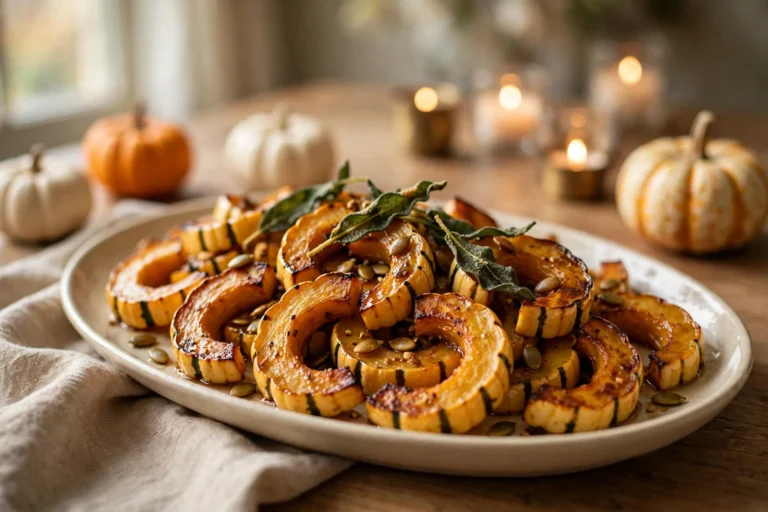
The Thanksgiving squash that needs no peeling and no butter: delicata half moons roasted at high heat with a measured gloss of maple, finished with sage crisped in the recipe’s own oil and toasted pepitas. About 105 calories a serving against roughly 165 for the same squash roasted with butter and a brown sugar glaze, with about 4 grams of fiber and more than a full day of vitamin A in the pile. Roasts in the morning and re-crisps in 10 minutes while the turkey rests.
- Total Time: 45 minutes
- Yield: 8 servings 1x
Ingredients
- 3 medium delicata squash, about 2 1/2 pounds total
- 2 tablespoons olive oil, divided
- 2 tablespoons pure maple syrup
- 3/4 teaspoon fine sea salt
- 1/4 teaspoon black pepper
- 1/4 teaspoon ground cinnamon
- 12 fresh sage leaves, whole, plus 1 tablespoon chopped fresh sage
- 2 tablespoons pepitas (pumpkin seeds)
- Flaky sea salt, for finishing
Instructions
- Heat the oven to 425 degrees Fahrenheit (218 degrees Celsius). Line a large rimmed sheet pan with parchment paper, or use two pans if the pieces will not fit in one uncrowded layer.
- Scrub the squash and pat them dry. Trim off the ends, halve each squash lengthwise, and scoop out the seeds with a spoon.
- Slice the halves crosswise into half moons about 1/2 inch thick, keeping the pieces as even as you can so they finish together.
- In a large bowl, toss the squash with 1 1/2 tablespoons of the olive oil, the maple syrup, fine salt, pepper, cinnamon and the chopped sage until every piece glistens.
- Spread the squash on the pan in a single layer with space between the pieces, flat sides down where they fall that way. Roast for 15 minutes without touching them.
- Flip each piece with tongs or a thin spatula. Roast 10 to 15 minutes more, until the edges are deeply golden and a knife slides into the thickest piece without resistance.
- While the squash finishes, heat the remaining 1/2 tablespoon of oil in a small skillet over medium heat. Fry the whole sage leaves for 20 to 30 seconds, until crisp and bright green, then drain them on a paper towel with a pinch of salt.
- Toast the pepitas in the same dry skillet for 1 to 2 minutes, shaking the pan, until they puff and pop.
- Pile the squash onto a warm platter. Drizzle over any pan juices, scatter the pepitas and crispy sage on top, finish with flaky salt, and serve warm.
- Prep Time: 15 minutes
- Cook Time: 30 minutes
One Comment
Comments are closed.