
Healthy Scalloped Potatoes: Golden, Layered and Light
In this article:
- Why These Healthy Scalloped Potatoes Eat Like the Real Gratin
- Slices at 1/8 Inch: The Thickness That Cooks Evenly
- A Milk Sauce That Sets Instead of Splitting
- The Numbers, Side by Side: 185 Against 300
- Ingredients for the Healthy Scalloped Potatoes
- Layering and Baking the Healthy Scalloped Potatoes
- Watery, Split or Still Crunchy: Gratin Fixes
- The Thanksgiving Timeline for This Dish
- Swaps: Russets, Sweet Potatoes and a Gluten Free Sauce
- The Side Dish That Earns Its Corner of the Plate
- Scalloped Potato Questions, Answered Before the Holiday
These healthy scalloped potatoes keep everything the table expects from the gratin, the tender layers, the golden top, the sauce that spoons like velvet, and serve it at about 185 calories a portion against roughly 300 for the classic built on cream and handfuls of cheese. The lightening is structural, not cosmetic.
There is no cauliflower hiding in the sauce and no fat free cheese melting into rubber. The recipe keeps real butter, real milk and real Gruyère, and spends them where they are tasted most: a sauce infused with garlic and thyme, and a measured layer of strong cheese grated fine so it covers like a blanket.
It is also built for the real choreography of Thanksgiving. The dish assembles the day before, bakes while the turkey rests, and holds its texture through a long, talkative dinner, which is more than can be said for most of the sides competing for its corner of the table.
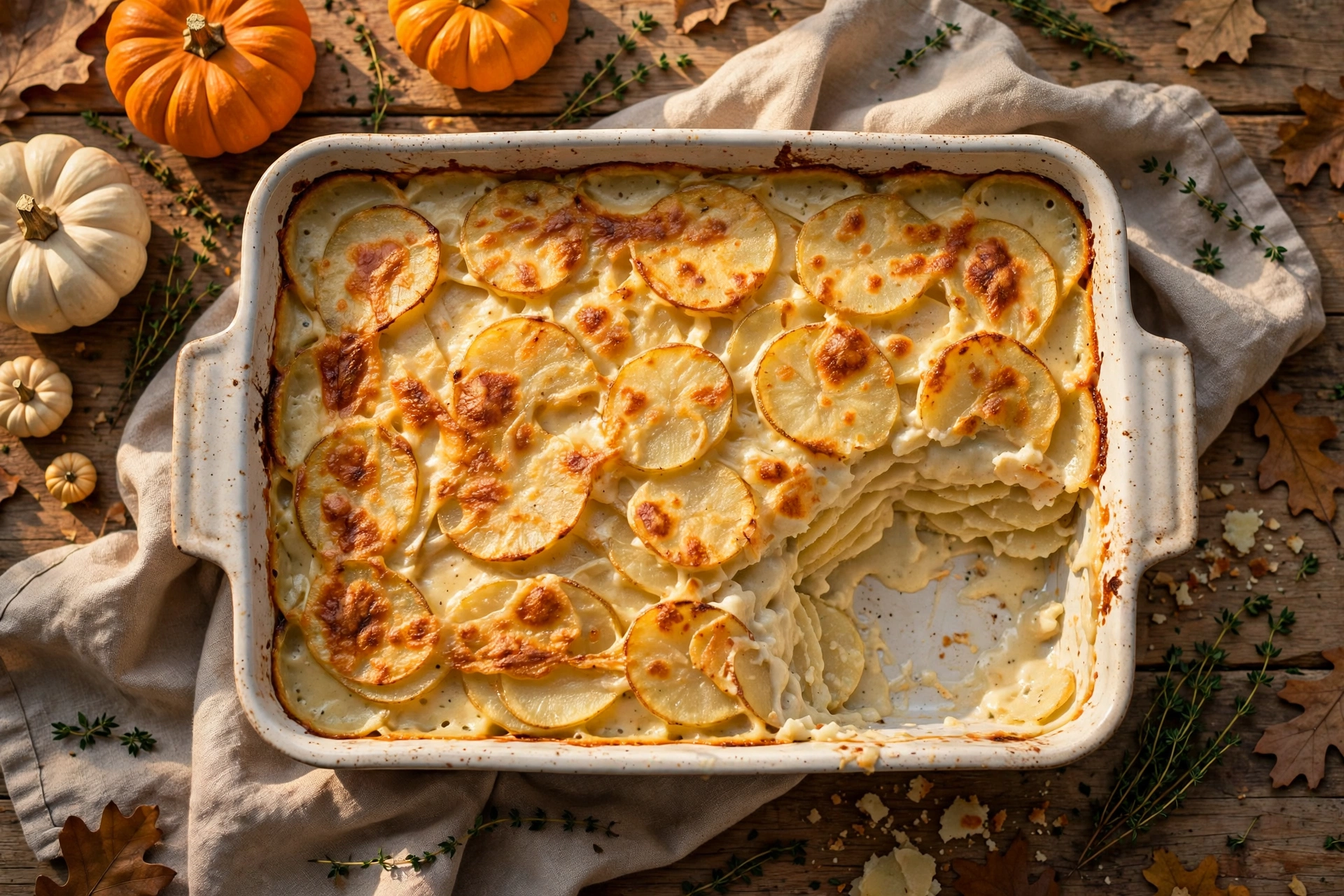
Why These Healthy Scalloped Potatoes Eat Like the Real Gratin
Healthy scalloped potatoes succeed because the dish was always a starch sauce wearing a cheese hat. As the potato slices bake, they release their own starch into the milk around them, and that starch, not cream, is what sets a scalloped potato sauce into soft, sliceable layers.
Yukon Gold potatoes are the right variety for the job. Their flesh is naturally buttery and their starch level sits between waxy and floury, so the slices hold their shape through a long bake while still thickening the sauce that surrounds them. Russets thicken harder but slump; red potatoes stay firm and never quite marry the sauce.
The cheese strategy does the rest. A half cup of aged Gruyère, grated on the fine side of the box grater, delivers more flavor per gram than two cups of mild cheddar, because aging concentrates flavor while fine grating multiplies surface area. Every slice meets cheese, which is all anyone at the table actually registers.
Temperature discipline finishes the work. The bake starts covered, so the slices cook through in their own steam before the top ever browns, and finishes uncovered for color. A gratin rushed at high heat gives you the classic disappointment: scorched top, crunchy middle, soup at the bottom.
Slices at 1/8 Inch: The Thickness That Cooks Evenly
One eighth of an inch, about 3 millimeters, is the thickness this dish lives or dies by. At that gauge the slices are supple enough to shingle tightly, they cook through in the time the sauce needs to set, and they keep a gentle bite instead of dissolving into mash.
A mandoline makes the thickness boring, which is what you want. Boredom here means forty slices of identical gauge, and identical gauge means the whole dish finishes at the same moment. Set the blade, use the guard, and let the last stub of each potato go to the soup pot rather than to your fingertips.
A sharp chef knife and patience can match it. Halve each potato lengthwise first so it sits flat and stable, then slice slowly, checking the first few against a ruler until your hands learn the measure. Slight variation is forgivable; a mix of wafers and planks is not.
Drop the slices into a bowl of cold water as you work. Ten minutes of soaking pulls off the loose surface starch that would otherwise glue the layers into a solid slab, and it keeps the cut faces pale. Drain and pat them dry before layering, because wet slices dilute the sauce you just built.
A Milk Sauce That Sets Instead of Splitting
The sauce starts as an infusion, not a roux. Butter melts with onion and garlic until soft, then the milk goes in with thyme and warms slowly, so the aromatics perfume the liquid before any thickener arrives. A cold milk sauce poured over raw potatoes tastes of very little; an infused one tastes cooked from the inside.
The single tablespoon of cornstarch is whisked into a splash of the cold milk and stirred in at the end. It is insurance, not structure: the potato starch does most of the setting during the bake, and the cornstarch simply guarantees the sauce holds on a buffet table without weeping.
Low fat milk splits when it is boiled hard or shocked by acid, and this recipe avoids both. The sauce comes only to a bare simmer before it meets the potatoes, there is no wine, no mustard and no lemon anywhere near it, and the oven does the rest at a moderate, even heat.
Season the sauce a touch more boldly than tastes right in the pan. Potatoes are famously thirsty for salt, and they will take their share from the sauce as they bake. A sauce that tastes perfectly seasoned on the stove will serve underseasoned at the table, so aim a half step past perfect.
The Numbers, Side by Side: 185 Against 300
A classic scalloped potato, built on heavy cream, a quarter pound of butter and two cups of cheddar, serves near 300 calories a portion, with the fat alone accounting for half of it. This version lands at about 185 calories a serving, with roughly 6 grams of protein and about 5 grams of fat.
The savings are itemized, not magical. Cream becomes 2 percent milk, which removes the largest single block. Two cups of cheese become a half cup of a stronger one, grated fine. Butter shrinks from a stick to 2 teaspoons, kept because its flavor carries through milk in a way oil never quite imitates.
What does not shrink is the portion. The dish still fills a 2 quart casserole and serves eight honest scoops, because a lightened side that needs a smaller serving to make its numbers work is an accounting trick, not a recipe.
Yukon Golds bring potassium and vitamin C along with their starch, figures any reader can check against the USDA data for the variety.
Next to the turkey, this is the math that matters across a whole plate. The same reader choosing our healthy mashed potatoes for one gathering and this gratin for another keeps both traditions alive, at a combined cost lower than a single serving of the old cream route.
Ingredients for the Healthy Scalloped Potatoes
- 2 1/2 pounds (1.1 kg) Yukon Gold potatoes
- 2 teaspoons butter, plus a little more for the dish
- 1 small yellow onion, finely chopped (about 3/4 cup)
- 2 garlic cloves, minced
- 2 cups (480 ml) 2 percent milk
- 1 tablespoon cornstarch
- 1 teaspoon fresh thyme leaves, or 1/2 teaspoon dried thyme
- 1 teaspoon fine sea salt
- 1/2 teaspoon black pepper
- 1/4 teaspoon freshly grated nutmeg
- 1/2 cup (50 g) finely grated Gruyère cheese
- 1 tablespoon grated Parmesan cheese
- 1 teaspoon chopped fresh chives or thyme leaves, to serve (optional)
Read the list once and the method of these healthy scalloped potatoes is already visible: a short sauce, a modest amount of strong cheese, and potatoes doing the heavy lifting. The Gruyère should be a piece you grate yourself, because pre grated cheese carries anti caking powders that keep it from melting smoothly into a sauce like this one.
Layering and Baking the Healthy Scalloped Potatoes
- Heat the oven to 375 degrees Fahrenheit (190 degrees Celsius). Butter a 2 quart baking dish, about 9 by 9 inches.
- Scrub the potatoes and peel them only if the skins are tough. Slice them 1/8 inch (3 mm) thick on a mandoline or with a sharp knife, and drop the slices into a large bowl of cold water for 10 minutes. Drain well and pat dry with a clean towel.
- Melt the butter in a medium saucepan over medium heat. Add the onion and cook until soft and translucent, 3 to 4 minutes. Stir in the garlic and cook 30 seconds more, until fragrant.
- Pour in the milk and add the thyme, salt, pepper and nutmeg. Warm the mixture, stirring now and then, until it steams and reaches a bare simmer, about 5 minutes. Do not let it boil.
- Whisk the cornstarch with 2 tablespoons of cold water in a small cup. Stir the slurry into the simmering milk and cook 1 minute, until the sauce lightly coats a spoon. Take the pan off the heat.
- Arrange half the potato slices in the dish in tight, overlapping rows. Pour over half the sauce and scatter half the Gruyère. Repeat with the remaining potatoes, sauce and Gruyère, then finish with the Parmesan.
- Cover the dish tightly with foil and bake for 45 minutes, until the potatoes at the center yield easily to the tip of a knife.
- Remove the foil and bake 25 to 30 minutes more, until the top is deeply golden in spots and the sauce bubbles thickly at the edges.
- Rest the dish for 15 minutes before serving. The sauce sets as it stands, so the first spoonful lifts in layers instead of sliding. Scatter the chives or thyme over the top.
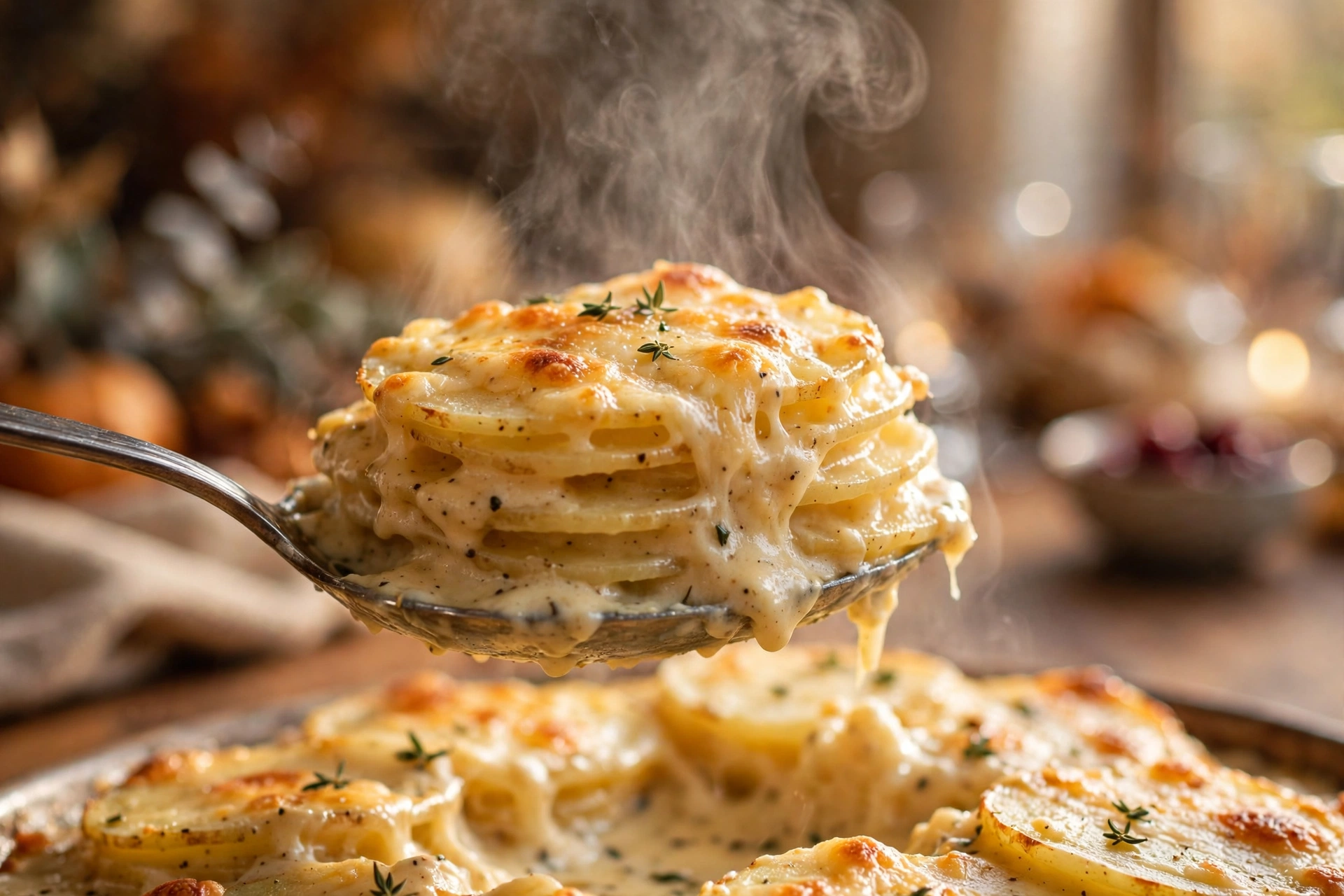
Watery, Split or Still Crunchy: Gratin Fixes
A watery gratin was almost always assembled with wet potatoes. Slices that go from the soaking bowl straight into the dish carry tablespoons of water with them, and the sauce pays for it. Dry the slices properly, and if a baked dish still pools, give it ten more minutes of rest; the potatoes keep drinking sauce as they stand.
A split sauce, grainy and separated at the edges, means the milk boiled at some point or the oven ran hot. It cannot be unboiled, but it can be disguised: rest the dish a full 20 minutes, spoon the servings from the center outward, and know that the flavor survived even when the emulsion did not.
Crunchy slices under a browned top mean the covered half of the bake was cut short. Cover the dish again with foil, return it to the oven for 15 minutes, and test at the center rather than the edge, because the edges always cook first and lie to you about the middle.
A pale, soft top is the easiest fix of all. Five minutes under a hot broiler, watched without leaving the room, gives the gratin its color. Set a timer and stay close: the distance between golden and scorched at broiler heat is about ninety seconds.
The Thanksgiving Timeline for This Dish
Two days before, buy the potatoes and grate the cheese; grated Gruyère keeps its flavor for days in a sealed container, and one less job on the day itself is worth more than any single recipe. One day before, slice the potatoes, build the sauce and assemble the whole dish, covered, in the fridge.
An assembled dish waiting overnight in its sauce is not a compromise. The slices drink in the garlic and thyme as they sit, and many cooks, us included, find the flavor better on the second day than the first. Bring the dish to room temperature for 30 minutes before it meets the oven, so the bake time stays honest.
On the day, the gratin goes into the oven as the turkey comes out. The bird needs 30 to 45 minutes of rest before carving anyway, and the covered half of this bake fits inside that window neatly; the uncovered finish happens while the table is being set and the healthy turkey gravy comes together on the stove.
If the oven is crowded, the dish also holds gracefully. Bake it fully an hour ahead, keep it covered in a warm spot, and give it 8 uncovered minutes in a hot oven just before serving.
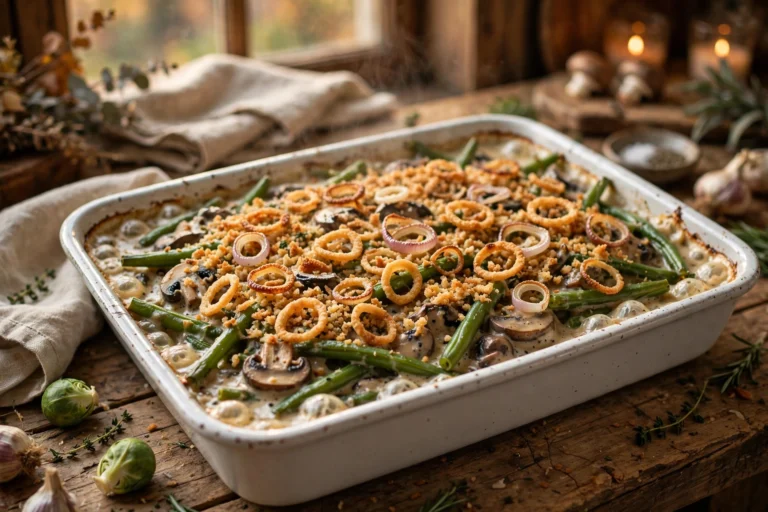
Around it, the rest of the lightened table is already planned: healthy green bean casserole for the traditionalists, and healthy cauliflower mash for the second potato vote.
Swaps: Russets, Sweet Potatoes and a Gluten Free Sauce
Russet potatoes work in this method with one adjustment: their higher starch thickens the sauce faster, so add a quarter cup more milk and check the center ten minutes early. The slices will be softer and less defined, closer to a bake than a gratin, which some families prefer.
A half and half layering, sweet potatoes for the bottom half and Yukon Golds on top, gives a beautiful two tone dish with a sweeter profile. It leans toward our healthy sweet potato casserole in spirit, so choose it when the menu wants color more than it wants classic.
The sauce is one small step from gluten free as written, because the thickener is cornstarch rather than flour. Confirm your cornstarch is certified if the table requires it, and the whole dish serves a gluten free guest without a separate pan or an apology.
For a dairy free table, oat milk and a plant butter swap in cleanly, and the cheese can be replaced by a quarter cup of nutritional yeast stirred into the sauce for savoriness. The result is a different dish, lighter and less rich, but the method, the slicing and the bake stay exactly the same.
The Side Dish That Earns Its Corner of the Plate
Healthy scalloped potatoes do not ask the table to lower its standards; they ask the cook to spend butter, cheese and cream only where they can be tasted. Slice thin, infuse the milk, grate the strong cheese fine.
The gratin that reaches the table is then the one everyone remembers from holidays before anyone counted anything. Happy Thanksgiving from the Nourish Table kitchen. Nora Ellis
Scalloped Potato Questions, Answered Before the Holiday
Do I have to use a mandoline for these scalloped potatoes?
No, but the slices must be evenly 1/8 inch thick, whichever tool you use. A mandoline simply makes evenness automatic. With a knife, halve each potato so it sits flat, slice slowly, and check your thickness against a ruler for the first few slices until your hands learn it.
Can I assemble healthy scalloped potatoes the day before Thanksgiving?
Yes, and the flavor improves for it. Assemble the dish completely in its sauce, cover tightly and refrigerate for up to 24 hours. Let it stand at room temperature for 30 minutes before baking, and add about 10 minutes to the covered bake since it starts cold.
Why did the sauce in my scalloped potatoes turn out watery?
The usual cause is slices that went into the dish still wet from soaking, which dilutes the sauce as it bakes. Pat the slices dry, and rest the finished gratin for a full 15 minutes, because the potatoes keep absorbing sauce as they stand and the texture firms up noticeably.
Can I freeze scalloped potatoes?
It is not recommended. Milk based sauces separate on thawing and the potato slices turn grainy, so the dish loses the texture that makes it worth serving. Leftovers keep well for 3 days in the fridge and reheat covered at 350 degrees Fahrenheit for about 20 minutes.
What is the difference between scalloped potatoes and potatoes au gratin?
Traditionally, scalloped potatoes are baked in a milk or cream sauce with no cheese, while au gratin adds cheese and often a browned crumb top. This recipe sits between the two: a milk sauce like a classic scalloped potato, with a measured layer of Gruyère for the gratin flavor.
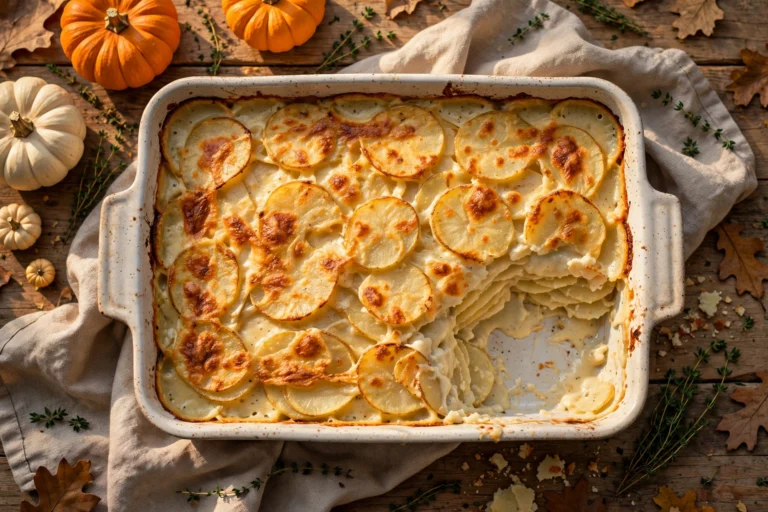
Healthy Scalloped Potatoes
Thin Yukon Gold slices layered in a garlic and thyme infused milk sauce, with a measured half cup of finely grated Gruyère doing the work of two cups of mild cheese. No cream, no cauliflower in the sauce, and the potatoes set the sauce themselves as they bake. About 185 calories a serving against roughly 300 for the classic gratin, and the dish assembles a day ahead for Thanksgiving.
- Total Time: 1 hour 40 minutes
- Yield: 8 servings 1x
Ingredients
- 2 1/2 pounds (1.1 kg) Yukon Gold potatoes
- 2 teaspoons butter, plus a little more for the dish
- 1 small yellow onion, finely chopped (about 3/4 cup)
- 2 garlic cloves, minced
- 2 cups (480 ml) 2 percent milk
- 1 tablespoon cornstarch
- 1 teaspoon fresh thyme leaves, or 1/2 teaspoon dried thyme
- 1 teaspoon fine sea salt
- 1/2 teaspoon black pepper
- 1/4 teaspoon freshly grated nutmeg
- 1/2 cup (50 g) finely grated Gruyère cheese
- 1 tablespoon grated Parmesan cheese
- 1 teaspoon chopped fresh chives or thyme leaves, to serve (optional)
Instructions
- Heat the oven to 375 degrees Fahrenheit (190 degrees Celsius) and butter a 2 quart baking dish, about 9 by 9 inches.
- Slice the potatoes 1/8 inch (3 mm) thick on a mandoline or with a sharp knife. Soak the slices in cold water for 10 minutes, then drain well and pat dry.
- Melt the butter in a medium saucepan over medium heat. Add the onion and cook until soft and translucent, 3 to 4 minutes. Stir in the garlic and cook 30 seconds more.
- Pour in the milk and add the thyme, salt, pepper and nutmeg. Warm, stirring now and then, until the mixture steams and reaches a bare simmer, about 5 minutes. Do not let it boil.
- Whisk the cornstarch with 2 tablespoons of cold water and stir the slurry into the milk. Cook 1 minute, until the sauce lightly coats a spoon, then remove from the heat.
- Layer half the potato slices in the dish in tight overlapping rows. Pour over half the sauce and scatter half the Gruyère. Repeat with the remaining potatoes, sauce and Gruyère, then finish with the Parmesan.
- Cover tightly with foil and bake for 45 minutes, until the center potatoes yield easily to the tip of a knife.
- Remove the foil and bake 25 to 30 minutes more, until the top is deeply golden in spots and the sauce bubbles thickly at the edges.
- Rest for 15 minutes so the sauce sets, scatter the chives or thyme over the top, and serve.
- Prep Time: 25 minutes
- Cook Time: 1 hour 15 minutes
One Comment
Comments are closed.