
Healthy Turkey Gravy: Silky, Savory and Lump-Free
In this article:
What Makes This Healthy Turkey Gravy Special
Healthy turkey gravy works when the pan drippings do the heavy lifting, and this recipe is built entirely around that idea. Instead of masking bland stock with butter and cream, it starts with the caramelized juices left in your roasting pan.
A short flour roux thickens those juices into a glossy sauce that tastes deeply savory yet feels light on the palate. It is the difference between a sauce that accompanies the meal and one that defines it.
The anti-lump technique is the real secret: warm liquid goes into the roux a little at a time, with constant whisking, so the starch hydrates evenly and never clumps. Fresh thyme and sage go in near the end, which keeps their perfume bright instead of muddy.
Skimming the fat from the drippings first removes the grease without removing the flavor, so each spoonful coats mashed potatoes silkily instead of sitting oily on top. The result is a restaurant-smooth gravy you can make while the turkey rests, with no blender and no last minute panic.
Healthy turkey gravy is the quiet hero of the Thanksgiving table, the glossy sauce that pulls turkey, potatoes and stuffing into one perfect bite. Picture the gravy boat making its slow circle around the table, steam curling up, everyone leaning in for a second pour.
This version delivers that moment with a sauce that is silky rather than gluey, deeply savory rather than salty, and light enough that nobody feels weighed down before pie. Every element earns its place, from the browned drippings to the last thyme leaf.
It starts the way all great gravies start, with real drippings from your roasted bird, then builds body with a simple flour roux and fresh herbs. Thirty minutes is all it takes, most of it hands-off simmering while you carve.
You can even make it two days ahead and reheat it in five minutes, which might be the best gift this recipe gives a busy holiday cook. One taste and the table will agree: this is the gravy Thanksgiving deserves.
Flavor Notes and Texture Contrast
The first spoonful tastes like the best part of the roast itself, concentrated: browned turkey juices, sweet shallot and a whisper of garlic. The roux adds a faint nuttiness underneath, the flavor of flour cooked just long enough to lose its raw edge and turn pale gold.
Then the herbs arrive, thyme’s earthy perfume and sage’s soft pine note, lifting the richness instead of competing with it. They go in late on purpose, so their brightness survives the simmer.
Texture is where this gravy earns the word silky: it flows off the spoon in a slow ribbon and settles over food in an even, glossy coat. There is no pastiness, no floury chalk on the tongue, just a clean savory finish that makes you reach for more.
A pinch of black pepper adds gentle warmth at the back, and a teaspoon of Worcestershire brings the kind of deep umami you cannot quite name. You taste layered complexity, never a single identifiable shortcut.
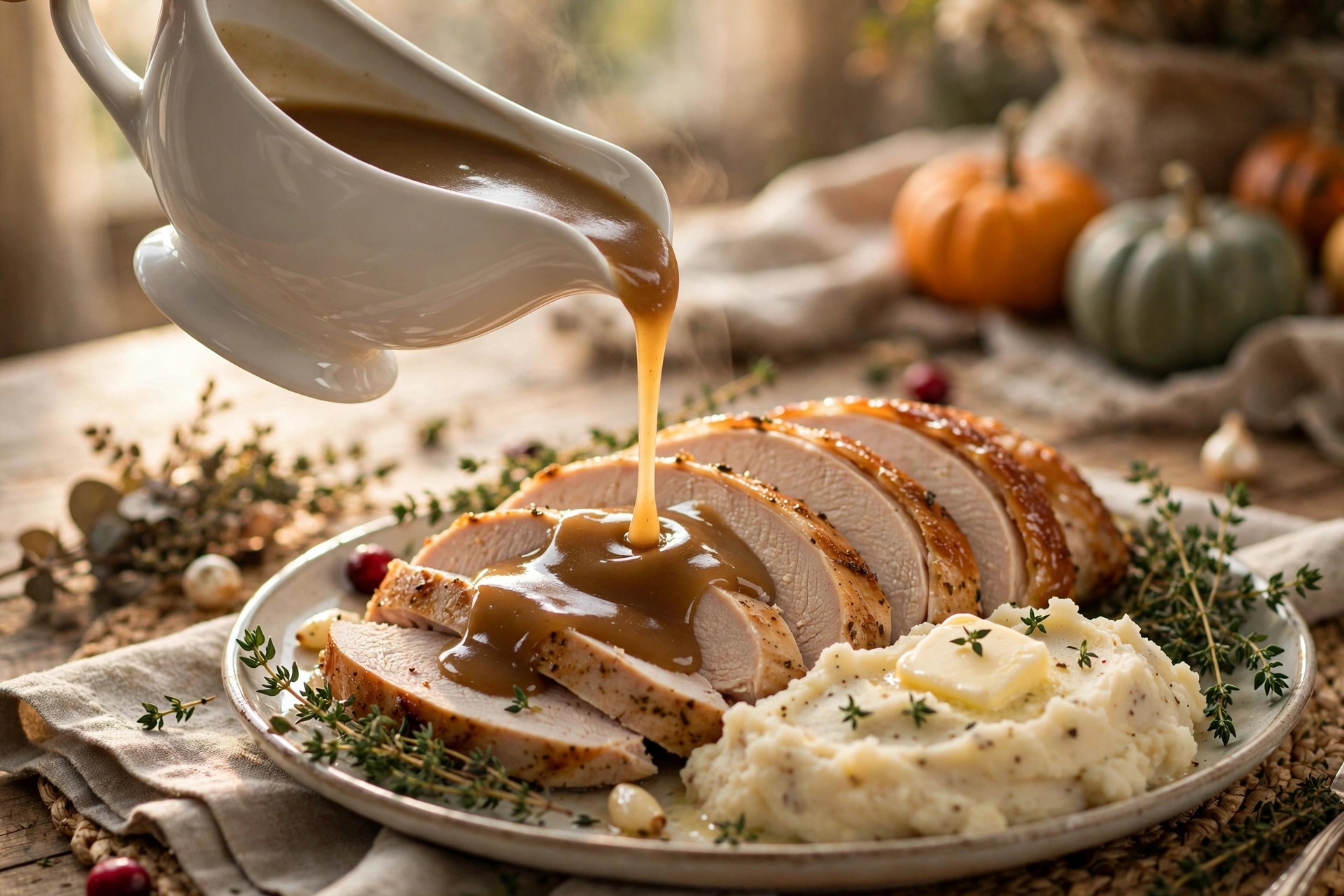
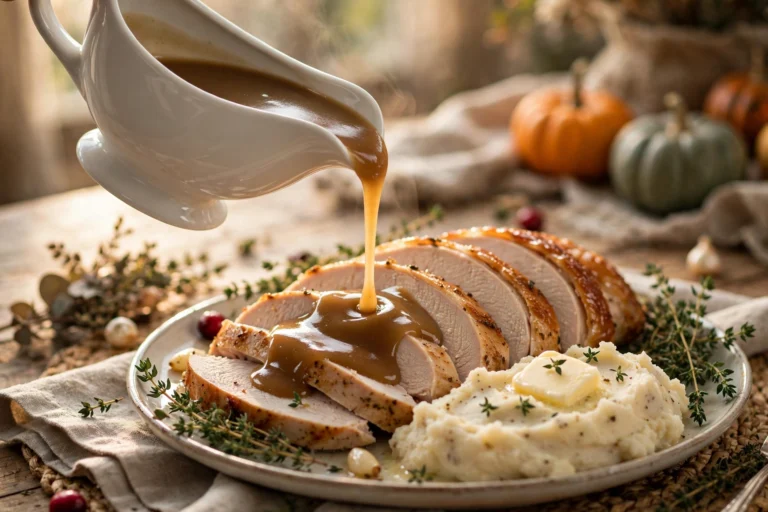
Visually it glows, a warm mahogany gold that catches the light in the gravy boat. Poured over a slice of healthy herb roasted turkey breast, it pools in the valleys and clings to every ridge. Over healthy mashed potatoes, it sinks into the swirls instead of sitting on top like a separate layer.
Serve it hot and the aroma does half the work, savory steam with green herbal notes that smells unmistakably like Thanksgiving. Let it cool slightly and it thickens just enough to cling, which is exactly how you want it on healthy cornbread stuffing.
The contrast that matters most is richness against lightness: all the roasted depth of a classic gravy, none of the heavy butter slick. Guests taste indulgence; you know the whole batch used just two tablespoons of fat.
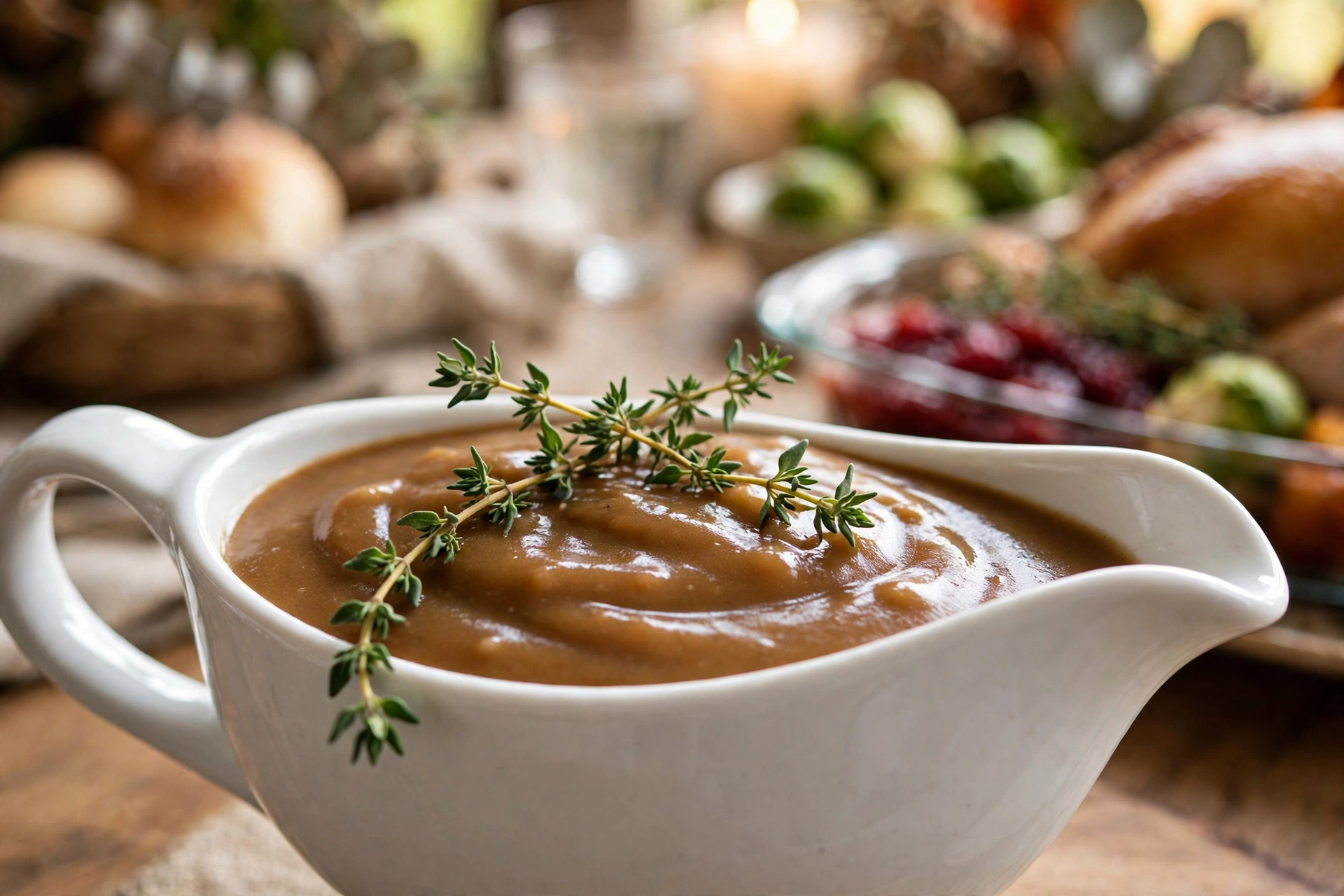
For the full Thanksgiving effect, serve the gravy in a warmed boat so it stays fluid through second helpings. A few fresh thyme sprigs on top signal the herbs inside and make the table look cared for. Small details like these turn a simple sauce into a centerpiece.
Why It Fits Your Schedule
Thanksgiving cooking is a logistics puzzle, and this gravy solves its piece elegantly. It needs exactly the thirty minutes your turkey spends resting under foil, the window when the oven is free and the carving board is waiting.
While the bird rests, you deglaze the pan, whisk the roux and simmer, and the gravy is ready before the first slice is cut. The whole process fits inside a window you were waiting through anyway.
Everything happens in one saucepan with tools you already own: a whisk, a strainer and a measuring cup. There is no blender to wash, no separate stock to simmer for hours, no second trip to the store. That make-ahead option is what turns healthy turkey gravy from a last minute scramble into the calmest dish on your holiday timeline.
Make it Tuesday or Wednesday, refrigerate it, and reheat it Thursday in five minutes with a splash of broth and a good whisking. It also scales without drama: double every ingredient for a crowd, use a wider pan, and give the roux one extra minute.
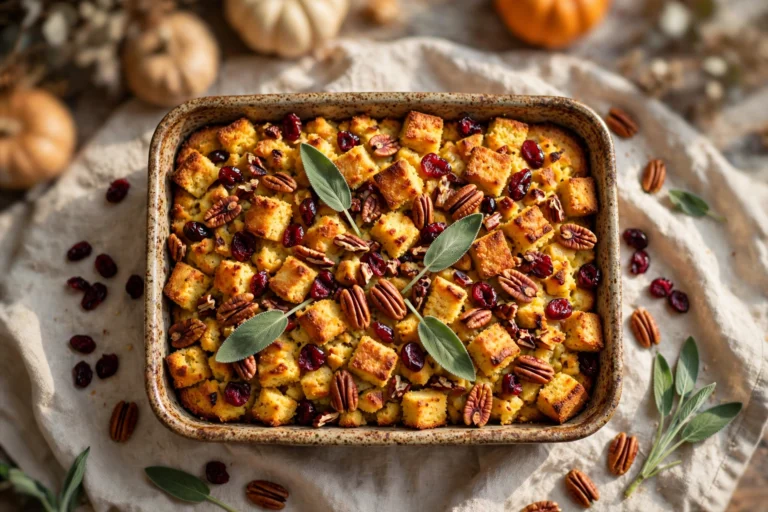
Pair the timing with sides that hold well, like healthy green bean casserole assembled ahead, and your oven schedule stays sane. Fewer moving parts on Thursday morning means more time at the table instead of at the stove.
Diet Conscious Twists
A classic turkey gravy can carry half a cup of butter and a cup of heavy cream; this one builds its body from just two tablespoons of skimmed drippings fat and a light flour roux. Using low-sodium broth to stretch the pan juices keeps the salt in check while the real drippings supply the flavor, so nothing tastes diluted.
Per quarter-cup serving, you get the roasted savor of the holiday with a fraction of the saturated fat, a trade confirmed by typical nutrient data in the USDA FoodData Central database. That is the whole point: flavor first, numbers that behave.
Gluten free cooks can swap the flour roux for a cornstarch slurry, one and a half tablespoons of cornstarch whisked into two tablespoons of cold water, stirred in at a boil. The method stays identical otherwise, and the finish is just as glossy.
Dairy free is automatic if you use the skimmed turkey fat instead of butter, since the recipe contains no milk or cream at all. Watching sodium?
Taste before you salt, because drippings vary wildly, and add it in small pinches at the very end, a habit MedlinePlus recommends for keeping holiday meals heart-friendlier. Small swaps, same celebration: nobody at the table will notice anything missing.
Ingredients
- 2 cups defatted turkey pan drippings, topped up with low-sodium turkey or chicken broth as needed
- 2 tablespoons turkey fat skimmed from the drippings, or unsalted butter
- 3 tablespoons all-purpose flour (see the gluten free swap in Diet Conscious Twists)
- 1 small shallot, finely minced
- 1 clove garlic, minced
- 1 tablespoon chopped fresh thyme leaves, plus a few sprigs for serving
- 1 teaspoon chopped fresh sage leaves
- 1/2 teaspoon fine sea salt, plus more to taste
- 1/2 teaspoon freshly ground black pepper
- 1 teaspoon Worcestershire sauce
Step by Step Instructions
- Pour the pan drippings through a fine mesh strainer into a large measuring cup or fat separator, pressing on the browned bits to release every drop of flavor.
- Let the liquid stand for five minutes, then skim off the fat that rises to the top and reserve 2 tablespoons of it; you should have about 1 1/2 cups of defatted juices.
- Add enough low-sodium turkey or chicken broth to the defatted juices to reach 2 cups total, and warm this liquid in a small saucepan until steaming but not boiling.
- Melt the reserved turkey fat in a medium saucepan over medium heat, add the shallot and garlic, and cook for 2 to 3 minutes until soft and fragrant but not browned.
- Sprinkle the flour over the shallots and whisk constantly for 1 to 2 minutes, until the roux turns pale gold and smells faintly nutty.
- Pour in about 1/2 cup of the warm liquid in a thin stream, whisking vigorously until you have a completely smooth, thick paste with no dry pockets.
- Add the remaining liquid in a slow, steady stream, whisking constantly, then stir in the thyme and sage.
- Bring to a gentle simmer and cook for 5 to 8 minutes, whisking often, until the gravy thickens enough to coat the back of a spoon.
- Stir in the salt, pepper and Worcestershire sauce, simmer 1 minute more, then taste and adjust the seasoning; for the silkiest finish, strain once more through the fine mesh strainer and keep warm until serving.
Secrets for Foolproof Healthy Turkey Gravy
Warm liquid is the single biggest lump preventer: cold broth hitting hot roux seizes the starch into clumps that no amount of whisking fully fixes. Add the first half cup almost drop by drop, whisking until the paste is glassy smooth before you pour faster.
A flat whisk reaches the corners of the pan better than a balloon whisk, so no flour hides in the edges. It is a small tool choice that prevents most lumps before they start.
No fat separator? Pour the strained drippings into a zip-top bag, hold it over a bowl, snip a tiny corner at the bottom and let the juices run out, pinching closed when the fat layer arrives. Or chill the drippings for twenty minutes and lift off the solidified fat with a spoon, an old restaurant trick that never fails.
Cook the roux to pale gold, not white: that extra minute removes the raw flour taste that ruins otherwise good gravy. Your nose knows when it is ready: nutty and warm.
Season at the very end, because drippings reduce as they simmer and early salting almost guarantees an over-salted pot. If the gravy looks thin at minute five, give it three more minutes before you judge; it thickens noticeably as it cools.
Too thick? Whisk in warm broth a quarter cup at a time until it flows. Still lumpy despite your best efforts? Pour it through the strainer and nobody will ever know.
Cooking for twenty? A wide saute pan gives the roux more surface area and keeps a doubled batch lump-free. Keep the finished gravy warm in a preheated thermos for up to one hour if the turkey needs extra resting time. Give it one last vigorous whisking right before pouring.
Variations to Try Next Time
Mushroom lovers can saute 8 ounces of sliced cremini mushrooms in the turkey fat before the shallot goes in, cooking until deeply browned for an earthy, almost meaty gravy. For a caramelized onion version, cook two thinly sliced yellow onions low and slow for twenty minutes until jammy, then proceed with the roux right in the same pan.
Both variations keep the silky base and add a completely different personality. Choose based on your menu, or make a double batch and try both.
No turkey this week? The method works beautifully with roast chicken drippings, and the smaller yield is perfect for a Sunday dinner. Swap the thyme and sage for a teaspoon of chopped fresh rosemary when you want a pine-forward, bolder gravy for game birds.
A pinch of smoked paprika, no more than a quarter teaspoon, adds gentle warmth without turning the gravy orange. A little goes a long way, so measure rather than shake.
For a creamier holiday table, whisk in a quarter cup of warm whole milk at the very end, off the heat, for a paler, milder sauce. Herb butter lovers can swirl in a tablespoon of cold butter just before serving for extra shine, though the gravy is already glossy on its own.
Each twist starts from the same foolproof base, so experiment with confidence. Once the technique is yours, the variations are endless.
A cider-kissed version suits autumn tables: replace half a cup of the broth with unsweetened apple cider for gentle fruity brightness. It pairs especially well with sage-forward turkey. Reduce the Worcestershire slightly so the cider stays in balance.
Keeping It Fresh: Storage Guide
Cool the gravy quickly, then refrigerate it in an airtight container for up to four days; it will gel firmly in the cold, which is completely normal. Reheat it gently in a saucepan over low heat, whisking in a splash of broth as it loosens back into a silky sauce.
Avoid blasting it in the microwave on high, since violent boiling can make a flour-thickened gravy grainy. Low and slow keeps the texture you worked for.
For longer keeping, freeze the cooled gravy in portion-sized containers or ice cube trays for up to three months. Thaw overnight in the refrigerator, then reheat low and slow with a little extra broth, whisking until smooth.
Thanksgiving timeline: make the gravy Tuesday or Wednesday, refrigerate, and reheat Thursday while the turkey rests, which frees your stovetop for last minute sides. If it separates slightly after freezing, a vigorous whisking or a quick pass with an immersion blender brings it right back. Label every container with the date, because frozen gravy all looks the same by January.
Conclusion
Healthy turkey gravy proves that the lightest sauce on the Thanksgiving table can also be the most flavorful one. Real drippings, a careful roux, fresh herbs and a patient whisk do all the work, no heavy cream required. Make it ahead, pour it generously, and watch the gravy boat come back empty.
This is the kind of recipe that quietly becomes tradition, requested every November without anyone quite remembering when it started. Your turkey deserves nothing less.
FAQ
Can I make healthy turkey gravy if my turkey did not produce many drippings?
Yes. Use low-sodium turkey or chicken broth as the full 2 cups of liquid and start the roux with 2 tablespoons of unsalted butter instead of turkey fat. To recover some roasted depth, brown the shallot a little deeper and add an extra teaspoon of Worcestershire sauce. The gravy will be slightly milder but still silky and savory.
How do I fix lumpy gravy without starting over?
Pour the gravy through a fine mesh strainer, pressing with the back of a ladle, and the lumps stay behind while the smooth sauce flows through. For stubborn bits, a quick blitz with an immersion blender dissolves them completely. Next time, warm your liquid first and add it gradually while whisking, which prevents lumps from forming at all.
Can I make this turkey gravy gluten free?
Absolutely. Skip the flour roux and thicken with a cornstarch slurry instead: whisk 1 1/2 tablespoons of cornstarch into 2 tablespoons of cold water. Saute the shallot and garlic in the turkey fat, add the warm liquid and herbs, bring to a boil, then whisk in the slurry and boil for 1 minute until glossy and thick. Arrowroot powder works the same way if you prefer it.
Can I make the gravy ahead for Thanksgiving dinner?
Yes, and you should. Prepare it up to 3 days ahead, cool it quickly and refrigerate it in an airtight container. Reheat gently in a saucepan over low heat, whisking in a splash of warm broth until it turns silky again. Making it Tuesday or Wednesday frees your stove for the chaos of Thursday morning.
Why does my gravy taste flat even though I used real drippings?
Flat gravy is almost always under-seasoned or under-reduced. Simmer it 3 to 5 minutes longer so the flavors concentrate, then season in small pinches at the very end, tasting after each addition. The teaspoon of Worcestershire sauce and the fresh herbs stirred in during the last minutes add the savory depth that salt alone cannot provide.
Healthy Turkey Gravy
Silky, savory and completely lump-free, this healthy turkey gravy starts with real pan drippings, a pale-gold flour roux, and fresh thyme and sage. Ready in 30 minutes, with a make-ahead option for a stress-free Thanksgiving.
- Total Time: 30 minutes
- Yield: 2 cups 1x
Ingredients
- 2 cups defatted turkey pan drippings, topped up with low-sodium turkey or chicken broth as needed
- 2 tablespoons turkey fat skimmed from the drippings, or unsalted butter
- 3 tablespoons all-purpose flour
- 1 small shallot, finely minced
- 1 clove garlic, minced
- 1 tablespoon chopped fresh thyme leaves, plus a few sprigs for serving
- 1 teaspoon chopped fresh sage leaves
- 1/2 teaspoon fine sea salt, plus more to taste
- 1/2 teaspoon freshly ground black pepper
- 1 teaspoon Worcestershire sauce
Instructions
- Pour the pan drippings through a fine mesh strainer into a large measuring cup or fat separator, pressing on the browned bits to release every drop of flavor.
- Let the liquid stand for five minutes, then skim off the fat that rises to the top and reserve 2 tablespoons of it; you should have about 1 1/2 cups of defatted juices.
- Add enough low-sodium turkey or chicken broth to the defatted juices to reach 2 cups total, and warm this liquid in a small saucepan until steaming but not boiling.
- Melt the reserved turkey fat in a medium saucepan over medium heat, add the shallot and garlic, and cook for 2 to 3 minutes until soft and fragrant but not browned.
- Sprinkle the flour over the shallots and whisk constantly for 1 to 2 minutes, until the roux turns pale gold and smells faintly nutty.
- Pour in about 1/2 cup of the warm liquid in a thin stream, whisking vigorously until you have a completely smooth, thick paste with no dry pockets.
- Add the remaining liquid in a slow, steady stream, whisking constantly, then stir in the thyme and sage.
- Bring to a gentle simmer and cook for 5 to 8 minutes, whisking often, until the gravy thickens enough to coat the back of a spoon.
- Stir in the salt, pepper and Worcestershire sauce, simmer 1 minute more, then taste and adjust the seasoning; for the silkiest finish, strain once more through the fine mesh strainer and keep warm until serving.
- Prep Time: 10 minutes
- Cook Time: 20 minutes


One Comment
Comments are closed.