Healthy Cauliflower Mash, Silky and Garlicky
In this article:
- Why Steaming, Not Boiling, Keeps This Mash Thick
- Garlic Sweetness Without the Raw Bite
- Twenty Five Minutes, One Pot, and a Calmer Thanksgiving Kitchen
- Cauliflower Mash Versus Mashed Potatoes, in Honest Numbers
- Ingredients for the Healthy Cauliflower Mash
- How to Make Healthy Cauliflower Mash
- Watery Mash? The Rescue Steps That Actually Work
- Brown Butter, Parmesan and Dairy Free Variations
- Make It the Day Before: The Thanksgiving Plan
- Conclusion
- FAQ
Why Steaming, Not Boiling, Keeps This Mash Thick
Healthy cauliflower mash has one famous failure: the soupy bowl. Cauliflower drinks up boiling water like a sponge, and every drop it absorbs has to go somewhere, usually straight into your serving dish. Steaming solves the problem before it starts.
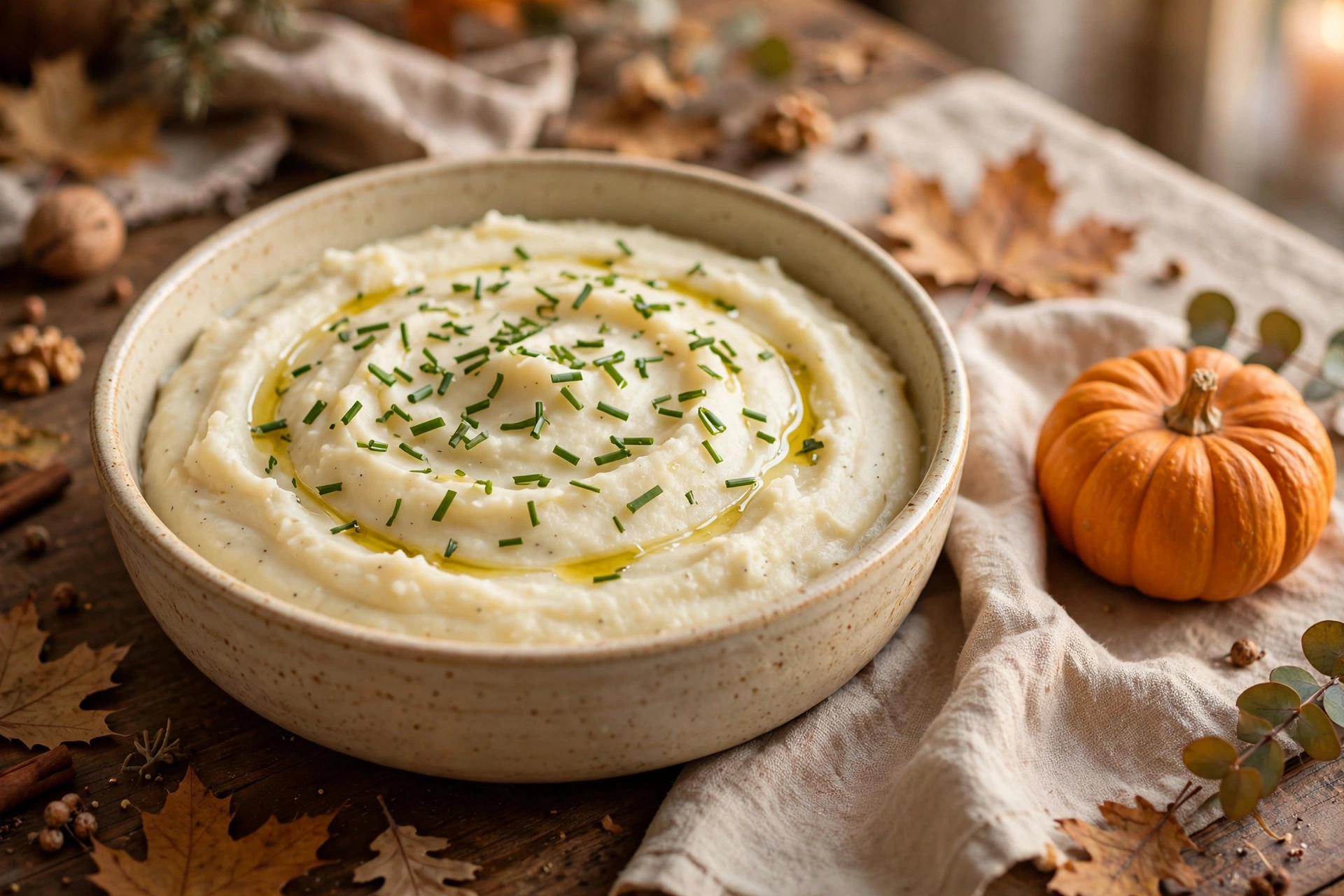
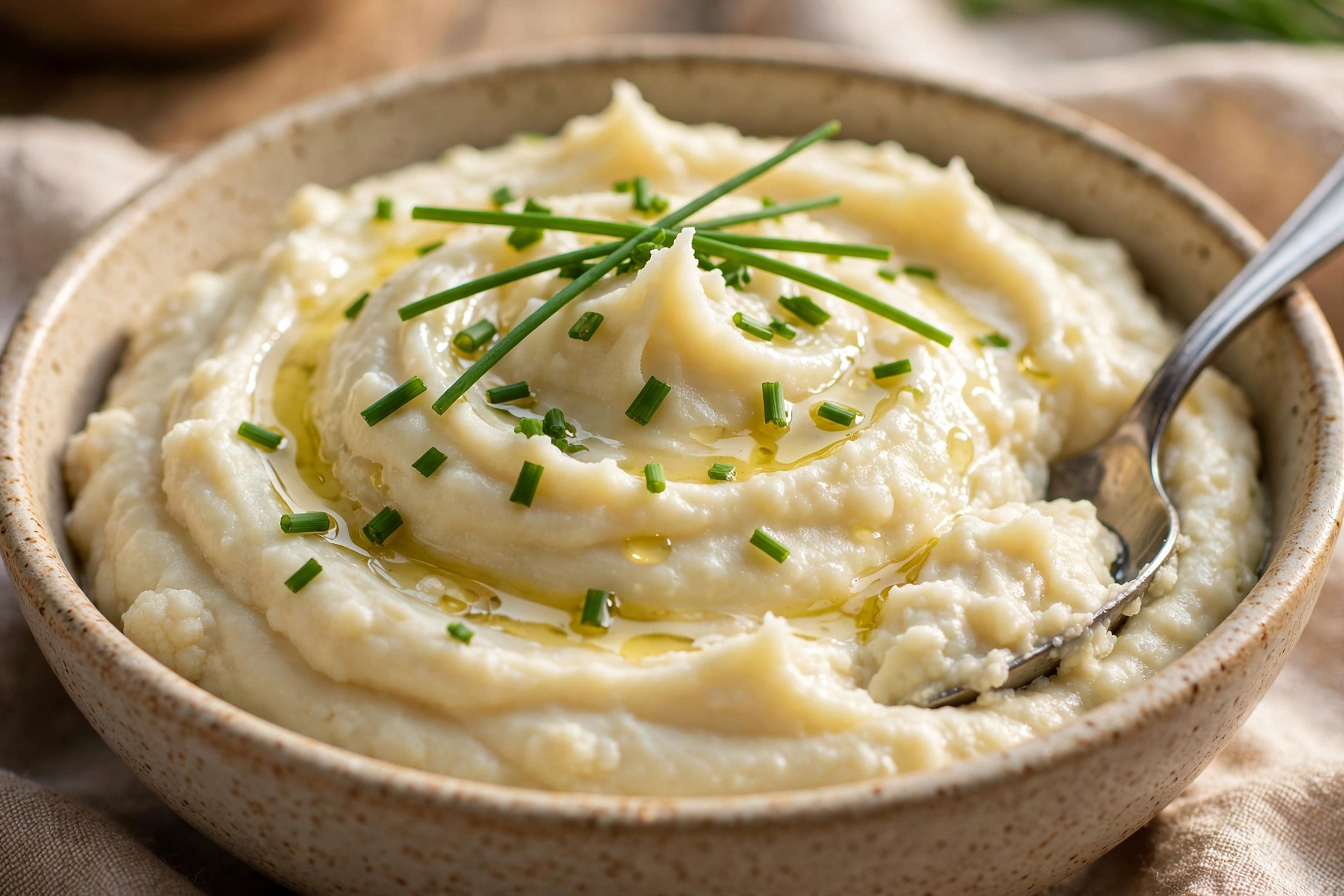
Florets cooked over broth instead of in it stay dense and dry at the surface. They soften fully, but they never waterlog, so the mash blends up thick enough to hold soft peaks. A spoon dragged across the top leaves a trail, the way a good mashed potato does.
The second safeguard happens after draining. The hot florets go back into the empty pot for two minutes, where the residual heat steams off the surface moisture. It is a quiet step that changes everything, and it costs nothing but a timer.
Body comes from two modest additions: a spoonful of light cream cheese for silk and Greek yogurt for gentle tang and protein. Together they give the mash the plush texture people expect on a holiday plate, at a fraction of the butter and cream in a classic recipe.
On the Thanksgiving table it sits comfortably next to our healthy turkey gravy, glossy enough to hold a pool of it in the center. Guests who reach for it out of curiosity usually go back for seconds out of preference.
Garlic Sweetness Without the Raw Bite
Raw garlic blended into a mash is a gamble. One clove too many and the whole bowl tastes sharp for hours. Here the garlic cloves steam whole, right alongside the florets, until they turn soft, sweet and almost spreadable.
Steamed garlic loses its bite and keeps its perfume. Blended into the hot cauliflower, it reads as depth rather than garlic flavor, the kind of background richness people notice without naming. A half teaspoon of garlic powder in the seasoning reinforces it without any raw edge.
The seasoning stays deliberately simple: salt, white pepper if you want the mash to stay pale, and a pinch of nutmeg. Nutmeg is the quiet classic in white mashes and purees, invisible on its own, missed when it is gone.
Chives finish the bowl for a reason. Their mild onion freshness cuts the creaminess and their green flecks make a white dish look alive on a table full of amber and gold. Scallion tops or parsley work when chives are out of season.
Served warm, the texture is plush and spoonable, never gluey, because cauliflower has no starch to overwork. Blend it boldly. Unlike potatoes, this is one mash that cannot be ruined by an extra thirty seconds in the processor.
Twenty Five Minutes, One Pot, and a Calmer Thanksgiving Kitchen
Thanksgiving cooking is a traffic problem, and this side dish refuses to add to it. One pot, one steamer basket, twenty five minutes from cutting board to serving bowl. The oven stays free for the turkey, and so does the cook.
The florets can be cut the day before and stored in a sealed container, which turns the day itself into a single steaming session. Even the garlic waits patiently, peeled and ready in the same container. Prep once, cook once, wash very little.
It also scales without drama. The recipe serves eight as written, and a double batch needs only a bigger pot and two blending rounds. Few holiday sides forgive a crowd this easily, and fewer still reheat without losing their texture.
Midway through the afternoon, when the healthy sweet potato casserole is in the oven and the rolls are rising, healthy cauliflower mash is the calmest pan on the stove. It waits, covered and warm, without drying out or falling apart.
That reliability is the real holiday luxury. A side dish that tolerates a delayed turkey, a late guest and a gravy that needs one more minute is worth more than a spectacular dish that must be served the second it is ready.
Serving vessel is the final practical detail. A warmed ceramic bowl holds the heat through a long blessing and a longer first round of plates. Run the empty bowl under hot water while the cauliflower steams, dry it quickly, and the mash will still be steaming when seconds are served.
Cauliflower Mash Versus Mashed Potatoes, in Honest Numbers
Per three quarter cup serving, this mash comes in near 85 calories, 9 grams of carbohydrate, 4 grams of protein and 3 grams of fiber. A classic butter and cream mashed potato at the same portion usually lands near 180 calories and 35 grams of carbohydrate.
The numbers are calculated from the ingredients in this recipe: two heads of cauliflower, light cream cheese, Greek yogurt and one tablespoon of olive oil across eight servings. Nothing exotic, nothing powdered, just a lighter construction of a familiar dish.
Cauliflower brings more than a calorie gap. It is one of the stronger vegetable sources of vitamin C, a fact reflected in the nutrient profiles published by USDA FoodData Central, and it counts fully toward the daily vegetable servings outlined on MyPlate.
Nobody at the table needs the lecture, and the dish never delivers one. It simply tastes like a silky, garlicky mash that happens to leave room for pie. That is the only argument a holiday side dish ever needs to win.
The fiber story deserves a sentence of its own. Because the cauliflower is steamed rather than boiled and drained hard, more of its natural fiber and vitamin C stay in the bowl instead of going down the sink with the cooking water. Gentle cooking is doing quiet nutritional work here, on top of the texture benefits.
Ingredients for the Healthy Cauliflower Mash
- 2 large heads cauliflower, about 4 pounds (1.8 kg), cut into medium florets
- 4 garlic cloves, peeled and left whole
- 1/2 cup (120 ml) low sodium vegetable broth or water, for steaming
- 2 tablespoons light cream cheese or Neufchatel, softened
- 1/4 cup (60 g) plain Greek yogurt, 2 percent
- 1 tablespoon extra virgin olive oil, plus a little more to serve
- 3/4 teaspoon fine sea salt, plus a pinch for the steaming liquid
- 1/2 teaspoon garlic powder
- 1/4 teaspoon white pepper, or black pepper
- 1 pinch ground nutmeg
- 2 tablespoons finely sliced fresh chives, to serve
How to Make Healthy Cauliflower Mash
- Pour the broth into a large pot and set a steamer basket inside, making sure the liquid stays below the basket. Cover and bring to a simmer over medium heat.
- Add the cauliflower florets and the whole garlic cloves to the basket. Cover and steam for 12 to 14 minutes, until a floret collapses completely when pressed with a spoon.
- Tip the cauliflower and garlic into a colander and let them drain for 1 minute. Return everything to the hot, empty pot, off the heat, and rest for 2 minutes so the surface steam escapes.
- Add the cream cheese, Greek yogurt, olive oil, salt, garlic powder, pepper and nutmeg to the pot.
- Blend with an immersion blender directly in the pot, or transfer to a food processor, and process until completely smooth and glossy, about 1 minute. Scrape the sides once for an even texture.
- Taste and adjust the salt. The mash should be thick enough to hold soft peaks; if it seems loose, blend in one more tablespoon of yogurt rather than adding liquid.
- Spoon into a warm serving bowl. Scatter the chives over the top, finish with a thin thread of olive oil, and serve hot.
Watery Mash? The Rescue Steps That Actually Work
If a batch ever comes out loose, the fix is heat, not thickener. Return the mash to a wide pan over low heat and stir for three to five minutes. The excess water leaves as steam, the texture tightens, and the flavor concentrates instead of diluting.
The usual cause is one of two shortcuts: florets pulled from the steamer too early, or the draining step skipped in a hurry. Undercooked cauliflower holds water in its core and releases it in the blender, which is why tenderness matters as much as dryness.
A tablespoon of finely grated Parmesan stirred into a loose batch also helps, absorbing moisture while adding savoriness. Our healthy mashed potatoes use the same rescue logic in reverse: there, the answer is a splash of warm milk solids; here, it is patience and evaporation.
What never works is adding flour or starch to the blender. The mash turns pasty, the cauliflower flavor dulls, and the texture reads as sauce rather than a side dish. Heat and time fix what starch only hides.
Brown Butter, Parmesan and Dairy Free Variations
For a richer holiday register, brown one tablespoon of butter until it smells nutty and drizzle it over the bowl at the table instead of mixing fat through the whole batch. The flavor impact is large, the calorie cost stays small, and the presentation looks like a restaurant finish.
The Parmesan version folds a quarter cup of finely grated Parmesan into the hot mash and swaps the chives for thyme leaves. It leans savory and pairs beautifully with our healthy green bean casserole, the two dishes sharing the table the way they have for decades.
Dairy free is the easiest variation of all. Replace the cream cheese with two more tablespoons of olive oil and the yogurt with an equal amount of unsweetened oat based yogurt, or simply leave the yogurt out and add a second pinch of nutmeg. The mash stays silky because the emulsion comes from the blending, not the dairy.
A loaded variation borrows from the baked potato playbook: sharp cheddar folded in, chives doubled, and a spoonful of Greek yogurt swirled on top of each serving. It is the version most likely to convert committed mashed potato loyalists, because it speaks their language while keeping the lighter base.
A roasted garlic version swaps the steamed cloves for a whole head of roasted garlic squeezed from its skins. The flavor turns deeper and sweeter, suited to a menu where the mash shares the plate with bold, herbed mains.
Make It the Day Before: The Thanksgiving Plan
This mash was designed to be made ahead, because Thanksgiving Day has enough live cooking already. Prepare the full recipe the day before, cool it quickly, and refrigerate it in its serving dish, covered, ready for the oven.
To reheat, cover the dish with foil and warm it at 325 degrees F for 20 to 25 minutes, stirring once halfway. A spoonful of warm broth or milk stirred in at the end restores the just blended gloss. Add the chives and olive oil only after reheating, so they stay fresh.
Leftovers keep for four days in the refrigerator and freeze for up to two months. Thaw overnight, reheat gently on the stove, and stir well; a quick pass with the immersion blender brings back the original silk if the texture separates.
Cold leftovers make an excellent base for a shepherd style topping or a crisp topped gratin the following day. Few Thanksgiving sides earn a second role this gracefully, which is one more reason the double batch is never a mistake.
For smaller households, freeze the leftovers in individual portions. Silicone muffin cups hold a perfect single serving; pop the frozen pucks into a sealed bag and thaw one at a time in a covered bowl with a splash of broth. It turns a holiday side into a two minute weeknight vegetable, weeks after the turkey is gone.
Conclusion
Healthy cauliflower mash earns its place on the Thanksgiving table the honest way: steamed dry, blended silky and seasoned like it matters. It carries gravy beautifully, waits patiently and leaves everyone room for pie. Make it once, and the mashed potato negotiation at your table may quietly be over.
FAQ
Why is my cauliflower mash watery, and how do I fix it tonight?
Watery mash comes from florets that were boiled instead of steamed, or drained too briefly. Tonight, return the mash to a wide pan over low heat and stir for 3 to 5 minutes until steam stops rising and the texture holds soft peaks. Next time, steam the cauliflower and rest it in the hot empty pot for 2 minutes before blending.
Can I make healthy cauliflower mash the day before Thanksgiving?
Yes, and it reheats better than mashed potatoes do. Refrigerate the finished mash in its serving dish, covered, then warm it at 325 degrees F for 20 to 25 minutes, stirring once. Stir in a spoonful of warm broth at the end and add the chives and olive oil after reheating so they stay bright.
Should I use a food processor, a blender or a potato masher for cauliflower mash?
A food processor gives the silkiest result in about a minute, and an immersion blender in the pot is nearly as smooth with less washing up. A potato masher makes a rustic, textured version that some families prefer. Avoid a high speed blender on full power for too long, which can turn the mash gluey and thin.
Can I freeze leftover cauliflower mash?
Yes, it freezes well for up to two months in sealed containers. Thaw it overnight in the refrigerator, then reheat gently on the stove with a splash of broth, stirring often. If the texture looks slightly separated after thawing, a few seconds with an immersion blender restores the original smooth finish.
What can I use instead of Greek yogurt and cream cheese in this mash?
For a dairy free bowl, replace both with 2 extra tablespoons of olive oil and a pinch more nutmeg, and blend a little longer for silkiness. Mashed white beans, about 1/4 cup blended in, also add body without dairy. If dairy is fine but yogurt is missing, sour cream or creme fraiche swap in one for one.
Healthy Cauliflower Mash
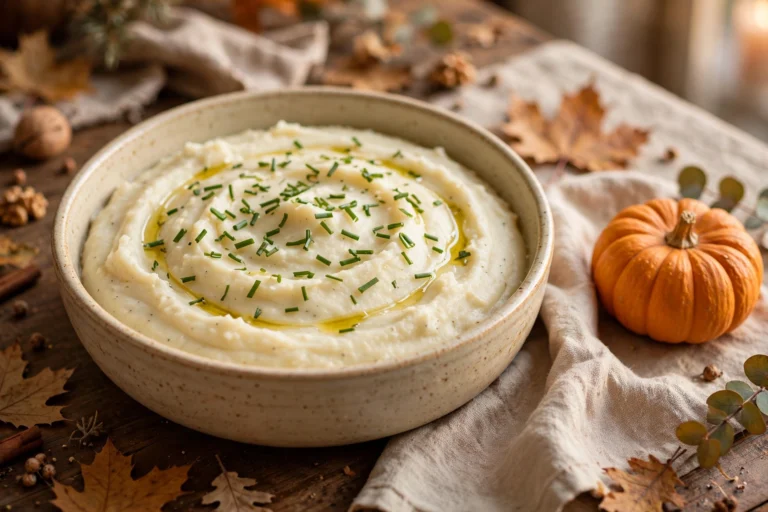
The lighter Thanksgiving mash that actually stays thick: cauliflower steamed, never boiled, dried in the hot pot, then blended silky with steamed garlic, light cream cheese and Greek yogurt. About 85 calories a serving, and it reheats like a dream when made the day before.
- Total Time: 25 minutes
- Yield: 8 servings 1x
Ingredients
- 2 large heads cauliflower, about 4 pounds (1.8 kg), cut into medium florets
- 4 garlic cloves, peeled and left whole
- 1/2 cup (120 ml) low sodium vegetable broth or water, for steaming
- 2 tablespoons light cream cheese or Neufchatel, softened
- 1/4 cup (60 g) plain Greek yogurt, 2 percent
- 1 tablespoon extra virgin olive oil, plus a little more to serve
- 3/4 teaspoon fine sea salt, plus a pinch for the steaming liquid
- 1/2 teaspoon garlic powder
- 1/4 teaspoon white pepper, or black pepper
- 1 pinch ground nutmeg
- 2 tablespoons finely sliced fresh chives, to serve
Instructions
- Pour the broth into a large pot and set a steamer basket inside, making sure the liquid stays below the basket. Cover and bring to a simmer over medium heat.
- Add the cauliflower florets and the whole garlic cloves to the basket. Cover and steam for 12 to 14 minutes, until a floret collapses completely when pressed with a spoon.
- Tip the cauliflower and garlic into a colander and let them drain for 1 minute. Return everything to the hot, empty pot, off the heat, and rest for 2 minutes so the surface steam escapes.
- Add the cream cheese, Greek yogurt, olive oil, salt, garlic powder, pepper and nutmeg to the pot.
- Blend with an immersion blender directly in the pot, or transfer to a food processor, and process until completely smooth and glossy, about 1 minute.
- Taste and adjust the salt. The mash should be thick enough to hold soft peaks; if it seems loose, blend in one more tablespoon of yogurt rather than adding liquid.
- Spoon into a warm serving bowl. Scatter the chives over the top, finish with a thin thread of olive oil, and serve hot.
- Prep Time: 10 minutes
- Cook Time: 15 minutes