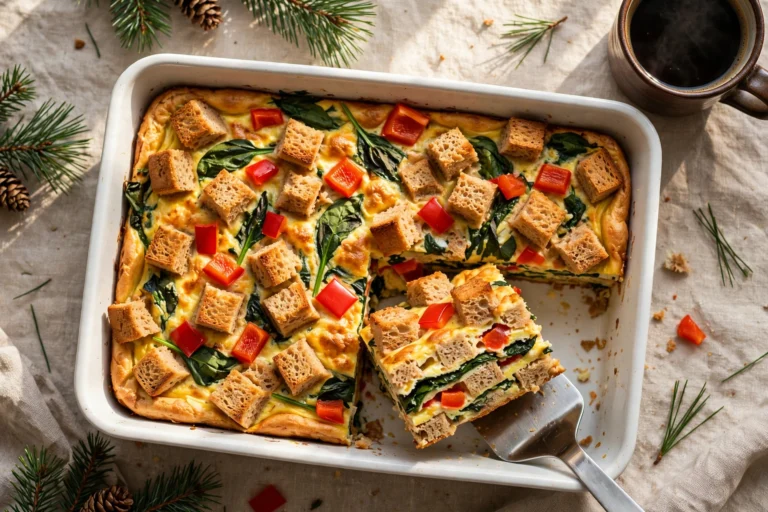
Healthy Dinner Rolls, Soft and Pull Apart at About 145 Calories Each
In this article:
- Why These Healthy Dinner Rolls Pull Apart Like the Bakery Kind
- A Yogurt Dough That Behaves Like an Enriched One
- The Honest Math: About 145 Calories Against Roughly 200
- Ingredients for Healthy Dinner Rolls
- Mixing, Shaping and Baking the Rolls, Step by Step
- Dense Rolls? The Three Usual Causes
- Honey on Top, Herbs Inside: Small Variations
- Freeze the Tray Now, Bake Them Fresh on Thursday
- The Basket Everyone Reaches Into Twice
- Questions Home Cooks Ask About Healthy Dinner Rolls
Healthy dinner rolls are the first thing to disappear from our Thanksgiving table, and for years they were also the item I refused to lighten, because a dry whole wheat roll next to the turkey felt like a punishment nobody asked for.
These rolls changed my mind. They bake up golden and glossy in one pan, tear apart in soft steamy layers, and carry that gentle yeast flavor that makes a dinner roll taste like a dinner roll and not like a breakfast scone.
The honest number is about 145 calories a roll, against roughly 200 for the classic butter rich version. What buys the difference is not a trick ingredient. It is yogurt doing quiet structural work, two tablespoons of butter instead of a stick, and honey where refined sugar used to sit.
Why These Healthy Dinner Rolls Pull Apart Like the Bakery Kind
Healthy dinner rolls work when the dough is treated as what it is: an enriched yeast dough that happens to be built leaner. The softness of a great roll comes from hydration, gentle fat and a full rise, not from butter alone.
Greek yogurt is the quiet architect here. Its protein and mild acidity tenderize the crumb the way buttermilk does in a biscuit, and it keeps the interior moist for hours after baking, long after a lean roll would normally turn firm.
White whole wheat flour matters just as much. It is milled from a paler wheat berry, so it delivers the fiber of whole grain with a flavor mild enough that nobody at the table plays detective. Regular whole wheat can read bitter against turkey and gravy; this one simply tastes like bread.
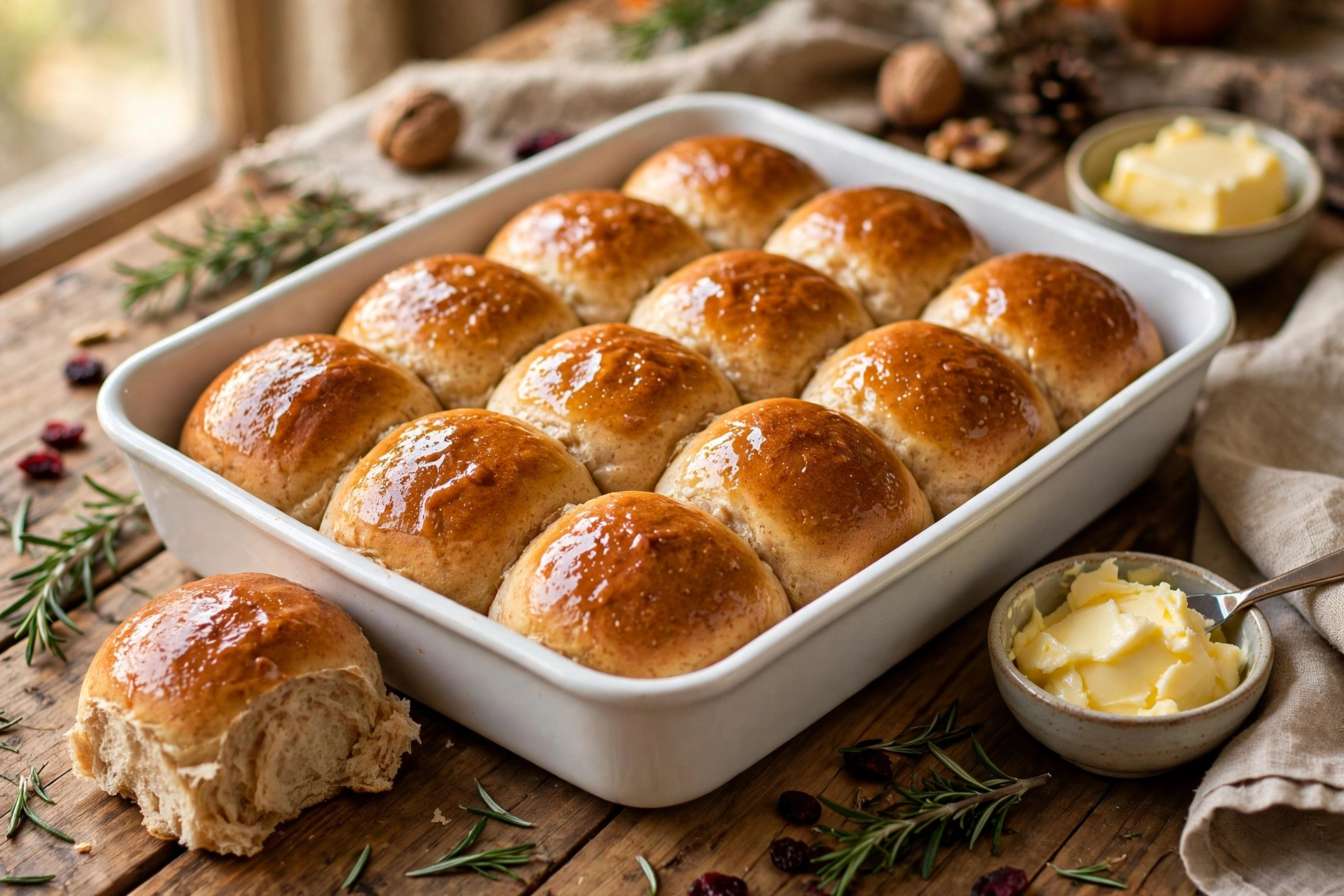
The pull apart format helps too. Twelve rolls rising shoulder to shoulder in one dish steam each other’s sides, which is why the edges stay soft and feathery instead of crusting over. A roll baked alone on a sheet pan can never match that texture.
A Yogurt Dough That Behaves Like an Enriched One
A classic Parker House style dough gets its tenderness from butter, milk and egg in generous amounts. This dough reaches a similar place with a different cast: warm milk to wake the yeast, an egg for structure and color, yogurt for moisture, and just enough butter to keep the flavor honest.
Temperature is the detail that decides everything. The milk should feel like warm bath water, around 110°F. Hotter than that and the yeast suffers; colder and the first rise drags, which matters on a day when the oven schedule is already a negotiation.
Room temperature yogurt and egg blend into the dough without chilling it back down. Cold yogurt straight from the fridge is the single most common reason home bakers report a sluggish rise with this style of dough, and it costs nothing to set the cup on the counter thirty minutes ahead.
Kneading is the other non negotiable. Eight to ten minutes builds the gluten net that traps the gas the yeast produces, and that net is what makes the difference between a roll that tears in soft strands and one that crumbles like a muffin.
If you own a stand mixer, the dough hook does this work in about seven minutes. By hand, push the dough away with the heel of your palm, fold it back, turn it a quarter, and repeat. It starts sticky and suspicious, then turns smooth and elastic. That transformation is the whole lesson.
The Honest Math: About 145 Calories Against Roughly 200
Let us put the numbers where you can see them. A classic dinner roll built on white flour, a full stick of butter worked through the batch and a sugar sweetened dough lands near 200 calories, with most of them coming from fat and refined starch.
This healthy dinner rolls recipe lands around 145 calories a roll, with about 6 grams of protein, which is high for a bread basket item and comes from the yogurt, the egg and the whole grain flour working together.
The fiber tells its own story: roughly 3 grams a roll against less than 1 in a white flour roll. On a plate where almost everything is rich and soft, the roll can quietly be the item carrying whole grain to the meal. The USDA makes the same general point in its FoodData Central entries comparing whole wheat and refined breads, and the gap is larger than most people guess.
None of this turns a roll into a salad, and it should not try to. The goal is narrower and more useful: the same warm, tearable, gravy ready roll, built so that taking a second one is a pleasure instead of a negotiation.
Ingredients for Healthy Dinner Rolls
- 3/4 cup milk, 2 percent, warmed to about 110°F
- 2 tablespoons honey, plus 1 teaspoon more for brushing
- 2 1/4 teaspoons instant yeast, one standard packet
- 3 cups white whole wheat flour, 360 grams, plus more for dusting
- 1 teaspoon fine sea salt
- 3/4 cup plain Greek yogurt, 2 percent, at room temperature
- 1 large egg, at room temperature
- 2 tablespoons unsalted butter, melted, plus a little more for the dish
- 2 tablespoons rolled oats, optional, scattered over the tops
Mixing, Shaping and Baking the Rolls, Step by Step
- Stir the warm milk, honey and yeast together in a large bowl and let the mixture stand for 5 minutes, until it turns foamy and smells faintly sweet. If nothing happens, the milk was too hot or the yeast is old; start over now rather than after the rise.
- Whisk the flour and salt in a second bowl so the salt never lands directly on the yeast. Pour the yeast mixture over the flour, then add the yogurt, egg and melted butter.
- Stir with a sturdy spoon until a shaggy dough forms and no dry flour remains at the bottom of the bowl. Cover and rest the dough for 10 minutes; this pause lets the whole wheat flour hydrate and makes kneading far easier.
- Knead for 8 to 10 minutes, by hand on a lightly floured surface or with a dough hook on medium low. The dough is ready when it feels smooth and elastic and springs back slowly when poked. Add flour one tablespoon at a time only if it sticks to everything it touches.
- Place the dough in a lightly buttered bowl, cover, and let it rise in a warm spot for about 1 hour, until doubled. A cold kitchen can stretch this to 90 minutes, which is fine.
- Butter a 9 by 13 inch baking dish. Turn the dough out, divide it into 12 equal pieces, and roll each piece under a cupped palm into a smooth ball, tucking the seams underneath.
- Arrange the balls in the dish in four rows of three, cover, and let them rise again for 30 to 40 minutes, until puffy and touching. Meanwhile, heat the oven to 375°F.
- Stir the remaining teaspoon of honey into a tablespoon of warm milk and brush it gently over the tops. Scatter the rolled oats over the rolls if you like the rustic finish.
- Bake for 18 to 22 minutes, until the tops are deep golden and the center roll sounds hollow when tapped, or reads 190°F on an instant thermometer.
- Rest the rolls in the dish for 5 minutes, then serve warm, straight from the pan, letting everyone tear their own from the cluster.
Dense Rolls? The Three Usual Causes
When a batch of healthy dinner rolls comes out heavier than expected, the cause is almost never the yogurt or the whole wheat flour. It is one of three quiet mistakes, and all three are easy to fix on the next tray.
The first is liquid temperature. Milk hot enough to steam will damage the yeast before the dough even exists, and the rolls rise halfway and stop. Warm to the touch is the whole instruction; your wrist is a reliable thermometer.
The second is cold ingredients. Yogurt and egg straight from the refrigerator chill the dough several degrees, and a cool dough rises slowly and unevenly, which reads as density in the finished crumb even when the yeast was fine.
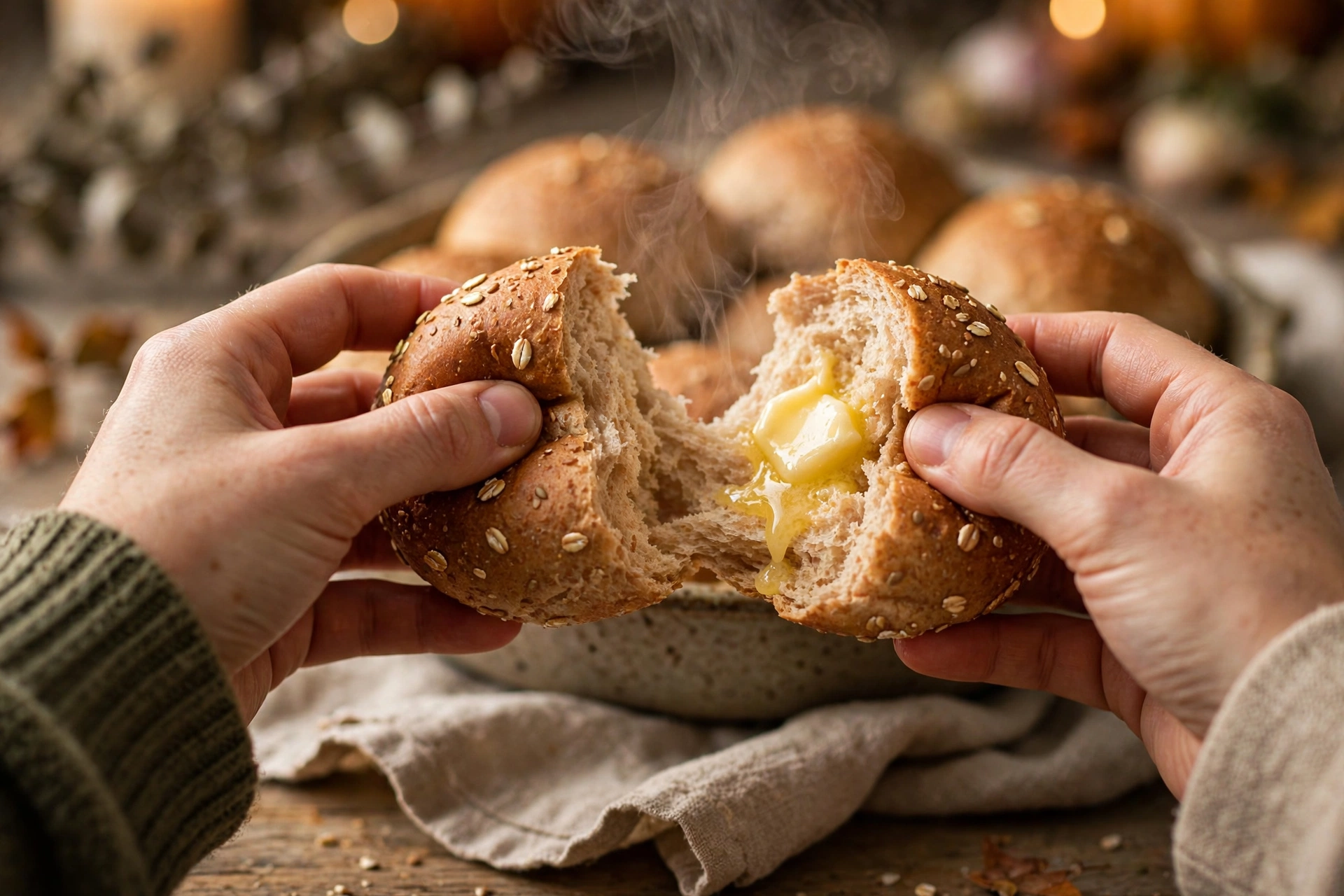
The third is an underbuilt gluten net. Whole wheat flour needs its full kneading time, because the bran in the flour interrupts gluten strands as they form. Stop at five minutes and the rolls tear short and crumbly instead of stretching into soft layers.
A scale helps quietly here as well. Twelve pieces of equal weight rise at the same speed, so the corner rolls do not finish baking while the center ones are still catching up. Divide the dough by weight once and the pan behaves every time after.
Honey on Top, Herbs Inside: Small Variations
The base recipe is deliberately plain, because a Thanksgiving roll has one job: carry butter, gravy and cranberry without arguing with any of them. Once that version is yours, small variations earn their place at other meals.
For a garlic herb version, knead one teaspoon of garlic powder and a tablespoon of finely chopped rosemary into the dough at the end of kneading, and skip the honey brush in favor of a light milk wash. These are the rolls to serve next to soup in January.
For a slightly sweeter breakfast roll, add the zest of one orange and a pinch of cinnamon to the flour, then brush the baked rolls with the honey mixture while they are still warm. They sit happily beside a strata on Christmas morning and need no jam at all.
A seeded top is the easiest change of all: replace the oats with a teaspoon each of sesame and poppy seeds scattered over the honey milk wash. The seeds toast in the oven and give the soft tops a delicate crunch that photographs beautifully, if that matters at your table.
Freeze the Tray Now, Bake Them Fresh on Thursday
The oven is the most contested real estate of Thanksgiving Day, and rolls that demand two rises on Thursday morning are asking for trouble. The freezer removes the whole problem, and this dough freezes gracefully because the yogurt keeps it supple.
Shape the rolls and arrange them in the buttered dish, then stop before the second rise. Cover the dish tightly and freeze for up to one month. The night before Thanksgiving, move the dish to the refrigerator to thaw slowly.
On Thursday, set the dish on the counter for 45 to 60 minutes while the turkey rests and the oven frees up. The rolls finish their rise as the kitchen warms, then bake exactly as written. Nobody at the table will ever guess their head start.
Baked rolls keep two days in a sealed bag at room temperature and refresh in a 300°F oven for 6 to 8 minutes, wrapped in foil with a sprinkle of water over the tops. Leftovers make a fine breakfast sandwich on Friday, split and toasted under a fried egg.
Serve the fresh batch beside the dishes they were built for: a spoonful of our healthy cornbread stuffing on the same plate, carved slices of healthy herb roasted turkey breast, and a torn corner dragged through healthy turkey gravy before it ever reaches your mouth.
The Basket Everyone Reaches Into Twice
Healthy dinner rolls earn their place not by being virtuous but by being the roll people actually want: warm, soft, faintly sweet, tearing apart in the pan with steam still inside. The lighter build is simply what lets that happen twice in one meal.
Bake them beside a pan of healthy corn casserole and the table gets the two golden items it reaches for most, both rebuilt the same honest way. The Harvard T.H. Chan School of Public Health makes a similar case for whole grains at the holiday table in its Nutrition Source guides, and a bread basket is the easiest place on the menu to act on it.
Make one tray for Thursday and, if your household is anything like mine, a second tray nobody hears about until Friday morning.
Questions Home Cooks Ask About Healthy Dinner Rolls
Can I use regular whole wheat flour instead of white whole wheat in these healthy dinner rolls?
Yes, and the rolls will still work, but the flavor turns earthier and the crumb a touch denser. If regular whole wheat is what you have, replace half a cup of it with all purpose flour to keep the texture soft, and give the dough the full 10 minute rest before kneading.
My Greek yogurt dough barely rose after an hour. What went wrong?
Check the three usual causes: milk that was hotter than about 115°F when the yeast went in, yogurt and egg added cold from the fridge, or an expired yeast packet. Move the bowl to a warmer spot and give it 30 more minutes before deciding the batch is lost; cool kitchens often just need time.
Can I make these rolls without a stand mixer?
Absolutely. Knead by hand on a lightly floured counter for the full 8 to 10 minutes, pushing the dough away with the heel of your palm, folding it back and turning it a quarter turn each time. The dough starts sticky and becomes smooth and elastic; that change in feel is your signal that the gluten is built.
How do I bake the rolls straight from the freezer on Thanksgiving Day?
Thaw the shaped, frozen rolls in the refrigerator overnight, then let the dish sit on the counter for 45 to 60 minutes so the rolls finish rising and look puffy and touching. Bake at 375°F exactly as written, adding 2 to 3 minutes if the centers still look pale.
Can I swap the Greek yogurt for sour cream or buttermilk?
Buttermilk works cup for cup in volume if you reduce the milk by 2 tablespoons, since it is thinner than yogurt. Sour cream also works, but it removes the point of the recipe: a cup of sour cream adds back roughly 300 calories to the batch that the yogurt had saved.