Healthy Christmas Breakfast Strata at About 275 Calories a Slice
In this article:
- Christmas Eve Assembly, Christmas Morning Ease
- Vegetables That Earn Their Place in the Layers
- Ingredients for Healthy Christmas Breakfast Strata
- Layering and Soaking the Strata, Step by Step
- The Count: About 275 Calories Against Roughly 580
- A Set Center and Crisp Edges: Troubleshooting the Bake
- Sweet Potato, Kale and a French Toast Cousin: Variations
- Setting the Strata on the Christmas Brunch Table
- The Dish That Lets the Cook Open Presents Too
- Questions Home Cooks Ask About Healthy Christmas Breakfast Strata
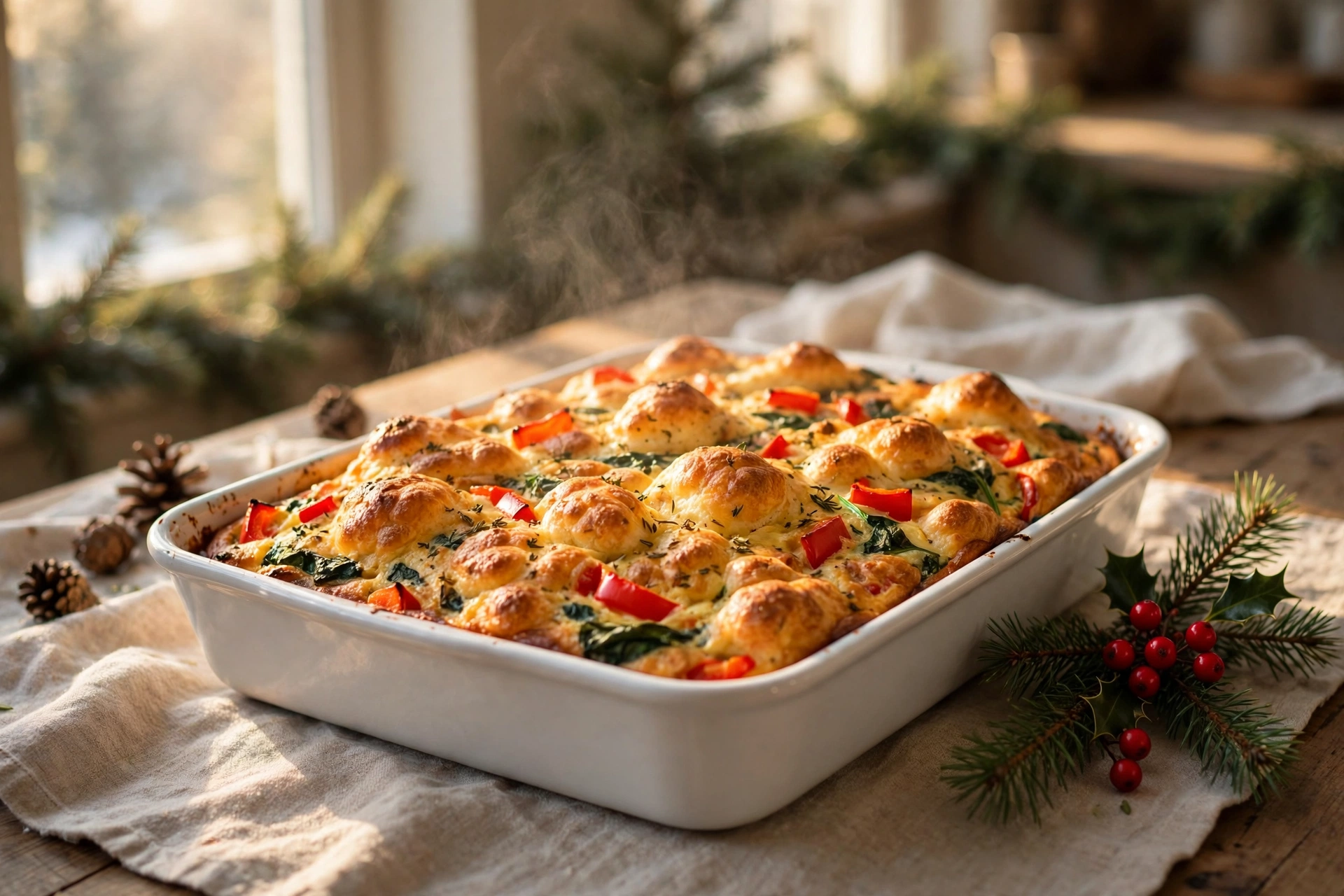
Healthy Christmas breakfast strata is the casserole I assemble on Christmas Eve, when the kitchen is finally quiet, so that Christmas morning belongs to coffee and wrapping paper instead of a stove. It goes into the oven cold from the refrigerator and comes out puffed, golden and ready to slice.
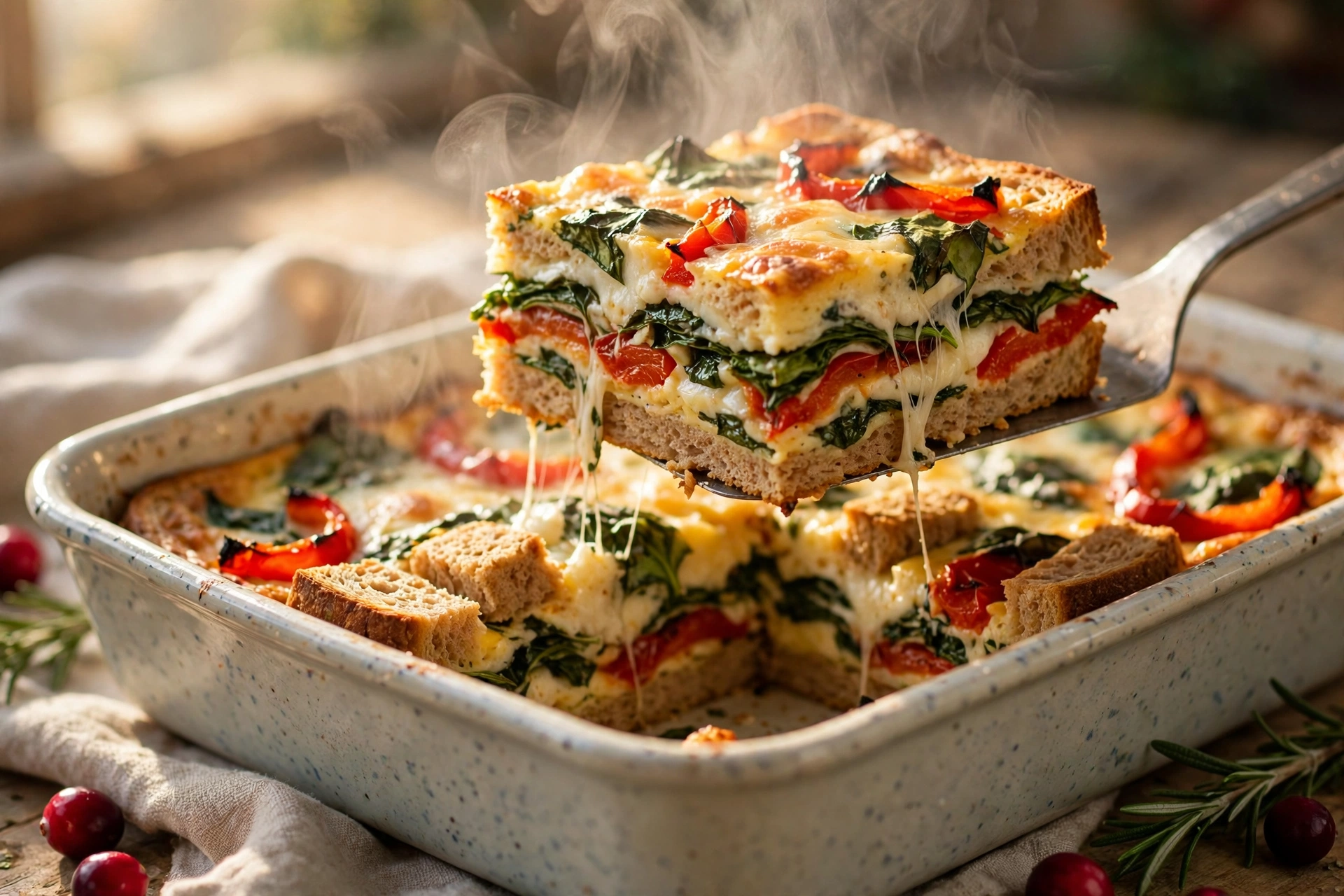
Inside the layers: whole wheat bread with real chew, roasted red pepper, spinach wilted down to almost nothing, sweet red onion and two cheeses used with intent. The custard is whole eggs plus whites and ordinary milk, seasoned with Dijon and Italian herbs.
The honest number is about 275 calories a generous slice, against roughly 580 for the classic strata built on sausage and full fat cheddar. Nobody at the table will do this math. They will simply ask whether there is more.
Christmas Eve Assembly, Christmas Morning Ease
Healthy Christmas breakfast strata works because the overnight soak does the skilled labor. Dry bread cubes drink up the custard slowly, cell by cell, so the baked dish sets into clean slices instead of a scramble with bread in it.
Whole eggs plus egg whites is the balance this dish needed. The yolks bring color, richness and the holiday feeling; the whites bring structure and protein without more fat, and the crumb stays tender rather than rubbery.
Whole wheat bread is not a compromise here, it is an upgrade. Its nutty flavor stands up to the custard where soft white bread dissolves, and its firm crumb is exactly what lets the strata slice like a cake the next morning.
The vegetables are cooked before they ever meet the bread. Peppers, onion, zucchini and spinach each give up their water in a hot pan on Christmas Eve, instead of giving it up inside your casserole on Christmas morning.
A strata also solves the brunch timing problem in a way no other dish does. It bakes unattended for the better part of an hour, which is precisely the length of a stocking round, and it rests gracefully while the table is set.
Vegetables That Earn Their Place in the Layers
Red bell pepper is the color of the dish, sweet and soft after its time in the pan, scattered through the layers like the fruit in a Christmas pudding. Roast it until its edges catch, because that small char reads as depth in the finished slice.
Spinach needs respect and a firm hand. Three loose cups wilt down to a small handful, and that handful must be squeezed dry in a towel before layering. Wet spinach is the single most common reason a strata weeps when sliced.
Zucchini brings moisture the good way once it is pre cooked: soft, mild and ready to disappear into the custard. Cut it small, cook it until its surface liquid is gone, and it will taste like part of the dish rather than a guest in it.
Red onion, cooked until sweet, threads through the layers with the garlic and herbs. Raw onion would stay harsh under the custard. Ten gentle minutes in the pan turns it into the background warmth the eggs need.
Choose the cheeses for contrast. Part skim mozzarella melts into long, mild strands that hold the layers together, while a smaller amount of Parmesan, salty and concentrated, seasons the whole dish from within.
There is a practical gift in this cast: every vegetable is cheap, available in December, and forgiving of timing. Nothing needs to be picked over, soaked or hunted down in a specialty aisle. The dish tastes like an occasion and shops like a Tuesday, which is precisely what a Christmas Eve cook needs to hear.
Ingredients for Healthy Christmas Breakfast Strata
- 8 cups cubed whole wheat bread, about 10 slices, cut in 1 inch cubes
- 1 tablespoon olive oil
- 1 large red bell pepper, diced
- 1 small zucchini, diced small
- 1/2 red onion, finely diced
- 2 garlic cloves, minced
- 3 cups baby spinach, roughly chopped
- 6 large eggs
- 1 cup liquid egg whites
- 1 3/4 cups 1 percent milk
- 1 cup shredded part skim mozzarella
- 1/3 cup finely grated Parmesan
- 1 tablespoon Dijon mustard
- 1 teaspoon Italian seasoning
- 3/4 teaspoon fine sea salt
- 1/2 teaspoon black pepper
- 2 tablespoons chopped fresh parsley, for serving
Layering and Soaking the Strata, Step by Step
- Spread the bread cubes on a sheet pan and dry them in a 300°F oven for 10 minutes, until crisp at the edges but not browned. Cool completely.
- Warm the olive oil in a large skillet over medium heat. Cook the bell pepper, zucchini and red onion for 6 to 8 minutes, until softened and their surface moisture has cooked off.
- Add the garlic and spinach. Cook, stirring, for 1 to 2 minutes, until the spinach wilts completely. Tip the vegetables onto a plate, and squeeze the spinach dry with a clean towel once cool enough to handle.
- Whisk the eggs, egg whites and milk in a large bowl until evenly yellow. Whisk in the Dijon, Italian seasoning, salt and pepper.
- Grease a 9 by 13 inch baking dish. Layer half the bread cubes, half the vegetables and half of each cheese. Repeat with the rest, finishing with cheese on top.
- Pour the custard slowly over the layers, moving the dish a quarter turn at a time so it reaches every corner. Press the top bread gently with a spatula so every cube meets the custard.
- Cover tightly and refrigerate for at least 8 hours and up to 24. This soak is the recipe; do not shorten it.
- On Christmas morning, set the dish on the counter while the oven heats to 350°F, about 25 minutes. Bake uncovered for 45 to 50 minutes, until puffed, deep golden at the edges and set in the center.
- Rest for 10 full minutes. The slices will cut cleanly. Scatter with parsley and serve warm.
The Count: About 275 Calories Against Roughly 580
Here is where the calories actually go. The bread and eggs are the honest bulk of the dish, real food doing real work: roughly 100 calories of bread and 70 of egg in every slice, holding about 20 grams of protein between them.
Compare that with the classic build, where a pound of sausage and two cups of full fat cheddar carry a slice to roughly 580 calories, and the fat renders out into the custard as it bakes. The flavor people remember was the eggs, the bread and the browned top, not the grease.
The USDA entries in FoodData Central for eggs and whole wheat bread underline how naturally balanced the base of this dish is. The lightness here comes from the cast list: vegetables where the meat was, whites where the extra yolks were, and cheese measured instead of handfuls.
It is worth saying plainly that 275 calories buys a slice that satisfies. This is a brunch centerpiece with protein to hold a morning of guests, not a token vegetable dish pushed to the side of the plate.
A Set Center and Crisp Edges: Troubleshooting the Bake
A center that jiggles like set gelatin is correct; a center that sloshes is not. The reliable test is a thin knife at the middle: it should come out clean, with no liquid egg clinging to the blade. If the top browns early, cover it loosely with foil and finish the bake.
Soggy strata almost always traces back to the soak or the vegetables. Bread that went in fresh and soft cannot drink enough custard, and vegetables that went in wet spend the night undoing your work. Dry bread and dry vegetables are the whole secret, stated twice because it matters twice.
If the bottom slices feel heavy, the dish needed its rest. Ten minutes out of the oven lets the custard finish setting from residual heat and lets steam escape from the crumb. Slice too early and even a perfect strata serves like a pudding.
Sweet Potato, Kale and a French Toast Cousin: Variations
For a heartier winter version, swap the zucchini for a cup of roasted sweet potato cubes, added with the peppers. The dish tilts gently sweet and stays firmly in the same calorie neighborhood, and the orange flecks look beautiful beside the spinach.
Kale can take the spinach role in January: strip the leaves, chop them fine and cook them a full five minutes until silky, since kale needs more time to soften than spinach does. Squeeze it dry exactly the same way.
A mushroom and thyme version, built on cremini mushrooms cooked until their liquid evaporates, turns the strata toward dinner. Serve it with a crisp salad and it stops being a holiday dish at all, in the best way.
For the sweet course at the same table, our healthy cinnamon rolls bake in the second oven rack while the strata rests, and a pitcher of healthy eggnog covers the coffee refusers.
Setting the Strata on the Christmas Brunch Table
Serve the strata in the dish it baked in, on a board, with the parsley scattered at the last second. It slices into eight generous squares, and the cut face, layered pepper red and spinach green, does the decorating for you.
Round the table out with things that need no oven at all. Our healthy gingerbread oatmeal bake is the sweet make ahead companion, and a bowl of fruit with a pot of healthy Christmas punch keeps the colors of the morning going.
Leftovers are a genuine asset here. Refrigerated slices reheat in a 325°F oven for 12 minutes and taste nearly fresh, and a cold slice, eaten standing at the counter on December 26, has its own loyal following in most houses.
For a table with guests who eat differently, the strata is quietly diplomatic. It is vegetarian without announcing itself, filling without being heavy, and sliceable into smaller squares for children or second helpings for teenagers. One dish covers the whole table, which is another kind of ease on a crowded morning.
The Harvard T.H. Chan School of Public Health suggests building festive meals around dishes that carry their vegetables inside them, in its Nutrition Source holiday guides. A strata that hides three vegetables under a golden top is that counsel, baked.
The Dish That Lets the Cook Open Presents Too
Healthy Christmas breakfast strata earns its place because it gives the morning back. The work happened the night before, in a calm kitchen, and the day itself asks only for an oven, a knife and a table of people who are glad to be there.
Make it exactly once and it becomes a fixture. The recipe forgives small changes, welcomes whatever vegetables the season offers, and holds its number honestly at about 275 calories a slice, which is a rare thing to say about the centerpiece of a Christmas table.
Questions Home Cooks Ask About Healthy Christmas Breakfast Strata
Can I assemble the strata two days before Christmas instead of one?
One night is ideal and 24 hours is the safe maximum. Past that, the bread begins to break down in the custard and the slices lose their clean edges. If you need a longer head start, dry the bread cubes and cook the vegetables two days ahead, store them separately, and assemble the night before.
My strata puffed beautifully then sank. Did I do something wrong?
A gentle settle of half an inch is normal as the steam escapes. A dramatic collapse usually means it was underbaked in the center or sliced before its 10 minute rest. Next time, test the center with a thin knife and give it the full rest before cutting.
Can I make this strata without the egg whites, using all whole eggs?
Yes. Replace the cup of egg whites with 4 more whole eggs. The slices will be richer and more golden, and the count climbs to roughly 320 calories a slice, still far below the classic. The texture holds exactly the same.
Which bread works best if I do not have whole wheat sandwich bread?
A crusty whole grain loaf, a day old baguette or challah all work. Keep the cubes at 1 inch, dry them fully, and avoid soft enriched breads that dissolve. Seeded loaves add a pleasant crunch at the edges of each slice.
How do I reheat leftover strata without drying it out?
Cover the slices with foil and warm them at 325°F for 10 to 12 minutes. The foil traps the moisture the custard needs. A microwave works in a pinch at half power, but the top loses its crisp edge.