Healthy Cornbread, Crisp Edged and Tender at About 145 Calories a Slice
Healthy Cornbread, Crisp Edged and Tender at About 145 Calories a Slice
In this article:
- The Hot Skillet Is the Recipe: a Crust You Can Hear
- Stone Ground, Medium or Fine: the Cornmeal Grind Decides the Crumb
- The Cornbread Math: About 145 Against About 205
- Ingredients for Healthy Cornbread
- Whisk, Rest, Sizzle, Bake: Healthy Cornbread in Four Moves
- A Thanksgiving Timeline for the One Oven You Own
- Dry, Crumbly or Dense: the Three Cornbread Failures, Solved
- Jalapeno Heat, Brown Butter Sage, or a Pan of Muffins
- Two Days on the Counter, a Month in the Freezer
- The Slice That Earns Its Place Next to the Turkey
- Questions Cooks Ask About Healthy Cornbread
Healthy cornbread should crackle when the knife goes in, then give way to a crumb so tender it nearly melts against a bite of turkey. This one is built for exactly that contrast, and it starts with a skillet heated until it sings.
The crust comes out deep gold and shatter crisp, the kind of edge people quietly negotiate for at the table. Inside, the crumb stays moist and fine, with the gentle sweetness of honey riding under the corn.
Nothing about it tastes reduced. The recipe keeps real olive oil, real eggs, and real honey, and lightens the structure around them instead of replacing the ingredients that make cornbread itself.
The batter takes ten minutes to whisk together and ten more to rest while the skillet heats. By the time the turkey is carved, the wedges are warm, crisp, and ready for gravy.
The Hot Skillet Is the Recipe: a Crust You Can Hear
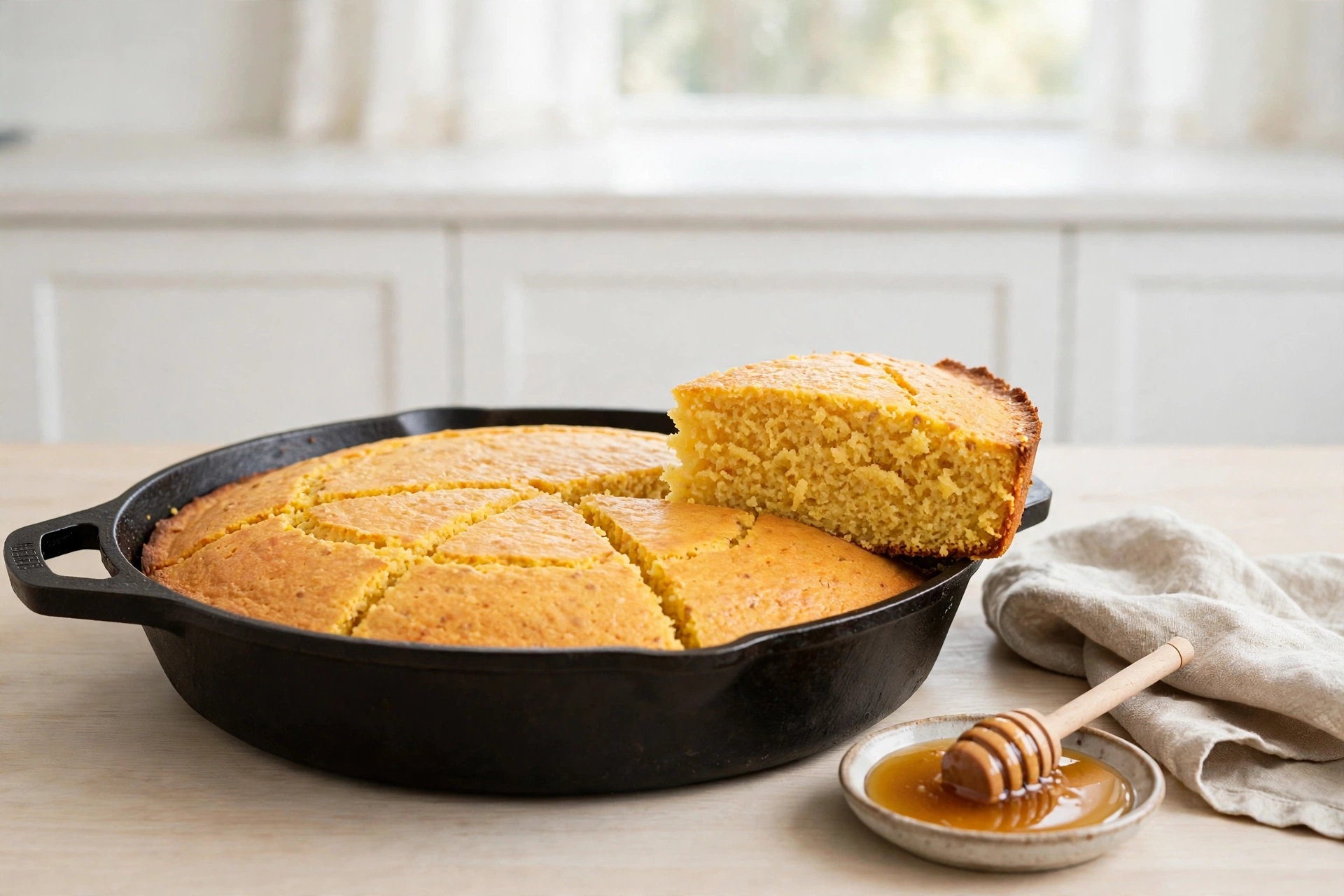
Healthy cornbread succeeds or fails on its crust, and the crust is a temperature event, not an ingredient. A cast iron skillet heated inside the oven for a full twenty minutes fries the batter on contact, and that first sizzle is what builds the crisp shell.
A cold pan gives you a cake. A ripping hot pan gives you cornbread, with edges that pull away from the iron, a bottom that browns like a griddle cake, and a center that stays tender because the bake is short.
The batter itself is engineered to stay moist under that heat. Greek yogurt brings protein and gentle tang, unsweetened applesauce holds water the way extra butter would, and a measured three tablespoons of olive oil keep the crumb supple rather than greasy.
Stone ground whole grain cornmeal does the rest. Because the germ and bran are still in the meal, the crumb tastes like corn first and cake second, and the fiber slows the whole slice down in the best way.
The ten minute rest is not optional decoration. Cornmeal drinks liquid slowly, and a rested batter bakes up even and moist, while a rushed one bakes up coarse and dry at the edges.
Slice the finished bread in the skillet and serve it from the iron. The pan holds its heat through the first round of plates, and the last wedge is nearly as crisp as the first.
Stone Ground, Medium or Fine: the Cornmeal Grind Decides the Crumb
Cornmeal is sold in three grinds, and the bag you grab decides the texture before you crack an egg. Fine grind bakes up tight and cakey, almost like a yellow sponge, and it is the grind behind most dry, disappointing slices.
Medium grind is the skillet sweet spot. The grains are small enough to soften fully in twenty minutes of baking, and large enough to keep a pleasant, sandy tenderness that reads as cornbread rather than cake.
Stone ground meal is milled between stones instead of steel rollers, so more of the germ survives. It tastes nuttier and more deeply of corn, and because it still carries the whole grain, it brings the fiber that refined meal loses.
Coarse grind and polenta are the two to leave on the shelf for this recipe. They need more liquid and more time than a quick batter gives them, and the finished wedges chew gritty instead of tender.
Whatever the grind, check the bag for the words whole grain. Degerminated cornmeal has had the germ removed for shelf life, and with it go most of the flavor and nearly all of the fiber.
Store the opened bag in the freezer. The natural oils in whole grain meal go stale at room temperature within a couple of months, and a bitter, dusty smell in the bag means the flour, not the baker, is the problem.
The Cornbread Math: About 145 Against About 205
A classic skillet cornbread is not outrageous, but it adds up quietly: a stick of butter, a cup of sugar, whole milk, and refined meal. Cut into ten wedges, it lands near 205 calories a slice, with about 9 grams of sugar.
This healthy cornbread lands near 145 calories a wedge, and every saving has an address. The stick of butter becomes three tablespoons of olive oil, the cup of sugar becomes three tablespoons of honey, and the milk becomes Greek yogurt with a splash of low fat milk.
The yogurt is the quiet heavy lifter. It replaces fat with protein, about 5 grams a slice, and its acidity wakes up the baking soda, which is part of why the crumb rises tender instead of dense.
The grain swap pays its own way. The USDA guidance at MyPlate is to make at least half your grains whole grains, and whole grain cornmeal puts this entire slice on the right side of that line, with about 2 grams of fiber.
Sodium sits near 285 milligrams a slice, reasonable for a bread that is seasoned to be eaten under gravy. Recipes built on self rising meal and boxed mixes run considerably higher before the gravy ever arrives.
None of the swaps ask the eater to notice them. The slice is golden, crisp edged, and faintly sweet; the arithmetic is simply better behaved than the classic version it replaces.
Ingredients for Healthy Cornbread
The list is a pantry list: stone ground cornmeal, a little white whole wheat flour for structure, yogurt and applesauce for moisture, and honey measured in tablespoons instead of cups.
- 1 1/2 cups stone ground whole grain yellow cornmeal, medium grind
- 1/2 cup white whole wheat flour
- 1 tablespoon baking powder
- 1/2 teaspoon fine sea salt
- 1/4 teaspoon baking soda
- 2 large eggs, at room temperature
- 1 cup plain low fat (2 percent) Greek yogurt
- 1/2 cup low fat (1 percent) milk
- 1/3 cup unsweetened applesauce
- 3 tablespoons honey
- 3 tablespoons olive oil, plus 1 teaspoon for the hot skillet
Whisk, Rest, Sizzle, Bake: Healthy Cornbread in Four Moves
The method has one theatrical moment, the batter hitting the hot iron, and three quiet ones around it. Set everything out before the oven heats, because once the skillet is ready, the batter should not wait.
- Place a 10 inch cast iron skillet in the oven and heat to 425 degrees F. Give the skillet a full 20 minutes to get properly hot; this is the crust being built.
- Whisk the cornmeal, flour, baking powder, salt, and baking soda in a large bowl until evenly combined and no streaks of white remain.
- In a second bowl, whisk the eggs, yogurt, milk, applesauce, honey, and 3 tablespoons of olive oil until completely smooth, with no ribbons of yogurt left.
- Pour the wet ingredients into the dry and fold with a spatula, about 12 strokes, just until no dry meal hides at the bottom. The batter will be thick and slightly lumpy. Rest it 10 minutes on the counter.
- Wearing a heavy oven mitt, bring the skillet out and set it on the stove. Swirl the remaining teaspoon of olive oil across the bottom and up the sides.
- Scrape the rested batter into the skillet at once. It should sizzle loudly at the edges. Smooth the top quickly and return the skillet to the oven.
- Bake 18 to 20 minutes, until the top is deep golden, the edges have pulled slightly from the iron, and a toothpick in the center comes out clean.
- Rest the bread in the skillet 10 minutes. Cut into 10 wedges and serve warm, straight from the pan.
A Thanksgiving Timeline for the One Oven You Own
Healthy cornbread solves the Thanksgiving oven problem by being fast and forgiving. Twenty minutes of baking is all it asks, and it is happiest in the exact window the day leaves open: while the turkey rests.
The schedule runs like this. The turkey comes out and gets tented at about 4:00. The skillet goes into the still hot oven to heat while the batter is whisked and rested. The bread bakes during the rest, and it is sliced as the bird is carved.
If your oven runs a second shift with casseroles, bake the cornbread earlier instead. It keeps beautifully for two hours wrapped in a clean towel inside the turned off oven, and a five minute warm through at 300 degrees F brings the crust back.
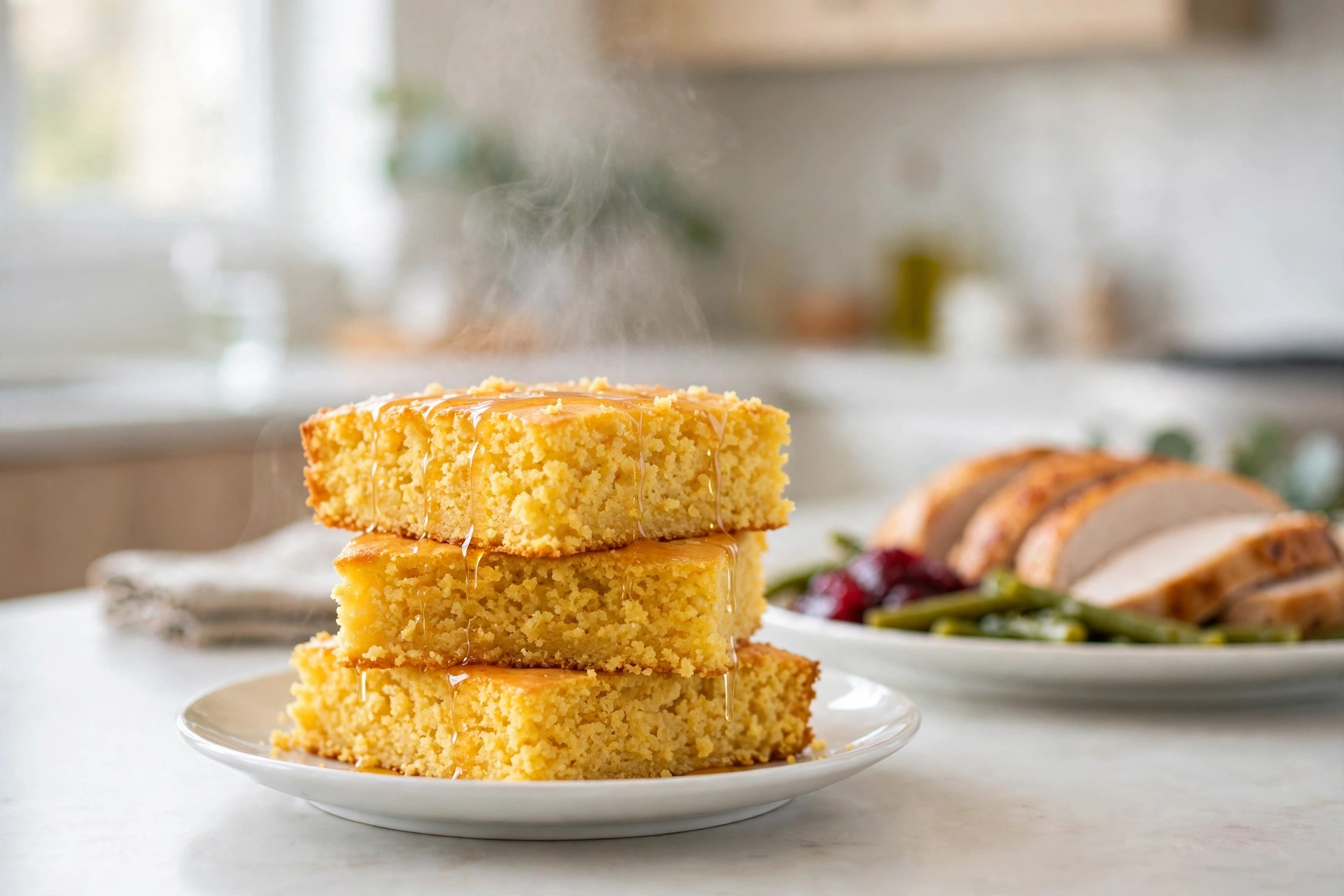
It belongs on the plate in a specific way: under or beside the gravy. Set it next to our healthy herb roasted turkey breast and let our healthy turkey gravy run over the wedge, and the crisp edge softens into the best bite of the meal.
Leftovers have a second career already planned. Day old wedges, cubed and dried overnight, become the base of our healthy cornbread stuffing, and on the table beside our healthy sweet potato casserole, the two dishes cover the sweet and savory ends of the bread basket.
For a crowd, the recipe doubles into a 12 inch skillet with about 5 extra minutes of baking. As one bread among many sides, one pan serves ten honestly, because holiday plates are built from small portions of many things.
Dry, Crumbly or Dense: the Three Cornbread Failures, Solved
Dry cornbread is almost never a recipe problem; it is a clock problem. Five extra minutes in the oven pulls more moisture out of this crumb than any ingredient swap can, so pull the skillet when the toothpick is clean, not when it is spotless.
The second dryness culprit is cold batter in a cooling skillet. If the pan waits on the counter while you hunt for a mitt, the sizzle fades and the crust steams instead of fries. Batter and hot iron should meet within a minute.
Crumbly wedges that fall apart on the plate point at the grind or the rest. Fine, degerminated meal has nothing to hold the slice together, and an unrested batter bakes unevenly. Medium stone ground meal and the full ten minute rest fix both halves of the problem.
A slice that crumbles and tastes sweet usually means the honey got generous. Honey is liquid as well as sugar, and every extra tablespoon loosens the crumb a little more. Measure it level, the way the recipe is written.
Dense, heavy cornbread is a leavening story. Old baking powder is the first suspect, and a batter folded thirty strokes instead of twelve is the second. Test the powder in hot water if it has been open more than six months.
If the finished bread is a touch dry despite everything, serve it the Southern way: split, warmed, with a spoonful of warm milk or a drizzle of honey over the crumb. It is a rescue so good it might become the house style.
Jalapeno Heat, Brown Butter Sage, or a Pan of Muffins
The jalapeno version folds one small jalapeno, seeds removed and minced fine, plus a quarter cup of shredded sharp cheddar into the batter. The heat stays gentle and green, and the cheese adds only about 15 calories a wedge.
For a brown butter sage version, swap the olive oil for three tablespoons of butter browned with six torn sage leaves, cooled for two minutes before whisking in. The flavor leans toward the stuffing end of the table, rich and woodsy.
A sweet corn version stirs half a cup of corn kernels, fresh or thawed frozen, into the rested batter. Each wedge gains little bursts of sweetness and a slightly heartier chew, at about 10 extra calories a slice.
The same batter bakes into muffins for portion built in. Fill a greased 12 cup muffin tin, skip the skillet preheat, and bake at 400 degrees F for 14 to 16 minutes; the edges crisp less, but the crumb stays tender and the portions pack for lunches.
For a dairy free pan, use a thick plant based yogurt and oat milk in the same measures. The crust still crisps in the hot iron, and the crumb sets a touch softer, which most people at the table will never identify.
Two Days on the Counter, a Month in the Freezer
Cornbread keeps two days at room temperature, wrapped in foil or sealed in a container once it is completely cool. Wrapping it warm traps steam against the crust, and the crisp edge you worked for goes soft overnight.
For the refrigerator, know that cold dries this bread faster than the counter does. If the pan must wait more than two days, freeze it instead: wedges wrapped individually, then bagged, keep a full month and thaw in twenty minutes on the counter.
Reheating is a crust revival exercise. Five minutes in a 350 degrees F oven, wedges set cut side up, brings back the edges; the microwave returns a soft, steaming wedge in twenty seconds, which is the right answer for a weekday lunch.
Holiday food safety belongs in the plan as well. FoodSafety.gov advises refrigerating Thanksgiving leftovers within two hours and eating them within three to four days, so move the leftover wedges into the fridge after the meal rather than leaving the skillet out for grazing.
Stale wedges are an ingredient, not a loss. Cube them, dry them overnight on a tray, and they are ready to become stuffing, a savory bread pudding, or the crisped croutons on a winter soup.
The Slice That Earns Its Place Next to the Turkey
Healthy cornbread asks for one piece of equipment and one act of patience: a skillet heated without shortcuts, and a batter allowed to rest. In exchange it delivers the loudest crust and the tenderest crumb on the Thanksgiving table.
At about 145 calories a wedge, with whole grain corn doing the heavy lifting, it is the rare lightened recipe that needs no introduction when it reaches the table. It simply tastes like cornbread, made well.
Questions Cooks Ask About Healthy Cornbread
Can I bake healthy cornbread in a glass or metal pan instead of a skillet?
Yes, but preheat the pan and adjust your expectations. A metal 9 inch square pan heated with the oven gives a good crust; glass should not be preheated empty, so expect softer edges and add 2 to 3 minutes. Bake until the center springs back and a toothpick comes out clean.
Why does my cornbread always come out dry?
Usually the clock, not the recipe. This crumb dries fast past 20 minutes, so pull it when the toothpick is clean rather than spotless. Cold batter in a cooling skillet and a fine, degerminated meal are the next two causes; a rested batter, a ripping hot pan, and stone ground meal solve both.
Can I make healthy cornbread the day before Thanksgiving?
Yes. Bake it, cool it completely, and wrap the whole round in foil. Reheat, still wrapped, at 300 degrees F for 10 minutes, then unwrap for 3 minutes to re crisp the edges. It is very good, though the fresh baked version, timed to the turkey rest, is the one people remember.
Is stone ground cornmeal essential, or will regular cornmeal work?
Regular medium grind cornmeal works in the same measure and the method does not change. Stone ground whole grain meal adds fiber, a deeper corn flavor, and a more tender crumb, which is why the recipe is written around it. Avoid fine grind, which bakes up cakey, and coarse polenta, which stays gritty.
Can I leave out the honey or swap the Greek yogurt?
The honey can drop to 2 tablespoons for a fully savory bread; leave out more and the crumb dries, because honey holds moisture as well as sweetness. For the yogurt, an equal measure of blended low fat cottage cheese or a thick skyr works; thin regular yogurt makes the batter too wet.