Healthy Roasted Parsnips With Honey and Thyme, About 145 Calories a Serving
Healthy Roasted Parsnips With Honey and Thyme, About 145 Calories a Serving
In this article:
- The Cut Decides Everything
- Crisp Edges, Custardy Centers
- Parsnip Math: 145 Calories Against the Classic 250
- Ingredients for Healthy Roasted Parsnips
- Two Showers of Honey, One Hot Pan
- Wednesday Night Prep, Thursday Glory
- Burnt Tips, Soggy Middles and Other Fixes
- Leftovers That Crisp Back Up
- The Root That Earns Its Place
- Questions Cooks Ask About Healthy Roasted Parsnips
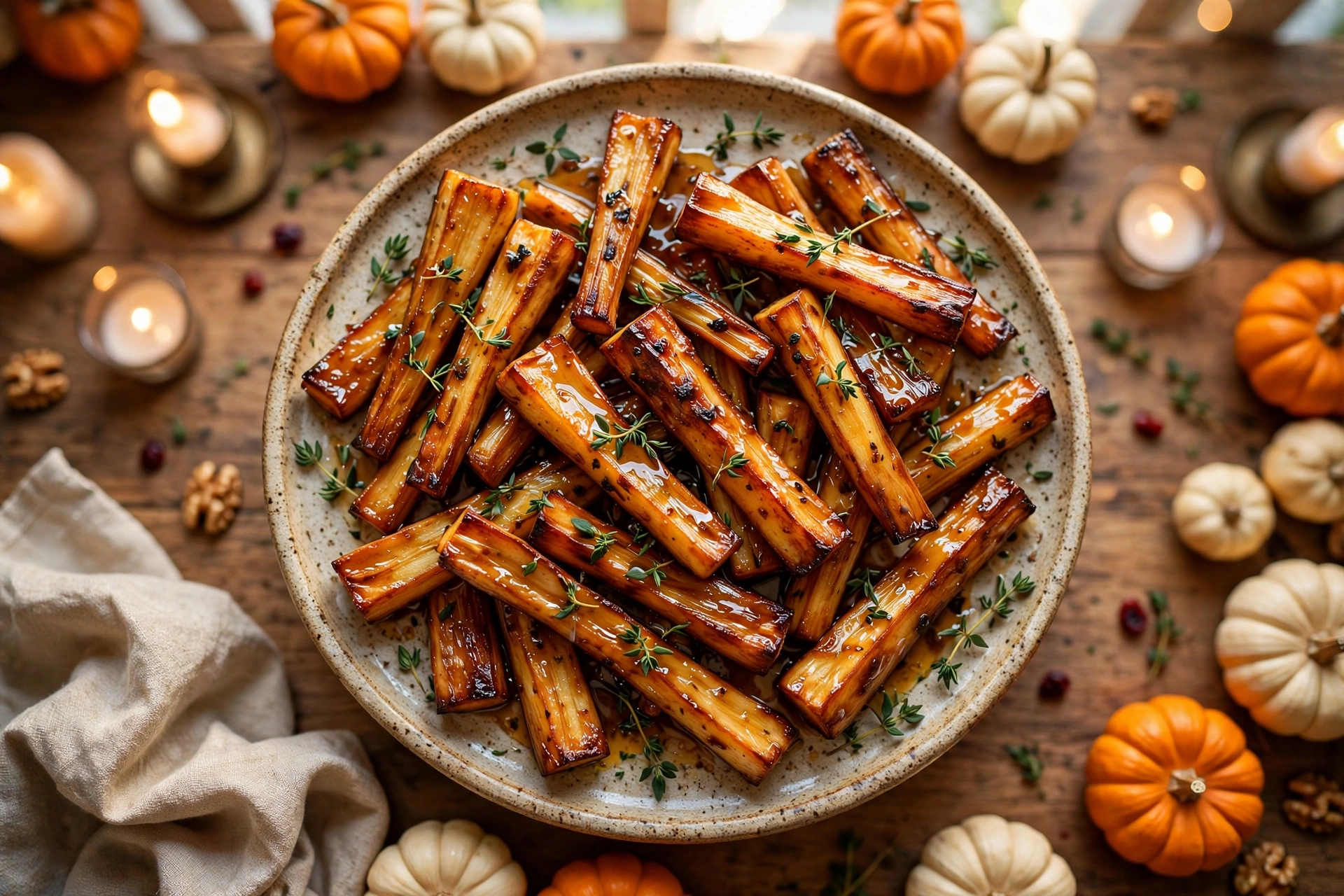
Healthy roasted parsnips are the side dish I bring back every November, when the Thanksgiving table groans with casseroles and somebody finally asks for a vegetable that still tastes like itself. Pale gold batons, edges darkened to a toffee crisp, centers soft as custard, a whisper of honey and thyme over everything.
The parsnip does most of the work for free. Buried all season, it converts starch to sugar as the ground cools, so a properly roasted one tastes candied before any sweetener comes near it. The whole recipe is built around not wasting that head start.
What it asks from you is modest: one tablespoon of olive oil, one tablespoon of honey used in two passes, and enough patience to cut the batons evenly. In return you get a serving at about 145 calories, on a day when almost nothing else on the table can say that.
The Cut Decides Everything
Healthy roasted parsnips succeed or fail at the cutting board, long before the oven matters. A parsnip is a tapered root, fat at the shoulder and thin at the tail, so a tray of careless chunks roasts into a tray of contradictions: burnt tips beside raw, woody middles.
Cutting every piece to the same half inch thickness removes the lottery. The thin tails stay whole, the fat shoulders get halved or quartered lengthwise, and every baton on the pan finishes in the same minute. Uniform pieces are the entire secret behind edges that caramelize together.
The second decision is the honey, and it is about timing rather than quantity. Honey brushed on at the start spends thirty minutes in a hot oven and can scorch before the centers soften. Two thirds of it goes on for the final stretch of roasting, and the last third lands after the pan comes out, glossy and raw.
Heat does the rest. A 425 degree oven is hot enough to drive the surface sugars toward caramel before the interior turns to mush, and a single uncrowded layer gives the moisture somewhere to go. Steam is the enemy of crisp edges, and space is the cheapest ingredient in the recipe.
The thyme is not decoration, either. Parsnip sweetness, left alone, can read one note and a little flat, the way plain caramel does. Fresh thyme brings a resinous, almost minty edge that cuts through the honey, so each bite finishes savory and you want another one.
Crisp Edges, Custardy Centers
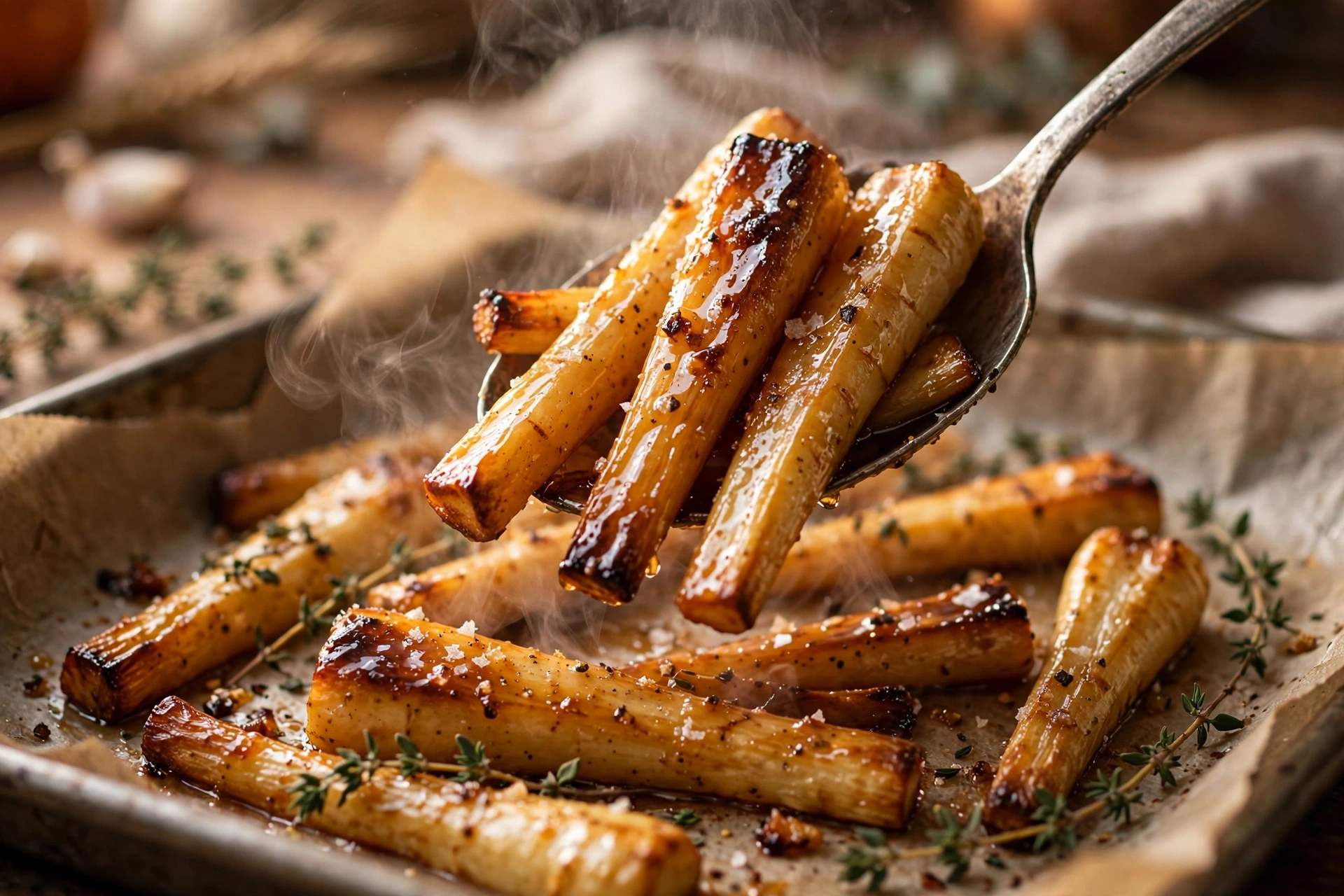
The bite you are after has two acts. First a delicate resistance, the caramelized skin giving way with a faint crackle, then a center so tender it reads almost creamy, sweet and earthy at once, with the thyme arriving late like a green note under the honey.
Color is the honest signal. Pale parsnips are underdone parsnips, whatever the timer says. Look for deep amber along the edges and undersides, with the faces still golden rather than dark; that contrast is where the flavor lives, and it is the same instinct that guides our healthy honey glazed carrots to their glossy finish.
Temperature contrast matters at the table too. Served straight from the oven, the glaze is fluid and the edges sing. Ten minutes later the honey sets into a soft sheen and the centers go silkier, which some of my family prefers. Either way, they should never sit long enough to steam under foil.
Serve them piled high rather than spread thin. A warm platter and a loose mound keep the bottom layer from going soft against the ceramic, and the batons on top stay glossy for the photograph nobody admits they are taking. A final few thyme leaves, raw and green, make the gold look deeper.
Parsnip Math: 145 Calories Against the Classic 250
Here is where this recipe earns its name. The best known versions of honey roasted parsnips on the internet use three tablespoons of olive oil and four tablespoons of honey for a pound and a half of roots, which works out to roughly 250 calories a serving before the flaky salt.
This pan uses one tablespoon of oil and one tablespoon of honey for two full pounds, and lands at about 145 calories a serving: roughly one hundred calories lighter, with the glaze still visibly glossy. The parsnip itself brings about 7 grams of fiber per serving, a figure most Thanksgiving sides cannot approach.
The swap works because roasting concentrates flavor instead of diluting it. As the batons lose water, their own sugars intensify, so a measured tablespoon of honey reads like far more. The USDA MyPlate vegetable guidance counts parsnips among the starchy vegetables worth rotating in, and this is the version that lets you rotate them in on the biggest eating day of the year.
Ingredients for Healthy Roasted Parsnips
- 2 pounds parsnips, preferably small to medium
- 1 tablespoon olive oil
- 2 teaspoons fresh thyme leaves, plus a few sprigs for serving
- 1/2 teaspoon fine sea salt
- 1/4 teaspoon black pepper
- 1 tablespoon honey, divided
- Flaky sea salt, for finishing
About the parsnips: size is a quality decision here. Small and medium roots are sweeter and more tender, while the very large ones develop a woody core that stays tough no matter how long they roast. If a giant is what the store offers, quarter it lengthwise and cut the pale core away before it goes in the bowl.
About the honey: an ordinary, mild honey is the right call. Dark, assertive honeys can bully the thyme and turn the glaze bitter at the edges. Warm the spoon under hot water before measuring and the honey will slide off in one clean ribbon, all of it landing where it belongs.
Two Showers of Honey, One Hot Pan
- Heat the oven to 425 degrees F. Line a large rimmed sheet pan with parchment, or leave it bare and lightly oiled for maximum browning on the undersides.
- Peel the parsnips and trim the ends. Cut them into batons about 3 inches long and 1/2 inch thick, halving or quartering the fat tops lengthwise so every piece matches. Cut away any woody core from very large roots.
- Toss the batons in a large bowl with the olive oil, thyme leaves, fine salt and pepper until every piece shines. Nothing sweet goes in yet.
- Spread the parsnips on the hot pan in a single layer with a little breathing room. Crowded pieces steam instead of roast, and steamed parsnips never crisp.
- Roast for 20 minutes. Turn each baton with tongs so the pale sides face down, and roast 5 minutes more. The edges should be turning amber and the centers nearly tender.
- Warm the honey until it pours easily. Brush or drizzle two thirds of it over the parsnips and return the pan to the oven for 5 to 8 minutes, until the glaze bubbles at the edges and the batons are deep gold.
- Pull the pan out. Drizzle the remaining honey over the top, scatter the flaky salt and extra thyme, and rest the parsnips for 3 minutes so the glaze sets into a sheen.
- Serve warm, straight from the pan or piled on a platter. They hold their texture for about 20 minutes on a warm stove top.
A word about the pan itself. Dark metal browns faster than pale aluminum, and a bare, lightly oiled surface gives the deepest color of all. Parchment is the safer choice for a first attempt, since the honey glaze lets go of it cleanly, where it can weld itself to an unlined pan in the final minutes.
Wednesday Night Prep, Thursday Glory
Thanksgiving oven space is a negotiation, and these batons are built to be reasonable guests. The peeling and cutting, the fiddly part, can happen on Wednesday night. The batons wait in a bowl of cold water in the fridge, drained and dried thoroughly before they meet the oil.
There is also a half roast path for a truly packed Thursday. Roast the seasoned batons for 15 minutes, before any honey, then cool and refrigerate them on the pan. On the day, a 12 minute finish in the hot oven while the turkey rests brings them back, and the honey goes on as written.
On the table, they sit happily beside the bird and under a ladle of our healthy turkey gravy, and they share the oven gladly with the maple roasted Brussels sprouts with cranberries at the same temperature. One pan of roots, one pan of sprouts, and the vegetable side of the menu is settled.
Burnt Tips, Soggy Middles and Other Fixes
If the tips char before the centers soften, the pieces were uneven or the honey went on too early. Sugar darkens far faster than root vegetable cooks, which is exactly why this recipe holds most of the honey back. Next time, shield a fast tray by moving it down a rack for the final minutes.
If the parsnips come out soft but pale, the pan was crowded or the batons went in wet from their Wednesday soak. Water is the quiet saboteur: dry them in a clean towel until they feel almost squeaky, and give them a hotter oven rather than a longer stay in a lukewarm one.
If the flavor reads flat, it is almost never the parsnip’s fault. Salt them again lightly while they are glossy and hot, and add the raw honey finish without skipping it. That last uncooked third is the aromatic layer, the part that smells like honey rather than caramel, and the dish leans on it.
If the glaze slides off and pools on the pan, the batons were still wet when the honey landed, or the honey went on cold and thick. Warm it until it pours like water, brush it over parsnips that are already steaming dry, and it will cling in a thin lacquer instead of beading away.
Leftovers That Crisp Back Up
Leftovers keep for up to 4 days in an airtight container in the fridge, and they reheat better than most roasted vegetables. The rule is dry heat: a hot sheet pan or the air fryer for 5 to 7 minutes brings the edges back to life. The microwave softens the glaze and undoes the caramel, so save it for a last resort.
Cold leftovers have a second career worth knowing. Chopped roughly, they go sweet and crisp edged in a breakfast hash with onion, or blend into a soup with stock and a spoon of yogurt for a lunch that tastes like it was planned. Nothing about them needs to be wasted.
Freezing is the one path I skip. Thawed parsnips weep and go limp, and a side built on crisp edges should not be asked to survive it. Make the full batch for the table, plan the hash for Friday, and let the recipe end there.
The Root That Earns Its Place
Healthy roasted parsnips ask for so little, one pan, two tablespoons of richness across six servings, a knife used with intention, and they return the sweetest, most caramelized vegetable on the Thanksgiving table. That ratio of effort to reward is rare on this holiday.
At my table they are the dish that disappears while the casseroles are still being passed, and the one my family now requests by name. Give the forgotten root its hot pan and its two showers of honey, and watch it take the place it should have had all along.
Questions Cooks Ask About Healthy Roasted Parsnips
Do I have to peel parsnips before roasting?
Yes, for this recipe. Parsnip skin is thin but bitter, and it toughens in a hot oven. A vegetable peeler takes it off in seconds. Very young, small parsnips can be scrubbed instead, but peeling gives the clean, sweet result the glaze deserves.
Why do my parsnips burn at the tips before the centers are tender?
Two causes: uneven pieces and honey added too early. Match the batons to a half inch thickness, splitting the fat tops, and hold the honey until the last 5 to 8 minutes. The sugar then glazes instead of scorching, and the centers finish in the same window.
Can I swap the honey for maple syrup?
Yes, one for one, and the result is lovely with thyme. Maple runs a little thinner, so use the same two pass method and watch the final minutes closely. The calories stay nearly identical, and the flavor leans warmer and more woodsy.
Can I make healthy roasted parsnips ahead for Thanksgiving?
Two ways. Peel and cut the batons the night before and hold them in cold water, then dry them very well before roasting. Or half roast them for 15 minutes without honey, refrigerate, and finish for 12 minutes while the turkey rests, glazing at the end as written.
What can I do with very large, woody parsnips?
Quarter them lengthwise and slice away the pale, fibrous core before cutting the batons; the core never turns tender. Or save giants for soup and mash, where blending hides the texture, and buy small to medium roots for roasting. The dish is only as good as the root you start with.
Healthy Roasted Parsnips
The forgotten root, roasted until the edges turn to toffee: even cut batons, one tablespoon of olive oil, and honey with thyme applied in two passes so it glazes instead of scorching. About 145 calories a serving against roughly 250 for the classic, with about 7 grams of fiber.
- Total Time: 45 minutes
- Yield: 6 servings 1x
Ingredients
- 2 pounds parsnips, preferably small to medium
- 1 tablespoon olive oil
- 2 teaspoons fresh thyme leaves, plus a few sprigs for serving
- 1/2 teaspoon fine sea salt
- 1/4 teaspoon black pepper
- 1 tablespoon honey, divided
- Flaky sea salt, for finishing
Instructions
- Heat the oven to 425 degrees F. Line a large rimmed sheet pan with parchment, or leave it bare and lightly oiled for deeper browning.
- Peel the parsnips and trim the ends. Cut into batons about 3 inches long and 1/2 inch thick, halving or quartering the fat tops lengthwise so every piece matches. Cut away any woody core from very large roots.
- Toss the batons in a large bowl with the olive oil, thyme leaves, fine salt and pepper until every piece shines. No honey yet.
- Spread on the pan in a single layer with breathing room. Crowded pieces steam instead of roast, and steamed parsnips never crisp.
- Roast for 20 minutes. Turn each baton with tongs so the pale sides face down, and roast 5 minutes more, until the edges turn amber and the centers are nearly tender.
- Warm the honey until it pours easily. Brush or drizzle two thirds of it over the parsnips and return the pan to the oven for 5 to 8 minutes, until the glaze bubbles at the edges and the batons are deep gold.
- Remove from the oven. Drizzle the remaining honey over the top, scatter the flaky salt and extra thyme, and rest 3 minutes so the glaze sets into a sheen.
- Serve warm. The parsnips hold their texture for about 20 minutes on a warm stove top.
- Prep Time: 15 minutes
- Cook Time: 30 minutes
Nutrition
- Serving Size: 3
- Calories: 145
- Sugar: 11
- Sodium: 210
- Fat: 3
- Saturated Fat: 0
- Unsaturated Fat: 3
- Trans Fat: 0
- Carbohydrates: 31
- Fiber: 7
- Protein: 2
- Cholesterol: 0