
Healthy Butternut Squash Soup (Roasted in Halves, Blended Silky)
In this article:
- No Peeling, No Cubing: The Halves Method
- Roasting Builds the Flavor That Simmering Cannot
- A Greek Yogurt Finish Instead of Cream
- Ingredients for the Healthy Butternut Squash Soup
- How to Make Healthy Butternut Squash Soup
- Too Thin or Too Thick? The Texture Fixes
- Blending Hot Soup Without the Steam Eruption
- Curried, Smoky and Fully Vegan Variations
- The Thanksgiving Plan: Make It Three Days Early
- Conclusion
- FAQ
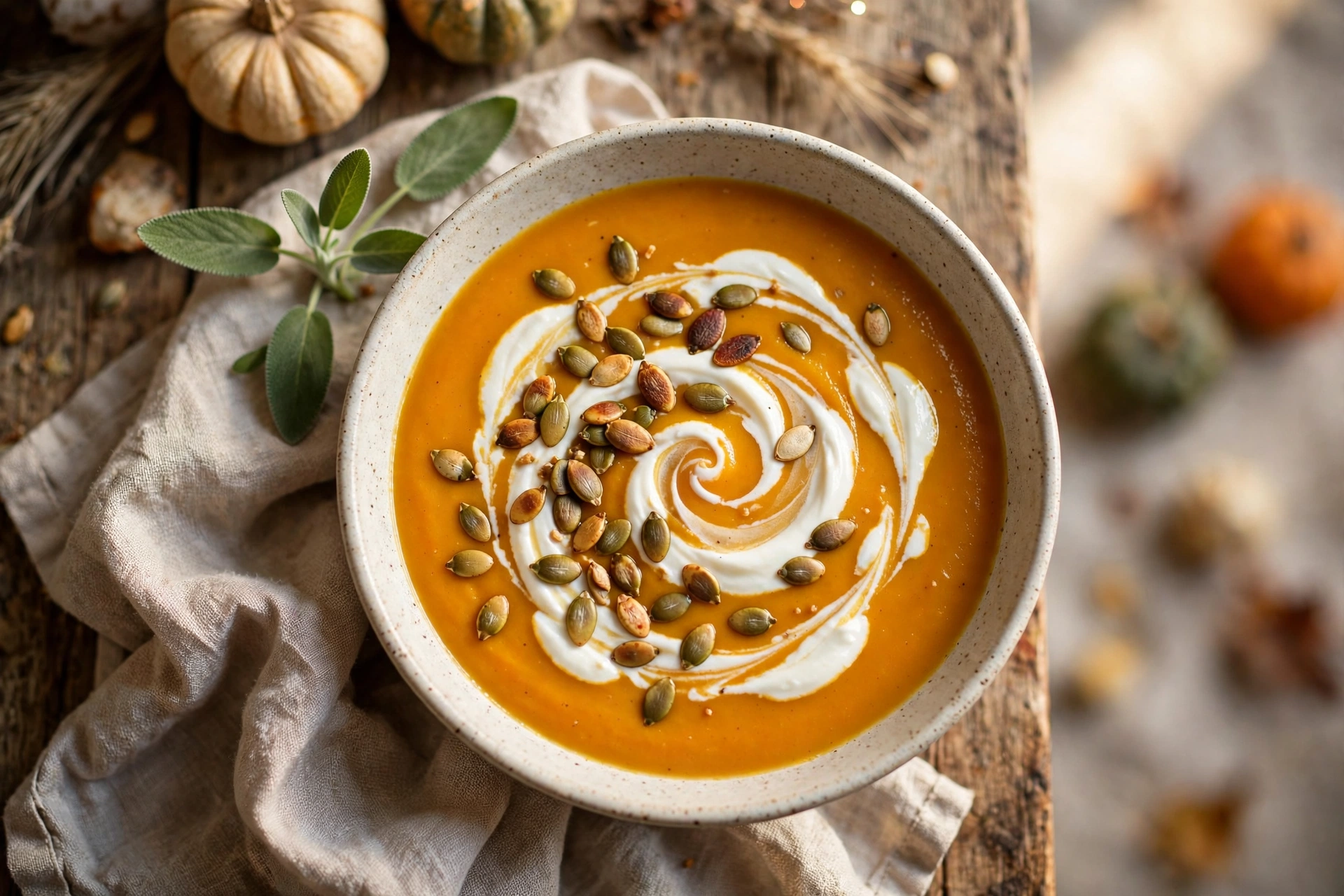
This healthy butternut squash soup starts in the oven, not the pot: the squash roasts in halves with onion, apple and whole garlic until the edges caramelize. Blended with sage and finished with Greek yogurt, it tastes like Thanksgiving in a bowl.
It also skips the step everyone dreads. There is no peeling a rock hard squash, no wrestling it into cubes, no bandaged knuckles before the holiday. The skin does its work in the oven, and the tender flesh scoops out with a spoon.
Served as a first course, it sets the tone for the whole meal: warm, golden and quietly rich, at about 175 calories a bowl. Nobody at the table will guess it is the lightest thing they eat all day.
No Peeling, No Cubing: The Halves Method
Healthy butternut squash soup often fails before it starts, at the cutting board. A raw butternut is dense, round and genuinely hard to peel, and many cooks quietly give up and reach for a can of pumpkin instead.
Halving is the escape route. One firm downward cut, a spoon for the seeds, and the squash is ready for the oven. The skin, impossible when raw, releases the flesh willingly after roasting, and the flat cut side bronzes against the tray.
There is a flavor dividend too. Cubes steam in their own juices in a crowded pot; halves roast dry and hot, so their sugars concentrate. That caramelized depth is what makes a simple soup taste like it simmered all afternoon.
Choosing the squash gets easier with three checks. It should feel heavy for its size, sound hollow when tapped, and wear matte, evenly tan skin with no green streaks or soft spots. A long, thick neck means more flesh and fewer seeds to scoop.
Roasting Builds the Flavor That Simmering Cannot
Everything on the tray has a job. The onion quarters sweeten and char at the edges, the apple halves collapse into a gentle acidity, and the garlic roasts inside its skin until it squeezes out like a soft, mellow paste.
Fresh sage goes in after the roast, not before, so its flavor stays green and distinct. A full tablespoon sounds generous, but butternut is a sweet, placid base that needs an assertive herb to keep the bowl interesting past the third spoonful.
The spices are measured, not pinched at random: half a teaspoon of cinnamon and a quarter of nutmeg. Together they read as warmth rather than pumpkin pie, the difference between a soup that flatters the turkey and one that competes with dessert.
One tray note before the oven door closes: the apple is not negotiable, but its variety is flexible. A firm pear, a tart Granny Smith or even a quince all roast the same way. What matters is the balance of sweet squash against something bright, which keeps the finished soup from tasting one dimensional.
A Greek Yogurt Finish Instead of Cream
Most versions of this soup finish with heavy cream or a full can of coconut milk, landing between 285 and 320 calories a serving. This one stirs in half a cup of nonfat Greek yogurt for the whole pot, plus a swirl in each bowl.
The math is worth seeing. That yogurt brings the soup to about 175 calories per serving, with roughly 24 grams of carbohydrates, 5 grams of fiber, 8 grams of sugar and 5 grams of protein. Winter squash is naturally rich in vitamin A and potassium, as the entries in USDA FoodData Central show, so the bowl earns its place without the cream.
Yogurt has one rule: it must never boil. Whisk it first with a ladle of hot soup in a small bowl, then stir that warmed mixture back into the pot off the heat. Tempered this way, it melts in silky and stays that way.
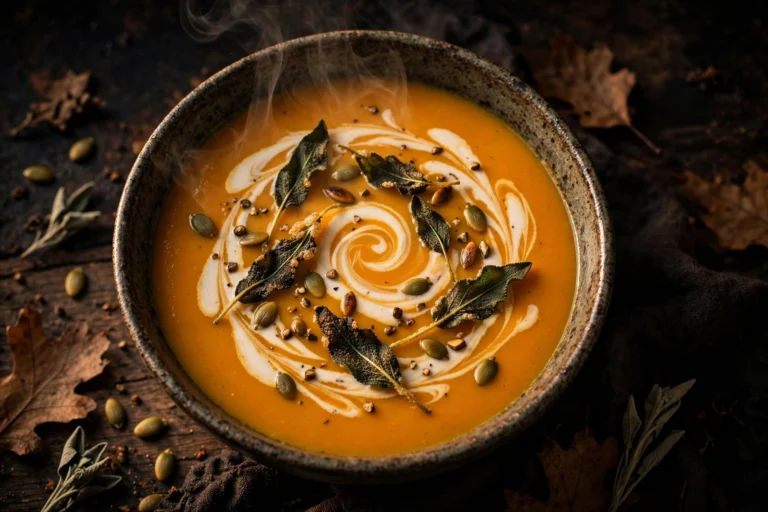
The garnish is part of the recipe, not an afterthought. Pumpkin seeds toasted with a teaspoon of maple syrup and a pinch of salt give the smooth soup its crunch, the contrast every spoonful needs. Smooth soups live or die on that final texture, and the seeds deliver it in every bowl.
Served in larger bowls, the same pot becomes a light main course for six, especially with a slice of whole grain toast for dipping. The protein stays modest, so on those nights a handful of white beans blended in quietly raises it without changing the flavor.
Ingredients for the Healthy Butternut Squash Soup
- 1 large butternut squash, about 3 pounds (1.4 kg), halved lengthwise and seeded
- 1 medium yellow onion, quartered
- 1 small Honeycrisp apple, halved and cored
- 4 cloves garlic, unpeeled
- 2 tablespoons olive oil, divided
- 1 teaspoon fine sea salt, divided, plus more to taste
- 1/2 teaspoon black pepper
- 1 tablespoon chopped fresh sage, or 1 teaspoon dried rubbed sage
- 1/2 teaspoon ground cinnamon
- 1/4 teaspoon ground nutmeg
- 3 1/2 cups low sodium vegetable broth, plus more as needed
- 1 tablespoon pure maple syrup, optional
- 1/2 cup plain nonfat Greek yogurt, at room temperature, plus more for serving
- 1/4 cup raw pumpkin seeds (pepitas), 1 teaspoon maple syrup and a pinch of salt, for the garnish
On a full Thanksgiving menu, this soup loves company like our Healthy Cornbread Stuffing, which can bake while the squash roasts and share the same oven heat.
How to Make Healthy Butternut Squash Soup
- Heat the oven to 425 degrees F (220 degrees C). Line a large rimmed baking sheet with parchment paper.
- Arrange the squash halves cut side up on the sheet with the onion quarters, apple halves and garlic cloves. Drizzle with 1 tablespoon of the olive oil and sprinkle with 1/2 teaspoon of the salt and all the pepper, then turn the squash cut side down.
- Roast for 35 to 40 minutes, until the squash flesh is very tender when pierced and the cut edges are deeply golden.
- Rest the tray for 10 minutes. Scoop the squash flesh into a large pot, squeeze the garlic out of its skins, and add the roasted onion and apple.
- Add the sage, cinnamon, nutmeg, remaining salt, remaining olive oil and 3 cups of the broth. Simmer gently for 10 minutes so the flavors settle together.
- Blend until completely silky, working in batches if needed, and add the remaining broth a splash at a time until the soup pours like thick cream.
- Temper the yogurt with a ladle of hot soup, then stir it into the pot off the heat. Add the maple syrup if you like, and adjust the salt.
- Toast the pumpkin seeds in a dry skillet for about 3 minutes, add the teaspoon of maple syrup and the pinch of salt, stir 30 seconds more, and tip onto parchment to cool.
- Serve the soup with a yogurt swirl and a spoonful of the maple pepitas over each bowl.
Too Thin or Too Thick? The Texture Fixes
Squash vary in water content, so even a careful recipe needs adjustments. If the soup pours like milk, simmer it uncovered for 10 minutes to concentrate, or blend in a handful of the thickest squash flesh you reserved from the tray.
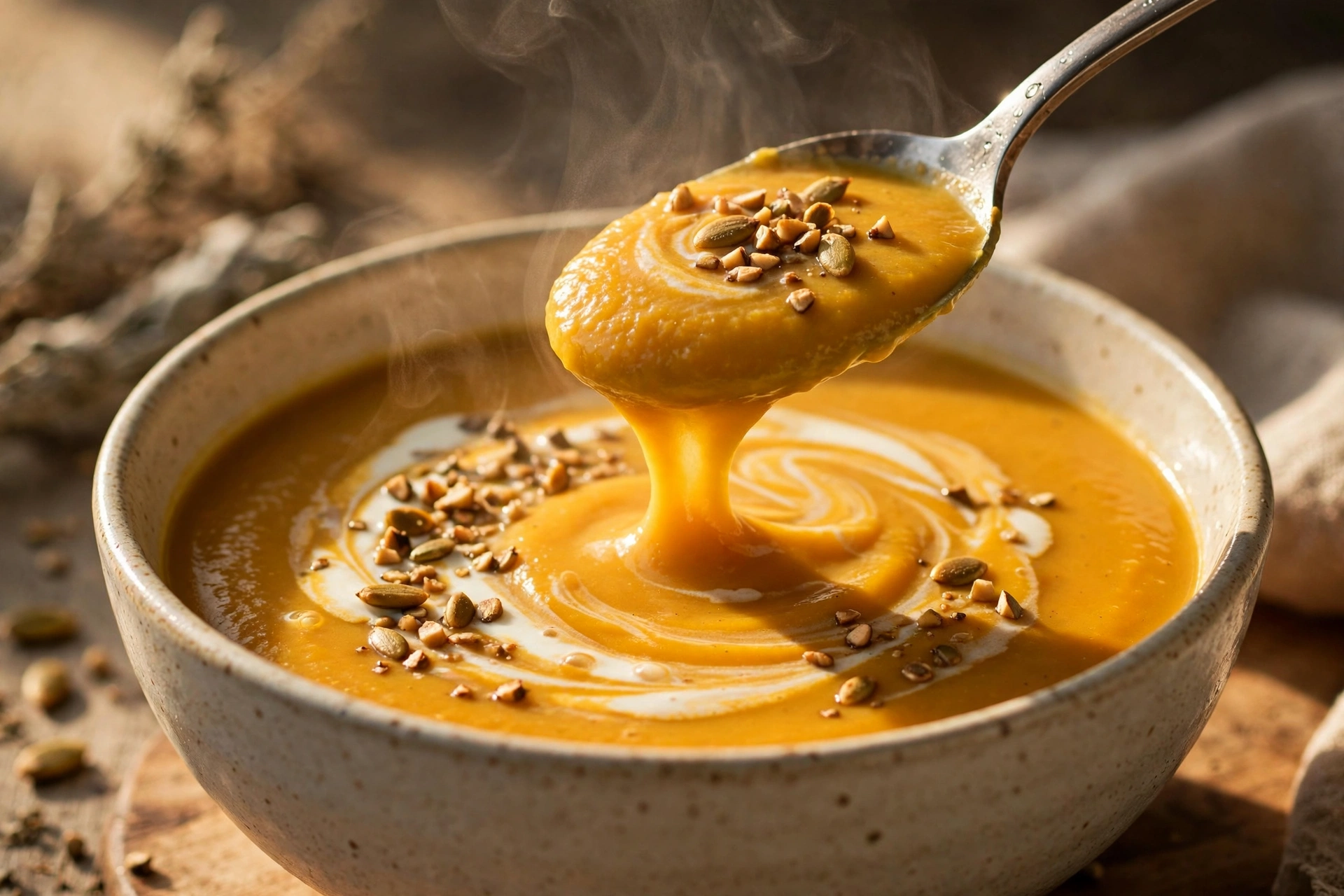
If it stands like mashed potatoes, the fix is broth, added a quarter cup at a time and blended after each addition. This is where a healthy butternut squash soup earns its silky reputation: patience with the liquid, not extra fat, gives the spoon coating texture.
Taste at the end, not the beginning. Salt reads differently once the yogurt goes in, and a final quarter teaspoon often wakes up the whole pot. A squeeze of lemon, though not traditional, brightens a batch that tastes flat.
Leftovers thicken overnight as the squash keeps absorbing liquid, which is normal and easy to correct. Reheat gently with a splash of broth, whisking as it warms, and never let it boil once the yogurt is in. The texture returns to silky within minutes.
Blending Hot Soup Without the Steam Eruption
Hot soup expands in a sealed blender and can blow the lid off, which is the one real danger in this recipe. Fill the jar no more than half full, hold a folded towel firmly over the lid, and start on the lowest speed.
Better still, crack the lid insert open for the first seconds so steam escapes, then close it and blend at full power for a full minute. A soup can look blended at twenty seconds and still be fibrous; the extra time is what makes it pour like velvet.
An immersion blender works directly in the pot and skips the transfer entirely. Keep the head fully submerged and move it slowly, and accept a texture a shade less perfect than the countertop blender gives. Both routes are fine; choose the one you trust.
Curried, Smoky and Fully Vegan Variations
For a curried version, add 2 teaspoons of mild curry powder and a grated teaspoon of fresh ginger with the spices, and finish with lime juice instead of maple. The squash takes the warmth gracefully and the bowl reads entirely new.
For a smoky version, stir in half a teaspoon of smoked paprika and serve with an extra thread of olive oil. It pairs especially well with our Healthy Herb Roasted Turkey Breast for smaller Thanksgiving gatherings.
For a fully vegan pot, replace the yogurt with half a cup of blended silken tofu or a swirl of oat based yogurt, added off the heat the same way. Everything else in the recipe, the MyPlate style vegetable base included, is already plant based.
A toppings bar turns the soup into a small event for guests: the maple pepitas, extra yogurt in a pitcher, fried sage leaves, a bowl of finely diced raw apple for brightness. People season their own bowls, and the plainest soup of the day becomes the course everyone talks about.
The Thanksgiving Plan: Make It Three Days Early
This healthy butternut squash soup may be the calmest dish on your entire holiday menu, because it improves as it rests. Make it up to three days ahead, but hold the yogurt: cool the blended soup quickly, refrigerate it plain, and add the tempered yogurt only after reheating.
It also freezes beautifully for up to three months, again without the yogurt and the garnish. Thaw overnight in the refrigerator, reheat gently without boiling, then finish and garnish as if it were fresh. The maple pepitas keep a week in a jar.
On the day itself, the soup waits on the lowest burner while everything else fights for oven space, and a ladle of our Healthy Turkey Gravy nearby means the first two courses are handled by the two calmest pots in the kitchen.
For portion planning, this pot gives six generous starter bowls or eight smaller cups for a long menu with many courses. If your table leans toward the cup format, stretch the batch with an extra half cup of broth and know that the flavor, built on a full roasted squash, will not dilute.
Conclusion
This healthy butternut squash soup asks almost nothing of you: no peeling, no cubing, no cream. In return it gives a roasted, sage scented bowl with a yogurt swirl and crunchy maple seeds, ready days before the holiday. Pour it as the first course, and Thanksgiving starts gently.
FAQ
My soup came out stringy. Did I choose a bad squash?
Strings usually mean the squash was under roasted or very large and old. Choose a squash that feels heavy for its size, with matte tan skin and a long thick neck, and roast until the flesh collapses at a touch. A full minute of blending also erases most fibers.
The yogurt curdled into white flecks. What went wrong?
The soup was boiling or the yogurt went in fridge cold. Always temper it: whisk the room temperature yogurt with a ladle of hot soup until smooth and warm, then stir it back in off the heat. Flecked soup still tastes fine and blends smooth again with ten seconds of immersion blending.
Can I make this soup without a countertop blender?
Yes. An immersion blender used directly in the pot works well, as long as the head stays submerged and you blend for at least two minutes. A food mill is the old fashioned third option. Avoid a food processor, which leaks thin liquids and leaves the texture coarse.
What can replace the apple if I do not have one?
A ripe pear is the closest swap and roasts the same way. Half a cup of unsweetened applesauce stirred in at the simmer works too. Or use a large carrot on the tray for a quieter sweetness; the soup will taste more purely of squash and sage.
Does this butternut squash soup freeze well for a make ahead Thanksgiving?
It freezes very well for up to three months, with two conditions: freeze it before adding the yogurt, and freeze the garnish separately or make it fresh. Thaw overnight in the refrigerator, reheat gently without boiling, then temper and stir in the yogurt just before serving.
Healthy Butternut Squash Soup
Butternut squash roasted in halves with onion, apple and whole garlic, so there is no peeling and no cubing. Blended silky with sage and warm spices, then finished with a Greek yogurt swirl and crunchy maple pepitas. About 175 calories a bowl, and it can be made three days before Thanksgiving.
- Total Time: 1 hour
- Yield: 6 servings 1x
Ingredients
- 1 large butternut squash, about 3 pounds (1.4 kg), halved lengthwise and seeded
- 1 medium yellow onion, quartered
- 1 small Honeycrisp apple, halved and cored
- 4 cloves garlic, unpeeled
- 2 tablespoons olive oil, divided
- 1 teaspoon fine sea salt, divided, plus more to taste
- 1/2 teaspoon black pepper
- 1 tablespoon chopped fresh sage, or 1 teaspoon dried rubbed sage
- 1/2 teaspoon ground cinnamon
- 1/4 teaspoon ground nutmeg
- 3 1/2 cups low sodium vegetable broth, plus more as needed
- 1 tablespoon pure maple syrup, optional
- 1/2 cup plain nonfat Greek yogurt, at room temperature, plus more for serving
- 1/4 cup raw pumpkin seeds (pepitas), 1 teaspoon maple syrup and a pinch of salt, for the garnish
Instructions
- Heat the oven to 425 degrees F (220 degrees C). Line a large rimmed baking sheet with parchment paper.
- Arrange the squash halves cut side up on the sheet with the onion quarters, apple halves and garlic cloves. Drizzle with 1 tablespoon of the olive oil, sprinkle with 1/2 teaspoon of the salt and all the pepper, then turn the squash cut side down.
- Roast for 35 to 40 minutes, until the squash flesh is very tender when pierced and the cut edges are deeply golden.
- Rest the tray for 10 minutes. Scoop the squash flesh into a large pot, squeeze the garlic out of its skins, and add the roasted onion and apple.
- Add the sage, cinnamon, nutmeg, remaining salt, remaining olive oil and 3 cups of the broth. Simmer gently for 10 minutes.
- Blend until completely silky, working in batches if needed, and add the remaining broth a splash at a time until the soup pours like thick cream.
- Temper the yogurt with a ladle of hot soup, then stir it into the pot off the heat. Add the maple syrup if you like, and adjust the salt.
- Toast the pumpkin seeds in a dry skillet for about 3 minutes, add the teaspoon of maple syrup and the pinch of salt, stir 30 seconds more, and tip onto parchment to cool.
- Serve the soup with a yogurt swirl and a spoonful of the maple pepitas over each bowl.
- Prep Time: 15 minutes
- Cook Time: 45 minutes

2 Comments
Comments are closed.