
Creamy Butternut Squash Soup (Dairy-Free)
In this article:
Why This Creamy Butternut Squash Soup Recipe Works
Creamy Butternut Squash Soup gets its velvet texture without a single drop of dairy, and that restraint is exactly why it works. Roasting the squash cut side down caramelizes its natural sugars, building a deep, sweet base that simmered squash alone can never reach.
A can of full fat coconut milk adds the richness, while fresh ginger and a spoonful of maple syrup keep the flavor bright instead of heavy. Blooming the spices in hot oil before the broth goes in wakes up the cinnamon and nutmeg, so every spoonful tastes layered rather than flat.
The technique stays honest: one sheet pan, one pot, and a blender do all the work, with nothing fussy in between. Finish it with crackling sage leaves and toasted pepitas, and a humble weeknight soup eats like something from a restaurant menu.
Creamy Butternut Squash Soup is the bowl I reach for the moment October air turns sharp and the squash bins overflow at the market. It tastes like fall concentrated: sweet roasted edges, warm spice humming underneath, and a finish so silky you will check the ingredient list twice.
This version skips the heavy cream entirely, leaning on roasted squash and coconut milk for body, which keeps it light enough for a weeknight but lush enough for guests. The whole pot comes together in about an hour, most of it hands off while the oven does the heavy lifting.
Serve it as a starter for a holiday dinner or as the main event with crusty bread, and it never disappoints. If roasted squash is your love language, our quinoa stuffed acorn squash delivers the same caramelized comfort in a heartier, stuffable form.

Flavor and Texture
The first spoonful is pure silk, a smooth, almost custardy puree that coats the tongue. Roasting brings out toffee notes boiling cannot match, with browned edges like the best part of a roasted vegetable tray. Coconut milk rounds everything out with gentle richness, smoothing the corners without shouting coconut.
Fresh ginger cuts through that richness with a warm, peppery lift, keeping the soup lively from the first bite to the last. Cinnamon and nutmeg sit quietly in the background, unmistakably autumnal but never pushing the bowl toward dessert.
A spoonful of maple syrup amplifies the squash’s own sweetness, while a splash of apple cider vinegar at the end snaps the flavors into focus. That sweet to savory balance is what separates a good squash soup from a forgettable one.
Then come the toppings, and they matter more than you think. Sage leaves fried until they shatter add an earthy, almost smoky crunch that plays beautifully against the smooth soup. Toasted pepitas bring a nutty pop and a little green color, so each spoonful has something to chew.
Serve it piping hot and the contrast peaks: steamy silk below, crisp crackle on top. Cooled slightly, the flavors meld and deepen, which is why the leftovers taste even better the next day.
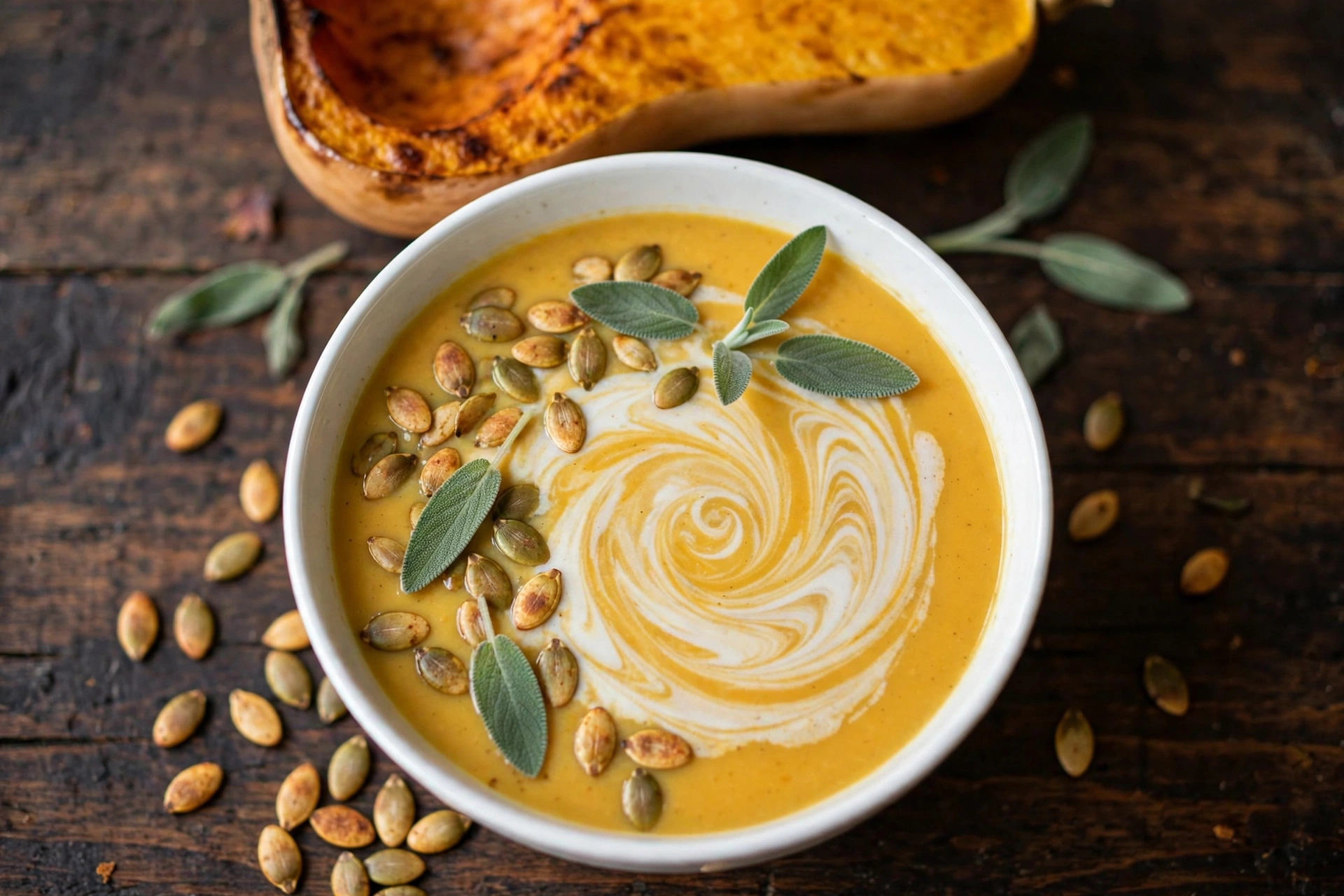
The aroma alone tells you autumn has arrived: caramelized squash, warm cinnamon, and that distinctive fried sage perfume drifting from the skillet. Visually, the bowl is a stunner, with a deep orange canvas, a white coconut swirl, dark green sage, and golden pepitas scattered like confetti.
It photographs beautifully for a dinner party, yet it asks for nothing more than a spoon. Every sense gets something, which is rare for a soup this simple.
This is a true one pot plus one pan dinner, which means the sink stays mercifully empty. Hands on work takes about twenty minutes: halving the squash, chopping the aromatics, and blending at the end.
The oven handles the squash for forty five minutes while the soup base simmers away on the stove, so the two timelines overlap neatly. Nothing needs precise timing or constant stirring, which makes it a calm Sunday project or a low stress weeknight cook.
Convenience and Time
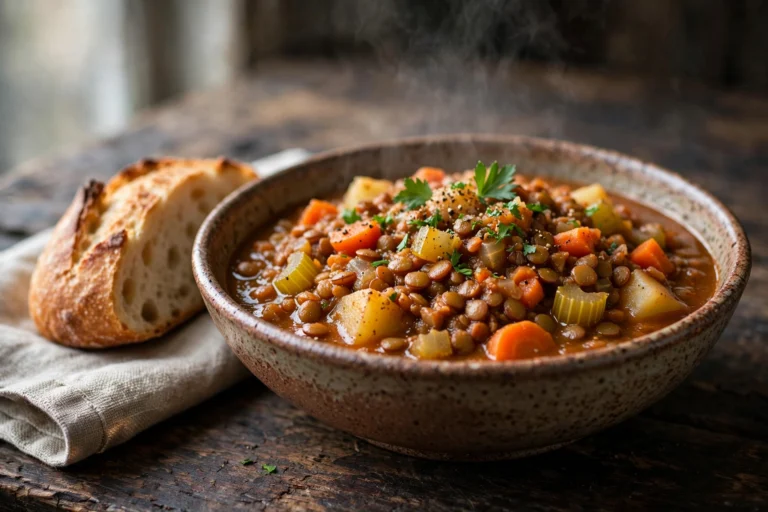
It scales beautifully, too: double everything for a crowd and use your largest pot, with no technique changes required. For another cozy one pot meal with the same low effort, our nourishing lentil and vegetable stew delivers deep comfort with minimal fuss.
Kids tend to love this soup because it is naturally sweet and completely smooth. Once you see how easily this creamy butternut squash soup comes together, it will earn a permanent spot in your fall rotation. Serve it in mugs as a starter, in deep bowls as a main, or pack it in jars for lunch.
Timing is forgiving: the squash and the soup base cook independently, so extra oven time never hurts. Roast the squash in the morning and finish the soup at dinner to split the work across the day. Few recipes respect a busy schedule this gracefully while tasting like a special occasion.
This soup is naturally vegan and gluten free, which makes it an easy fit for mixed tables during the holidays. Coconut milk keeps it dairy free without sacrificing an ounce of creaminess, and the whole pot lands around 210 calories per serving with real fiber.
Per the USDA FoodData Central database, butternut squash delivers serious vitamin A and potassium in every bowl. Healthline notes that one cup of cooked squash provides well over 400 percent of the daily value for vitamin A. Watching sugar? Cut the maple syrup to one teaspoon or skip it, since roasted squash brings plenty of natural sweetness.
For a nut free table, this recipe is already safe, and the pepita topping adds crunch without any tree nuts in sight. Need more protein to make it a full meal?
Stir in a cup of cooked white beans before blending, or serve it alongside our protein packed quinoa black bean bowl. Paleo and Whole30 cooks can enjoy it as written, just confirm your broth has no added sugar.
Pick a squash that feels heavy for its size, with matte, deep tan skin and no soft spots or green streaks. If the squash fights your knife, microwave the whole thing for three minutes to soften the skin, then halve it safely.
Roast cut side down without fail: direct contact with the hot pan is what builds the caramelized flavor. Do not skimp on the blending time; a full two to three minutes with an immersion blender is the difference between smooth and silky.
Diet Friendly Options
When using a countertop blender, work in batches and vent the lid, since hot soup expands and can blow the top off. Salt in layers, a little on the squash, a little on the vegetables, then adjust at the end, because under salted squash soup always tastes flat.
Add the vinegar off the heat and taste before adding more; acid is the secret that makes the sweetness sing. Fry the sage at the very last minute, since it loses its shatter within an hour of cooking. If the soup thickens in the fridge, whisk in a splash of broth while reheating and it returns to perfect silk.
Warm your serving bowls with hot water before ladling, since this soup cools quickly and shows best when steaming. Serving a crowd? Keep the pot on low with the lid ajar, and fry the sage in batches as guests arrive. Never boil the soup hard after adding the coconut milk; a gentle simmer keeps it glossy.
No coconut milk? Blend one cup of soaked raw cashews with one cup of water until completely smooth for an equally lush dairy free base. Oat milk works in a pinch, though the soup will be lighter and less rich.
Swap the butternut for kabocha or red kuri squash; both roast beautifully and bring an even denser sweetness. Trade the ginger for a tablespoon of red curry paste to take the whole pot in a Thai inspired direction.
Ingredients
- 1 large butternut squash (about 1.4 kg / 3 lb), halved lengthwise and seeded
- 2 tablespoons extra virgin olive oil, divided
- 1 teaspoon fine sea salt, divided, plus more to taste
- 1/2 teaspoon freshly ground black pepper
- 1 large yellow onion, roughly chopped (about 1 1/2 cups)
- 2 medium carrots, peeled and chopped
- 2 celery stalks, chopped
- 4 garlic cloves, peeled and smashed
- 1 tablespoon grated fresh ginger
- 1/2 teaspoon ground cinnamon
- 1/4 teaspoon ground nutmeg
- 1/4 teaspoon cayenne pepper (optional)
- 4 cups (960 ml) low sodium vegetable broth
- 1 can (400 ml) full fat coconut milk, shaken well
- 1 tablespoon pure maple syrup
- 1 tablespoon apple cider vinegar
- 12 fresh sage leaves
- 1/3 cup raw pepitas (pumpkin seeds)
Step by Step Instructions
- Heat the oven to 400 F (200 C) and line a large rimmed baking sheet with parchment paper. Rub the cut sides of the squash with 1 tablespoon of the olive oil, 1/2 teaspoon of the salt, and all of the black pepper. Place the halves cut side down on the sheet and roast for 40 to 45 minutes, until deeply caramelized at the edges and completely fork tender.
- While the squash roasts, heat the remaining tablespoon of olive oil in a large Dutch oven or heavy pot over medium heat. Add the onion, carrots, and celery with the remaining 1/2 teaspoon of salt. Cook for 8 to 10 minutes, stirring occasionally, until softened and golden at the edges.
- Add the garlic, ginger, cinnamon, nutmeg, and cayenne if using. Stir constantly for 1 minute until intensely fragrant. Blooming the spices in the hot oil like this wakes up their flavor far better than adding them to liquid.
- Pour in the vegetable broth, scraping up any browned bits from the bottom of the pot with a wooden spoon. Bring to a gentle boil, then reduce the heat and simmer for 15 minutes, until the carrots and celery are completely tender.
- Scoop the roasted squash flesh away from the skins and add it to the pot along with 3/4 cup of the coconut milk. Discard the skins. The squash should be so soft it nearly collapses when scooped.
- Blend until completely silky: use an immersion blender directly in the pot for 2 to 3 full minutes, or transfer the soup to a countertop blender in batches. If using a countertop blender, vent the lid and cover it with a towel, since hot soup expands.
- Stir in the maple syrup and the apple cider vinegar. Taste carefully and adjust with more salt as needed. If the soup feels too thick, whisk in a splash of warm broth until it flows like heavy cream.
- Crisp the sage: heat 1 tablespoon of olive oil in a small skillet over medium high heat until shimmering. Fry the sage leaves for 20 to 30 seconds until crisp and darkened, working in two batches if needed. Drain on a paper towel and sprinkle lightly with salt.
- Toast the pepitas in a dry skillet over medium heat for 3 to 4 minutes, shaking often, until they pop and turn golden. Watch them closely, since they go from toasted to burnt quickly.
- Ladle the hot soup into warm bowls. Swirl a spoonful of the remaining coconut milk over each serving, then top with crispy sage leaves and toasted pepitas. Serve immediately.
Tips and Tricks for Creamy Butternut Squash Soup Success
A diced apple added with the carrots brings a bright, orchard sweetness that loves the cinnamon. For a smoky version, add half a teaspoon of smoked paprika with the other spices.
Top it Moroccan style with a swirl of harissa thinned with olive oil instead of the sage. Pair the finished bowls with a crisp side like our roasted beet and citrus salad, whose bright acidity cuts the soup’s richness perfectly.
Leftover creamy butternut squash soup keeps for five days in the refrigerator in sealed jars, and the flavor deepens overnight. Reheat gently on the stove over medium low heat, whisking in a splash of broth to loosen it back to silk.
It freezes beautifully for up to three months; freeze without the sage and pepita toppings, which go soggy. Thaw overnight in the refrigerator, then reheat and blend briefly if the texture separated at all.
For a dinner party, cook the soup fully two days early and refrigerate, then fry fresh sage just before serving. The roasted squash itself can be prepped a day ahead, which cuts day of work to about thirty minutes. Coconut milk sometimes looks grainy after freezing; a quick blitz with the immersion blender brings it right back.
Creamy Butternut Squash Soup proves that the coziest fall cooking needs no cream, no fuss, and no special equipment. Roast, simmer, blend, and garnish: four moves stand between you and the silkiest bowl of the season.
Make it once for the beauty of that coconut swirl, then make it again because your freezer and your future self will thank you. When the leaves turn, this is the soup that tastes like home.
Ingredient Swaps and Variations
Storage and Make Ahead
Conclusion
If your squash runs large, you may have extra roasted flesh — freeze it in one-cup portions for instant soup starters later. And do not skip warming the bowls; this soup loses its magic fast when it hits a cold dish. Small details, big payoff.
FAQ
Why is my butternut squash soup grainy instead of silky?
Graininess almost always means under roasting or under blending. Roast until a fork slides through with zero resistance and the cut faces show deep caramelization, then blend a full two to three minutes. An immersion blender left running longer is the fix; a rushed thirty second blitz is the cause.
Can I make creamy butternut squash soup without coconut milk?
Yes. Blend one cup of soaked raw cashews with one cup of water until completely smooth and use it in place of the coconut milk. Oat milk also works but gives a lighter body. Either way, keep the maple syrup and vinegar, since they balance the soup no matter which creamy base you choose.
How do I cut a butternut squash safely without wrestling it?
Microwave the whole squash for three minutes to soften the skin, let it cool for a minute, then trim both ends to create flat, stable surfaces. Stand it upright and slice down through the center with a sharp chef’s knife. Never try to peel it raw first; roast with the skin on and scoop the flesh out after.
Why does my squash soup taste bland even with salt?
Bland squash soup usually misses acid, not salt. Stir in the apple cider vinegar at the very end and taste again before adding more salt. Layering matters too: season the squash before roasting and the vegetables while they saute, so flavor builds at every stage instead of sitting on top.
Can I freeze this soup with the coconut milk in it?
Yes, it freezes well for up to three months. Coconut milk can look slightly grainy after thawing, but a quick blitz with an immersion blender while reheating restores the silk. Freeze the soup base only and add fresh crispy sage and toasted pepitas after reheating.
Creamy Butternut Squash Soup (Dairy-Free)
Ingredients
- 1 large butternut squash (about 1.4 kg / 3 lb), halved lengthwise and seeded2 tablespoons extra virgin olive oil, divided1 teaspoon fine sea salt, divided, plus more to taste1/2 teaspoon freshly ground black pepper1 large yellow onion, roughly chopped (about 1 1/2 cups)2 medium carrots, peeled and chopped2 celery stalks, chopped4 garlic cloves, peeled and smashed1 tablespoon grated fresh ginger1/2 teaspoon ground cinnamon1/4 teaspoon ground nutmeg1/4 teaspoon cayenne pepper (optional)4 cups (960 ml) low sodium vegetable broth1 can (400 ml) full fat coconut milk, shaken well1 tablespoon pure maple syrup1 tablespoon apple cider vinegar12 fresh sage leaves1/3 cup raw pepitas (pumpkin seeds)
Instructions
- Heat the oven to 400 F (200 C) and line a large rimmed baking sheet with parchment paper. Rub the cut sides of the squash with 1 tablespoon of the olive oil, 1/2 teaspoon of the salt, and all of the black pepper. Place the halves cut side down on the sheet and roast for 40 to 45 minutes, until deeply caramelized at the edges and completely fork tender.While the squash roasts, heat the remaining tablespoon of olive oil in a large Dutch oven or heavy pot over medium heat. Add the onion, carrots, and celery with the remaining 1/2 teaspoon of the salt. Cook for 8 to 10 minutes, stirring occasionally, until softened and golden at the edges.Add the garlic, ginger, cinnamon, nutmeg, and cayenne if using. Stir constantly for 1 minute until intensely fragrant. Blooming the spices in the hot oil like this wakes up their flavor far better than adding them to liquid.Pour in the vegetable broth, scraping up any browned bits from the bottom of the pot with a wooden spoon. Bring to a gentle boil, then reduce the heat and simmer for 15 minutes, until the carrots and celery are completely tender.Scoop the roasted squash flesh away from the skins and add it to the pot along with 3/4 cup of the coconut milk. Discard the skins. The squash should be so soft it nearly collapses when scooped.Blend until completely silky: use an immersion blender directly in the pot for 2 to 3 full minutes, or transfer the soup to a countertop blender in batches. If using a countertop blender, vent the lid and cover it with a towel, since hot soup expands.Stir in the maple syrup and the apple cider vinegar. Taste carefully and adjust with more salt as needed. If the soup feels too thick, whisk in a splash of warm broth until it flows like heavy cream.Crisp the sage: heat 1 tablespoon of olive oil in a small skillet over medium high heat until shimmering. Fry the sage leaves for 20 to 30 seconds until crisp and darkened, working in two batches if needed. Drain on a paper towel and sprinkle lightly with salt.Toast the pepitas in a dry skillet over medium heat for 3 to 4 minutes, shaking often, until they pop and turn golden. Watch them closely, since they go from toasted to burnt quickly.Ladle the hot soup into warm bowls. Swirl a spoonful of the remaining coconut milk over each serving, then top with crispy sage leaves and toasted pepitas. Serve immediately.

One Comment
Comments are closed.