
Roasted Beet and Citrus Salad
In this article:
- Why This Roasted Beet and Citrus Salad Recipe Works
- Flavor and Texture
- Convenience and Time
- Diet Friendly Options
- Ingredients
- Step by Step Instructions
- Tips and Tricks for Roasted Beet and Citrus Salad Success
- Golden vs. Red Beets: Which to Choose
- Ingredient Swaps and Variations
- What to Serve With Roasted Beet and Citrus Salad
- Storage and Make Ahead
- Conclusion
- FAQ
Why This Roasted Beet and Citrus Salad Recipe Works
Roasted Beet and Citrus Salad is the winter salad that eats like a celebration and nourishes like a tonic. The formula is built on contrast: earthy, caramelized beets against juicy citrus, with peppery arugula bridging the two. Roasting turns beets from dense and earthy into something silky and sweet, while a citrus vinaigrette ties every component into one bite.
The technique is simple but deliberate. Wrapping the beets in foil lets them steam in their own juices, concentrating their sugars instead of drying them out. Segmenting the citrus, rather than slicing it into wheels, removes every trace of bitter pith and gives you clean, glistening jewels of fruit.
It also looks like a jewel box, which makes it a natural showpiece for holiday tables and dinner parties. For another colorful starter, try our refreshing vegan gazpacho when tomatoes are at their peak. Every plate delivers color, crunch, and brightness in perfect balance.
Roasted Beet and Citrus Salad brings the sunshine of citrus season straight into fall and winter. The deep ruby of the beets, the coral of blood oranges, and the pale green of shaved fennel look stunning on a white platter. It is the kind of dish that makes guests pause before they pick up a fork.
The flavor story is just as compelling as the visuals. Sweet roasted beets, tart citrus, salty pistachios, and creamy goat cheese hit every corner of the palate in a single forkful. Peppery arugula and anise scented fennel keep the richness in check and add a fresh, green lift. No single ingredient dominates, the mark of a well composed salad.
Best of all, it fits the way we actually cook in the colder months. The beets roast unattended while you segment citrus and whisk a quick vinaigrette, so the active work stays under thirty minutes. If you love bright composed salads, our creamy cucumber salad is another crisp, refreshing favorite to keep in rotation. Even beginners can nail it.
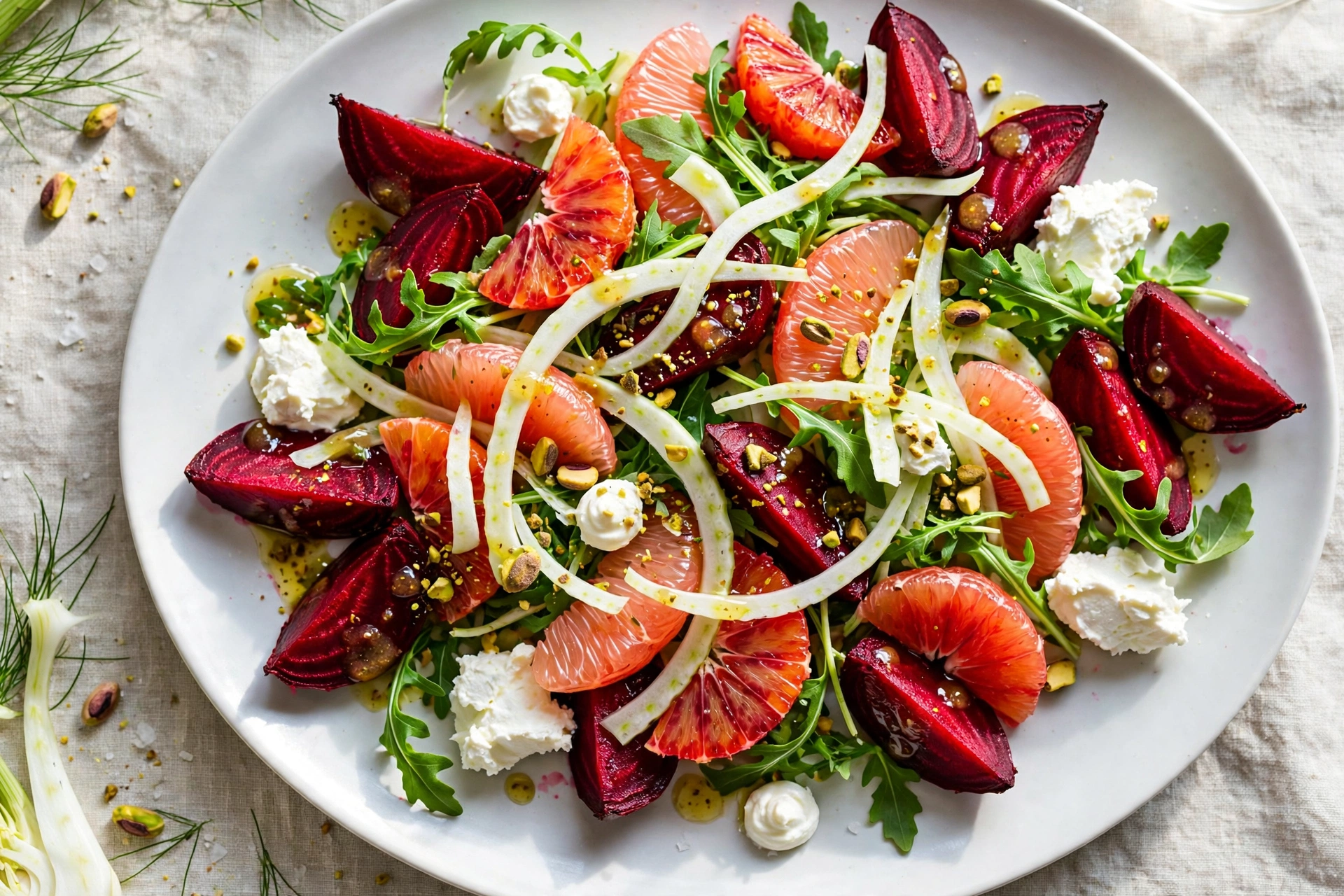
Flavor and Texture
The first bite is all about the beets: dense, velvety, and deeply sweet, with caramelized edges that taste almost like roasted candy. Their earthiness is gentle rather than muddy, a mineral richness that feels grounding and satisfying. Against that depth, the citrus bursts with clean acidity and floral perfume.
Blood oranges bring berry like notes and dramatic color, while grapefruit adds a pleasant bitter edge that keeps the roasted beet and citrus salad from tasting one dimensional. Each segment is juicy and tender, with no membrane or pith to interrupt the texture. The contrast between warm toned beets and cool, bright citrus is what makes the combination classic.
Then the supporting players arrive. Shaved fennel contributes a crisp, almost icy crunch and a whisper of anise that perfumes the whole plate. Baby arugula adds peppery bite and a soft, leafy bed that catches the vinaigrette beautifully. Together they keep the roasted beet and citrus salad feeling light and alive.
Crunch comes from toasted pistachios, buttery and faintly sweet, scattered generously over the top. Creamy goat cheese melts slightly against the warm beets, adding tangy richness in every third or fourth bite. Fresh mint lifts everything with a cool, clean finish that makes you reach for more.
The vinaigrette deserves its own praise. Fresh orange juice and honey echo the fruit on the plate, while Dijon mustard gives the dressing body and a gentle sharpness. It is glossy, balanced, and just thick enough to cling to every leaf and wedge.
Nutritionally, the plate is a quiet powerhouse. Beets are rich in folate, potassium, and nitrates, with research linking beets to healthy blood pressure and exercise performance. Citrus delivers a full day of vitamin C, and the olive oil helps your body absorb the fat soluble nutrients. Eating the rainbow has rarely tasted this good.
Convenience and Time
The beauty of roasted beet and citrus salad is that the oven does the heavy lifting. Wrapping the beets in foil and roasting them takes five minutes of hands on effort, then forty five minutes of unattended time. During that window you can segment the citrus, shave the fennel, and whisk the vinaigrette at a relaxed pace.
It is also a perfect make ahead entertaining dish. Roast the beets up to three days in advance and refrigerate them whole and unpeeled. Segment the citrus a day ahead and keep it in its juice. On serving day, assembly takes ten minutes flat.
The recipe scales gracefully for crowds. Double or triple the beets across two sheet pans, whisk a bigger batch of vinaigrette, and build the salad on a large platter instead of individual plates. For more easy entertaining ideas, browse our easy summer salads collection for inspiration across the seasons.
Cleanup is refreshingly simple. One sheet of foil per beet, one bowl for the vinaigrette, and a platter for serving. Few impressive dishes ask so little of the cook and the kitchen. You will spend more time eating it than cleaning up after it.
Cooking for two? Halve everything except the vinaigrette: whisk the full batch and save half in a jar for the week, since beets roast just as well in small quantities. Check small beets early, because two medium beets can finish a full fifteen minutes before a big batch.
Diet Friendly Options
This roasted beet and citrus salad is naturally vegetarian and gluten free, built entirely from whole produce, nuts, and olive oil. Each generous serving lands around 310 calories, with fiber from the beets and arugula and healthy fats from the pistachios and dressing. You can confirm the detailed nutrition profile through the USDA FoodData Central database.
For a fully vegan version, swap the honey for pure maple syrup and replace the goat cheese with diced ripe avocado. The avocado adds the same creamy contrast and brings heart healthy monounsaturated fats. Nut free diners can trade the pistachios for toasted sunflower seeds or pumpkin seeds.
To lower the natural sugar, use an extra grapefruit in place of one blood orange and reduce the honey to two teaspoons. The salad stays vibrant and balanced, just a touch more savory. It adapts without ever feeling like a lesser version of itself. Small tweaks, same stunning result.
Ingredients
- 4 medium beets (about 900 g), red and golden mixed, scrubbed and trimmed
- 2 tablespoons extra virgin olive oil, plus more for drizzling
- 1/2 teaspoon fine sea salt
- 1/4 teaspoon freshly ground black pepper
- 2 blood oranges
- 1 large pink grapefruit
- 1 small fennel bulb, very thinly shaved
- 4 cups baby arugula
- 1/3 cup shelled pistachios, toasted and roughly chopped
- 1/3 cup crumbled goat cheese (or 1 ripe avocado, diced, for dairy free)
- 2 tablespoons fresh mint leaves, torn
- 3 tablespoons fresh orange juice, for the vinaigrette
- 1 tablespoon fresh lemon juice, for the vinaigrette
- 1 tablespoon honey, for the vinaigrette
- 1 teaspoon Dijon mustard, for the vinaigrette
- 1/3 cup extra virgin olive oil, for the vinaigrette
- 1/4 teaspoon fine sea salt, for the vinaigrette
- 1/8 teaspoon freshly ground black pepper, for the vinaigrette
Step by Step Instructions
- Heat the oven to 400 F (200 C). Wrap each beet individually in foil with a light drizzle of olive oil and a pinch of salt, then place them on a rimmed baking sheet.
- Roast for 45 to 60 minutes, until a thin knife slides easily into the center of the largest beet. Smaller beets will finish sooner, so check them at the 45 minute mark.
- Let the beets cool for 10 minutes, then rub the skins off with paper towels or wear gloves and slip them off under cool running water. Cut each beet into 6 to 8 wedges.
- While the beets roast, supreme the citrus. Cut a thin slice off the top and bottom of each fruit so it sits flat, then follow the curve with your knife to remove all peel and white pith. Working over a bowl to catch the juice, cut between the membranes to release clean segments.
- Whisk the orange juice, lemon juice, honey, and Dijon in a small bowl. Stream in the 1/3 cup of olive oil while whisking constantly until glossy and slightly thickened. Season with the 1/4 teaspoon of salt and 1/8 teaspoon of pepper.
- Shave the fennel paper thin with a mandoline or a very sharp knife. Soak the slices in ice water for 10 minutes for extra crunch, then drain and pat dry.
- Spread the arugula over a large serving platter. Arrange the beet wedges, citrus segments, and shaved fennel over the greens in colorful, overlapping rows.
- Drizzle with half of the vinaigrette, letting it fall over the beets and citrus where it will glisten. Reserve the rest for the table so guests can add more.
- Scatter the toasted pistachios, goat cheese, and torn mint over the top. Finish with a thread of your best olive oil and serve immediately.
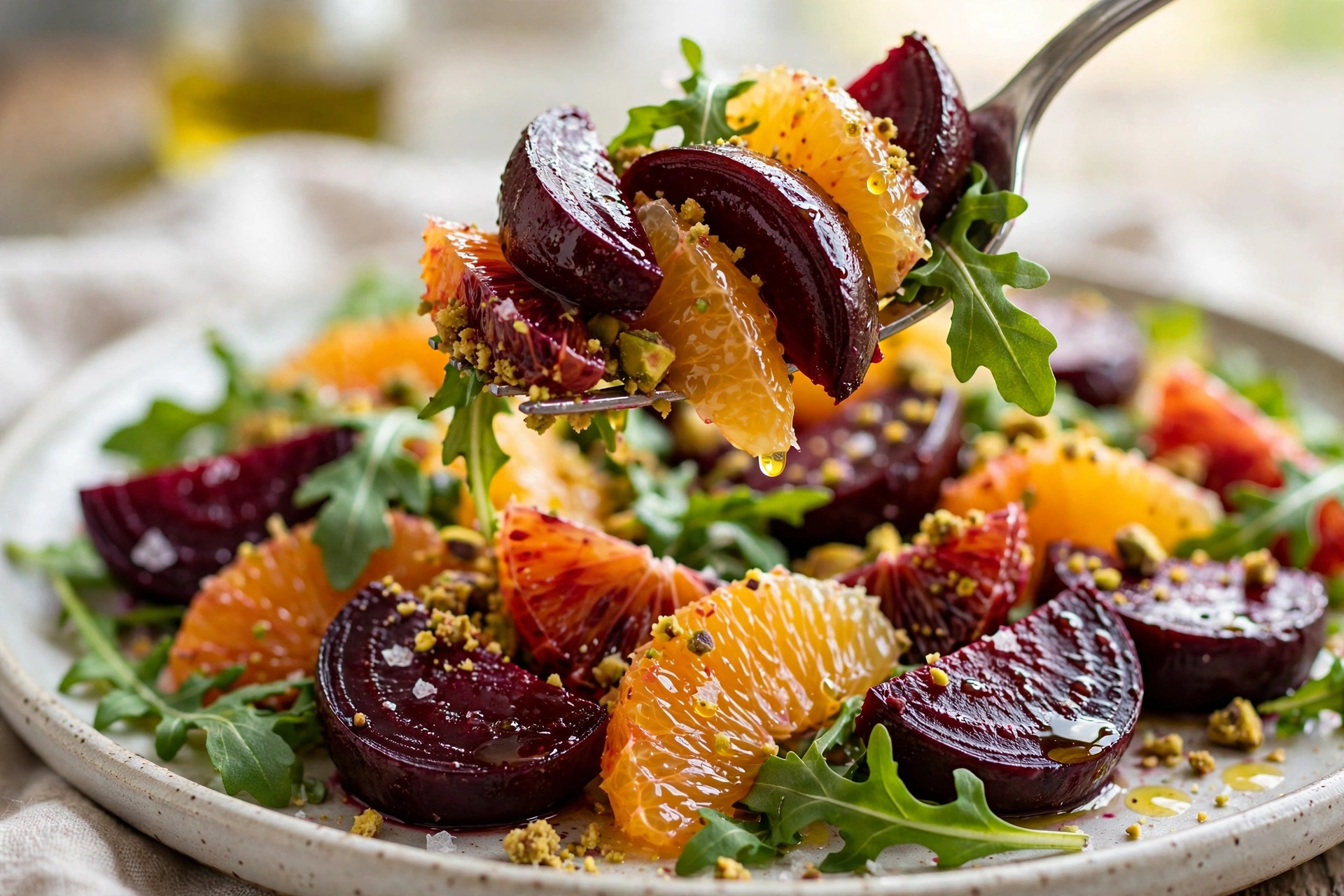
Tips and Tricks for Roasted Beet and Citrus Salad Success
Choose beets that feel heavy for their size with smooth, unblemished skins, since dense beets roast up sweeter and more tender. A mix of red and golden beets looks spectacular and the golden ones stain far less. Scrub them well but leave the skins on for roasting, because the skin protects the flesh and slips off easily afterward.
Roast the beets whole and uncut for the most concentrated flavor. Cutting them before roasting lets juices escape and dulls their sweetness. Foil wrapping is the key trick: it traps steam, cooks them evenly, and keeps the oven clean.
Wear gloves or rub the skins off under cool running water to avoid pink hands for days. Beet juice stains everything it touches, so cut the wedges on a glass or ceramic board rather than wood. Keep a damp towel nearby for quick wipe downs as you work.
Supreme the citrus over a bowl and save every drop of juice for the vinaigrette or a sparkling water. Sharp knives matter here: a dull blade tears the membranes and mangles the segments. Take your time with this step, because clean segments are what make the salad look professional.
Dress the salad at the very last minute, right before it hits the table. Salt and acid start drawing moisture from the beets and wilting the arugula within minutes. For another crisp make ahead friendly option, see our homemade cucumber salad, which holds its crunch far longer.
For a vinaigrette that never splits, lean on the Dijon. Mustard is a natural emulsifier, so whisk it with the juices and honey first, then pour the olive oil in a slow, thin stream while whisking without stopping. If the dressing ever breaks, whisk in a teaspoon of warm water and it will come back together in seconds.
If your beets come with fresh greens attached, do not throw them away. Wash them well, chop them, and saute them in olive oil with garlic for a quick side, or toss a handful raw into the salad like spinach. They taste like mild Swiss chard and stretch one bunch of beets into two dishes.
Golden vs. Red Beets: Which to Choose
Red beets bring dramatic ruby color and a deep, mineral sweetness. Golden beets taste milder and honeyed, with almost none of the earthiness that puts beet skeptics off. If someone at your table claims not to like beets, the golden ones usually win them over. Use both for a platter that looks like stained glass.
Roast the two colors separately so the red juice never bleeds onto the golden wedges. Give each its own foil packet and its own corner of the baking sheet. Golden beets also cook a little faster, so start checking them five to ten minutes before the red ones. The payoff is wedges that stay jewel bright on the plate.
Ingredient Swaps and Variations
Swap the greens to change the mood of the plate. Baby spinach makes the salad milder and kid friendlier, while a spring mix adds color and variety. Massaged kale turns it into a heartier winter meal that stands up to the dressing for hours. Each green brings its own personality to the plate.
Change the fruit with the seasons. Cara cara oranges and mandarins work beautifully when blood oranges are unavailable. Pomegranate arils add jewel like crunch and a tart pop in late fall. Even thinly sliced pear brings a buttery sweetness that loves roasted beets.
Vary the cheese and the crunch. Feta stands in for goat cheese with a saltier punch, while shaved parmesan adds nutty depth. Walnuts or hazelnuts replace pistachios easily, and candied pecans turn the salad into a holiday showstopper.
Choosing between goat cheese and feta comes down to mood. Goat cheese melts into the warm beets with tangy creaminess, while feta stays crumbly and brings a saltier, brinier punch that loves the sweet citrus. For the prettiest result, buy feta in a block and crumble it yourself: pre-crumbled feta looks dusty and never tastes as fresh.
Make it a full meal with simple additions. A cup of cooked quinoa or farro tucked under the greens adds staying power. Sliced avocado brings creaminess for dairy free guests, and a handful of chickpeas adds plant protein without changing the character of the dish. Lunch the next day is officially sorted.
What to Serve With Roasted Beet and Citrus Salad
This roasted beet and citrus salad loves simple, savory partners that let its brightness shine. Serve it alongside roasted chicken or pan seared salmon, or next to a lentil soup for a cozy vegetarian spread. On holiday tables it holds its own next to roast turkey. Keep the rest of the menu mellow so the beets and citrus stay the stars.
Storage and Make Ahead
A fully dressed roasted beet and citrus salad is best eaten within an hour, before the arugula wilts and the beets release their juices. If you need to hold it, keep the components separate: roasted beets up to 4 days refrigerated, citrus segments 2 days in their juice, vinaigrette 1 week in a jar, and greens undressed until serving.
Leftover dressed salad keeps for one day in an airtight container, though the arugula will soften considerably. The beets and citrus themselves stay delicious for days and make an excellent topping for grain bowls. Refresh leftovers with a squeeze of lemon and a few fresh mint leaves.
The vinaigrette is a meal prep hero on its own. It keeps for a week refrigerated in a sealed jar; whisk or shake well before using since the oil and juice naturally separate. Drizzle it over roasted vegetables, grain bowls, or simple green salads all week long. It might become your house dressing.
Conclusion
Roasted Beet and Citrus Salad proves that winter produce can be just as exciting as anything summer offers. It is vibrant without effort, nourishing without lecturing, and beautiful enough to anchor a holiday table. The combination of earthy beets and electric citrus never gets old.
Make it once for the color, then make it again for the way it makes you feel: bright, energized, and well fed. This is the salad that converts beet skeptics and reminds citrus lovers why they wait all year. Keep it in your cold weather rotation and it will never disappoint.
FAQ
How do I keep the beets from staining everything pink?
Roast the beets whole with their skins on, then peel them under cool running water while wearing disposable gloves. Cut the wedges on a glass or ceramic board instead of wood, which absorbs the pigment permanently. Golden beets stain far less than red ones, so mix the two colors if staining worries you.
Can I roast the beets a day ahead of time?
Yes, and it is the smartest way to serve this salad to guests. Roast the beets whole, let them cool, and refrigerate them unpeeled for up to 3 days. Peel and slice them cold just before assembling, since cold beets cut into neater wedges and bleed less juice onto the plate.
What is the best way to supreme citrus without wasting juice?
Work over a wide bowl so every drop is caught, then pour that juice straight into the vinaigrette. After releasing the segments, squeeze the remaining membranes hard to extract the last of the juice. A sharp thin bladed knife is essential: a dull blade tears the membranes and turns the segments ragged.
Why does my salad turn watery if it sits for an hour?
Salt and acid start drawing moisture out of the beets and wilting the arugula within minutes of dressing. Assemble the salad dry and drizzle the vinaigrette over it at the very last moment before serving. For parties, keep the components separate and let guests build their own plates.
Can I make this roasted beet and citrus salad without goat cheese?
Absolutely. Diced ripe avocado gives the same creamy contrast and keeps the salad fully dairy free and vegan friendly. You can also skip the creamy element entirely and add extra pistachios for richness. Either way, the beets and citrus carry the dish beautifully on their own.
Can I use canned or pre-cooked beets instead of roasting?
Yes, drained canned beets or vacuum packed pre-cooked beets work in a pinch, and they save you an hour. Pat them very dry and skip the roasting step entirely. You will lose some caramelized depth, so give the wedges a quick toss in olive oil and a hot oven for ten minutes to wake up their flavor.
What citrus works best in this salad?
A mix gives the best flavor and color. Blood oranges bring berry notes and drama, Cara Cara oranges are sweet and seedless, and pink grapefruit adds a bitter edge that keeps the salad lively. In a pinch, plain navel oranges work fine. Taste your fruit first: if it is very tart, add a touch more honey to the vinaigrette.
Can I serve this salad warm?
Yes, and it is wonderful that way. Assemble the salad while the beets are still warm from the oven: the heat softens the goat cheese slightly and makes the vinaigrette smell incredible. The arugula will wilt a little, so add it at the very last second or swap in sturdier greens like baby kale.
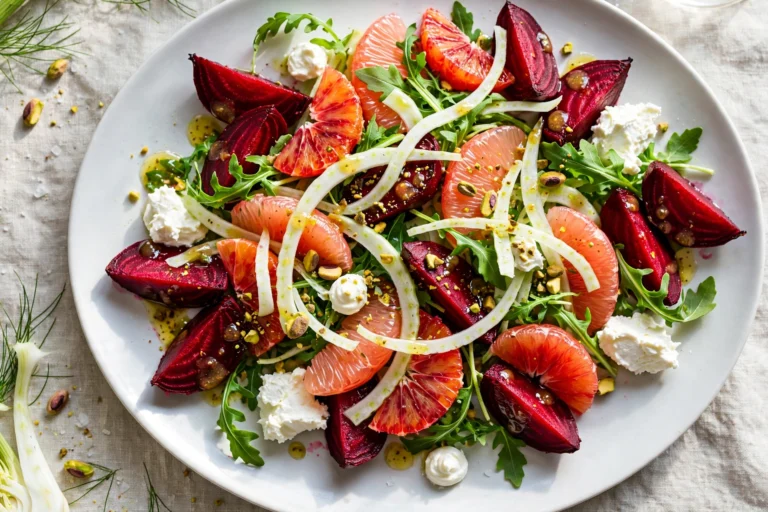
Roasted Beet and Citrus Salad
- Total Time: 80 minutes
- Yield: 4 servings 1x
Ingredients
- 4 medium beets, red and golden mixed, scrubbed and trimmed2 tablespoons extra virgin olive oil, plus more for drizzling1/2 teaspoon fine sea salt1/4 teaspoon freshly ground black pepper2 blood oranges1 large pink grapefruit1 small fennel bulb, very thinly shaved4 cups baby arugula1/3 cup shelled pistachios, toasted and roughly chopped1/3 cup crumbled goat cheese (or 1 ripe avocado, diced, for dairy free)2 tablespoons fresh mint leaves, torn3 tablespoons fresh orange juice, for the vinaigrette1 tablespoon fresh lemon juice, for the vinaigrette1 tablespoon honey, for the vinaigrette1 teaspoon Dijon mustard, for the vinaigrette1/3 cup extra virgin olive oil, for the vinaigrette1/4 teaspoon fine sea salt, for the vinaigrette1/8 teaspoon freshly ground black pepper, for the vinaigrette
Instructions
- Heat the oven to 400°F (200°C). Wrap each beet in foil with a drizzle of olive oil and roast 45 to 60 minutes until tender.Cool 10 minutes, rub off the skins, and cut into wedges.Supreme the citrus: remove peel and pith, then cut segments between the membranes over a bowl to catch the juice.Whisk the orange juice, lemon juice, honey, and Dijon; stream in the olive oil until glossy. Season with salt and pepper.Shave the fennel paper thin. Soak in ice water 10 minutes, then drain and pat dry.Spread arugula on a large platter and arrange the beets, citrus, and fennel in colorful rows.Drizzle with half the vinaigrette; reserve the rest for the table.Scatter pistachios, goat cheese, and mint over the top.Finish with a thread of olive oil and serve immediately.
- Prep Time: 20 minutes
- Cook Time: 60 minutes
- Category: Salads
- Cuisine: American
2 Comments
Comments are closed.