Healthy Corn Pudding, Custard Soft and Honest at About 165 Calories a Serving
Healthy Corn Pudding, Custard Soft and Honest at About 165 Calories a Serving
In this article:
- Blend a Third of the Corn: Body Without Cream
- The Pudding Math: About 165 Against About 340
- One Bowl, Ten Minutes, No Mix and No Cans
- Ingredients for Healthy Corn Pudding
- Whisk, Fold, Bake: Forty Five Quiet Minutes
- On the Thanksgiving Table: Baked in the Morning, Reheated at Four
- Watery, Rubbery or Pale: the Three Pudding Fixes
- With Cheddar and Chives, With Gentle Heat, or Dairy Free
- The Side Dish That Tastes Like It Always Did
- Questions Cooks Ask About Healthy Corn Pudding
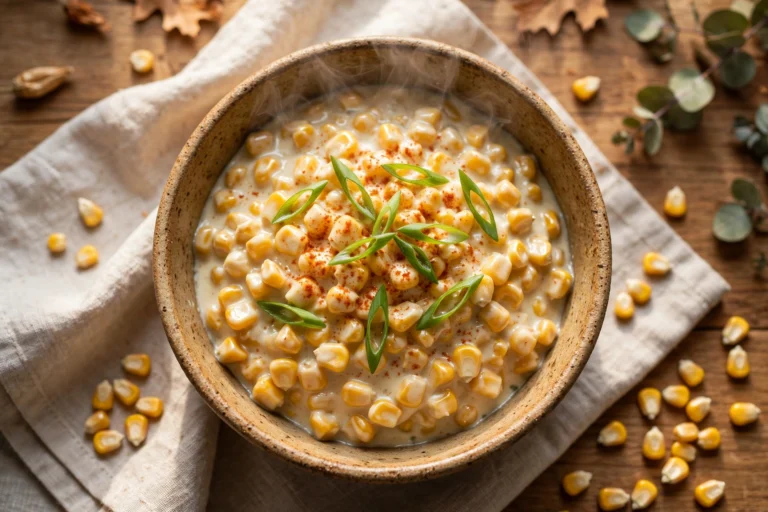
Healthy corn pudding should spoon like a soft custard and taste like corn at its sweetest, not like the butter and sugar that usually carry it. This version gets its body from the corn itself: a third of the kernels are blended into the base, and the rest stay whole and tender.
The texture lands where the classic lands. The top bakes to a pale gold, the center sets just enough to hold a spoon mark, and every bite carries whole kernels suspended in a gentle, eggy custard.
The numbers are the real difference. A serving of this pudding lands at about 165 calories, against roughly 340 for the classic version built on a stick of butter, a cup of sugar, and cream.
There is no muffin mix, no canned creamed corn, and no sweetener from a packet anywhere in the bowl. Three whole eggs, a spoon of honey, and two tablespoons of butter do all the work those shortcuts used to do.
It is also built for the real Thanksgiving schedule. The batter can wait overnight, the pudding bakes in the quiet of the morning, and it reheats, covered, while the turkey rests on the board.
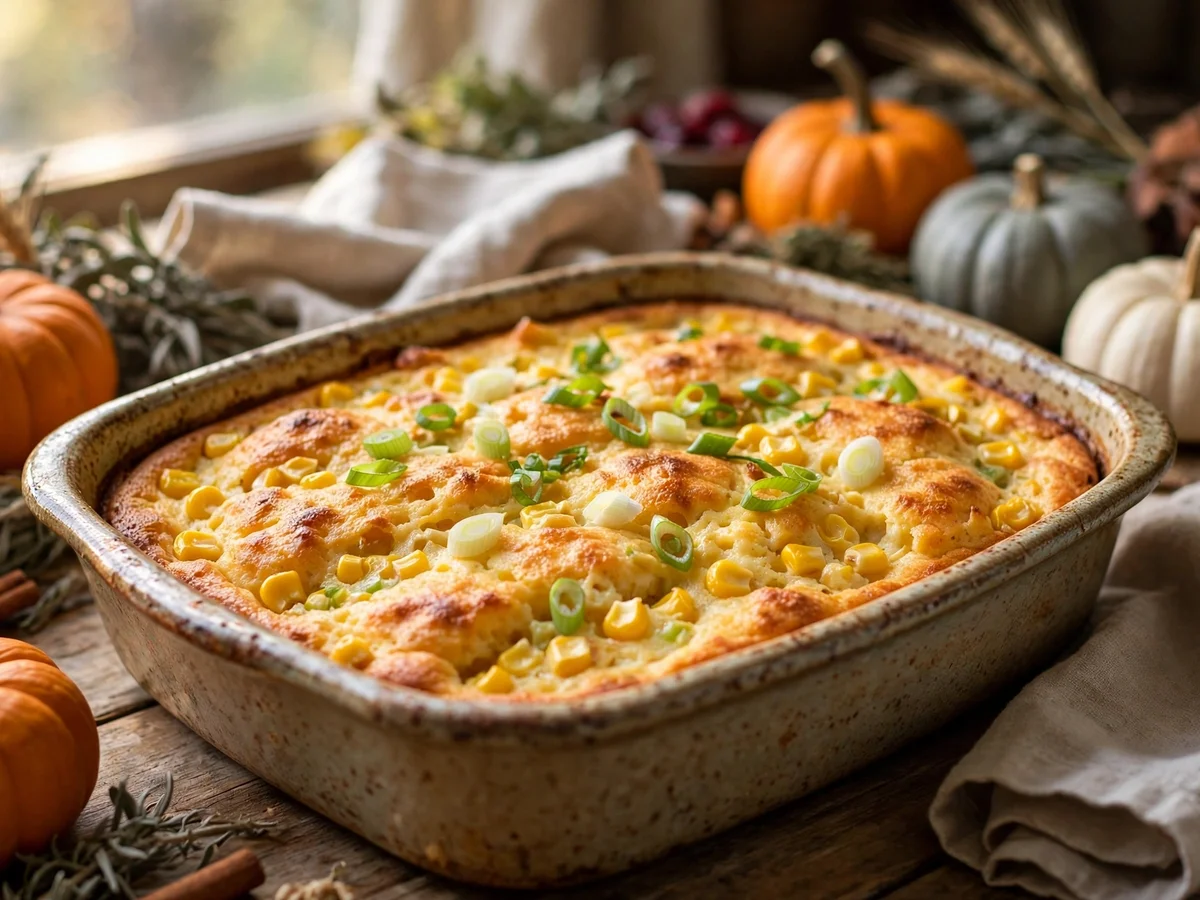
Blend a Third of the Corn: Body Without Cream
Healthy corn pudding usually borrows its texture from something else: a boxed muffin mix, a can of creamed corn, or a heavy hand with cornstarch. Each shortcut works, and each one costs flavor, sodium, or a label full of ingredients nobody keeps at home.
Blending a third of the kernels with the milk changes the base itself. The blended corn releases its own starch and sweetness into the custard, so the pudding sets soft and creamy with no cream at all.
The remaining kernels go in whole. That contrast is the whole pleasure of corn pudding: a smooth, spoonable base carrying tender pops of corn in every bite, exactly the texture the canned versions imitate with thickeners.
The blend takes thirty seconds in any blender. You are not making a puree; a few pulses leave the base flecked and slightly coarse, which keeps the finished pudding from turning baby food smooth.
Frozen corn works beautifully here, and for a November dish it is the honest choice. Thaw it and drain it well, because the water frozen corn releases in the oven is the number one cause of a watery pudding.
Fresh corn in season is even sweeter, about six ears for four cups of kernels. Scrape the cobs with the back of the knife after cutting; the milky juice from the cob belongs in the blender with the rest.
The Pudding Math: About 165 Against About 340
The classic corn pudding is a dessert wearing a side dish costume: half a cup of butter, up to a cup of sugar, whole milk or cream, and eggs. Cut into eight servings, it lands near 340 calories a serving, with the butter and sugar alone accounting for half.
This version reaches about 165 calories a serving, and the arithmetic is plain. The whole dish carries two tablespoons of butter instead of eight, one tablespoon of honey instead of a cup of sugar, and low fat milk instead of cream.
The corn itself is not the problem it is sometimes made out to be. According to USDA FoodData Central, a cup of corn kernels brings real fiber, B vitamins, and folate to the table, nutrients a Thanksgiving plate is often short on.
The eggs stay whole, all three of them. Several light recipes keep only whites to save forty calories a serving, and lose the richness and the set that makes the dish taste like pudding rather than a steamed omelet.
Protein lands near 6 grams a serving, respectable for a side dish, and the sodium stays moderate because nothing comes from a seasoned mix. Both numbers describe the same generous three quarter cup serving, so the comparison with the classic is an honest one.
Nothing here depends on a sugar substitute. The sweetness comes from the corn, a spoon of honey, and the gentle caramel of a golden top, which is why the flavor never carries that thin, artificial edge.
One Bowl, Ten Minutes, No Mix and No Cans
The batter for healthy corn pudding comes together in about ten minutes, in one large bowl, with a whisk. The oven does the rest, and it does it unattended, which matters more on Thanksgiving than on any other day of the year.
The order is simple: blend, whisk, fold, pour. The eggs and milk whisk first, the blended corn joins them, and the whole kernels fold in last so they stay intact.
A two quart baking dish is the right vessel. Shallower dishes bake faster and set firmer; a deep dish keeps the center softer, closer to the spoon pudding style many Southern families expect.
The pudding asks for no water bath. Recipes that insist on one are protecting egg custards far more delicate than this one; here the corn starch in the base keeps the set gentle even with direct heat.
It sits comfortably beside the richer dishes on the table. Cooks building a lighter menu often pair it with our healthy herb roasted turkey breast, where the same logic of building flavor first applies to the main dish.
Doubling for a crowd is straightforward. A double batch fills a 9 by 13 inch dish, bakes five to eight minutes longer, and holds its soft center as long as you watch the edges rather than the clock. The blend step doubles without any change in technique.
Cleanup is one bowl, one blender jar, and the dish it bakes in. On a day when every pan in the kitchen is spoken for, that economy is worth as much as the calories saved.
Ingredients for Healthy Corn Pudding
The list is short and entirely from scratch: corn in two forms, eggs, milk, a little butter, a spoon of honey, and the scallions that keep the sweetness awake. Nothing boxed, nothing canned, nothing powdered.
- 4 cups corn kernels (about 6 ears fresh, or frozen and thawed), divided
- 3 large eggs
- 1 1/2 cups low fat (1 percent) milk
- 2 tablespoons unsalted butter, melted
- 1 tablespoon honey
- 3 tablespoons cornstarch
- 1 teaspoon fine sea salt
- 1/4 teaspoon black pepper
- 1/4 teaspoon ground nutmeg
- 3 scallions, thinly sliced
Whisk, Fold, Bake: Forty Five Quiet Minutes
The method has one moment that matters: the blend. Everything else is whisking and waiting, and the waiting is the kind that frees you to mash potatoes or set the table.
- Heat the oven to 350 degrees F. Lightly grease a 2 quart baking dish. If the corn is frozen, thaw it fully and drain it in a colander for at least 10 minutes, pressing gently.
- Place 1 1/2 cups of the corn in a blender with the milk. Blend 20 to 30 seconds, until mostly smooth but still flecked.
- Whisk the eggs in a large bowl until the yolks and whites are fully combined. Whisk in the melted butter, honey, cornstarch, salt, pepper, and nutmeg until no cornstarch streaks remain.
- Pour the blended corn into the egg mixture and whisk to combine. Fold in the remaining 2 1/2 cups of whole kernels and the scallions.
- Pour the batter into the prepared dish and smooth the top. Bake 40 to 45 minutes, until the edges are set and lightly golden and the center still has a soft jiggle when the dish is nudged.
- Rest 10 minutes before serving. The center finishes setting as it stands, and the pudding spoons in soft, clean scoops.
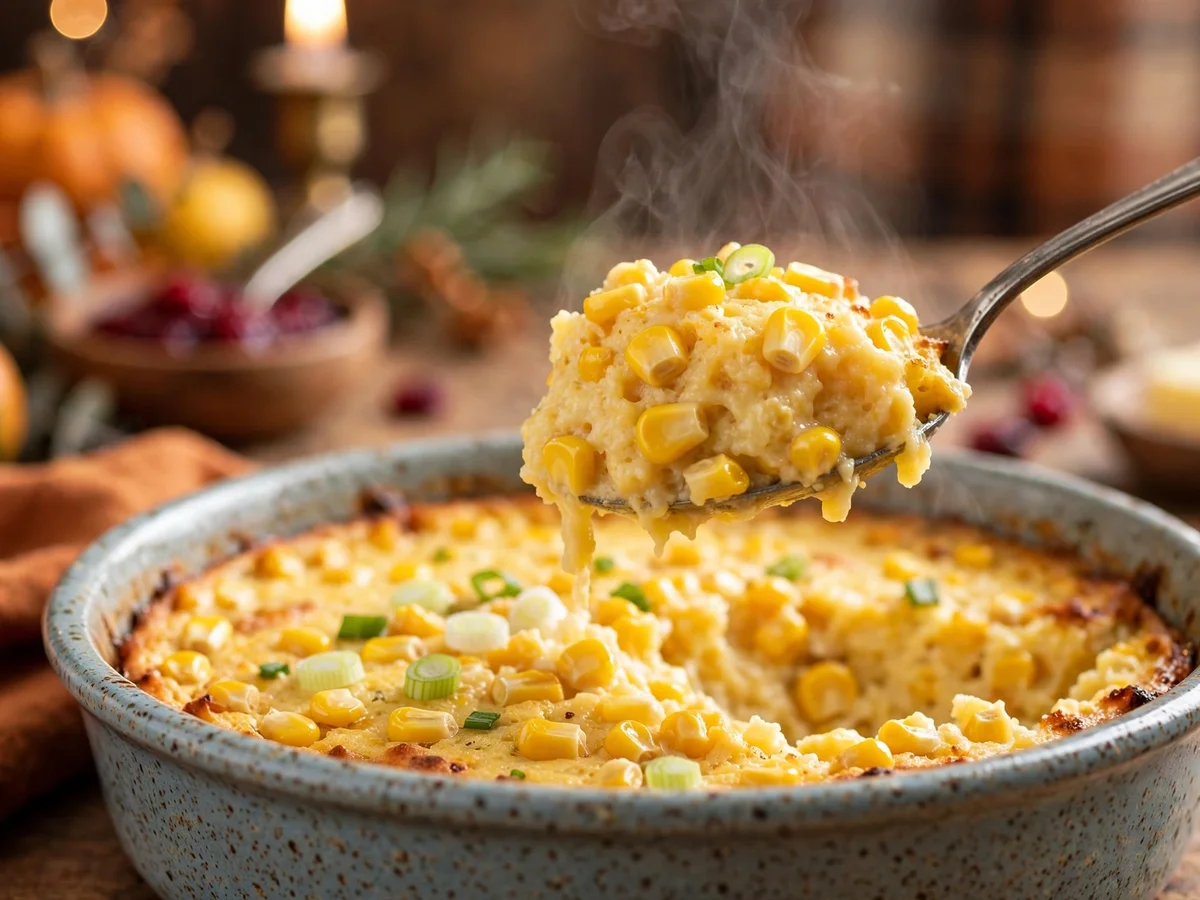
On the Thanksgiving Table: Baked in the Morning, Reheated at Four
Healthy corn pudding earns its place on the Thanksgiving table because it tolerates the day. The classic sides fight for the same hour of oven and attention; this one quietly steps aside.
The batter can be mixed the night before, covered, and refrigerated. Stir it once in the morning, because the cornstarch settles, pour it into the dish, and add five minutes to the bake for the cold start.
Baked in the morning, the pudding keeps its texture for hours. Reheat it, covered with foil, at 325 degrees F for about 20 minutes while the turkey rests, and it comes back soft, steaming, and golden.
It travels well too. Baked in its dish, wrapped in a towel, and carried warm, it survives a drive across town better than any dish that depends on crispness.
On the plate it does the quiet work of balancing richer neighbors. Next to healthy sweet potato casserole and healthy mashed potatoes, its gentle sweetness is the bite guests return to between the heavy ones.
Plan the quantity without anxiety. As one side among many, this recipe serves eight honest portions; as one of only three sides, expect it to serve six, and make the double batch rather than apologizing at the table. Corn pudding is the dish guests take seconds of quietly, after the polite first round is done.
For a fully planned lighter menu, the pudding also pairs naturally with our healthy green bean casserole: two classic sides, both rebuilt on flavor first, neither one tasting like a concession.
Watery, Rubbery or Pale: the Three Pudding Fixes
A watery pudding almost always traces back to the corn. Frozen kernels that go in wet weep into the custard as they bake, so drain them longer than feels necessary and pat them dry if the center has failed you before.
The second cause is an underbake. The pudding should leave the oven with a soft jiggle in the middle, but the edges must look set and matte, not glossy and loose. A glossy edge means ten more minutes, whatever the timer says.
A rubbery pudding is an overbaked one, or a batter whisked like cake batter until the eggs foamed. Fold the kernels in gently and pull the dish early; the rest on the counter finishes the set without tightening it.
A pale top is mostly cosmetic, and two minutes under the broiler, watched closely, fixes it. Corn pudding browns fast at the end, so those two minutes are a ceiling, not a suggestion to walk away.
Salt deserves one honest sentence. Corn reads sweeter and fuller with its full teaspoon of salt; a timid hand makes the pudding taste flat and oddly more sugary, and sends cooks reaching for the butter dish at the table.
Finally, serve it warm rather than hot. Ten minutes of rest lets the custard settle into its spoonable state; straight from the oven it slumps, and guests judge the dish by a texture that would have fixed itself.
Leftovers reheat without complaint. A covered dish at 325 degrees F for fifteen minutes brings the pudding back to the table almost exactly as it first arrived.
With Cheddar and Chives, With Gentle Heat, or Dairy Free
The cheddar version folds half a cup of finely shredded sharp cheddar into the batter and scatters two more tablespoons over the top. It adds about 35 calories a serving and turns the pudding toward the savory end of the table.
A gentle Southwestern turn adds a small diced jalapeno, seeds removed, and a quarter teaspoon of cumin in place of the nutmeg. The heat stays a warmth rather than a bite, and lime zest over the top wakes the whole dish.
For a dairy free pudding, use unsweetened oat milk in the same amount and replace the butter with two tablespoons of olive oil. The set is slightly softer and the flavor a touch more rustic, but the blended corn base carries it.
Summer corn, cut from the cob and barely blanched, makes the sweetest version of all. The recipe was written for November, but nothing about it belongs only to November, and a July cookout is a fine place to prove it.
Herbs beyond the scallions are welcome in small amounts: a tablespoon of chopped thyme or chives folded in, or parsley scattered over the finished dish for color. Keep the hand light; the corn is the flavor, everything else is the frame.
The Side Dish That Tastes Like It Always Did
Healthy corn pudding asks for a blender, a bowl, and the patience to drain the corn properly. What it returns is the dish people remember: soft, golden, sweet with corn, and soft enough to spoon beside the turkey.
Build the flavor from the corn itself and the lightening takes care of itself. At about 165 calories a serving, this is the rare holiday side that nobody at the table will identify as the healthy one.
Questions Cooks Ask About Healthy Corn Pudding
Can I make healthy corn pudding the night before Thanksgiving?
Yes, in two ways. Mix the batter, cover, and refrigerate up to 24 hours; stir well before baking and add about 5 minutes for the cold start. Or bake it fully, refrigerate, and reheat covered at 325 degrees F for 20 minutes.
Why does my corn pudding turn out watery?
Almost always the corn. Frozen kernels carry surface water that weeps into the custard as it bakes, so thaw fully, drain at least 10 minutes, and pat dry. An underbaked pudding, pulled while the edges still look glossy, weeps for the same reason.
Can I use canned corn instead of frozen for this pudding?
You can. Drain and rinse two 15 ounce cans and pat the kernels dry; the pudding will be a little softer and slightly less sweet than the frozen version. Skip canned creamed corn, which adds sugar, sodium, and thickeners the blended base already replaces.
How do I know when corn pudding is done without overbaking it?
Look at the edges, not the clock. They should be set, matte, and lightly golden while the center still jiggles softly when the dish is nudged. The 10 minute rest finishes the center; a fully firm center in the oven means a rubbery pudding on the table.
Does healthy corn pudding freeze well?
It freezes acceptably for up to 2 months, though the custard softens slightly on thawing. Freeze the baked pudding in its dish, wrapped well, thaw overnight in the refrigerator, and reheat covered at 325 degrees F until steaming. The cheddar variation freezes best.