Healthy Mac and Cheese, Baked and Golden at About 300 Calories a Serving
Healthy Mac and Cheese, Baked and Golden at About 300 Calories a Serving
In this article:
- Blend the Cauliflower Into the Sauce: Body Without the Butter Load
- The Mac Math: About 300 Against About 470
- Sharp Cheddar in a Smaller Role, Parmesan at Full Voice
- Ingredients for Healthy Mac and Cheese
- Boil, Blend, Whisk, Bake: the Sauce in Four Moves
- On the Thanksgiving Table: Assembled Wednesday, Baked Thursday
- Grainy, Split or Soggy: the Three Sauce Fixes
- With Broccoli, With Gentle Heat, or Gluten Free
- The Side Dish Nobody Identifies as Light
- Questions Cooks Ask About Healthy Mac and Cheese
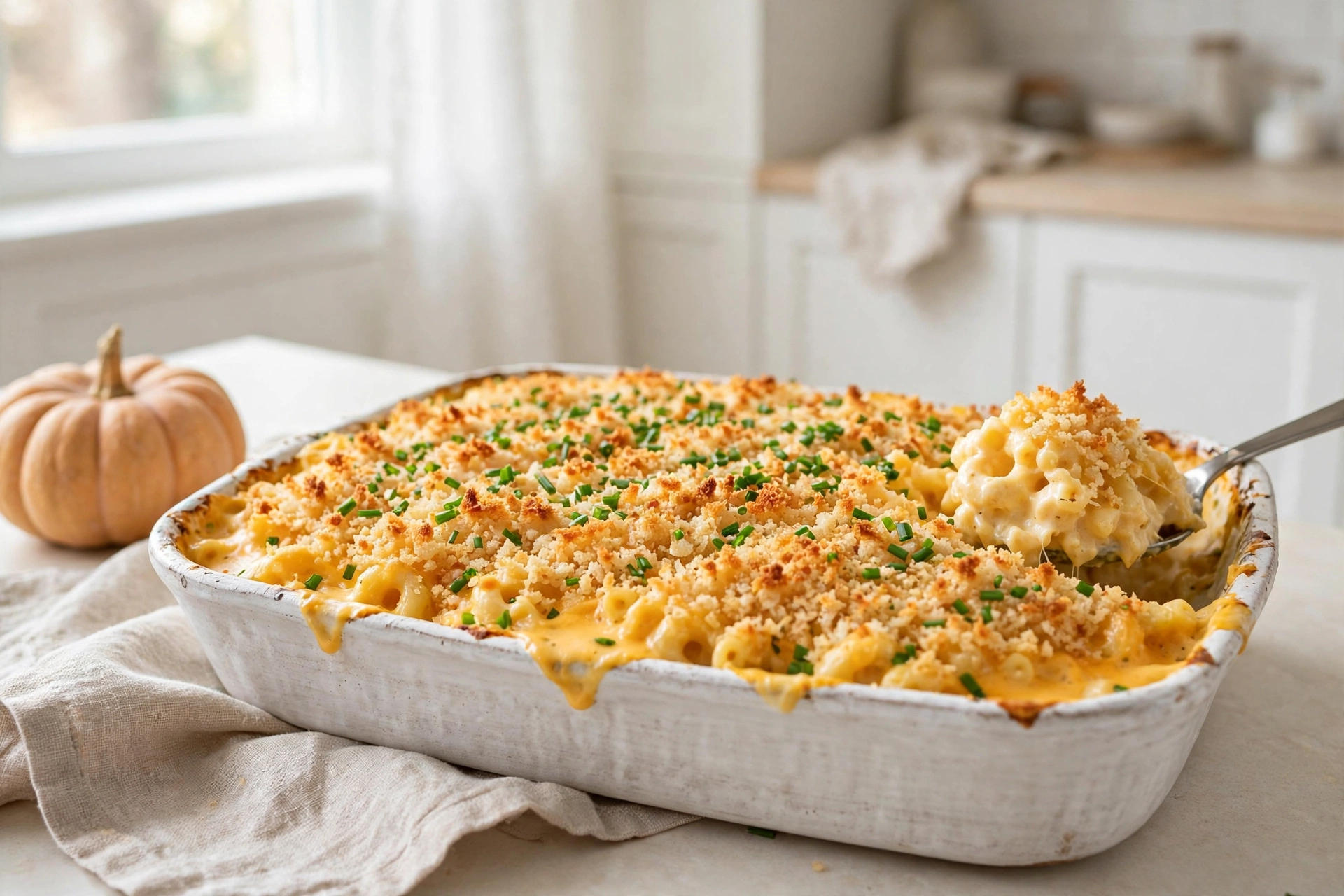
Healthy mac and cheese should arrive at the table bubbling, golden at the edges, and unmistakably cheesy, not as a pale apology for the real thing. This version keeps the baked casserole form and the sharp cheddar flavor, and rebuilds only the sauce underneath.
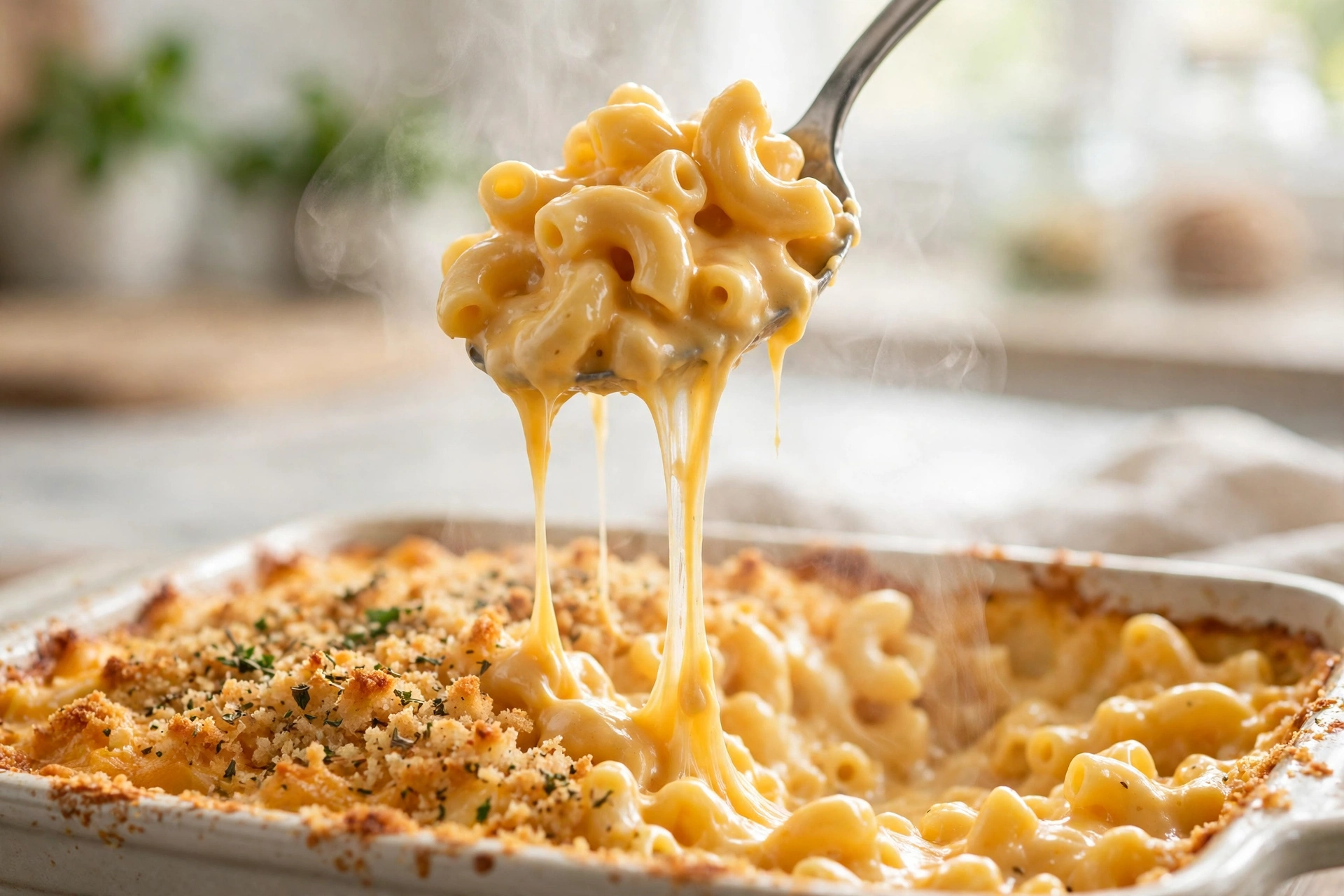
The top bakes into a crisp panko crust that crackles under the spoon. Underneath, the elbows sit in a sauce that coats every curve and pulls in long strands when a scoop is lifted, exactly the behavior people judge a mac and cheese by.
The difference is in the arithmetic. A generous serving lands at about 300 calories, against roughly 470 for the classic built on half a cup of butter, three or four cups of cheese, and a sauce enriched with cream.
The quiet trick is cauliflower, simmered in the milk and blended into the sauce until it disappears completely. It gives the sauce body and a gentle sweetness, so the cheddar can be measured in a cup and a quarter instead of a small mountain.
It is also built for the real Thanksgiving week. The casserole assembles a day ahead, waits quietly in the refrigerator, and bakes while the turkey rests, which is the only oven window a holiday cook truly owns.
Blend the Cauliflower Into the Sauce: Body Without the Butter Load
Healthy mac and cheese usually borrows its richness from a substitute: reduced fat cheese that turns gummy, a tub of nonfat sour cream, or a spoon of margarine standing in for butter. Each swap works on paper, and each one leaves a flavor the table notices.
Blending cauliflower into the sauce takes the opposite path. Two cups of florets simmer in the milk until they are completely tender, then blend into a base that is already thick, pale gold, and faintly sweet before any cheese arrives.
The cauliflower contributes real body, because its fibers and natural starch hold the sauce the way a long roux would. A two tablespoon roux is still there for insurance, but it is seasoning for the texture rather than the whole structure.
At this ratio, the cauliflower is invisible. Two cups of florets across twelve ounces of pasta and a full measure of sharp cheddar reads as richness, not as a vegetable course, and the mustard and smoked paprika keep the flavor pointed at cheese.
The elbows matter more than they are usually credited for. Their curve holds sauce inside and out, which is why this dish spoons creamy even with a leaner sauce; small shells are the one honest substitute, and they behave the same way.
It is the same logic we use in our healthy cauliflower mash, where the vegetable disappears into a familiar texture. Here the trick hides inside a sauce instead of a mash, and nobody at the table has ever named it.
The Mac Math: About 300 Against About 470
The classic baked mac and cheese is a celebration with a price tag: half a cup of butter, up to four cups of cheese, whole milk or cream, and a buttery crumb. Cut into eight servings, it lands near 470 calories a serving.
This version reaches about 300 calories a serving, and the arithmetic is plain. The whole dish carries two tablespoons of butter instead of eight, one and a quarter cups of cheddar instead of four, and low fat milk instead of cream.
The cauliflower pulls weight beyond texture. According to USDA FoodData Central, a cup of cauliflower brings fiber, vitamin C, and folate in exchange for about 25 calories, which is how the sauce stays generous while the total falls.
Protein lands near 14 grams a serving, strong for a side dish, because the cheese is reduced rather than removed and the Greek yogurt stirred in at the end adds its share. Nothing in the bowl is a fat free imitation of itself.
The portion behind the numbers is the honest one: about three quarters of a cup, the same scoop used to measure the classic. The 300 and the 470 describe identical servings, so the comparison is arithmetic rather than marketing.
Sodium stays moderate, near 430 milligrams, mostly from the cheeses and the salted pasta water. Recipes built on processed cheese sauces and seasoned mixes run far higher, another quiet win for building the sauce from plain ingredients.
Sharp Cheddar in a Smaller Role, Parmesan at Full Voice
Healthy mac and cheese fails when the cheese is chosen for its label instead of its voice. Sharp cheddar carries more flavor per ounce than mild, which is the entire reason a cup and a quarter can do the work of four cups of a quieter cheese.
Grate it from a block, never from a bag. Pre shredded cheese is coated with anti caking powders that melt into a grainy sauce, and in a lean sauce there is no extra fat to hide the texture. Thirty seconds with a box grater removes the problem.
The quarter cup of Parmesan is the second voice. It melts into the background and stretches the cheddar flavor longer on the tongue, the same reason a small amount of an aged cheese finishes so many Italian sauces.
Dijon mustard, garlic powder, and smoked paprika are measured in pinches and teaspoons, and each one points at the cheese. Mustard sharpens, garlic deepens, paprika adds the warm color that makes a pale sauce read as cheddar gold.
The Greek yogurt goes in last, off the heat, and it is there for tang as much as creaminess. It gives the sauce the faint cultured edge that keeps a rich dish from tasting flat, the role sour cream plays in older recipes at several times the fat.
Salt the pasta water like you mean it. Elbows seasoned from the inside need less salt in the sauce, and the whole dish tastes more like cheese and less like salt, which is the balance a lighter sauce has to strike.
Ingredients for Healthy Mac and Cheese
The list is a classic list read with a pencil: real butter, real cheddar, real Parmesan, and one vegetable doing quiet structural work. Nothing fat free, nothing powdered, nothing that needs a specialty store.
- 12 ounces elbow macaroni
- 2 cups cauliflower florets (about half a small head)
- 1 1/2 cups low fat (1 percent) milk
- 2 tablespoons unsalted butter
- 2 tablespoons all purpose flour
- 1 teaspoon Dijon mustard
- 1/2 teaspoon garlic powder
- 1/4 teaspoon smoked paprika
- 3/4 teaspoon fine sea salt, plus more for the pasta water
- 1/4 teaspoon black pepper
- 1 1/4 cups shredded sharp cheddar cheese (about 5 ounces), divided
- 1/4 cup finely grated Parmesan cheese
- 1/2 cup plain nonfat Greek yogurt, at room temperature
- 1/4 cup panko breadcrumbs
- 2 tablespoons chopped chives
Boil, Blend, Whisk, Bake: the Sauce in Four Moves
The method protects two moments: the blend, which must be completely smooth, and the yogurt, which must never boil. Everything else is ordinary weeknight cooking, and the oven finishes the dish unattended.
- Heat the oven to 375 degrees F. Lightly grease a 2 1/2 quart baking dish. Bring a large pot of well salted water to a boil.
- Cook the macaroni 1 minute shy of the package directions. Reserve 1 cup of the pasta water, then drain the pasta and set it aside.
- While the pasta cooks, combine the cauliflower and milk in a medium saucepan, cover, and simmer 8 to 10 minutes, until the florets are completely tender when pressed with a spoon.
- Blend the cauliflower and milk with the mustard, garlic powder, paprika, salt, and pepper until perfectly smooth, at least 45 seconds. A flecked blend here means a flecked sauce later.
- Return the pasta pot to medium heat and melt the butter. Whisk in the flour and cook 1 minute, then slowly whisk in the cauliflower blend. Simmer 2 to 3 minutes, whisking, until the sauce lightly coats a spoon.
- Take the pot off the heat. Stir in 1 cup of the cheddar and all the Parmesan until melted, then whisk in the yogurt until the sauce turns glossy. Never let the sauce boil after the yogurt goes in.
- Fold in the drained pasta, loosening with splashes of pasta water until every elbow is coated and the mixture looks slightly too saucy. It tightens as it bakes.
- Pour into the prepared dish. Scatter the remaining 1/4 cup cheddar and the panko over the top. Bake 15 to 18 minutes, until bubbling at the edges and golden on top. Rest 5 minutes, scatter the chives, and serve.
On the Thanksgiving Table: Assembled Wednesday, Baked Thursday
Healthy mac and cheese earns its place on the Thanksgiving table because it can be finished the day before the oven becomes contested ground. Most rich sides demand the same final hour; this one quietly waits its turn.
For the make ahead version, undercook the pasta by a full extra minute and make the sauce slightly looser with pasta water. Assemble the casserole without its topping, cover, and refrigerate up to 24 hours.
On Thursday, scatter the cheddar and panko over the cold casserole and bake at 375 degrees F for 25 to 30 minutes, until the center bubbles. The natural slot is the turkey rest, between the bird leaving the oven and the carving.
It sits naturally beside the other rebuilt classics. Next to our healthy herb roasted turkey breast, healthy green bean casserole, and healthy sweet potato casserole, it is the creamy, golden spoonful that balances the plate of greens and roasts.
Plan quantities without anxiety. As one side among many, this recipe serves eight; as one of only three sides, make the double batch in a 9 by 13 inch dish and add about 5 minutes to the bake.
If the casserole must travel, bake it at home, wrap the hot dish in towels, and carry it in a box. A ten minute hold at 300 degrees F at the destination brings back the bubbling edges without drying the center.
Leftovers hold their own on Friday. Reheat single portions in the microwave with a spoonful of milk stirred in, or warm the whole dish, covered, at 325 degrees F until the center steams again.
Grainy, Split or Soggy: the Three Sauce Fixes
A grainy sauce is almost always the cheese, not the cook. Bagged shreds carry anti caking coatings that refuse to melt smooth, and a sauce that boils after the cheese goes in tightens the proteins into grit. Block cheese, grated fresh, off the heat, fixes both causes.
A split sauce traces back to the yogurt. Cold yogurt dropped into a near boiling sauce will curdle into white flecks, and a sauce returned to a boil after the yogurt goes in breaks the same way. Room temperature yogurt, whisked in off the heat, stays silky.
If the split has already happened, whisk in two tablespoons of warm milk off the heat and keep whisking. Mild cases come back together; severe cases still taste fine under the panko, which is one more reason the baked format forgives.
A thin sauce usually means the pasta went in wet or the blend was under simmered. The fix is patience rather than starch: fold the pasta in and let the assembled casserole stand 5 minutes before baking, and the elbows drink what the sauce cannot hold.
A soggy top means the panko met steam. Scatter the crumbs on dry, never mixed with melted butter in advance, and if the top is pale at the end of the bake, give it 1 minute under the broiler, watched without blinking.
A bland result is a seasoning problem with a known address. Under salted pasta water is the usual cause, and a missing teaspoon of mustard is the second; both sharpen the cheese without adding a single calorie to the dish.
Finally, respect the rest. Five minutes out of the oven lets the sauce set from soupy to spoonable, and the casserole that looked loose at minute zero serves in clean, creamy scoops at minute five.
With Broccoli, With Gentle Heat, or Gluten Free
The broccoli version folds two cups of small steamed florets into the pasta before baking. It is the variation children ask for by name, and it adds color and fiber while the cauliflower stays hidden underneath, doing its work unseen.
A gentle heat version swaps half the cheddar for pepper Jack and adds one small jalapeno, seeds removed, minced into the roux. The warmth stays behind the cheese rather than in front of it, and a spoon of honey over the top is a very Southern finish.
For a gluten free casserole, use gluten free elbows cooked 2 minutes shy of the package time, because they soften faster in the sauce, and swap the flour in the roux for the same measure of sweet rice flour. The panko becomes gluten free crumbs or crushed rice crackers.
A roasted garlic version mashes four cloves of roasted garlic into the cauliflower blend. The sauce turns sweeter and deeper, and the smoked paprika can step aside; the dish moves toward the turkey end of the table and away from the children’s end.
Whole wheat elbows are a quiet upgrade rather than a variation: the same method, a slightly nuttier bite, and about a gram more fiber a serving. They drink a little more sauce, so keep the pasta water close when you fold.
The Side Dish Nobody Identifies as Light
Healthy mac and cheese asks for a blender, a block of sharp cheddar, and the discipline to keep the sauce off the boil once the yogurt goes in. What it returns is the casserole people remember: golden, bubbling, and pulling in strands.
Build the body from a vegetable and keep the cheese honest, and the lightening takes care of itself. At about 300 calories a serving, this is the Thanksgiving side that guests take seconds of before anyone mentions the word healthy.
Questions Cooks Ask About Healthy Mac and Cheese
Can you taste the cauliflower in healthy mac and cheese?
No, not at this ratio. Two cups of florets blended completely smooth into the milk disappear under sharp cheddar, mustard, and smoked paprika; the sauce reads as creamy and faintly sweet. Blend a full 45 seconds while the mixture is hot, because a flecked blend is the only version that gives the cauliflower away.
Can I assemble healthy mac and cheese the day before Thanksgiving?
Yes. Undercook the pasta by an extra minute, loosen the sauce with a little more pasta water, assemble without the topping, cover, and refrigerate up to 24 hours. Add the cheddar and panko, then bake from cold at 375 degrees F for 25 to 30 minutes, until the center bubbles.
Why did my cheese sauce turn grainy?
Almost always bagged pre shredded cheese, whose anti caking coatings melt into grit, or a sauce that boiled after the cheese went in. Grate sharp cheddar from a block, take the pot off the heat, and stir the cheese in gradually until just melted.
How do I keep the Greek yogurt from splitting the sauce?
Temperature and order. Use yogurt at room temperature, take the sauce off the heat before whisking it in, and never boil the sauce afterward. If a mild split appears, whisk in two tablespoons of warm milk off the heat and it usually comes back together.
Does healthy mac and cheese freeze well?
The baked casserole freezes for up to 2 months, wrapped tightly. Thaw overnight in the refrigerator and reheat, covered, at 325 degrees F with a splash of milk stirred in; the panko softens in the freezer, so refresh the top under the broiler for 1 minute before serving.