Healthy Deviled Eggs With Greek Yogurt and Smoked Paprika, About 40 Calories a Half
Healthy Deviled Eggs With Greek Yogurt and Smoked Paprika, About 40 Calories a Half
In this article:
- Yogurt Does the Work, Quietly
- Firm Whites, Silky Centers, a Little Smoke
- The Math: 40 Against 65 a Half
- Ingredients for Healthy Deviled Eggs
- Cooking, Peeling and Piping the Eggs
- Boiled Tuesday, Filled Thursday Morning
- Green Rings, Torn Whites and Other Fixes
- Holding Deviled Eggs Until the Turkey Lands
- The First Plate to Empty
- Questions Cooks Ask About Healthy Deviled Eggs
Healthy deviled eggs are the appetizer I put out at Thanksgiving while the turkey still owns the oven, because they ask for nothing but a platter and a cool corner of the counter. Twenty four halves, filled high, gone before the gravy is warm.
The filling is the classic one in shape and seasoning, yolks mashed with mustard, a splash of vinegar and a dusting of paprika, but Greek yogurt stands where the mayonnaise used to be. The tang stays, the heaviness goes, and the protein, if anything, improves.
Each half lands at about 40 calories, against 65 or more for a classic version, and nobody at the table has ever asked what changed. They are also the most forgiving make ahead dish of the holiday: the eggs cook on Tuesday, the filling pipes on Thursday morning.
Yogurt Does the Work, Quietly
Healthy deviled eggs work because the yolk was always the flavor. Mayonnaise brought fat and a little body, but the richness people remember comes from the yolks themselves, and a third of a cup of thick Greek yogurt gives back the body while the mustard and vinegar restore the brightness.
The yogurt has to be genuinely thick, the kind that holds a spoon upright. Plain nonfat Greek yogurt mashes into the yolks without loosening them, so the filling pipes into clean swirls instead of slumping. Thin yogurt is the one substitution that quietly ruins the texture.
Garlic powder does quiet work in the background. It rounds the filling the way it does in our healthy spinach artichoke dip, savory and warm without announcing itself, and it keeps the flavor full even with the fat lowered.
Smoked paprika finishes what the yogurt starts. A plain dusting of sweet paprika is mostly color, but the smoked kind adds the depth that makes a lighter filling taste complete, a small echo of the fire the classic version never had.
Eggs themselves carry the nutrition here. They are one of the most complete proteins in an ordinary kitchen, as the American Egg Board lays out, so a lighter deviled egg is still a genuinely satisfying bite and not a diet plate apology.
Firm Whites, Silky Centers, a Little Smoke
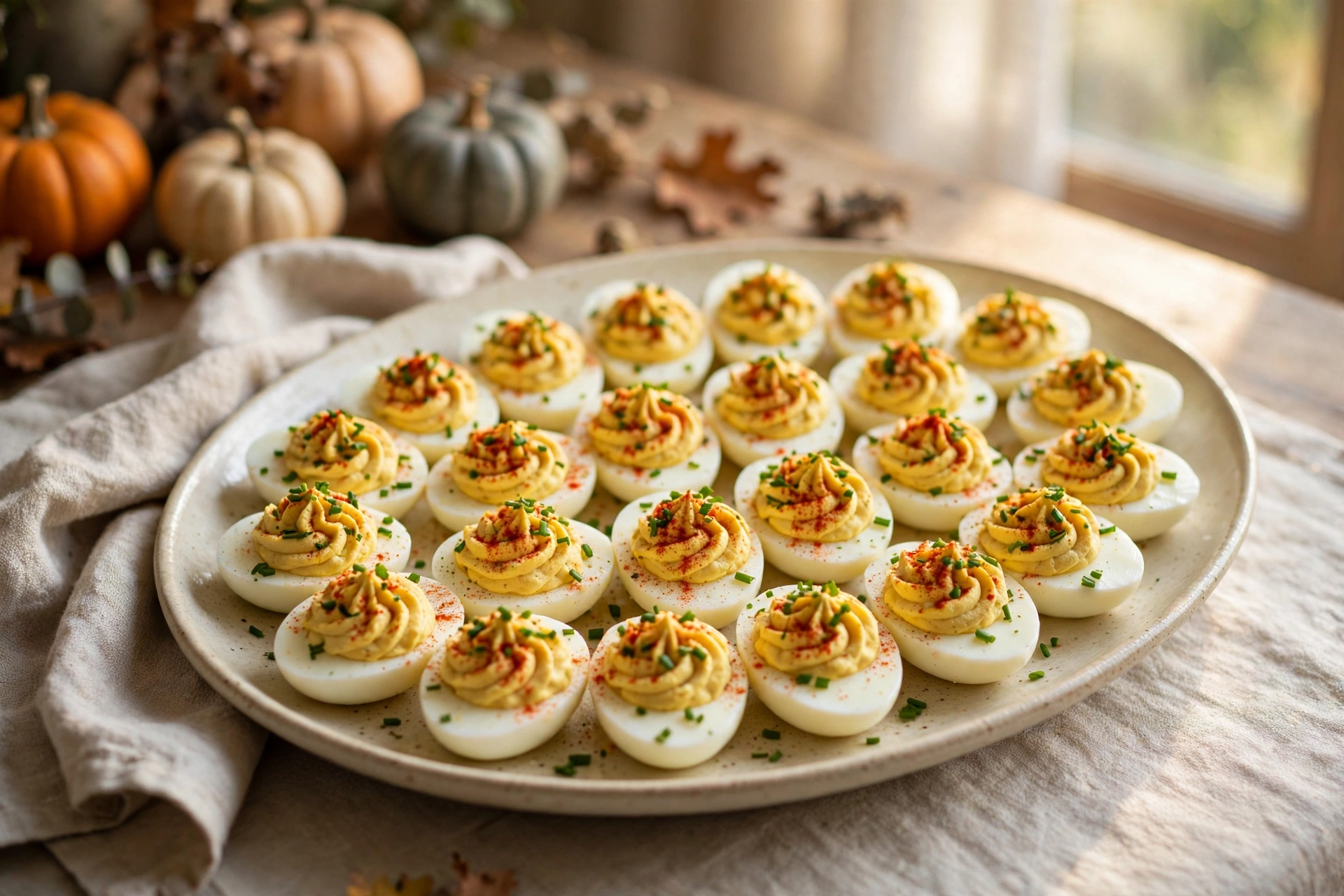
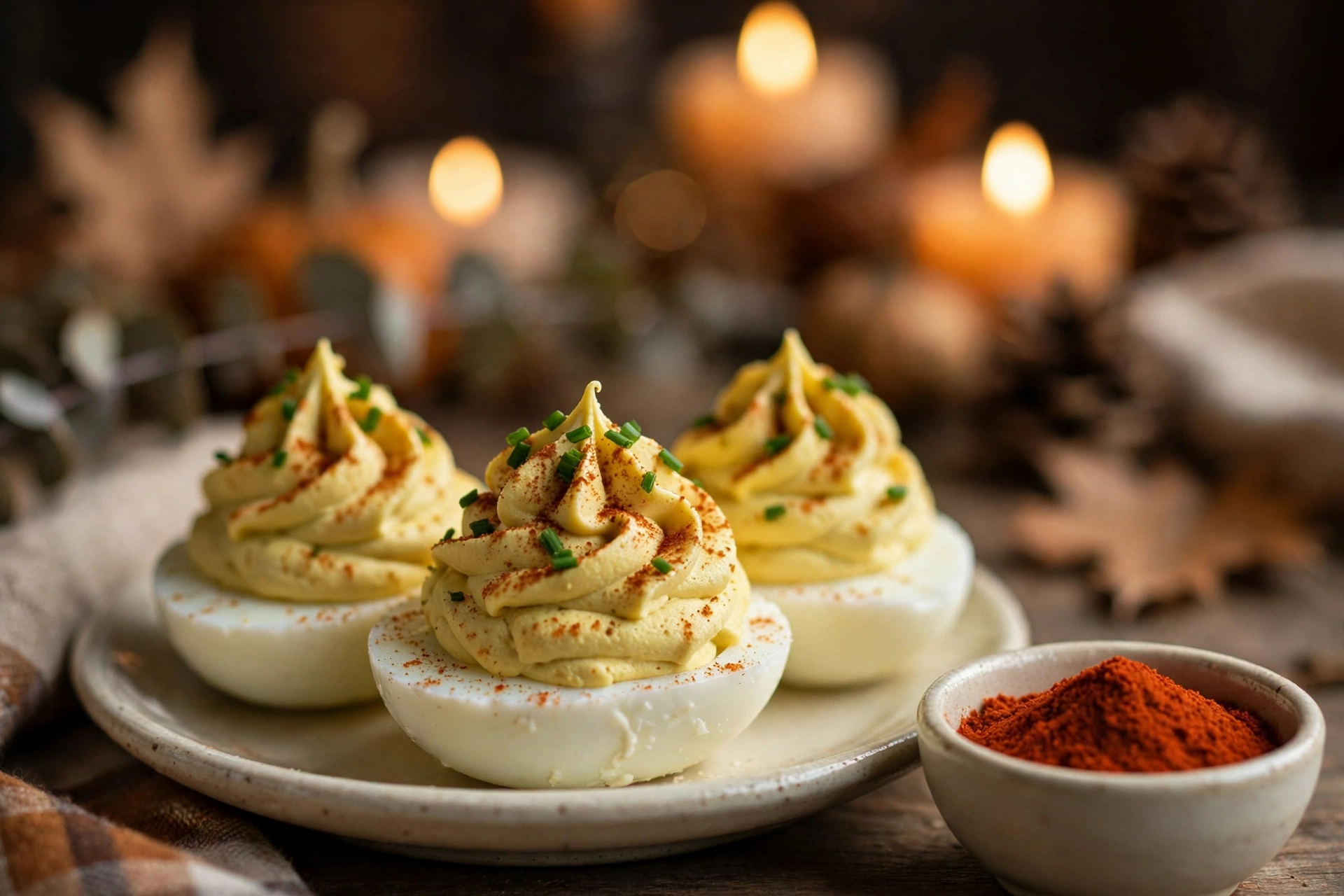
The pleasure of the dish is contrast. The white should be firm and clean, with a gentle resistance, and the filling should be smooth enough to pipe, pale gold, cool and tangy, with the smoked paprika sitting on top like a final seasoning rather than a decoration.
Getting the whites right is a timing decision. Twelve minutes of rest in the hot water, off the heat, cooks the yolks through without toughening the whites into rubber. Pull them earlier and the centers stay jammy, lovely for toast, wrong for a filling that must hold a swirl.
The filling wants to be mashed further than instinct suggests. Yolks rubbed to fine crumbs before the yogurt goes in give a silk texture; yolks left in small lumps give a filling that pipes in bursts and tastes grainy no matter how good the seasoning is.
Temperature matters at serving. Straight from the fridge the filling is a touch stiff and the flavors sit quietly, so give the platter fifteen minutes on the counter before it goes out. The paprika blooms, the tang lifts, and the texture turns properly creamy.
There is a look to aim for as well. High swirls, a confident dusting, chives scattered like they fell there on purpose. On a Thanksgiving table crowded with brown food, this platter of white and gold is the thing eyes land on first, next to the deep red of our healthy cranberry turkey meatballs.
The Math: 40 Against 65 a Half
A classic deviled egg, filled with a mayonnaise based mixture, lands around 65 calories a half, sometimes closer to 80 when the filling is generous. These healthy deviled eggs serve the same full half at about 40 calories, with roughly 3 grams of protein in every piece.
The saving comes from a single swap. A third of a cup of mayonnaise carries close to 300 calories into a batch of filling; the same measure of nonfat Greek yogurt carries about 35, and it brings protein and tang with it instead of only fat.
Nothing else is trimmed. The yolks all stay, the filling is piped generously, and the halves are full sized eggs, not a smaller portion dressed up as a lighter recipe. Two halves make a proper appetizer serving at about 80 calories.
That leaves real room at a meal that needs it. Thanksgiving plates fill fast, and a guest who starts with deviled eggs and our healthy green bean casserole still has space for pie, which is more than the classic versions of both can promise.
The sodium stays reasonable too, because the filling is seasoned once, deliberately, rather than salted at every stage. A measured half teaspoon across twenty four halves seasons the whole platter without pushing any single piece high.
Ingredients for Healthy Deviled Eggs
- 12 large eggs, ideally bought a week ahead
- 1/3 cup plain nonfat Greek yogurt
- 2 teaspoons Dijon mustard
- 1 teaspoon apple cider vinegar
- 1/2 teaspoon fine sea salt
- 1/4 teaspoon black pepper
- 1/4 teaspoon garlic powder
- Smoked paprika, for dusting
- 1 tablespoon finely snipped chives, plus more for serving
- Pinch of cayenne pepper, optional
Eggs bought a week ahead peel noticeably more cleanly than farm fresh ones, because the membrane loosens its grip on the white as the egg ages. For Thanksgiving, buy the eggs the week before and let the calendar do half the peeling work.
The chives are worth snipping fine and adding at the last moment. Their mild onion freshness is the top note of the whole bite, and it fades within an hour of cutting, so a small extra pinch waits in a bowl for the platter to be refreshed.
Cooking, Peeling and Piping the Eggs
- Set the eggs in a single layer in a large pot and cover with cold water by about an inch. Crowded eggs crack against each other, so use the biggest pot you have.
- Bring the water to a full rolling boil over high heat. The moment it boils, turn the heat off, cover the pot and let the eggs rest in the hot water for 12 minutes.
- While the eggs rest, fill a large bowl with ice water. Move the eggs straight into the ice bath and let them sit for 10 minutes, until cold through.
- Crack each shell lightly all over with the back of a spoon and return the eggs to the cold water for a few minutes. The water slips under the membranes and loosens them.
- Peel under a thin stream of running water, starting at the wide end where the air pocket sits. Set the peeled whites on a towel lined tray as you go.
- Halve each egg lengthwise with a clean, sharp knife, wiping the blade on a damp towel between cuts so the whites stay snowy. Ease the yolks out into a mixing bowl.
- Mash the yolks with a fork until they are fine, even crumbs with no lumps left. Stir in the yogurt, Dijon mustard, vinegar, salt, black pepper and garlic powder until the filling is smooth and holds a swirl.
- Spoon the filling into a zip top bag, press out the air and snip a corner. Pipe the filling generously into each white, or spoon it in with two small teaspoons.
- Dust the tops with smoked paprika through a small sieve and scatter the chives over. Rest the platter in the fridge for at least 30 minutes before serving.
Boiled Tuesday, Filled Thursday Morning
The whole recipe takes about fifty minutes, and most of it is waiting. Twelve minutes of rest in hot water, ten in the ice bath, and the only real work, peeling and piping, is twenty minutes of quiet counter time with a podcast on.
For Thanksgiving, spread it across the week. Cook and chill the eggs on Tuesday, still in their shells, where they keep happily for two days. Peel and fill on Thursday morning, and the appetizer is finished before the turkey even goes in.
The filling also pipes a day ahead if Thursday looks crowded. Pipe the filling into a zip top bag on Wednesday, keep the peeled whites covered in the fridge, and fill on Thursday. The swirls look freshly made because, in every way that matters, they are.
Doubling is painless, which the holiday often demands. Cook the second dozen in the same pot in a second batch rather than crowding the first, and stir the filling in one large bowl. Forty eight halves sounds like a lot until the first platter comes back empty.
Serve the eggs within two hours of leaving the fridge, the standard window for egg dishes at a party. A platter set over a shallow tray of ice stretches that window comfortably through a long afternoon of grazing.
Green Rings, Torn Whites and Other Fixes
The gray green ring around a yolk is harmless and entirely a timing problem. It forms when eggs cook too long or cool too slowly, so the twelve minute rest followed by a fast ice bath keeps yolks a clean, deep yellow.
Torn whites at peeling mean the eggs were very fresh or the membrane never loosened. The spoon crack and the return to cold water fix most of it; for a stubborn egg, peeling under running water floats the shell away in pieces instead of tearing.
A watery filling almost always traces back to thin yogurt. Stir a spoonful of the mashed yolk back in to firm it, and next time drain loose yogurt in a coffee filter for twenty minutes before mixing. The filling should hold a peak before it ever meets the bag.
For variations, the finishing trio is where to play. Dill and lemon zest make a brighter, springlike version; a few finely chopped capers with sweet paprika turn the platter briny and deep; a pinch of cayenne in the filling itself wakes up the whole tray for a crowd that likes heat.
If a white tears beyond saving, chop it finely and fold it into the filling rather than throwing it away. The filling stretches a little further, the texture barely changes, and no one counts the halves on the platter anyway.
Holding Deviled Eggs Until the Turkey Lands
Filled eggs keep a full day in the fridge, covered loosely so the paprika stays dry and the chives stay green. A sheet of parchment laid over the platter protects better than tight plastic wrap, which presses on the swirls and smears the dusting.
Unfilled, the system lasts longer. Cooked eggs in their shells keep two days refrigerated, peeled whites keep a day under a damp towel in a covered container, and the filling keeps two days in its piping bag with the corner still sealed.
Transport is easy if the platter travels flat. A rimmed baking sheet under the platter keeps it level in the car, and the paprika and chives go on after arrival, since a bumpy ride shakes a dusting loose.
Leftovers, in the unlikely event, are breakfast. Chopped roughly with their filling, they become an egg salad with the seasoning already done, good on toast with a little extra yogurt stirred through.
The First Plate to Empty
Healthy deviled eggs earn their place at Thanksgiving honestly, by being the appetizer everyone actually reaches for twice. They taste like the classic, they look like the classic, and they leave the table with room for the meal they are opening.
Make them once with the full peeling method and the make ahead rhythm, and they stop being a holiday project at all. They become the quiet, reliable first plate, the one that is always empty before the turkey is carved.
Questions Cooks Ask About Healthy Deviled Eggs
Why do my yolks get a green ring, and how do I stop it?
The ring is sulfur from the white reacting with iron in the yolk, and it shows up when eggs are overcooked or cooled slowly. Twelve minutes of rest in the hot water, then straight into an ice bath, keeps the yolks solid yellow.
How far ahead can I make deviled eggs for Thanksgiving?
Cook the eggs up to two days ahead and keep them in their shells. Peel and fill the morning of, or fill the night before and hold the platter covered in the fridge; the texture holds up well for about 24 hours once filled.
My eggs will not peel cleanly. What am I doing wrong?
Very fresh eggs are the usual cause, so buy them a week ahead when you can. Then crack the shells all over before the ice bath ends, and peel under a thin stream of water starting at the wide end.
Can I make the filling without yogurt?
Yes, though the numbers change. Blended low fat cottage cheese gives a similar tang and body, and mashed avocado makes a richer, greener filling that browns faster, so serve that version within a few hours. The yogurt version stays the lightest of the three.
How long can deviled eggs sit out at a party?
Two hours is the standard safe window for egg dishes at room temperature. For a long afternoon, set the platter over a shallow tray of ice and the eggs stay cold and safe well past that, which suits Thanksgiving grazing perfectly.
Healthy Deviled Eggs
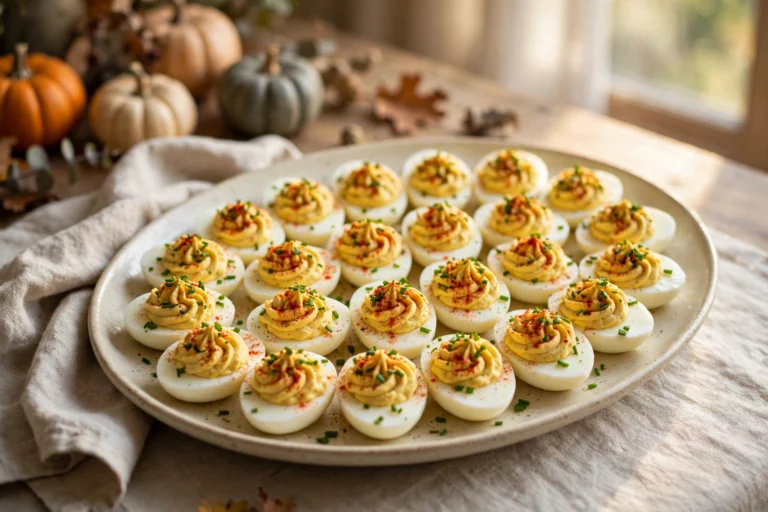
The classic Thanksgiving appetizer, lightened with Greek yogurt instead of mayonnaise. Twelve eggs become twenty four high piped halves with smoked paprika and chives, at about 40 calories a half, ready to boil on Tuesday and fill on Thursday morning.
- Total Time: 50 minutes
- Yield: 12 servings 1x
Ingredients
- 12 large eggs, ideally bought a week ahead
- 1/3 cup plain nonfat Greek yogurt
- 2 teaspoons Dijon mustard
- 1 teaspoon apple cider vinegar
- 1/2 teaspoon fine sea salt
- 1/4 teaspoon black pepper
- 1/4 teaspoon garlic powder
- Smoked paprika, for dusting
- 1 tablespoon finely snipped chives, plus more for serving
- Pinch of cayenne pepper, optional
Instructions
- Set the eggs in a single layer in a large pot and cover with cold water by about an inch. Crowded eggs crack against each other, so use the biggest pot you have.
- Bring the water to a full rolling boil over high heat. The moment it boils, turn the heat off, cover the pot and let the eggs rest in the hot water for 12 minutes.
- While the eggs rest, fill a large bowl with ice water. Move the eggs straight into the ice bath and let them sit for 10 minutes, until cold through.
- Crack each shell lightly all over with the back of a spoon and return the eggs to the cold water for a few minutes. The water slips under the membranes and loosens them.
- Peel under a thin stream of running water, starting at the wide end where the air pocket sits. Set the peeled whites on a towel lined tray as you go.
- Halve each egg lengthwise with a clean, sharp knife, wiping the blade on a damp towel between cuts so the whites stay snowy. Ease the yolks out into a mixing bowl.
- Mash the yolks with a fork until they are fine, even crumbs with no lumps left. Stir in the yogurt, Dijon mustard, vinegar, salt, black pepper and garlic powder until the filling is smooth and holds a swirl.
- Spoon the filling into a zip top bag, press out the air and snip a corner. Pipe the filling generously into each white, or spoon it in with two small teaspoons.
- Dust the tops with smoked paprika through a small sieve and scatter the chives over. Rest the platter in the fridge for at least 30 minutes before serving.
- Prep Time: 20 minutes
- Cook Time: 12 minutes
Nutrition
- Serving Size: 2
- Calories: 80
- Sugar: 1
- Sodium: 170
- Fat: 5
- Saturated Fat: 2
- Unsaturated Fat: 3
- Trans Fat: 0
- Carbohydrates: 1
- Fiber: 0
- Protein: 7
- Cholesterol: 186