Healthy Baked Pears With a Cinnamon Oat Crumble, About 150 Calories a Half
Healthy Baked Pears With a Cinnamon Oat Crumble, About 150 Calories a Half
In this article:
- Ripe Fruit Does the Sweetening
- Soft Pear, Crisp Crumble, Cool Yogurt
- Dessert Math: 150 Against a 290 Calorie Classic
- Ingredients for Healthy Baked Pears
- Coring, Filling and Baking the Pears
- Thirty Minutes While the Coffee Brews
- Hard Pears, Soft Crumble and Other Fixes
- Keeping Baked Pears for the Next Day
- A Light Ending to a Rich Meal
- Questions Cooks Ask About Healthy Baked Pears
Healthy baked pears are the dessert I serve at Christmas when the meal has already been long and generous, and what the table wants is something warm, spiced and gentle to finish on. A ripe pear, baked until it just gives, needs far less help than most desserts ask for.
The crumble does the festive work: oats and walnuts with cinnamon, ginger, nutmeg and orange zest, bound with olive oil and a single spoon of maple syrup for the whole dish. It goes on halfway through the bake, which is how it stays crisp instead of steaming into the fruit.
Each half lands at about 150 calories, against 290 or more for the butter and brown sugar versions, and the pears hold beautifully for a crowd. They bake while the coffee brews and come to the table warm, with cold yogurt against the spice.
Ripe Fruit Does the Sweetening
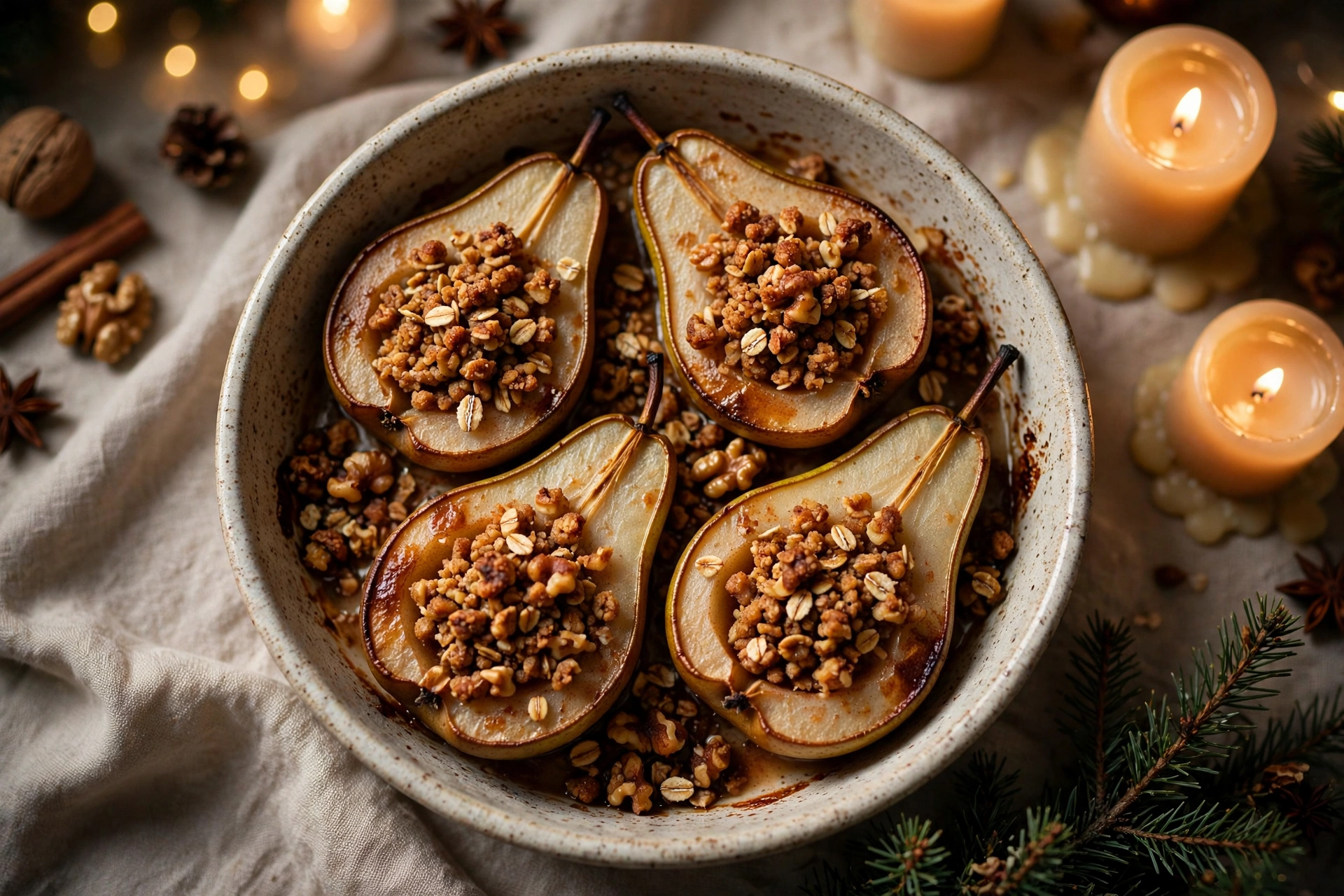
Healthy baked pears work because ripeness replaces sugar. A Bosc pear at the right stage, fragrant at the stem and giving slightly at the neck, carries enough natural sweetness that the whole crumble needs one spoon of maple syrup rather than the third of a cup most recipes pour on.
Heat does the rest of the sweetening. As the pear bakes, its juices concentrate and its texture turns silky, so the finished dessert tastes richer than its ingredient list suggests. Underripe fruit is the one real way to spoil it, because no topping rescues a hard, bland pear.
The variety matters as much as the ripeness. Bosc pears hold their shape through a full bake and arrive at the table still looking like pears, while softer varieties slump into sauce. Their dense flesh also stands up to the crumble without weeping into it.
The skin stays on, deliberately. It holds each half together in the oven, it carries much of the fruit’s fiber, as MyPlate notes for whole fruit generally, and it turns a beautiful bronze against the pale flesh.
Even the third of a cup of water in the dish has a job. It steams the pears gently from below so the bottoms soften without scorching, then reduces with the escaping juices into a light syrup that spoons over each serving like a sauce you never had to make.
Soft Pear, Crisp Crumble, Cool Yogurt
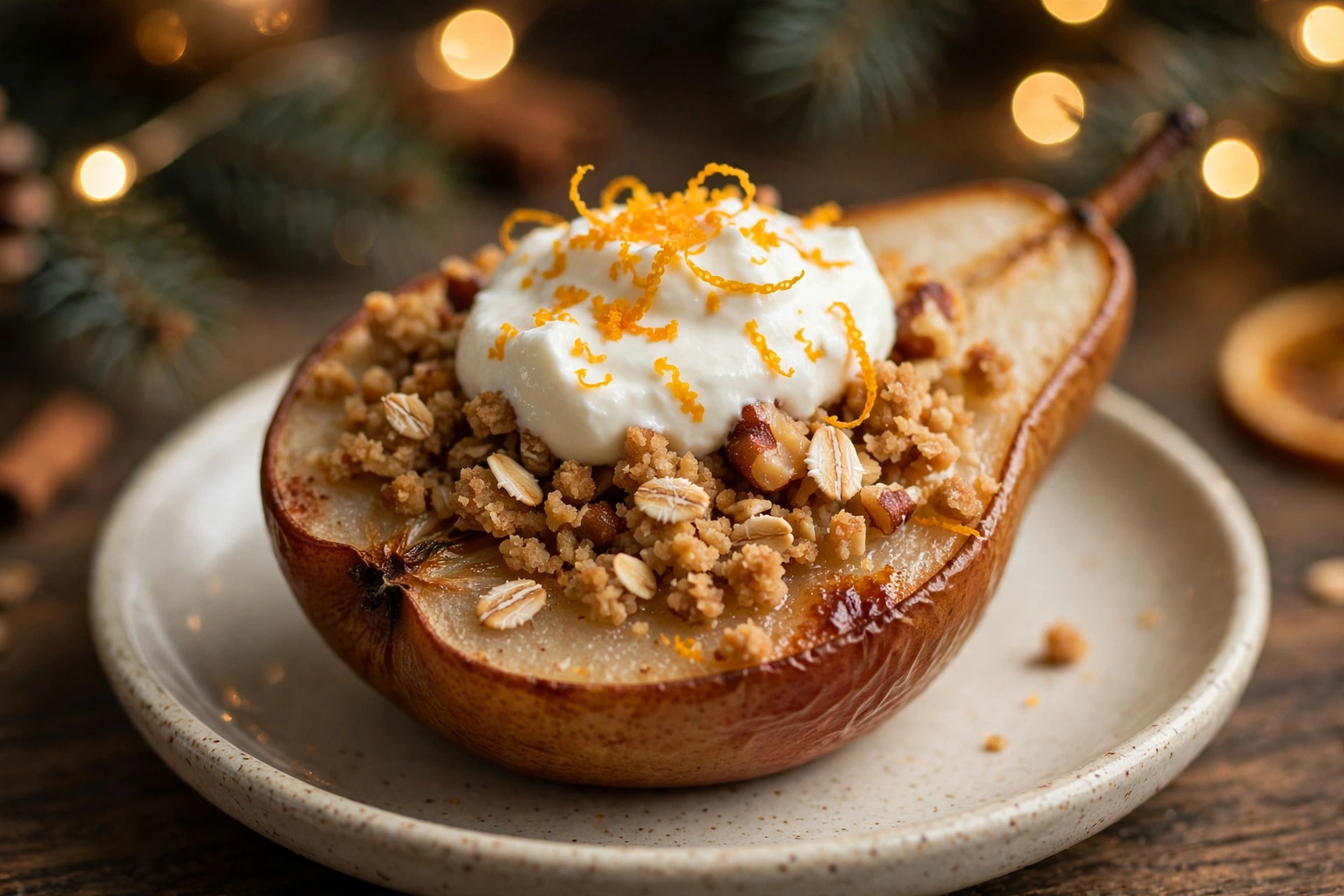
The pleasure of the dish is a three way contrast. The pear bakes to a soft, almost custardy give, the crumble on top stays rough and crisp, and the spoon of cold Greek yogurt melts slowly over both, cool and tangy against the warm spice.
Keeping the crumble crisp is a timing decision, not an ingredient one. Fifteen minutes alone gives the pears a head start, so when the topping goes on, the fruit is already tender and the crumble spends its oven time toasting instead of steaming.
The spice blend is what makes it taste like Christmas rather than October. Cinnamon leads, ginger warms the middle, nutmeg sits underneath, and orange zest lifts the whole thing the way it does in our healthy baked apples, the autumn cousin of this dessert.
Served warm, the juices in the dish turn lightly syrupy and spoon over the yogurt like a sauce. It looks like a dessert that took planning, which is useful, because it took about twelve minutes of actual work.
There is also the perfume to account for. Twenty minutes in, the kitchen smells of cinnamon, orange and warm fruit, the exact smell a Christmas house is supposed to have, and it arrives before a single plate does.
Dessert Math: 150 Against a 290 Calorie Classic
A classic baked pear, crumbled with butter and a third of a cup of brown sugar and finished with whipped cream, lands around 290 calories a half, sometimes well past it. These healthy baked pears serve the same generous half at about 150 calories, with 4 grams of fiber.
The savings come from two swaps. The crumble binds with olive oil and one spoon of maple syrup instead of butter and a scoop of sugar, and plain nonfat Greek yogurt replaces whipped cream while adding a little protein the classic never had.
Nothing is sweetened with substitutes and nothing is portioned down. The half a pear on the plate is a full, handsome serving, the kind a guest finishes happily at the end of a long meal without feeling managed.
It is also a genuinely useful dessert for a mixed table. It is naturally gluten free if your oats are certified, it contains no refined sugar beyond the spoon of maple, and it sits comfortably beside richer options like our healthy pumpkin pie.
The same plate earns a second life at breakfast, which the classic never manages. A leftover half over yogurt with its crumble reads as a planned parfait, not a compromise, so the recipe quietly covers two courses of the holiday without any extra shopping.
Ingredients for Healthy Baked Pears
- 4 large ripe but firm Bosc pears
- 1/2 cup rolled oats
- 1/4 cup walnuts, finely chopped
- 1 tablespoon maple syrup
- 1 tablespoon olive oil
- 1 teaspoon ground cinnamon, divided
- 1/4 teaspoon ground ginger
- 1/8 teaspoon ground nutmeg
- 1/4 teaspoon fine sea salt
- 1 teaspoon vanilla extract
- 1 teaspoon orange zest, plus more for serving
- 1/3 cup water
- 1 cup plain nonfat Greek yogurt, for serving
Choose pears that feel heavy for their size and smell faintly sweet at the stem end. If the rack only offers rock hard fruit, buy it three or four days ahead and let the counter do the ripening, checking the neck each morning.
The yogurt is the one serving choice to make on purpose. Plain nonfat keeps the dessert exactly where the numbers promise, cool and clean against the spice. A vanilla yogurt tastes softer and sweeter, and some tables prefer it; it simply adds a few grams of sugar per spoon.
Coring, Filling and Baking the Pears
- Heat the oven to 375 degrees F. Pour the water into a baking dish large enough to hold the pear halves in a single layer.
- Halve the pears lengthwise, keeping the stems. Scoop out the core and seeds with a melon baller or a small spoon, and widen the well slightly so it holds the crumble.
- Set the halves cut side up in the dish and sprinkle them with half the cinnamon, rubbing it lightly over the cut surfaces.
- Mix the oats, walnuts, maple syrup, olive oil, remaining cinnamon, ginger, nutmeg, salt, vanilla and orange zest in a bowl, until the oats look evenly damp and clump lightly when pinched.
- Bake the pears uncovered for 15 minutes, until the flesh just begins to soften at the edges.
- Spoon the crumble generously into the wells and over the tops, pressing it gently so it stays in place.
- Return the dish to the oven for 12 to 15 minutes more, until the pears give easily to the tip of a knife and the crumble is crisp and deep golden.
- Rest for 5 minutes. Serve warm, one half per plate, with 2 tablespoons of Greek yogurt and a little extra orange zest.
Thirty Minutes While the Coffee Brews
The whole dessert takes about forty minutes, and only twelve of them are work. The pears core in minutes, the crumble stirs together in one bowl, and the oven handles the rest while the table is being cleared.
For Christmas dinner, the rhythm is easy. The pears go in as the main course is served, get their crumble while plates are being cleared, and come out warm just as coffee and our healthy hot chocolate start to circulate.
The dish also scales without complaint. Eight halves fit a standard baking dish, and a second dish doubles the recipe with no change to timing, which makes this one of the few from scratch desserts that feeds twelve without drama.
If the evening runs long, the baked pears wait well. Held warm in a low oven for twenty minutes, they lose nothing; the crumble stays crisp and the fruit stays silky.
The crumble itself can be mixed a day ahead and kept in a jar, which trims the day itself down to coring and assembly. Stir it once before spooning it on, because the oats settle and the zest likes to sink to the bottom of the jar.
Hard Pears, Soft Crumble and Other Fixes
Hard pears are the common failure, and they announce themselves at the coring stage: the spoon fights, the flesh looks pale and dry. Give underbaked halves ten extra minutes under foil with a splash more water, and note the lesson for next time, ripeness first.
A soft crumble means it went on too early or the dish was crowded and steamy. Bake the pears alone for the first fifteen minutes as written, and if a crumble ever does soften, five minutes on a hot tray by itself brings the crunch back.
Pears that tip in the dish are fixed before they bake. A thin slice off the rounded back of each half gives it a flat base, and nobody at the table ever sees the surgery.
For variations, pecans stand in for the walnuts, a pinch of cardamom joins the spice blend gracefully, and the same crumble over halved apples gives you a close relative of our healthy apple crisp in individual form.
For a small table, the recipe halves without any adjustment. Two pears in a smaller dish, the same oven temperature, the same two stage timing. Watch the smaller batch from the twelve minute mark, because less fruit in the oven dries a little faster at the edges.
Keeping Baked Pears for the Next Day
Leftover halves keep four days in the fridge, covered, with the yogurt stored separately. The crumble softens slowly in the cold, so the texture shifts from crisp to chewy, still pleasant, especially for breakfast.
Reheat in a 325 degree F oven for ten minutes to bring back some of the contrast, or eat them cold from the fridge with yogurt and a spoon, parfait style. The microwave works but softens the crumble further, so the oven wins when there is time.
The crumble mixture itself keeps a week in a jar, which makes a second small batch later in the holidays nearly effortless. The baked pears do not freeze well; the fruit turns watery as it thaws.
Leftovers also layer into a breakfast jar worth planning for: cold pear pieces, yogurt, the softened crumble and a spoon of the dish syrup, in that order. It keeps two days refrigerated and tastes like the dessert remembered itself on purpose.
A Light Ending to a Rich Meal
Healthy baked pears finish a Christmas dinner the way the meal deserves, warmly, with spice and a little ceremony, and without one more heavy course. They taste like the season and leave the table comfortable, which is its own kind of generosity.
Make them once with properly ripe fruit and the crumble added halfway, and they become the dessert you reach for whenever the meal before them has been long, rich and worth it.
Questions Cooks Ask About Healthy Baked Pears
Which pears are best for baking?
Bosc is the reliable choice: dense flesh, a shape that holds in the heat and skin that bronzes beautifully. Anjou works as a second choice. Bartlett tastes wonderful but softens fast and can slump, so give it five minutes less and a watchful eye.
How do I know the pears are ripe enough?
Press gently at the neck, beside the stem. A ripe pear gives slightly there while the body stays firm; that is the exact stage for baking. Rock hard pears need days on the counter first, and a pear that is soft all over is better eaten fresh.
Can I make them ahead for Christmas dinner?
Yes. Bake them completely earlier in the day, cool and refrigerate, then reheat uncovered at 325 degrees F for ten minutes before serving. The crumble will not be quite as crisp as fresh, but warm fruit with cold yogurt covers the difference gracefully.
What replaces the walnuts for a nut free table?
Pumpkin seeds, chopped and toasted with the oats, give the same rough crunch. Sunflower seeds also work. Or skip the nuts entirely and add two extra tablespoons of oats with a pinch more salt for balance.
Can I serve baked pears cold?
Gladly, especially the next morning. Cold, the flavors settle and the texture turns almost jammy, lovely over yogurt with the leftover crumble scattered on top. Warm is better for Christmas night; cold is the cook’s breakfast.

Healthy Baked Pears
Ripe Bosc pears baked until just tender under a cinnamon oat and walnut crumble with ginger, nutmeg and orange zest, a single spoon of maple syrup in the whole dish, served warm with plain Greek yogurt. About 150 calories a half against 290 or more for a butter and brown sugar version, made for the Christmas table.
- Total Time: 42 minutes
- Yield: 8 servings 1x
Ingredients
- 4 large ripe but firm Bosc pears
- 1/2 cup rolled oats
- 1/4 cup walnuts, finely chopped
- 1 tablespoon maple syrup
- 1 tablespoon olive oil
- 1 teaspoon ground cinnamon, divided
- 1/4 teaspoon ground ginger
- 1/8 teaspoon ground nutmeg
- 1/4 teaspoon fine sea salt
- 1 teaspoon vanilla extract
- 1 teaspoon orange zest, plus more for serving
- 1/3 cup water
- 1 cup plain nonfat Greek yogurt, for serving
Instructions
- Heat the oven to 375 degrees F. Pour the water into a baking dish large enough to hold the pear halves in a single layer.
- Halve the pears lengthwise, keeping the stems. Scoop out the core and seeds with a melon baller or a small spoon, and widen the well slightly so it holds the crumble.
- Set the halves cut side up in the dish and sprinkle them with half the cinnamon, rubbing it lightly over the cut surfaces.
- Mix the oats, walnuts, maple syrup, olive oil, remaining cinnamon, ginger, nutmeg, salt, vanilla and orange zest in a bowl, until the oats look evenly damp and clump lightly when pinched.
- Bake the pears uncovered for 15 minutes, until the flesh just begins to soften at the edges.
- Spoon the crumble generously into the wells and over the tops, pressing it gently so it stays in place.
- Return the dish to the oven for 12 to 15 minutes more, until the pears give easily to the tip of a knife and the crumble is crisp and deep golden.
- Rest for 5 minutes. Serve warm, one half per plate, with 2 tablespoons of Greek yogurt and a little extra orange zest.
- Prep Time: 12 minutes
- Cook Time: 30 minutes
Nutrition
- Serving Size: 1
- Calories: 150
- Sugar: 13
- Sodium: 85
- Fat: 5
- Saturated Fat: 1
- Unsaturated Fat: 4
- Trans Fat: 0
- Carbohydrates: 23
- Fiber: 4
- Protein: 4
- Cholesterol: 2