
Healthy Stuffed Acorn Squash at About 280 Calories a Half
In this article:
- Why These Healthy Stuffed Acorn Squash Halves Work on a Crowded Table
- Roasting Is Where the Flavor Happens
- The Honest Math: About 280 Calories Against Roughly 500
- Ingredients for Healthy Stuffed Acorn Squash
- Roasting, Filling and Baking the Squash, Step by Step
- A Filling That Stays Put: Three Fixes
- Brown Rice, Farro and a Maple Drizzle: Variations That Still Behave
- Roast on Wednesday, Stuff and Bake on Thursday
- The Side Dish That Looks Planned for Weeks
- Questions Home Cooks Ask About Healthy Stuffed Acorn Squash
Healthy stuffed acorn squash is the side I set on the Thanksgiving table when one dish has to do three jobs at once: feed the vegetarians properly, bring real color to a mostly beige plate, and stay light enough that nobody negotiates with the pie later.
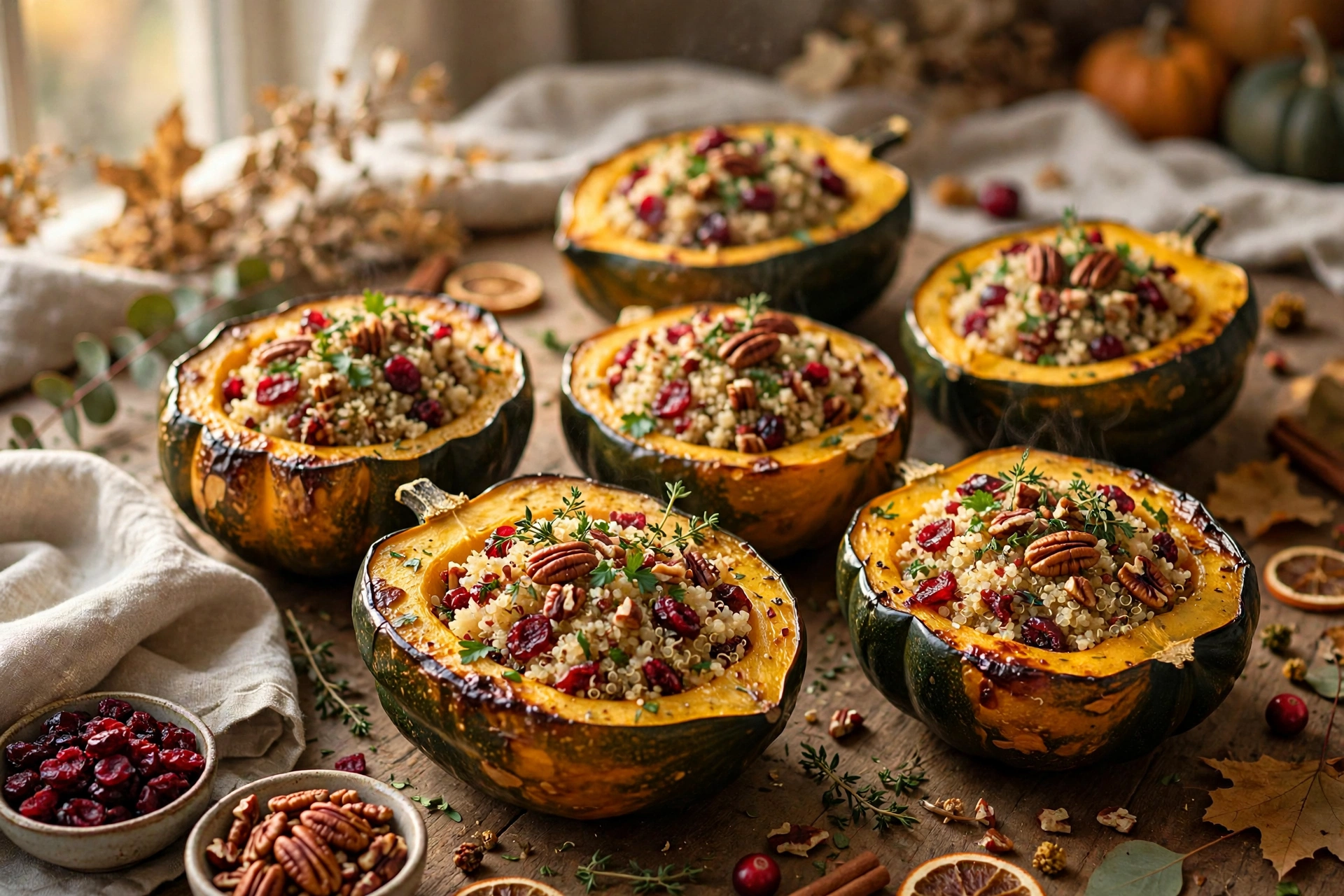
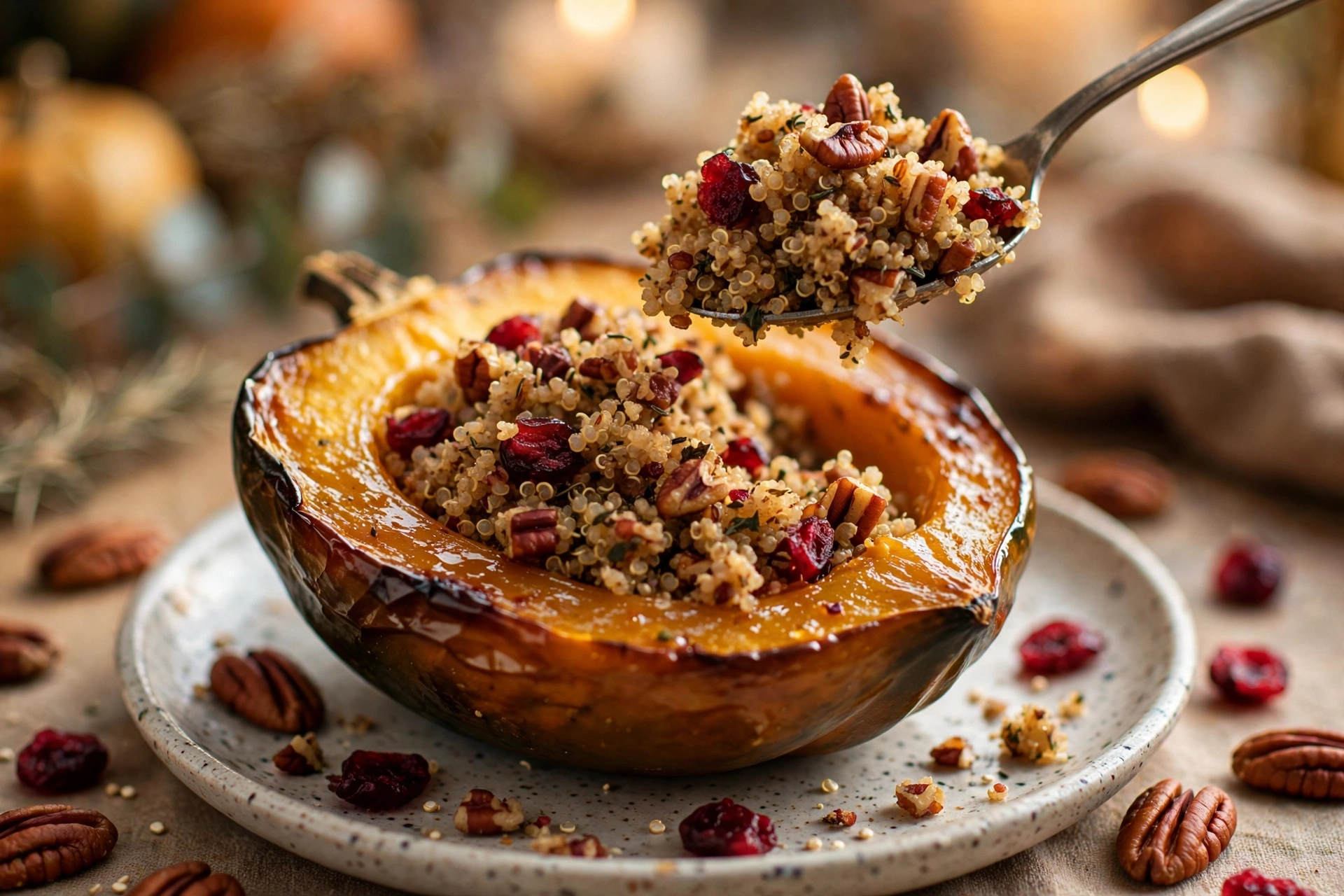
Each roasted half arrives in its own glossy bowl of squash, mounded with fluffy quinoa, tart cranberries, toasted pecans and a soft dice of apple and celery. The cut edges caramelize in the heat, the filling stays savory first and gently sweet second, and the whole thing eats like a small meal hiding inside a side dish.
The honest number is about 280 calories for a generously filled half, against roughly 500 for the classic rich stuffing and cheese version. Nothing in the filling is a substitute ingredient or an apology. It is simply a better cast, cooked with a little more attention.
Why These Healthy Stuffed Acorn Squash Halves Work on a Crowded Table
Healthy stuffed acorn squash works because the squash is not a container, it is half the dish. Roasting concentrates its sugars and firms its flesh, which gives the grain filling something sweet and earthy to push against in every bite.
Quinoa earns the lead role in the filling. It cooks quickly, stays separate and fluffy instead of packing into a dense scoop, and it brings complete protein to a plate where the vegetarian option is too often an afterthought made of bread.
Cranberry and pecan are the Thanksgiving signals. The cranberries cut through the sweetness of the squash in small tart bursts, while the toasted pecans hand the soft filling the one crunchy note it would otherwise miss entirely.
Sage, thyme and celery keep the filling honest. They are the flavors of stuffing, moved into a grain, so these halves taste like they belong beside turkey and gravy instead of visiting from a different menu entirely.
A stuffed half also solves a serving problem nobody talks about. It portions itself, travels from oven to table without a serving spoon duel, and gives every guest the same ratio of squash to filling, first plate and second alike.
Roasting Is Where the Flavor Happens
Roast the halves cut side down first. The flesh steams gently against the pan while the cut surface stays protected, so the interior cooks evenly without going leathery at the rim, which is where acorn squash usually dries out.
Choose squash that feel heavy for their size, with matte, deep green skin and no soft spots or pale patches. A dried, intact stem is a good sign; a missing stem lets moisture in and quietly shortens the squash’s sweet life in the pantry.
A thin brush of olive oil and a real pinch of salt matter more here than any spice blend. Salt draws the squash flavor forward before the filling ever goes in, so the finished bite tastes seasoned all the way through.
Doneness is visual and tactile. The flesh should yield to a fork with almost no resistance, and the skin should deepen to a burnished green with amber showing at the edges. An underdone half will fight the spoon at the table.
Cook the quinoa while the squash roasts, and build the skillet filling inside the same window. Thanksgiving cooking rewards overlap, and this recipe is timed so the oven and the stovetop finish within a few minutes of each other.
One small habit protects the whole dish: let the roasted halves rest cut side up for five minutes before filling them. Steam escapes instead of loosening the filling, and the squash firms just enough to hold its shape under the spoon.
The Honest Math: About 280 Calories Against Roughly 500
Here is where the calories actually go. The squash half itself contributes roughly 130 of them, and the quinoa, pecans and cranberries carry most of the rest, doing real work in exchange: fiber, protein, chew and crunch.
Compare that with the classic build, where a fatty meat stuffing and a heavy blanket of cheese push a stuffed half toward 500 calories, much of it saturated fat that pools in the bottom of the shell. The flavor people remember was never the grease.
The USDA entries in FoodData Central for acorn squash and quinoa show how naturally lean the base of this dish is. The lightness here is arithmetic, not marketing, and it leaves room at the table for everything else.
For the cook keeping score, the protein lands near 6 grams a half and the fiber near 6 grams as well. That is why one half beside a modest slice of turkey leaves people genuinely full rather than merely fed.
Ingredients for Healthy Stuffed Acorn Squash
- 3 acorn squash, about 1 pound each, halved lengthwise and seeded
- 1 tablespoon olive oil, plus 1 teaspoon more for brushing
- 3/4 teaspoon fine sea salt, divided
- 1/2 teaspoon black pepper
- 2/3 cup quinoa, rinsed well
- 1 1/3 cups low sodium vegetable broth
- 1 small yellow onion, finely diced
- 2 celery stalks, finely diced
- 1 small Honeycrisp apple, cored and diced small
- 2 garlic cloves, minced
- 1 tablespoon chopped fresh sage, or 1 teaspoon dried rubbed sage
- 1 teaspoon fresh thyme leaves, or 1/2 teaspoon dried thyme
- 1/4 cup dried cranberries
- 3 tablespoons chopped pecans, toasted
- 2 tablespoons finely grated Parmesan
- 2 tablespoons chopped fresh parsley, for serving
Roasting, Filling and Baking the Squash, Step by Step
- Heat the oven to 400°F. Line a rimmed sheet pan with parchment so the caramelized edges release cleanly later.
- Brush the cut sides of the squash halves with the teaspoon of olive oil, sprinkle with 1/4 teaspoon of the salt and the pepper, and set them cut side down on the pan.
- Roast for 30 to 35 minutes, until the flesh gives easily under a fork and the edges have taken on deep amber color.
- Meanwhile, simmer the quinoa in the vegetable broth for 15 minutes. Rest it off the heat for 5 minutes, then fluff with a fork so the grains stay separate.
- Warm the tablespoon of olive oil in a large skillet over medium heat. Cook the onion and celery for 4 to 5 minutes, until softened at the edges.
- Add the apple and cook 3 minutes more. Stir in the garlic, sage and thyme and cook just 30 seconds, until fragrant.
- Tip the quinoa into the skillet with the cranberries, pecans, Parmesan and the remaining 1/2 teaspoon salt. Toss everything together and taste for seasoning.
- Flip the squash halves cut side up. If one rocks in the pan, shave a thin slice from its skin side so it sits level.
- Mound the filling into the halves, packing it lightly, about 2/3 cup in each. Return the pan to the oven.
- Bake for 10 to 12 minutes, until the filling is hot through and its top edges toast lightly. Rest 5 minutes, scatter with parsley, and serve warm.
A Filling That Stays Put: Three Fixes
Wet filling is the usual failure, and it starts at the quinoa pot. If the grains finish in standing liquid, they carry that water straight into the squash. Cook until the broth is fully absorbed, then let the pan rest covered so the last steam redistributes instead of pooling.
Rocking halves are the second failure. A round bottom on a flat pan will always wobble under a spoon. The thin shaved slice in the method is not cosmetic; it is the difference between a side dish and a small table accident.
The third is filling that slides at the first cut. Pack the quinoa lightly rather than loosely, rest the baked halves for five full minutes, and serve them with a spoon alongside the knife. The squash shell is the bowl; nobody needs the filling to behave like a slice of cake.
Brown Rice, Farro and a Maple Drizzle: Variations That Still Behave
Brown rice swaps in cleanly for the quinoa if it is already cooked and warm; use 2 cups cooked and skip the broth step. Farro works too, chewier and nuttier, though the filling lands a little heavier and the calorie count climbs modestly.
For a dairy free tray, leave out the Parmesan and finish each half with a drizzle of maple syrup whisked with tahini and a pinch of salt. The drizzle reads as a glaze, photographs beautifully, and keeps the savory sweet balance intact.
A mushroom and kale version suits a colder week in January: saute 8 ounces of sliced cremini mushrooms and two handfuls of chopped kale into the skillet instead of the apple, and keep everything else the same. The halves stop being a holiday dish and become a standing winter dinner.
Leftover filling has its own second act. Crisp it in a skillet the next morning until the edges toast, open a small well in the center and crack in an egg per person. It is a Friday breakfast that tastes nothing like a compromise.
Roast on Wednesday, Stuff and Bake on Thursday
The oven is the most contested real estate of Thanksgiving Day, and this recipe is built to stay out of the fight. Roast the squash halves on Wednesday, cool them, and refrigerate them covered in their pan overnight.
Cook the filling on Thursday morning while the kitchen is still calm, or make it Wednesday too and keep it in a sealed container. Cold filling warms more gently than cold squash, so the two parts meet at the right temperature.
On Thursday, fill the cold halves, cover the pan loosely with foil, and bake at 375°F for 20 minutes, then uncover for 8 to 10 minutes to toast the tops. The halves go to the table as the turkey rests, next to carved slices of our healthy herb roasted turkey breast.
Serve the halves warm, not blazing. Ten minutes out of the oven, the filling holds together when it is scooped, the squash tastes sweeter as it settles toward eating temperature, and the Parmesan on top stays supple instead of turning leathery.
Leftovers keep three days in the refrigerator and reheat well at 350°F for 12 to 15 minutes, covered. Serve a reheated half beside a bowl of healthy butternut squash soup on Friday and the leftovers feel like a plan rather than a repeat.
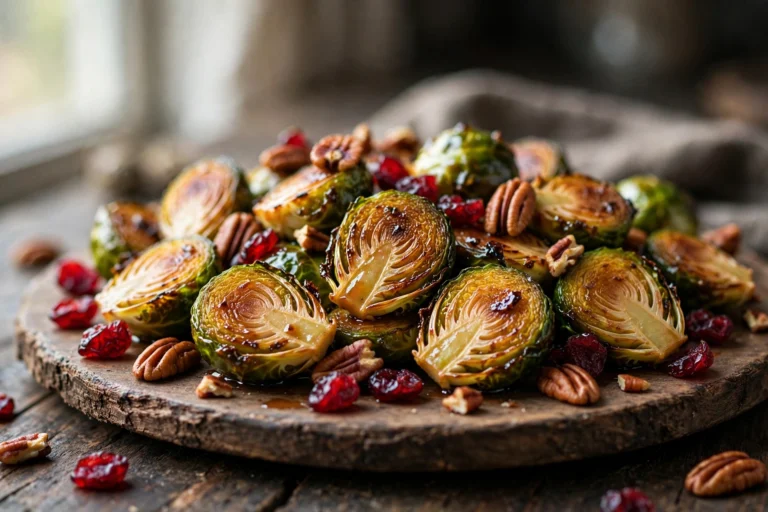
For the rest of the lightened table, the halves sit happily next to a spoonful of healthy wild rice pilaf and the green crunch of maple roasted Brussels sprouts with cranberries.
The Side Dish That Looks Planned for Weeks
Healthy stuffed acorn squash earns its place because it looks deliberate. Six burnished halves in a row read as the dish the whole menu was organized around, even when the cook assembled most of it the day before.
The Harvard T.H. Chan School of Public Health makes a similar case for building holiday plates around vegetables that carry their own structure in its Nutrition Source guides. A squash that serves as its own bowl is that advice, plated.
Make the full tray even for a small table. The halves reheat gracefully, the filling keeps its texture, and Friday’s lunch tends to be the quiet victory of the whole holiday.
Questions Home Cooks Ask About Healthy Stuffed Acorn Squash
Can I use butternut or delicata squash instead of acorn in this recipe?
Butternut works if you choose small ones and roast the halves a few minutes longer; the cavity is smaller, so expect extra filling to serve on the side. Delicata is trickier because its cavity is shallow and its skin is thin; it holds about half the filling and roasts faster, so check it at 20 minutes.
My quinoa filling came out wet and soupy. How do I rescue it tonight?
Spread the filling in a wide skillet over medium heat and cook, stirring, for 3 to 4 minutes so the excess moisture steams off. If it is still loose, stir in 2 tablespoons of extra cooked quinoa or fine breadcrumbs, rest it 5 minutes, and fill the squash while the filling is hot.
How do I stop the squash halves from rocking in the pan?
Slice a thin piece off the rounded skin side of each half so it sits on a small flat base before roasting. If a half still wobbles after filling, nestle it against its neighbors in a smaller baking dish so the halves brace each other.
What can replace the pecans for a guest with a nut allergy?
Toasted pumpkin seeds are the closest swap: same crunch, similar richness, and they keep the Thanksgiving flavor intact. Sunflower seeds also work. Add them at the same point in the recipe so they stay crisp instead of steaming soft inside the filling.
Can I freeze the stuffed squash halves?
The filling freezes well for up to 2 months on its own. The roasted squash does not; its flesh turns watery and soft after thawing. For a freezer plan, freeze the filling, roast fresh squash when you need it, and bake the filled halves exactly as written.

One Comment
Comments are closed.