Healthy Crème Brûlée Sweet Potatoes, Silky, Crackly and Light at About 200 Calories a Ramekin
In this article:
- A Dessert That Earns Its Place Next to the Turkey
- Silky Custard Under a Glassy Amber Top
- Why the Greek Yogurt Never Curdles
- What Goes Into the Custard
- How to Make Healthy Crème Brûlée Sweet Potatoes
- One Teaspoon of Sugar, One Loud Crack
- The Numbers Next to the Classic Casserole
- Bake Them Wednesday, Torch Them Thursday
- Small Swaps That Keep the Ramekin Light
- FAQ
Healthy crème brûlée sweet potatoes take the most theatrical dessert of the season and rebuild it on a Greek yogurt custard. The crackly caramel top stays exactly where it belongs. What changes is everything underneath it, and the numbers that follow dessert.
Each ramekin lands at about 200 calories with 9 grams of protein, roughly half the calories of the classic casserole serving. The custard tastes rich because sweet potato and vanilla do the heavy lifting, not cream.
The format suits Thanksgiving better than a big casserole dish does. Six individual ramekins bake the day before, wait quietly in the fridge, and get their glassy tops in the last ten minutes before serving.
A Dessert That Earns Its Place Next to the Turkey
Healthy crème brûlée sweet potatoes work because the sweet potato is already halfway to custard on its own. Roasted until it slumps, the flesh turns dense, sweet and almost buttery, with a depth that pumpkin puree never quite reaches.
The yogurt custard is the second half of the trick. Greek yogurt brings the tang and body that heavy cream usually provides, and a gentle water bath sets it into something that spoons like silk instead of rubber.
Portion control is built into the dish rather than negotiated at the table. A ramekin is a serving, finished when the last shard of caramel is gone. Nobody goes back for a sliver that turns into a second helping.
There is also a texture argument. The classic casserole gives you soft on soft, sweet on sweet. Here the top shatters, the custard stays cool and silky, and the contrast keeps every spoonful interesting to the end.
Silky Custard Under a Glassy Amber Top
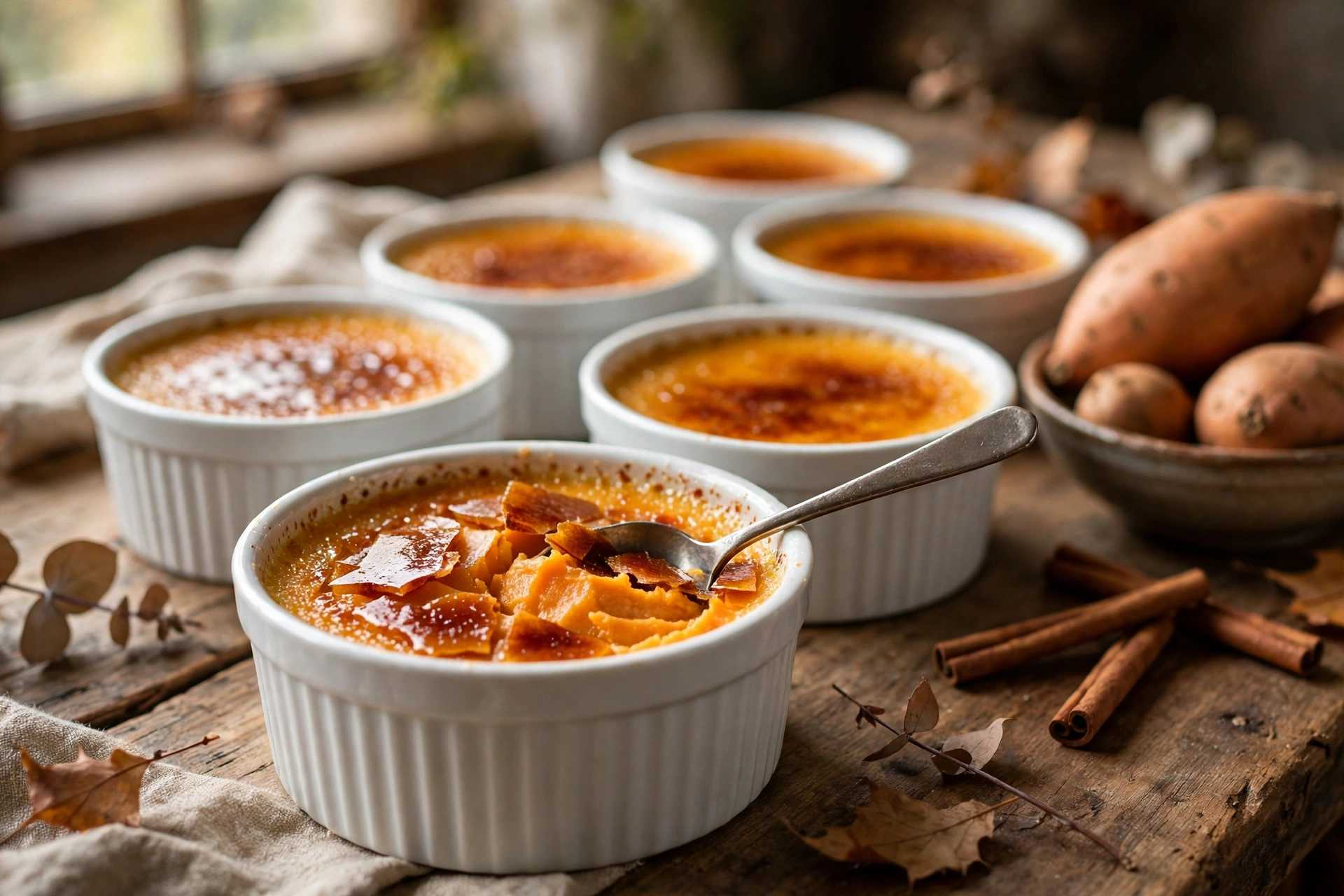
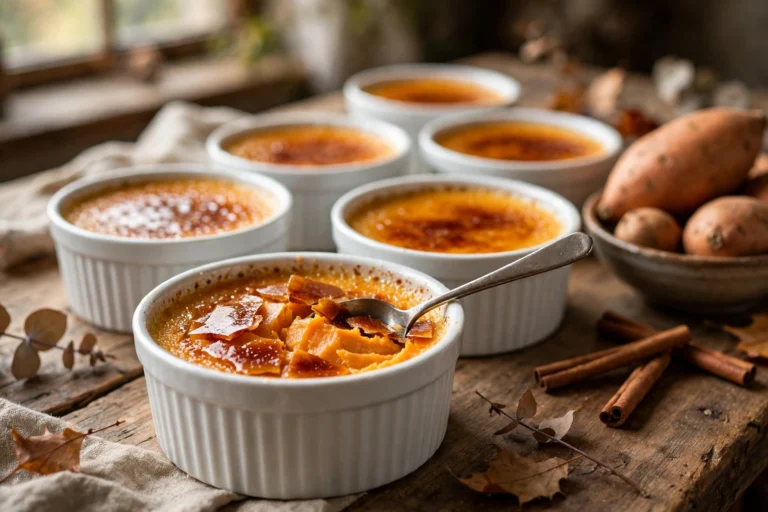
The first spoonful is a small event. The caramel top resists, then cracks with an audible snap, and the spoon slides into custard the color of late afternoon light. Warm spice arrives first, then the deep caramel sweetness of the potato itself.
Cinnamon stays in the background on purpose. Half a teaspoon (1.3 g) is enough to read as warmth rather than spice cake, and the vanilla rounds the edges of the yogurt tang so the custard tastes composed, not dieted.
Temperature does quiet work here too. The custard is served cold from the fridge while the torched top is still faintly warm, and that small contrast makes the whole ramekin taste fresher than a room temperature dessert.
The finish is clean. Sweet potato leaves a long, mellow sweetness, the yogurt keeps it from cloying, and the bitter edge of real caramel stops the bite from turning into candy. It tastes like dessert, not like a compromise wearing a costume.
Why the Greek Yogurt Never Curdles
The fear with yogurt custards is curdling, and it is a fair fear. Yogurt splits when it meets high heat quickly, which is why this recipe never lets that happen. Three small defenses stack up, and together they are close to foolproof.
First, the yogurt drains for 20 minutes. Removing that loose whey means less free water in the custard, a cleaner set, and a surface that dries enough to hold a proper caramel top later.
Second, the sweet potato puree is warmed and whisked into the yogurt before the yolks enter. The mixture that meets the eggs is already warm and even, so the yolks never get shocked by a hot spot.
Third, the bake is deliberately gentle: 300 F (150 C), a water bath, and a short 28 to 32 minutes. The custard sets at the edges while the center keeps a soft jiggle, then finishes in the fridge. If you have made our whipped sweet potatoes with Greek yogurt, you already know how well this yogurt behaves with sweet potato.
What Goes Into the Custard
The ingredient list is short because the technique does the work. Two sweet potatoes, a tub of Greek yogurt, milk, yolks, a measured amount of sugar, vanilla, cinnamon and salt. Nothing exotic, nothing that requires a special trip in Thanksgiving week.
Choose sweet potatoes with deep orange flesh and unbroken skins, about 1 pound total (454 g) for two medium ones. The darker the flesh, the sweeter and more vivid the custard. Save any extra puree for a pot of healthy sweet potato soup on the weekend.
The sugar is split on purpose. One third of a cup (67 g) sweetens the whole batch of custard, and a single teaspoon per ramekin builds the top. That is the entire sugar budget, and it is roughly half of what the classic recipes on the first page of search results use.
- 2 medium sweet potatoes, about 1 pound total (454 g)
- 1 1/2 cups plain 2% Greek yogurt (368 g)
- 1/2 cup 2% milk (120 ml)
- 4 large egg yolks (68 g)
- 1/3 cup granulated sugar (67 g)
- 2 teaspoons vanilla extract (10 ml)
- 1/2 teaspoon ground cinnamon (1.3 g)
- 1/4 teaspoon fine sea salt (1.5 g)
- 6 teaspoons granulated sugar (25 g), for the crackly tops
How to Make Healthy Crème Brûlée Sweet Potatoes
The work divides into two calm sessions. Roasting and baking happen first, whenever the oven is free. The torch work takes ten minutes at the end and doubles as the dinner table announcement that dessert is coming.
- Heat the oven to 400 F (200 C). Scrub the sweet potatoes (454 g), prick each one several times with a fork, and roast on a lined baking sheet for 45 to 50 minutes, until they slump and a knife slides through with no resistance.
- Let the potatoes cool for 10 minutes, then scoop the flesh into a bowl and mash it completely smooth. You should have about 1 2/3 cups of puree (380 g).
- Spoon the Greek yogurt (368 g) into a fine mesh strainer set over a bowl and let it drain for 20 minutes. Lower the oven to 300 F (150 C) and put a kettle of water on to heat.
- Whisk the drained yogurt with the milk (120 ml), vanilla extract (10 ml), cinnamon (1.3 g) and salt (1.5 g) until smooth. Warm the sweet potato puree until it is steaming, then whisk it into the yogurt mixture.
- In a separate bowl, whisk the egg yolks (68 g) with the 1/3 cup of sugar (67 g) until pale. Whisk a ladle of the warm yogurt mixture into the yolks, then pour the yolks back in and whisk everything together. Strain the custard into a pouring jug.
- Divide the custard among six 6 ounce ramekins set in a deep roasting pan. Pour hot water into the pan until it reaches halfway up the sides of the ramekins.
- Bake for 28 to 32 minutes, until the edges are set and the centers still jiggle gently when the pan is nudged. Lift the ramekins out of the water and cool on a rack for 30 minutes.
- Cover and refrigerate for at least 2 hours, or up to 2 days. The custards finish setting as they chill, and the flavor deepens overnight.
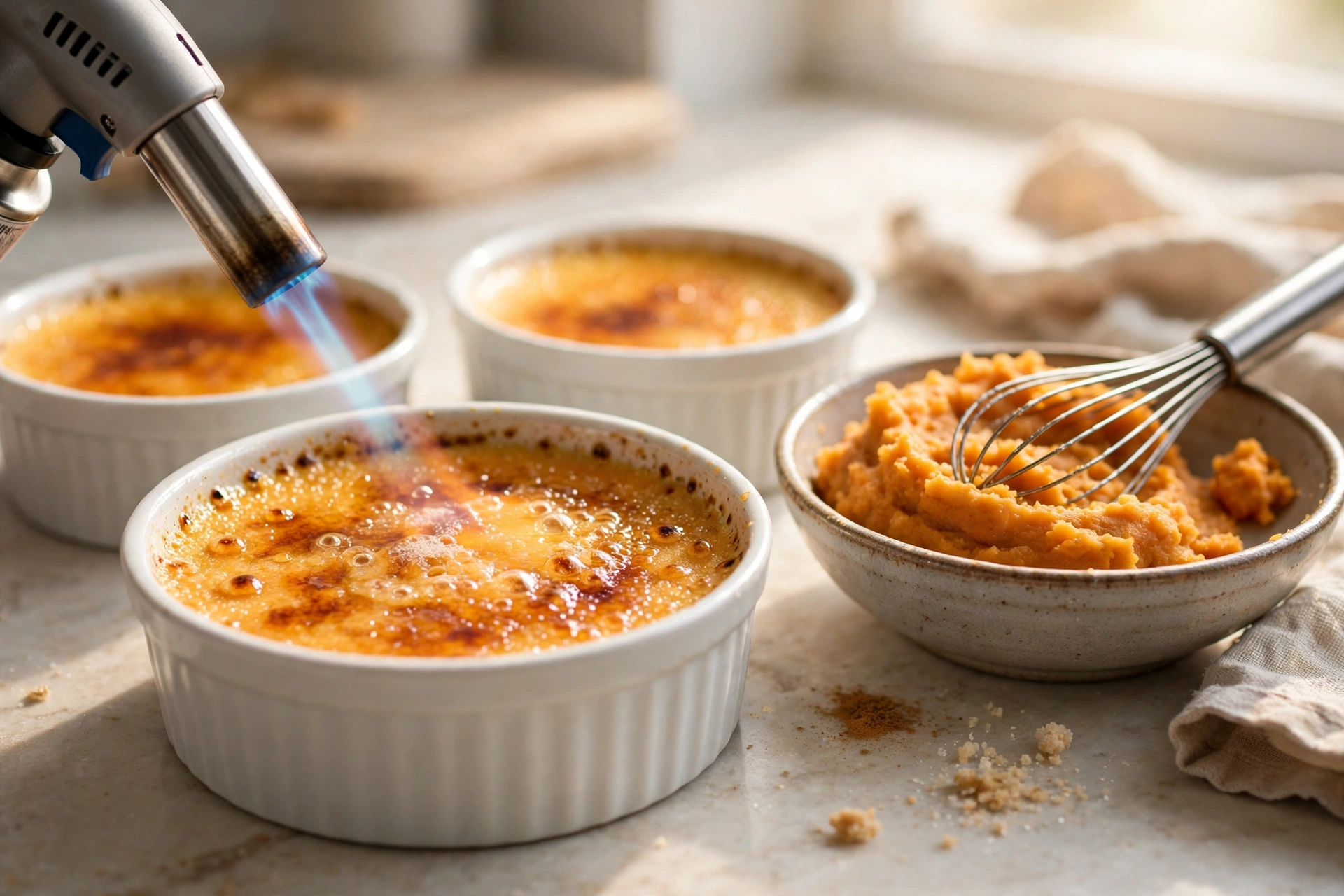
- Just before serving, blot any moisture from the tops. Sprinkle 1 teaspoon of sugar (about 4 g) over each custard in a thin, even layer and torch in slow circles until the sugar melts into amber glass. Rest 2 minutes so the top hardens, then serve.
One Teaspoon of Sugar, One Loud Crack
The top is where most light versions quietly fail, because cooks either skip the sugar or pile it on. One teaspoon (about 4 g) per ramekin is the tested middle: spread thin and even, it melts into a continuous sheet of glass that cracks properly.
Technique matters more than quantity. Blot the cold custard dry first, because surface moisture turns the sugar to syrup instead of glass. Keep the torch moving in slow circles and stop at deep amber; ten extra seconds takes caramel from bitter-edged to burnt.
No torch is not a dead end. A broiler works on oven safe ramekins, set 4 to 6 inches from the element and watched without blinking, because the sugar goes from pale to perfect in under 2 minutes. Never put a sweet potato shell under a broiler; the dry skin can scorch and catch.
Serve within the hour once the tops are done. The glass stays loud for about 45 minutes, then humidity starts softening it. If guests are slow, torch half the ramekins now and half later, and accept the applause twice.
The Numbers Next to the Classic Casserole
Set this ramekin beside the classic casserole and the exchange is easy to read. A serving of marshmallow topped sweet potato casserole with butter and brown sugar lands near 380 calories, with about 20 grams of sugar before the marshmallows melt into the count.
This healthy crème brûlée sweet potatoes version lands at about 200 calories, 9 grams of protein, 2 grams of fiber and 21 grams of sugar, most of it measured and deliberate. The protein is the real surprise: the yogurt and yolks turn a dessert into something that actually holds you.
The numbers come from the ingredient weights, not from optimism. Sweet potato nutrition data in USDA FoodData Central puts the roasted flesh at about 86 calories per 100 grams, and that is the anchor for the whole calculation.
None of this asks you to retire the casserole. It gives the table a second sweet potato with a different job: individual, cool, crackly, and light enough that a slice of pie later in the evening is still a reasonable decision.
Bake Them Wednesday, Torch Them Thursday
Thanksgiving rewards anything finished early, and these ramekins are finished almost before the turkey goes in. Roast the potatoes and bake the custards on Wednesday, chill them overnight, and Thursday asks only for sugar, a torch and ten minutes.
The chilled ramekins keep for 2 days in the fridge, covered, without the tops done. Do not freeze them; yogurt custard weeps when it thaws and the texture never fully recovers. Freeze leftover roasted puree instead, for up to 3 months.
If the week produces leftover turkey, plan the following days with the same calm: our guide to lighter plates built from the bird, from chili to salads, lives in the leftover turkey recipes collection. Dessert first, leftovers second, nothing wasted.
Serving logistics are simple because the ramekins travel well. Set them on a tray straight from the fridge, torch them in the kitchen or at the table, and carry them out while the tops are still ticking as they cool.
Small Swaps That Keep the Ramekin Light
A dairy free ramekin is within reach. Use a thick coconut yogurt at the same weight (368 g) and coconut milk in place of the 2% milk (120 ml). The set is a touch softer and the protein drops, so serve those ramekins very cold.
Spice roads stay gentle. A pinch of ground ginger (0.3 g) leans the custard toward gingerbread, while a quarter teaspoon of orange zest (0.5 g) brightens it toward the citrus end of the holiday table. Both keep the calorie count where it is.
For a smaller household, the recipe halves cleanly into three ramekins with the same bake time. For a bigger one, it doubles into twelve, baked in two pans, and the torch line at serving time becomes part of the entertainment.
End where the recipe began: a dessert built on a vegetable, a tub of yogurt and one honest teaspoon of sugar per person. These healthy crème brûlée sweet potatoes are the rare holiday dessert that gives you the crack, the silk and the second helping of everything else.
FAQ
Can I make healthy crème brûlée sweet potatoes without a kitchen torch?
Yes. Use the broiler on oven safe ramekins, set 4 to 6 inches (10 to 15 cm) from the element, and watch without looking away. The sugar goes from pale to deep amber in under 2 minutes, and there is no safe moment to multitask.
Why did my Greek yogurt custard curdle or turn grainy?
The custard got too hot, too fast. Drain the yogurt first, temper the yolks with a ladle of the warm mixture, and bake at 300 F (150 C) in a water bath. Pull the ramekins while the centers still jiggle; they finish setting in the fridge.
How far ahead can I make these for Thanksgiving?
Bake the custards up to 2 days ahead and keep them covered in the fridge, without the sugar tops. Torch the tops within an hour of serving so the glass stays crisp, and never freeze the set custards, because yogurt weeps as it thaws.
Can I use Japanese sweet potatoes for this crème brûlée?
You can, and the flavor turns chestnut sweet and a little drier. The flesh is paler and less moist, so add 1 extra tablespoon of milk (15 ml) to keep the custard silky, and expect a lighter color under the caramel.
Why did my caramel top go soft after torching?
Humidity and time are the usual causes. Blot the custard dry before sugaring, use a thin even layer of 1 teaspoon of sugar (4 g), and serve within about 45 minutes. A top torched in the morning will not survive until dinner.
Healthy Crème Brûlée Sweet Potatoes, Silky, Crackly and Light at About 200 Calories a Ramekin
Roasted sweet potato folded into a drained Greek yogurt custard with vanilla and cinnamon, baked gently in a water bath, chilled, then finished with a thin torched sugar top. About 200 calories and 9 grams of protein a ramekin, with half the sugar of the classic.
- Total Time: 3 hours 35 minutes
- Yield: 6 ramekins 1x
Ingredients
2 medium sweet potatoes, about 1 pound total (454 g)
1 1/2 cups plain 2% Greek yogurt (368 g)
1/2 cup 2% milk (120 ml)
4 large egg yolks (68 g)
1/3 cup granulated sugar (67 g)
2 teaspoons vanilla extract (10 ml)
1/2 teaspoon ground cinnamon (1.3 g)
1/4 teaspoon fine sea salt (1.5 g)
6 teaspoons granulated sugar (25 g), for the crackly tops
Instructions
Heat the oven to 400 F (200 C). Scrub the sweet potatoes (454 g), prick each one several times with a fork, and roast on a lined baking sheet for 45 to 50 minutes, until they slump and a knife slides through with no resistance.
Let the potatoes cool for 10 minutes, then scoop the flesh into a bowl and mash it completely smooth. You should have about 1 2/3 cups of puree (380 g).
Spoon the Greek yogurt (368 g) into a fine mesh strainer set over a bowl and let it drain for 20 minutes. Lower the oven to 300 F (150 C) and put a kettle of water on to heat.
Whisk the drained yogurt with the milk (120 ml), vanilla extract (10 ml), cinnamon (1.3 g) and salt (1.5 g) until smooth. Warm the sweet potato puree until it is steaming, then whisk it into the yogurt mixture.
In a separate bowl, whisk the egg yolks (68 g) with the 1/3 cup of sugar (67 g) until pale. Whisk a ladle of the warm yogurt mixture into the yolks, then pour the yolks back in and whisk everything together. Strain the custard into a pouring jug.
Divide the custard among six 6 ounce ramekins set in a deep roasting pan. Pour hot water into the pan until it reaches halfway up the sides of the ramekins.
Bake for 28 to 32 minutes, until the edges are set and the centers still jiggle gently when the pan is nudged. Lift the ramekins out of the water and cool on a rack for 30 minutes.
Cover and refrigerate for at least 2 hours, or up to 2 days. The custards finish setting as they chill, and the flavor deepens overnight.
Just before serving, blot any moisture from the tops. Sprinkle 1 teaspoon of sugar (about 4 g) over each custard in a thin, even layer and torch in slow circles until the sugar melts into amber glass. Rest 2 minutes so the top hardens, then serve.
- Prep Time: 20 minutes
- Cook Time: 1 hour 15 minutes
Nutrition
- Calories: 200
- Sugar: 21
- Sodium: 160
- Fat: 5
- Saturated Fat: 2
- Trans Fat: 0
- Carbohydrates: 31
- Fiber: 2
- Protein: 9
- Cholesterol: 125