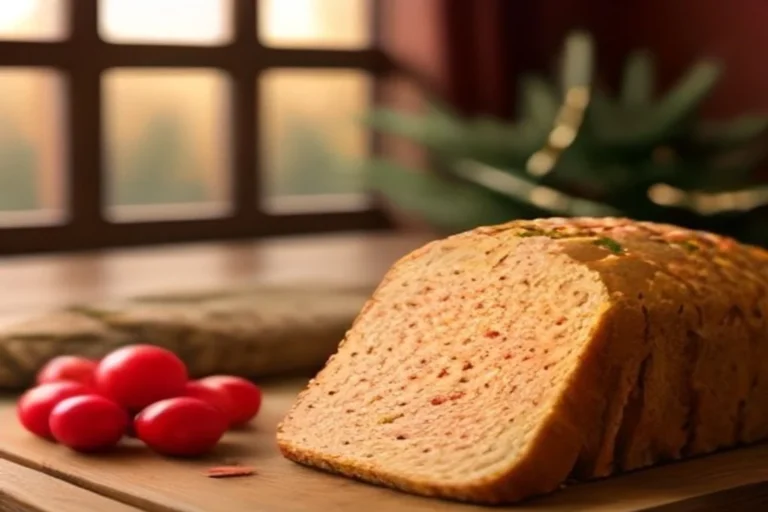
Healthy Shortbread Cookies, Buttery, Tender and Lightly Sweet at About 95 Calories Each
Healthy Shortbread Cookies, Buttery, Tender and Lightly Sweet at About 95 Calories Each
In this article:
- Real Butter, Less of It: the Honest Trade
- Cornstarch and a Gentle Oven Keep the Crumb Tender
- The Cookie Math: 95 Against 160
- Ingredients for Healthy Shortbread Cookies
- Mix, Chill, Slice: Three Quiet Stages
- Spread, Grit or Tough Crumbs: Reading Your Cookies
- Built for the Christmas Cookie Tin
- Orange, Vanilla Bean and a Light Chocolate Dip
- The Cookie That Still Tastes Like Christmas
- Questions Bakers Ask About Shortbread Cookies
Shortbread is the cookie that health minded bakers usually give up on first. Three ingredients, and the middle one is butter by the stick. The usual fixes make it worse: swap in coconut oil, sweeten with syrup, and the result is a fine cookie that is simply not shortbread anymore.
These healthy shortbread cookies take the honest road instead. The butter stays, because butter is the flavor, but the dose drops. Half the flour becomes whole wheat pastry flour, the sugar is measured rather than generous, and a spoonful of cornstarch protects the tender crumb that whole grains like to steal.
Each cookie lands at about 95 calories, against roughly 160 for a classic shortbread finger of the same size. The texture survives the trade completely: a clean snap at the edge, then a slow, buttery melt, with orange zest and vanilla carrying the Christmas note.
The dough is a quiet afternoon kind of recipe. Mix it in one bowl, chill it in a log, slice and bake. It also freezes beautifully, which is why experienced December bakers make two logs and call one of them insurance.
Real Butter, Less of It: the Honest Trade
Classic shortbread runs on a simple ratio: one part sugar, two parts butter, three parts flour. The butter is not an accent; it is the structure, coating the flour so the crumb stays short and tender instead of bready. Remove it and you have changed the cookie’s identity, not improved its health profile.
This recipe keeps the identity and adjusts the arithmetic. Ten tablespoons of butter for two dozen cookies is a real reduction from the classic two sticks per batch, yet every cookie still tastes unmistakably of butter, because nothing competes with it. No coconut, no nut butter, no oil blend diluting the flavor.
Temperature is how less butter still works. The butter should be soft enough to leave an impression when pressed, around 65 degrees F, but never glossy or melting. Butter that is too warm whips up airy and the cookies spread and toughen; butter that is too cold refuses the sugar and leaves the dough crumbly past repair.
Beat the butter and sugar only until combined and slightly lightened, about one minute. Shortbread is not a creaming cookie. Excess air becomes excess spread in the oven, and the fine, dense crumb that defines the style depends on keeping the mixture calm from the very first step.
Cornstarch and a Gentle Oven Keep the Crumb Tender
Whole wheat flour is the obvious health upgrade and the usual texture problem. Its bran cuts into the crumb, its protein builds chew, and an unadjusted swap produces a wholesome cookie that eats like a cracker. The fix is not to abandon the whole grain but to choose the right one and support it.
Whole wheat pastry flour is milled from soft wheat, lower in protein than regular whole wheat, and it bakes tender where the standard flour bakes hearty. Used for half the flour, it brings fiber and a gentle nuttiness while the all purpose half preserves the classic pale, delicate bite.
Two tablespoons of cornstarch do quiet, essential work. Cornstarch dilutes the protein further and interrupts crumb formation, so the cookie sets tender instead of firm. It is the same trick old fashioned recipes call for when they want a melting texture, and it matters even more once whole grain enters the bowl.
The oven stays gentle, 325 degrees F, and the cookies come out pale. Shortbread should barely color at the edges; deep golden edges taste toasted and feel hard by the second day. Pull the tray when the surfaces look set and matte and the bottoms show the faintest gold, then let carryover finish the job.
The Cookie Math: 95 Against 160
A classic shortbread finger, bakery sized, carries roughly 160 calories, most of them from butter and refined sugar riding on white flour. It is a lovely cookie. It is also, in a season of cookie tins and office trays, a cookie that adds up faster than anyone tracks.
These healthy shortbread cookies were costed ingredient by ingredient, using standard reference values of the kind published in USDA FoodData Central. Less butter does most of the work. Coconut sugar, ground fine, sweetens at half a cup for the batch instead of the classic two thirds or more, and the whole wheat pastry flour adds a gram of fiber per cookie that the classic cannot claim.
The honest summary: about 95 calories per cookie, five grams of fat, four grams of sugar. Not a health food, and the recipe will not pretend otherwise. It is a real Christmas cookie, built so that two with afternoon coffee fit an ordinary day, which is the only definition of healthy that survives December contact.
Portion honesty is part of the design. The log is sliced a half inch thick, so every cookie is the same cookie, and the yield of twenty four is real rather than aspirational. If your household prefers the smaller tea size, slice a third inch thick, bake two minutes less, and the count drops near 70 calories each.
Ingredients for Healthy Shortbread Cookies
- 1 cup whole wheat pastry flour
- 1 cup all purpose flour
- 2 tablespoons cornstarch
- 1/2 teaspoon fine sea salt
- 10 tablespoons unsalted butter, softened (1 stick plus 2 tablespoons)
- 1/2 cup coconut sugar, ground fine in a blender or spice grinder
- 1 teaspoon vanilla extract
- 1 teaspoon finely grated orange zest
- 1 tablespoon milk, only if the dough refuses to come together
Nine ingredients, and each one is load bearing. The coconut sugar must be ground fine before it meets the butter; coarse crystals stay gritty in a low moisture dough and print tiny speckles across the surface. Thirty seconds in a dry blender turns it into a powder that behaves like the caster sugar shortbread expects.
The orange zest is the Christmas signal, subtle on purpose. It perfumes the dough rather than flavoring it outright, the way the best bakery shortbread smells festive before you can say why. Lemon zest works in the same dose for a brighter, less wintry cookie.
Mix, Chill, Slice: Three Quiet Stages
- Whisk the whole wheat pastry flour, all purpose flour, cornstarch and salt together in a medium bowl until evenly combined.
- In a large bowl, beat the butter and the ground coconut sugar with a wooden spoon or hand mixer on low for about 1 minute, until combined, smooth and slightly lightened. Beat in the vanilla and the orange zest.
- Add the flour mixture in two additions, mixing on the lowest speed or by hand just until no dry streaks remain. The dough will look crumbly, then come together when pressed. If it refuses, knead in the tablespoon of milk.
- Turn the dough onto a sheet of parchment and shape it into a log about 2 inches across and 10 inches long, rolling it under the parchment for a smooth surface. Wrap tightly and refrigerate for at least 30 minutes, or up to 3 days.
- Heat the oven to 325 degrees F and line a baking sheet with parchment. Slice the chilled log into rounds a scant 1/2 inch thick and arrange them 1 inch apart on the sheet.
- Bake for 16 to 18 minutes, rotating the sheet once, until the surfaces look set and matte and the edges show the faintest gold. The centers will feel soft; that is correct.
- Cool on the sheet for 10 minutes, where the cookies firm up, then move them to a rack to cool completely. Store in an airtight tin at room temperature.
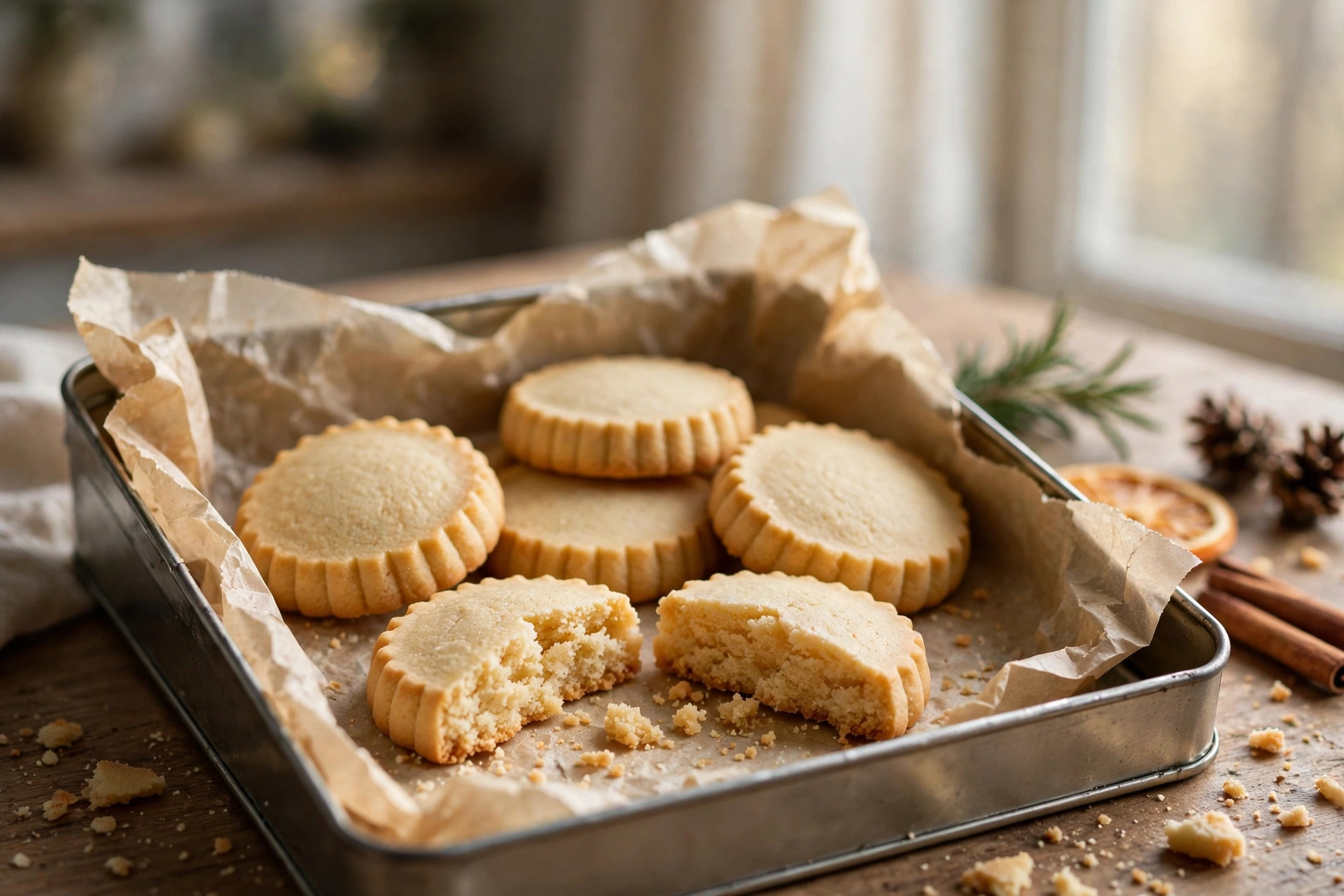
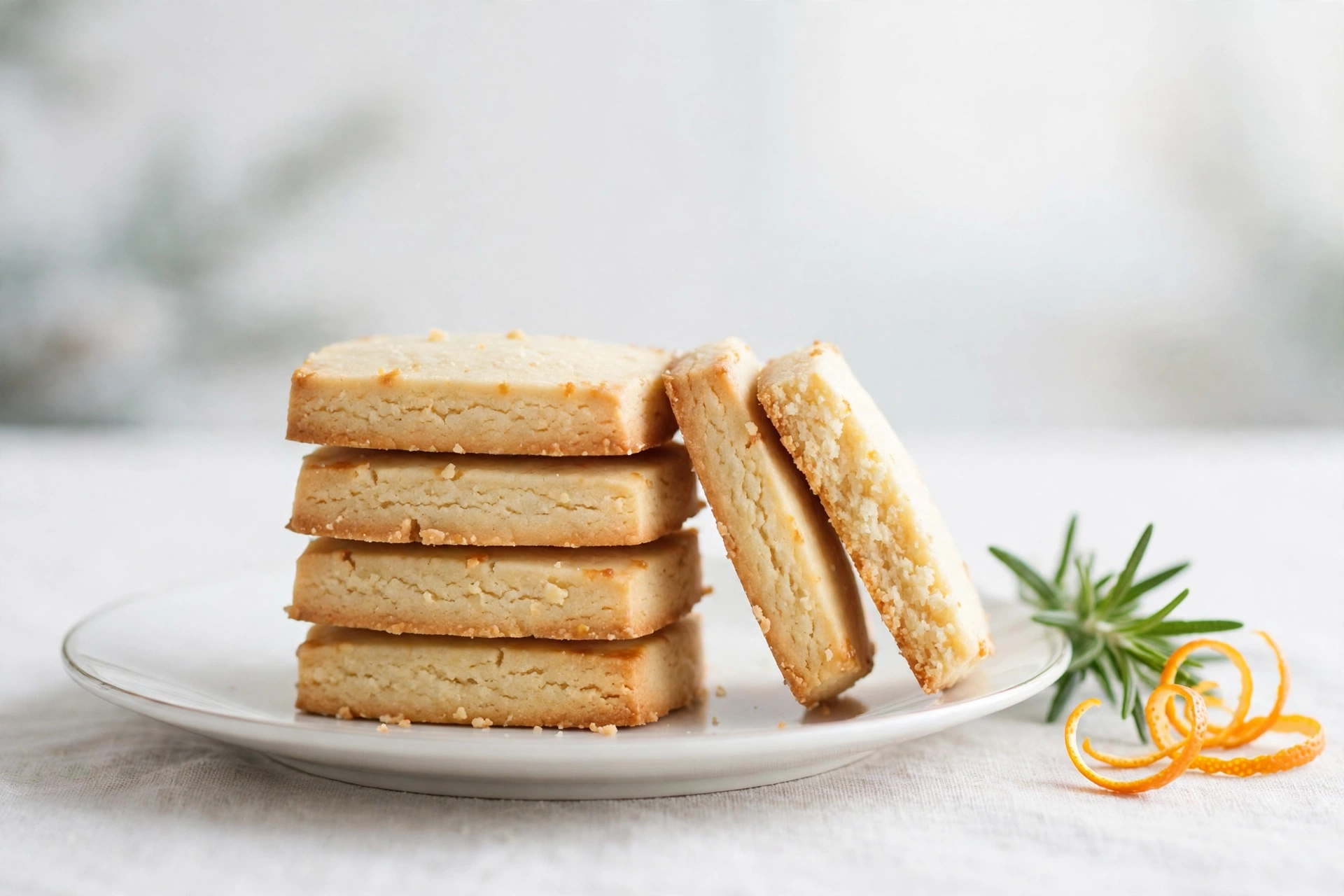
The log shape is a deliberate choice. Rolled and cut dough warms under your hands and spreads unevenly; a chilled log slices into identical rounds that bake at the same rate, which is how a home batch ends up looking bakery uniform. For the classic finger shape in the first photo, press the same dough into a loaf pan, chill, unmold and slice into bars.
One more detail protects the edges: slice with a thin knife in a single downward press, not a sawing motion. Sawing drags the crumb and frays the rim, and frayed rims brown too fast and crumble in the tin. A clean cut keeps the silhouette sharp through the bake.
Spread, Grit or Tough Crumbs: Reading Your Cookies
Spread is the most common complaint, and it is nearly always temperature. Butter that started too soft, a log sliced before it firmed, or a warm kitchen in December with the oven running all day. The fix is patience: rechill the sliced rounds on the tray for ten minutes before baking, and the shape will hold.
Grit comes from the sugar, not the flour. Coconut sugar crystals are larger and harder than caster sugar, and shortbread dough has almost no liquid to dissolve them. If your first batch feels sandy, grind the sugar finer next time, a full minute, and let the mixed dough rest ten minutes before shaping so the powder can hydrate.
Toughness has two sources: overmixing after the flour goes in, and overbaking in pursuit of color. Mix only to the last dry streak, and judge doneness by the matte surface rather than golden edges. A shortbread that looks slightly underdone on the tray is usually the one that eats perfectly on day two.
Crumbly slices at the cutting stage mean the log is either too cold or slightly dry. Let it stand five minutes at room temperature before slicing, and press any cracked round back together with your fingers; the butter will fuse it in the oven. If cracks keep appearing, the dough needed that tablespoon of milk.
Built for the Christmas Cookie Tin
Shortbread was born for gifting: sturdy, long keeping, and better on day three than day one as the butter flavor settles into the crumb. These healthy shortbread cookies keep that gift friendly nature. In a parchment lined tin they hold two weeks at room temperature, and the texture stays tender because the cornstarch resists staling dryness.
Pack them like a bakery does: single layers between parchment sheets, snug enough that the cookies cannot slide, with the tin filled to the top so nothing rattles. They travel well in the mail for the same reason they keep well, low moisture and a firm set, arriving intact where frosted cookies surrender.
In a mixed holiday box, shortbread plays the calm base note. Ours sits happily beside healthy spritz cookies for shape, healthy thumbprint cookies for the jammy center, and healthy snickerdoodles for cinnamon warmth. Four cookies, four textures, one tin, and nobody can tell which ones were the lightened batch.
Add the small signals that make a box feel intentional: a sprig of rosemary under the lid, the orange zest story told on the gift tag, and a note that the cookies keep two weeks. Recipients ration what they understand; clear keeping notes turn one afternoon of baking into a month of small celebrations.
Orange, Vanilla Bean and a Light Chocolate Dip
The base dough is a template. Replace the orange zest with the seeds of half a vanilla bean and a pinch of cardamom for a Scandinavian register, or with two teaspoons of finely chopped fresh rosemary and lemon zest for a savory sweet cookie that belongs on a cheese board as much as a dessert tray.
A light chocolate finish keeps the numbers honest. Dip one edge of each cooled cookie in two ounces of melted dark chocolate, set on parchment, and you add roughly fifteen calories per cookie while making the box look professionally finished. A drizzle uses even less chocolate and reads just as festive in photographs.
For a fully whole grain batch, use all whole wheat pastry flour and add one extra tablespoon of butter; the crumb turns deeper and nuttier, closer to a digestive biscuit, and some families prefer it. For a gluten free version, a one to one gluten free baking blend replaces both flours cleanly, with the cornstarch kept, and the chill extended to a full hour.
Slice and bake dough also becomes thumbprint dough with no changes: roll tablespoons of dough into balls, indent, fill with a half teaspoon of raspberry jam, and bake two minutes longer. It joins our healthy biscotti in the category of one dough, several December afternoons.
The Cookie That Still Tastes Like Christmas
These healthy shortbread cookies succeed because they refuse the usual bargain. Nothing essential was removed and replaced with an apology; the butter, the sugar and the ritual all stayed, measured by a cook who respects both the tradition and the people eating it.
Bake one log for the tin and one for the freezer. When December runs long and the doorbell keeps ringing, you will slice, bake and serve a cookie that tastes like it was the plan all along, because it was.
Questions Bakers Ask About Shortbread Cookies
Can I make these with 100 percent whole wheat flour?
Yes, with adjustments. Use whole wheat pastry flour only, never regular whole wheat, and add one extra tablespoon of butter. The crumb turns nuttier and slightly denser, closer to a digestive biscuit, and the chill matters even more for clean slices.
Why did my shortbread spread into thin puddles?
The butter was too warm or the log was sliced before it firmed. The dough should feel cool and solid at slicing. Next batch, chill the log a full hour and put the loaded tray back in the fridge for ten minutes before it meets the oven.
How long does the dough log keep in the freezer?
Wrapped tightly in parchment and then in a sealed bag, the log keeps three months. Slice from frozen with a heavy knife, adding one to two minutes to the bake. It is the easiest way to have fresh shortbread within twenty minutes of deciding you want it.
Can I swap the coconut sugar for regular sugar or maple syrup?
Granulated sugar swaps one for one and gives a paler, more classic cookie. Maple syrup does not work here; the added liquid breaks the short crumb and the cookies bake up soft and cakey. A dry sweetener is structural in shortbread, not just flavor.
How should I store baked shortbread so it stays tender for two weeks?
Cool the cookies completely, then layer them in an airtight metal tin with parchment between layers, at room temperature away from heat. Do not refrigerate baked shortbread; the cold dries the crumb. A slice of plain bread in the tin is unnecessary here because the cookies are low moisture by design.