Healthy Roasted Root Vegetables, Caramelized Edges at About 200 Calories a Cup
In this article:
- Same Size Pieces, Same Finish
- Garlic, Rosemary and Edges That Actually Crisp
- The Honest Count: 200 Against 310
- Ingredients for Healthy Roasted Root Vegetables
- Seasoning, Spreading and Roasting the Roots
- Cut Wednesday, Roast While the Turkey Rests
- Pale, Soft or Scorched: Reading the Pan
- Turnips, Squash and Other Roots in the Rotation
- The Pan That Replaces Two Other Sides
- Questions Cooks Ask About Healthy Roasted Root Vegetables
Healthy roasted root vegetables are the side dish I plan first, before the turkey, before the pies, because a Thanksgiving table without something earthy and caramelized feels unfinished. Carrots, parsnips, sweet potatoes and red onion roast into one pan of sweet, savory, burnished pieces.
The classic version of this pan is glazed hard, with butter and brown sugar doing the talking. This one keeps the deep edges and the soft centers, then lets rosemary, thyme and a single spoon of maple syrup carry the flavor instead.
The number to remember is about 200 calories for a full cup, against roughly 310 for the butter and brown sugar glazed classic. Nobody tastes the difference as a loss, because what people actually remember is the crispy corner on a carrot.
Same Size Pieces, Same Finish
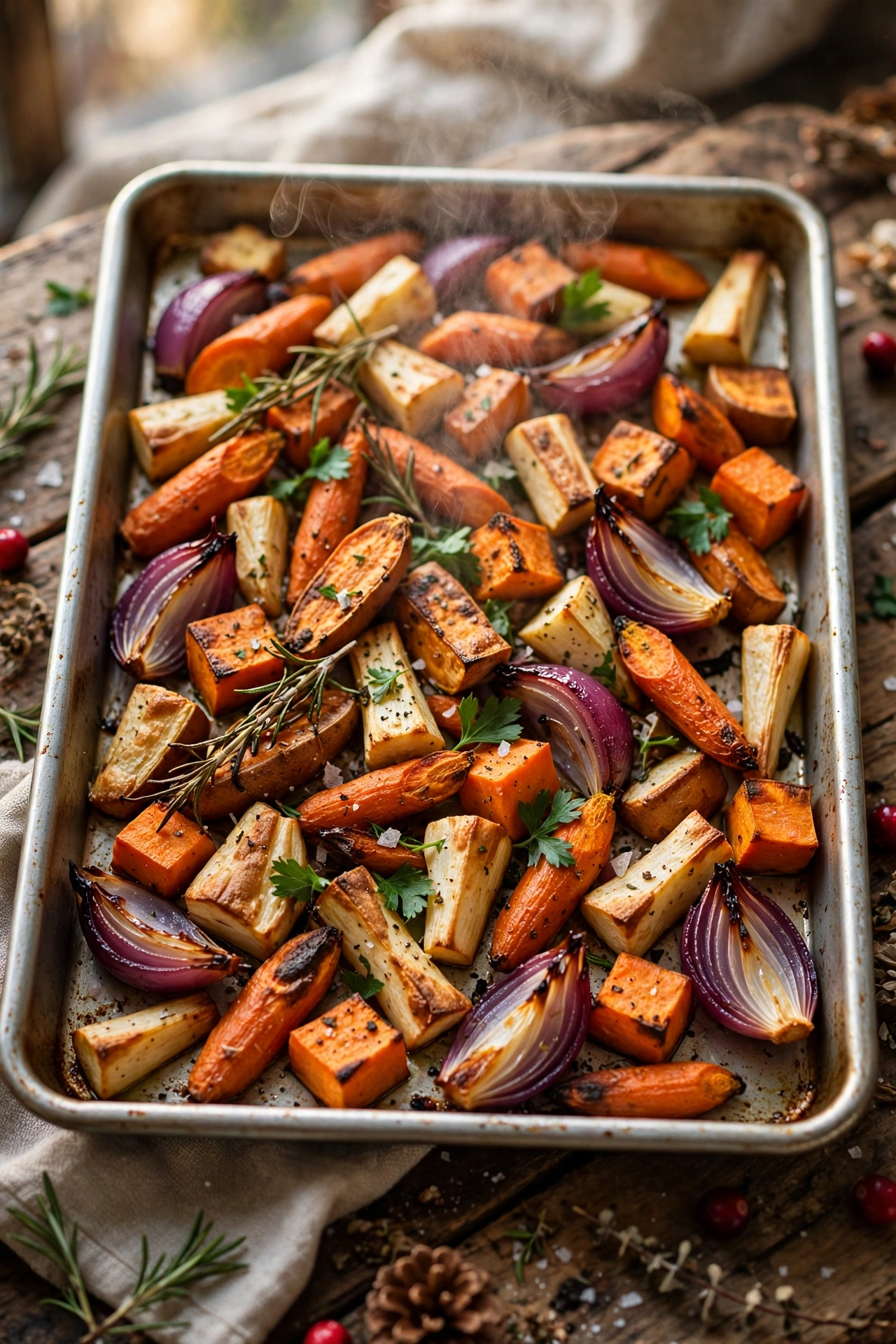
Healthy roasted root vegetables live or die on the knife work, and the rule is simple to say and easy to rush: every piece the same size, roughly one inch, no matter which vegetable it came from. A one inch chunk of carrot and a one inch cube of sweet potato finish within minutes of each other.
Sweet potato cooks fastest, so its cubes can sit at the generous end of one inch. Carrot and parsnip are denser, so their chunks should not creep bigger, or they will still be firm when the sweet potato is ready to collapse.
Parsnips deserve one extra sentence of respect. On large parsnips, cut the thick end into quarters and slice out the pale woody core before chunking, because that core stays stringy no matter how long the pan stays in the oven.
Red onion goes in as wedges with the root end left partly intact. The wedges separate into petals as they roast, and those thin edges char first, which is exactly the bitter sweet note the sweeter roots need beside them.
Work on a big board and drop each finished vegetable into the same large bowl. By the time the last sweet potato is cubed, the bowl shows the whole palette: orange, cream, gold and purple, already looking like November.
Garlic, Rosemary and Edges That Actually Crisp
The seasoning here is built like a dry marinade rather than a glaze. Olive oil goes on first and gets worked over every surface with your hands, because a dry corner of parsnip will scorch before it ever browns.
Rosemary and thyme are the Thanksgiving accent, chopped fine so they cling instead of falling to the pan. The single tablespoon of maple syrup is not there to sweeten; it is there to help the edges take color in the last ten minutes.
Garlic is the one ingredient held back. Minced garlic burns at roasting temperature long before the roots are tender, so it goes over the pans near the end, where it perfumes the vegetables instead of turning bitter on their surfaces.
Heat does the rest, and heat needs room. Spread the vegetables across two pans with real space between the pieces, cut faces down where they fall, because a crowded pan steams its load and returns pale, soft vegetables.
The reward for that patience is texture. Caramelized faces, frizzled onion edges, centers soft enough to crush with a fork, and a pan that smells like the holiday before the turkey even leaves the oven.
The Honest Count: 200 Against 310
A cup of classic glazed root vegetables, the kind finished with butter and a brown sugar shine, lands around 310 calories. This pan lands at about 200 a cup, measured from the ingredients listed below, and the serving is a real cup rather than a polite half scoop.
The savings are mostly fat and added sugar. Two and a half tablespoons of olive oil replace the butter, one tablespoon of maple syrup replaces the quarter cup of brown sugar, and the vegetables themselves supply the sweetness everyone assumes came from the glaze.
What the serving keeps is worth saying out loud. Six grams of fiber, a full range of colors on the plate, and produce that arrives with its nutrients intact: according to the USDA FoodData Central database at https://fdc.nal.usda.gov/, carrots and sweet potatoes bring serious beta carotene, and parsnips add folate and potassium.
This is also the side that frees up the rest of the table. Beside a plate built around our Healthy Herb Roasted Turkey Breast at https://nourishtable.com/healthy-herb-roasted-turkey-breast/, one strong vegetable pan means nobody has to make three separate vegetable dishes to feel covered.
Sodium stays honest too, at about 280 milligrams a serving, because the salt is measured for the whole batch and the finish is a pinch of flaky salt rather than a second full salting at the table.
Ingredients for Healthy Roasted Root Vegetables
- 1 1/2 pounds carrots, peeled and cut into 1 inch chunks
- 1 pound parsnips, peeled, woody core removed from large ones, cut into 1 inch chunks
- 1 1/2 pounds sweet potatoes, peeled and cut into 1 inch cubes
- 1 large red onion, cut into 1 inch wedges with the root end partly intact
- 2 1/2 tablespoons olive oil
- 1 tablespoon maple syrup
- 1 tablespoon fresh rosemary leaves, finely chopped
- 2 teaspoons fresh thyme leaves
- 3 garlic cloves, minced
- 1 teaspoon fine sea salt
- 1/2 teaspoon black pepper
- 1/4 teaspoon smoked paprika
- Flaky salt and chopped fresh parsley, to finish
Seasoning, Spreading and Roasting the Roots
- Heat the oven to 425 degrees F with racks in the upper and lower thirds. Line two large rimmed sheet pans with parchment paper.
- Cut the carrots, parsnips, sweet potatoes and onion to one inch pieces as described above, keeping the sizes close, and pile everything into your largest mixing bowl.
- Pour over the olive oil and maple syrup, then add the rosemary, thyme, sea salt, pepper and smoked paprika. Toss with your hands for a full minute, lifting from the bottom, until every piece looks glossy and seasoned.
- Divide the vegetables between the two pans and spread them into a single layer with space around the pieces. Turn as many cut faces down against the pan as you can manage.
- Roast undisturbed for 20 minutes. The bottoms should be taking on deep golden color when you check one piece with a spatula.
- Flip the vegetables with a wide spatula, rotate the pans top to bottom and front to back, and scatter the minced garlic evenly over both pans.
- Roast 12 to 15 minutes more, until the edges are browned in spots and a knife slides into the thickest carrot chunk with no resistance.
- Rest the pans for 5 minutes, then shower with a pinch of flaky salt and the chopped parsley. Serve warm, straight from the pan or piled into a wide bowl.
Cut Wednesday, Roast While the Turkey Rests
Thanksgiving oven space is a negotiation, and this pan is timed to win it. The turkey comes out to rest for at least thirty minutes before carving, and a hot oven with nothing in it is exactly what these vegetables want.
The cutting can happen a full day ahead. Keep the chunks in a sealed container lined with a dry towel, refrigerated, and they will wait quietly; the towel matters, because surface moisture is the enemy of browning the next day.
Toss the vegetables with the oil and seasonings no more than an hour before roasting. Salt draws water out of cut vegetables as they sit, and a wet surface steams instead of searing when the pan hits the heat.
If the pans finish before the rest of dinner, hold them in a 200 degree F oven for up to forty minutes. They will soften slightly at the edges but stay honest, and a two minute blast at 425 just before serving brings the crisp back.
Leftovers are part of the plan rather than an apology. These healthy roasted root vegetables reappear the next morning under fried eggs, folded into our Healthy Wild Rice Pilaf at https://nourishtable.com/healthy-wild-rice-pilaf/, or mashed roughly into the Friday soup pot.
Pale, Soft or Scorched: Reading the Pan
Pale and soft almost always means the pan was crowded. Pieces touching shoulder to shoulder release steam faster than the oven can clear it, and steamed roots never brown; split the batch across two pans, even if the second pan looks sparse.
Scorched bottoms with raw centers point to a pan placed too low over a heating element, or to the maple syrup pooling under the pieces. Rotate the pans halfway, and if your oven runs hot at the back, turn each pan front to back at the same moment.
Dark edges but firm centers mean the pieces were cut too large for the temperature. Drop the size to three quarter inch chunks next time, and if it happens tonight, cover the pan loosely and give the vegetables eight more minutes at 375 degrees F.
Bland results usually trace back to salt timing rather than salt quantity. The measured salt seasons the batch, but the small shower of flaky salt at the end is what the tongue notices first, so do not skip the finish.
If the onion wedges blacken more than you like, tuck them under the other vegetables for the second half of roasting. Their sugars make them the first to color, and a little shelter keeps them sweet instead of bitter.
Turnips, Squash and Other Roots in the Rotation
Turnips are the easiest recruit. Peel them, chunk them at the same one inch size, and swap them in for up to half the parsnips; they bring a gentle peppery bite that plays well against the sweet potato.
Butternut squash joins willingly too, though it softens faster than the roots, so cut its cubes a little larger. Our Healthy Sweet Potato Casserole at https://nourishtable.com/healthy-sweet-potato-casserole/ covers the sweet, spoonable end of the table, so this pan is free to stay savory and firm.
Golden beets can come along where red ones cannot. Red beets bleed across the whole pan and turn dinner pink, a fact everyone learns exactly once; golden beets roast sweet without redecorating their neighbors.
For a carrot forward variation, trade the parsnips for more carrots and compare the result with our Healthy Honey Glazed Carrots at https://nourishtable.com/healthy-honey-glazed-carrots/. The two dishes share a table happily, one glossy and sweet, this one savory and edged.
Dried herbs work in a pinch at half the fresh quantity, and a teaspoon of Dijon mustard whisked into the oil gives the pan a French accent that suits a December roast chicken just as well as the November turkey.
The Pan That Replaces Two Other Sides
Healthy roasted root vegetables earn their place by doing the work of two dishes at once, the sweet vegetable and the savory one, in a single pan that asks for twenty minutes of cutting and then leaves the cook alone. On a holiday built out of timers, that calm is a real ingredient.
Make the full batch even for six people. The pan shrinks as it roasts, the leftovers are the best part of Friday, and a table with one excellent vegetable dish always eats better than a table with three tired ones.
Questions Cooks Ask About Healthy Roasted Root Vegetables
Can I roast these vegetables ahead and reheat them for Thanksgiving?
Yes, with one adjustment. Roast them to just tender, about five minutes shy of fully browned, cool them on the pans, then reheat at 425 degrees F for eight to ten minutes before serving so the edges finish crisping instead of softening in a low oven.
Why did my vegetables steam instead of roast?
Almost always crowding or moisture. Two pans with space between the pieces, vegetables cut the day before kept dry under a towel, and an oven fully heated to 425 before the pans go in fixes nearly every case of pale, soft roots.
Do I have to peel the carrots and parsnips?
Peeling gives the cleanest edges and the most even browning, and parsnips in particular can carry a tough, bitter skin. If your carrots are young and thin skinned, a hard scrub is enough, but peel the parsnips and the sweet potatoes either way.
Can I add beets to the mix?
Golden beets, yes, cut to the same size. Red beets will tint every other vegetable pink as they roast, so give them their own small pan and combine the two batches in the serving bowl if you want both colors on the table.
What temperature is best if my oven is busy with other dishes?
The vegetables are flexible between 400 and 450 degrees F. At 400, add about five minutes and expect softer edges; at 450, check five minutes early and flip sooner, because the maple syrup in the coating colors fast at high heat.
Healthy Roasted Root Vegetables
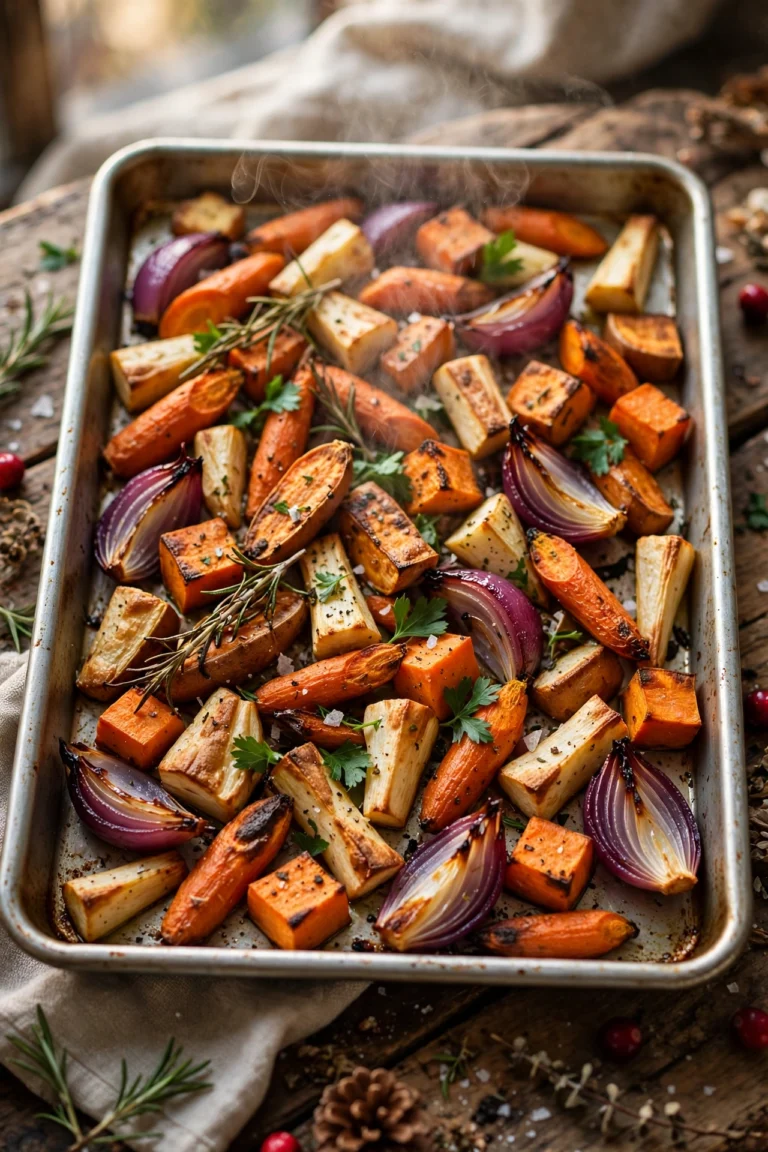
Carrots, parsnips, sweet potatoes and red onion roasted in one pan with a measured coating of olive oil, rosemary, thyme and a single spoon of maple syrup for color. Cut to one inch, spread across two pans, and finished with garlic in the last minutes so the edges caramelize instead of steaming. About 200 calories per cup against roughly 310 for the butter and brown sugar glazed classic, built for the Thanksgiving table.
- Total Time: 1 hour
- Yield: 8 servings 1x
Ingredients
- 1 1/2 pounds carrots, peeled and cut into 1 inch chunks
- 1 pound parsnips, peeled, woody core removed from large ones, cut into 1 inch chunks
- 1 1/2 pounds sweet potatoes, peeled and cut into 1 inch cubes
- 1 large red onion, cut into 1 inch wedges with the root end partly intact
- 2 1/2 tablespoons olive oil
- 1 tablespoon maple syrup
- 1 tablespoon fresh rosemary leaves, finely chopped
- 2 teaspoons fresh thyme leaves
- 3 garlic cloves, minced
- 1 teaspoon fine sea salt
- 1/2 teaspoon black pepper
- 1/4 teaspoon smoked paprika
- Flaky salt and chopped fresh parsley, to finish
Instructions
- Heat the oven to 425 degrees F with racks in the upper and lower thirds. Line two large rimmed sheet pans with parchment paper.
- Cut the carrots, parsnips, sweet potatoes and onion to one inch pieces, keeping the sizes close, and pile everything into your largest mixing bowl.
- Pour over the olive oil and maple syrup, then add the rosemary, thyme, sea salt, pepper and smoked paprika. Toss with your hands for a full minute, lifting from the bottom, until every piece looks glossy and seasoned.
- Divide the vegetables between the two pans and spread them into a single layer with space around the pieces. Turn as many cut faces down against the pan as you can manage.
- Roast undisturbed for 20 minutes, until the bottoms are taking on deep golden color.
- Flip the vegetables with a wide spatula, rotate the pans top to bottom and front to back, and scatter the minced garlic evenly over both pans.
- Roast 12 to 15 minutes more, until the edges are browned in spots and a knife slides into the thickest carrot chunk with no resistance.
- Rest the pans for 5 minutes, then shower with a pinch of flaky salt and the chopped parsley. Serve warm.
- Prep Time: 20 minutes
- Cook Time: 40 minutes
Nutrition
- Serving Size: 1
- Calories: 200
- Sugar: 13
- Sodium: 280
- Fat: 7
- Saturated Fat: 1
- Unsaturated Fat: 6
- Trans Fat: 0
- Carbohydrates: 38
- Fiber: 6
- Protein: 3
- Cholesterol: 0