Healthy Pfeffernusse Cookies with Whole Wheat, Warm Spices and a Light Snow Dusting, About 55 Calories a Cookie
In this article:
- What Makes These Healthy Pfeffernusse Cookies Special
- Dark Molasses, Warm Spice and One Quiet Kick of Pepper
- Ingredients for the Healthy Pfeffernusse Cookies
- How to Make the Healthy Pfeffernusse Cookies
- Bake Them on Sunday, Serve Them All Season
- The Chill Is Not Optional and Other Cookie Wisdom
- Orange Zest, Anise and Other Easy Turns
- Lighter by Design, With the Numbers Up Front
- Tins, Freezers and the Two Week Rule
- FAQ
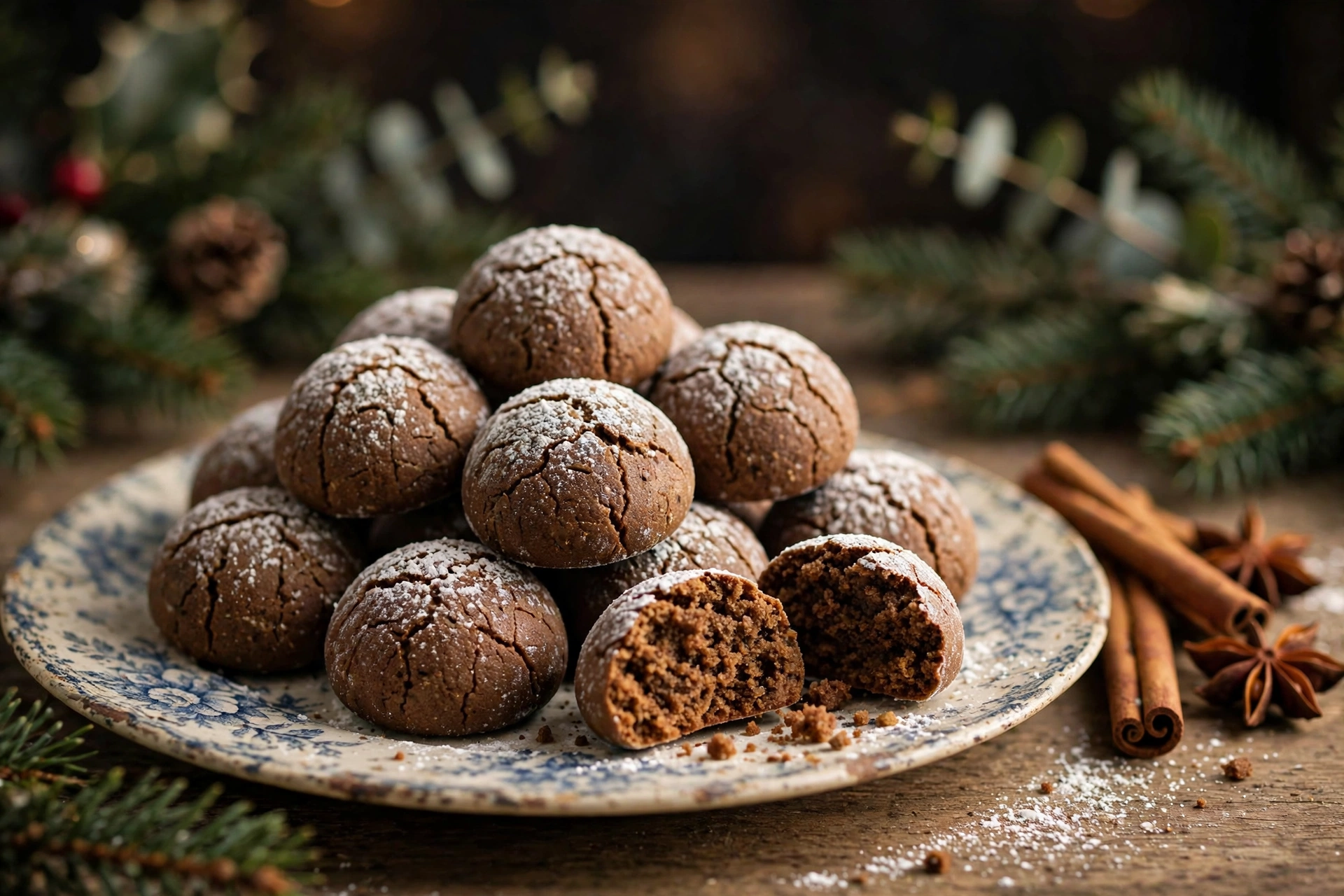
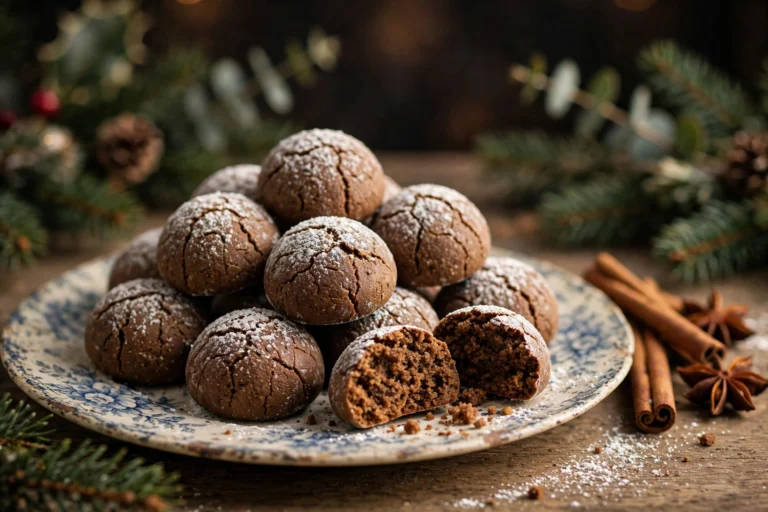
Healthy pfeffernusse cookies are the small dark domes of the German Christmas tin: deeply spiced, gently sweet, and built to be dunked in something hot while the tree lights blur in the background.
Each cookie comes to about 55 calories. The classic versions hide under a thick white glaze that can double the sugar of the cookie itself. This one wears only a light dusting of snow, measured with a sieve, not a bowl.
The dough is stiff, dark and fragrant, the kind you roll between your palms while the kitchen fills with cinnamon and clove. It asks for one hour of patience in the fridge and repays it for weeks.
What Makes These Healthy Pfeffernusse Cookies Special
Healthy pfeffernusse cookies keep the identity of the original intact. The spice blend is the full traditional chorus, cinnamon, ginger, cloves, nutmeg, cardamom and the famous pinch of pepper that gives the cookie its name.
What changes is the structure underneath. Half the flour is whole wheat pastry flour, which brings fiber and a gentle nuttiness while staying tender, a lesson the best lighter baking repeats: never go all whole wheat in a cookie.
Applesauce quietly takes the place of part of the butter. It keeps the crumb moist for the long storage these cookies are famous for, and it lets the molasses flavor read darker and deeper.
The sweetness is built in layers instead of volume. Coconut sugar and molasses taste richer than the same weight of white sugar, so the dough needs less of them, and the finish is a dusting rather than a glaze.
These are cookies with a past. Bakers in Germany, Denmark and the Netherlands have made versions of them for centuries, and our healthy Christmas cookies collection is proud to give them a lighter seat at the table.
Dark Molasses, Warm Spice and One Quiet Kick of Pepper
The first bite is warmth, not heat. Cinnamon leads, ginger follows with its slow glow, and cloves and nutmeg settle underneath like the bass note in a carol sung in a low register.
Then the pepper arrives, a quarter teaspoon across thirty six cookies. You do not taste pepper exactly. You taste the moment the spices seem to sharpen and last longer on the tongue, which is the whole historic point.
Molasses gives the cookie its dark color and its almost savory depth. It also keeps the crumb tender for days, working with the applesauce so the centers stay soft while the edges set firm.
Orange zest is the small modern note. One teaspoon lifts the heavy spices the way a candle lifts a dark room, and it pairs with the molasses the way it does in our healthy gingerbread cookies, bright against deep.
The dusting at the end is not decoration alone. That fine white veil against the dark dome is the look of snow on a roof, and its tiny sweetness lands first, before the spice takes over.
Ingredients for the Healthy Pfeffernusse Cookies
- 1 1/4 cups whole wheat pastry flour (150 g)
- 1 1/4 cups all-purpose flour (155 g)
- 1 teaspoon baking soda (5 g)
- 2 teaspoons ground cinnamon (5 g)
- 1 teaspoon ground ginger (2 g)
- 1/2 teaspoon ground cloves (1 g)
- 1/2 teaspoon ground nutmeg (1 g)
- 1/4 teaspoon ground cardamom (0.5 g)
- 1/4 teaspoon finely ground black pepper (0.5 g)
- 1/2 teaspoon fine sea salt (3 g)
- 3 tablespoons unsalted butter (42 g), melted
- 1/4 cup unsweetened applesauce (60 g)
- 1/2 cup coconut sugar (100 g)
- 1/4 cup molasses (80 g)
- 1 large egg (50 g), at room temperature
- 1 teaspoon vanilla extract (5 ml)
- 1 teaspoon orange zest (2 g)
- 1/4 cup powdered sugar (30 g), for dusting
How to Make the Healthy Pfeffernusse Cookies
- Whisk the flours (150 g and 155 g), baking soda (5 g), cinnamon, ginger, cloves, nutmeg, cardamom, pepper and salt (3 g) in a large bowl until the spice is evenly spread and no streaks remain.
- In a second bowl, whisk the melted butter (42 g), applesauce (60 g), coconut sugar (100 g) and molasses (80 g) until glossy and smooth.
- Whisk the egg (50 g), vanilla (5 ml) and orange zest (2 g) into the molasses mixture until fully combined.
- Fold the dry ingredients into the wet in two additions, mixing to a stiff, dark dough. It will feel dense and slightly tacky, which is correct.
- Cover the bowl and refrigerate the dough for 1 hour. Cold dough rolls cleanly and keeps the domes tall in the oven.
- Heat the oven to 350 degrees F (175 degrees C). Line two baking sheets with parchment.
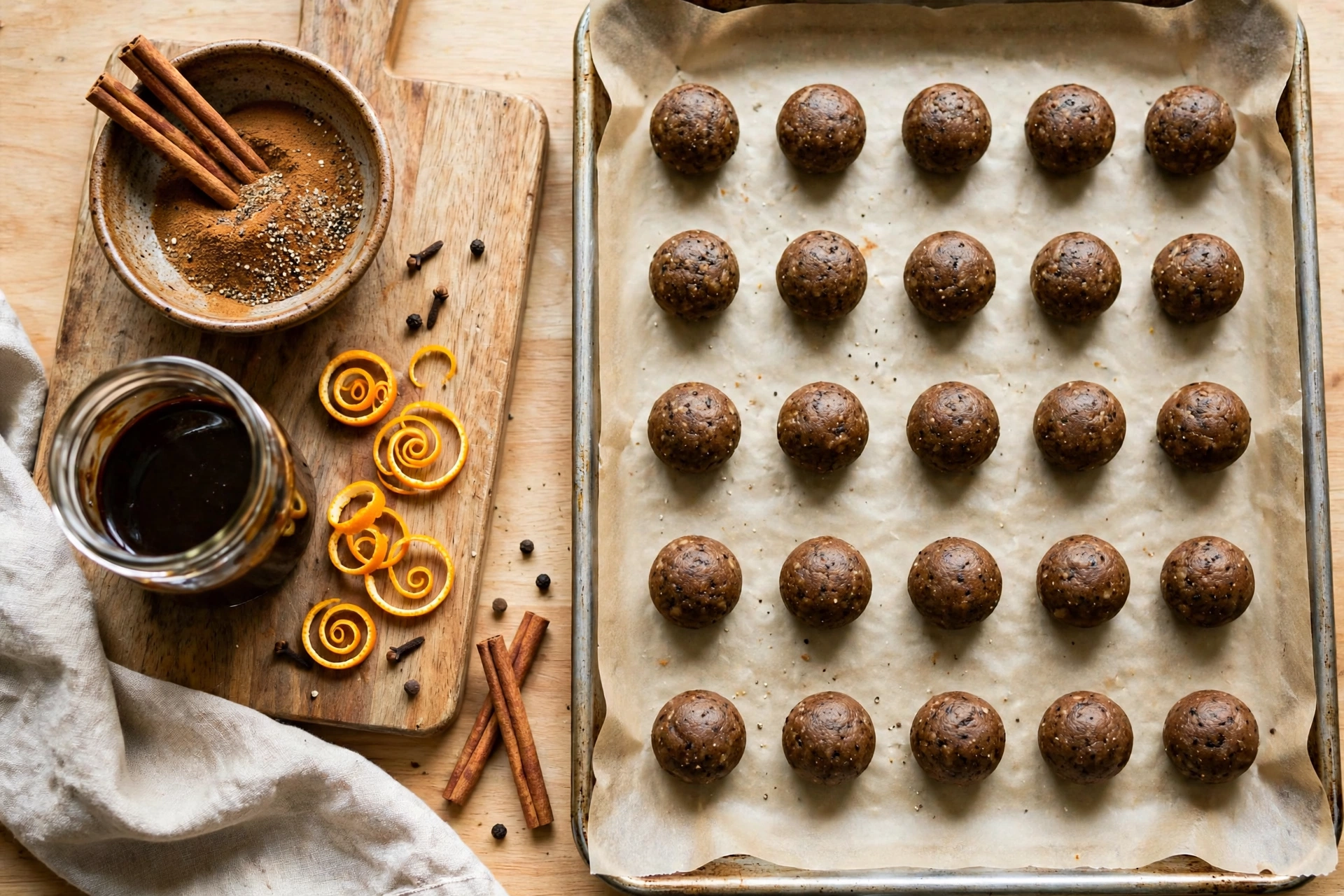
- Roll the dough into 36 balls of about 1 tablespoon each (about 18 g), and set them 1 1/2 inches apart on the sheets. Damp palms keep the dough from sticking.
- Bake for 11 to 13 minutes, until the tops are set and just beginning to crack. The centers should still feel slightly soft when pressed.
- Cool on the sheet for 5 minutes, then move to a rack and cool completely. Dust lightly with the powdered sugar (30 g) through a small sieve, and let the cookies rest a day before judging them.
Bake Them on Sunday, Serve Them All Season
Pfeffernusse are the rare cookie that improves with time. Fresh from the oven they are pleasant and firm. Three days later, in a closed tin, the spices have married and the crumb has softened into something close to cake.
This is why German bakers make them early. Bake a double batch in the first half of December and the Christmas tin is handled, which frees the busy final week for pies and the healthy gingerbread trifle style centerpieces.
The dough is equally patient. Rolled balls freeze raw on a tray, then keep in a bag for up to 3 months. Bake them from frozen at the same temperature, adding 2 minutes, and the house smells like a holiday in fifteen minutes.
For cookie boxes, these travel better than almost anything fragile. They do not crumble, they do not melt, and their flavor survives the mailbox, which is more than a frosted sugar cookie can claim.
One caution on timing: do not dust them with sugar until the day you pack or serve. The dusting is the snow, and snow looks best fresh, even if the cookie underneath is a week old and proud of it.
The Chill Is Not Optional and Other Cookie Wisdom
Warm dough is the first mistake. Rolled warm, these cookies spread into flat, pale discs and lose the dome. One hour in the fridge firms the butter and lets the flour hydrate, and the shape holds.
Measure the spices with respect. The blend looks like a lot on paper, nine teaspoons across the bowl, but pfeffernusse are spice cookies first and sugar cookies never. Cutting the blend in half makes a plain brown cookie.
Grind the pepper fine. Coarse pepper leaves harsh flecks that read as grit. Finely ground black pepper melts into the warmth, and white pepper works too if that is what the cupboard holds.
Watch the last two minutes of baking. These dark cookies give few color cues, so judge by touch: the top should feel set and spring back lightly, with the center still giving a little. Overbaked, they turn into pebbles.
Finally, let them rest before the verdict. A pfeffernusse eaten warm tastes unfinished, because it is. The flavor is designed to arrive over days, and patience is genuinely an ingredient in this recipe.
Orange Zest, Anise and Other Easy Turns
The orange zest can step aside for lemon zest (2 g) if you prefer a brighter, sharper top note. The dough darkens either way, and the citrus reads clearly against the molasses in both versions.
A pinch of ground anise (0.5 g) leans the blend toward the Dutch style. It pairs naturally with the pepper and gives the tin a faint licorice perfume that spice cookie people tend to love.
For a nutty turn, fold in 1/3 cup of finely chopped walnuts (40 g), the way the classic lighter versions do. The cookies gain a gentle crunch and about 8 extra calories each, still modest for a holiday tin.
Nut free and dairy free versions both work. Replace the butter with the same weight of coconut oil (42 g), and the cookies keep their dome and their spice, with a slightly firmer bite when cold.
If your Christmas baking leans toward snow white trays, bake these beside our healthy almond snowball cookies. The dark domes and the pale rounds make each other look better, and the spice contrast keeps the tin interesting.
Lighter by Design, With the Numbers Up Front
One of these healthy pfeffernusse cookies, dusted and ready, carries about 55 calories, 11 grams of carbohydrates, 5 grams of sugar and 1 gram of fat. A glazed classic of the same size commonly lands between 90 and 130 calories.
The savings come from three measured choices. Part of the butter becomes applesauce, the sugar is split between coconut sugar and molasses for depth per gram, and the glaze becomes a quarter cup of dusting shared by all thirty six cookies.
Whole grains do quiet work here too. As the Harvard Nutrition Source notes in its guidance on whole grains, swapping even part of the refined flour in a recipe raises the fiber that keeps a small treat satisfying.
None of this asks the cookie to pretend. It is still a spiced, sweet, dunkable Christmas cookie, the kind that belongs with coffee after a long dinner. It simply arrives at that pleasure with a lighter footprint.
Two cookies with a cup of tea make a dessert of about 110 calories that nobody at the table experiences as a compromise. On a holiday tray, that is a genuinely useful thing to be able to say.
Tins, Freezers and the Two Week Rule
Store the baked cookies in a metal tin or a sealed jar at room temperature, with a piece of parchment between layers. They keep beautifully for 2 weeks and stay good for 3, with the flavor peaking somewhere in the first ten days.
If the cookies firm up more than you like, tuck a small piece of apple or a slice of bread into the tin overnight. The crumb borrows the moisture and softens by morning, an old baker trick that still works.
The fridge is not their friend. Cold air dries the crumb and dulls the spice, so the counter tin wins. The freezer, by contrast, keeps baked cookies well for up to 3 months, thawed at room temperature in their closed container.
Ship them without fear. Pad the tin with parchment, fill every gap so the domes cannot rattle, and they will arrive with their dusting mostly intact and their spice fully loaded.
Bake them once, early in the season, and let the tin do the rest. These cookies were designed by centuries of bakers to wait gracefully, and this lighter version keeps that promise while wearing a little less snow.
FAQ
Should I use black pepper or white pepper in pfeffernusse?
Both are traditional. Finely ground black pepper gives a slightly warmer, more visible warmth, while white pepper blends in invisibly with a sharper finish. Use 1/4 teaspoon (0.5 g) of either, ground fine, never coarse.
Why is my pfeffernusse dough so stiff and sticky at the same time?
That is the correct texture. The molasses makes it tacky while the high flour ratio keeps it stiff. Chill it for the full hour, roll with damp palms, and it will shape into clean balls without extra flour.
How long do healthy pfeffernusse cookies actually keep?
In a sealed tin at room temperature they keep 2 to 3 weeks, and the flavor improves over the first week as the spices settle. For longer storage, freeze baked cookies for up to 3 months.
Can I make these pfeffernusse cookies without nuts and without butter?
Yes. This recipe is already nut free. For dairy free, swap the butter for the same weight of coconut oil (42 g). The dome holds, the spice stays bold, and the bite is slightly firmer when cold.
What is Lebkuchen spice, and can I use it here instead?
Lebkuchen spice is the German gingerbread blend of cinnamon, cloves, allspice, nutmeg, cardamom and coriander. You can replace the cinnamon, ginger, cloves, nutmeg and cardamom here with 4 teaspoons of it, but keep the pepper separate and do not skip it.
Healthy Pfeffernusse Cookies with Whole Wheat, Warm Spices and a Light Snow Dusting, About 55 Calories a Cookie
Small dark German Christmas domes with half whole wheat pastry flour, coconut sugar and molasses, applesauce in place of part of the butter, the full traditional spice blend with its pinch of pepper, and a light sieve dusting of powdered sugar instead of a glaze. About 55 calories a cookie, and the flavor improves for days in the tin.
- Total Time: 1 hour 37 minutes
- Yield: 36 cookies 1x
Ingredients
1 1/4 cups whole wheat pastry flour (150 g)
1 1/4 cups all-purpose flour (155 g)
1 teaspoon baking soda (5 g)
2 teaspoons ground cinnamon (5 g)
1 teaspoon ground ginger (2 g)
1/2 teaspoon ground cloves (1 g)
1/2 teaspoon ground nutmeg (1 g)
1/4 teaspoon ground cardamom (0.5 g)
1/4 teaspoon finely ground black pepper (0.5 g)
1/2 teaspoon fine sea salt (3 g)
3 tablespoons unsalted butter (42 g), melted
1/4 cup unsweetened applesauce (60 g)
1/2 cup coconut sugar (100 g)
1/4 cup molasses (80 g)
1 large egg (50 g), at room temperature
1 teaspoon vanilla extract (5 ml)
1 teaspoon orange zest (2 g)
1/4 cup powdered sugar (30 g), for dusting
Instructions
Whisk the flours (150 g and 155 g), baking soda (5 g), cinnamon, ginger, cloves, nutmeg, cardamom, pepper and salt (3 g) in a large bowl until the spice is evenly spread and no streaks remain.
In a second bowl, whisk the melted butter (42 g), applesauce (60 g), coconut sugar (100 g) and molasses (80 g) until glossy and smooth.
Whisk the egg (50 g), vanilla (5 ml) and orange zest (2 g) into the molasses mixture until fully combined.
Fold the dry ingredients into the wet in two additions, mixing to a stiff, dark dough. It will feel dense and slightly tacky, which is correct.
Cover the bowl and refrigerate the dough for 1 hour. Cold dough rolls cleanly and keeps the domes tall in the oven.
Heat the oven to 350 degrees F (175 degrees C). Line two baking sheets with parchment.
Roll the dough into 36 balls of about 1 tablespoon each (about 18 g), and set them 1 1/2 inches apart on the sheets. Damp palms keep the dough from sticking.
Bake for 11 to 13 minutes, until the tops are set and just beginning to crack. The centers should still feel slightly soft when pressed.
Cool on the sheet for 5 minutes, then move to a rack and cool completely. Dust lightly with the powdered sugar (30 g) through a small sieve, and let the cookies rest a day before judging them.
- Prep Time: 25 minutes
- Cook Time: 12 minutes
Nutrition
- Calories: 55
- Sugar: 5
- Sodium: 65
- Fat: 1
- Saturated Fat: 1
- Trans Fat: 0
- Carbohydrates: 11
- Fiber: 1
- Protein: 1
- Cholesterol: 8