Healthy Molasses Cookies, Soft and Crackled at About 95 Calories Each
Healthy Molasses Cookies, Soft and Crackled at About 95 Calories Each
In this article:
- Regular or Blackstrap: the Molasses Decides the Cookie
- Soft Centers Are a Clock and a Chill, Not a Secret Ingredient
- The Cookie Math: About 95 Against About 140
- Ingredients for Healthy Molasses Cookies
- Whisk, Chill, Roll, Bake: Molasses Cookies in Four Moves
- Built for the Cookie Tin: Gifting, Shipping and Freezing the Dough
- Flat, Puffy or Tough: the Three Molasses Cookie Failures
- Orange Zest, Espresso Depth, or a Sandwich Cookie
- A Week Soft in the Tin, Three Months in the Freezer
- The Cookie That Smells Like December
- Questions Bakers Ask About Healthy Molasses Cookies
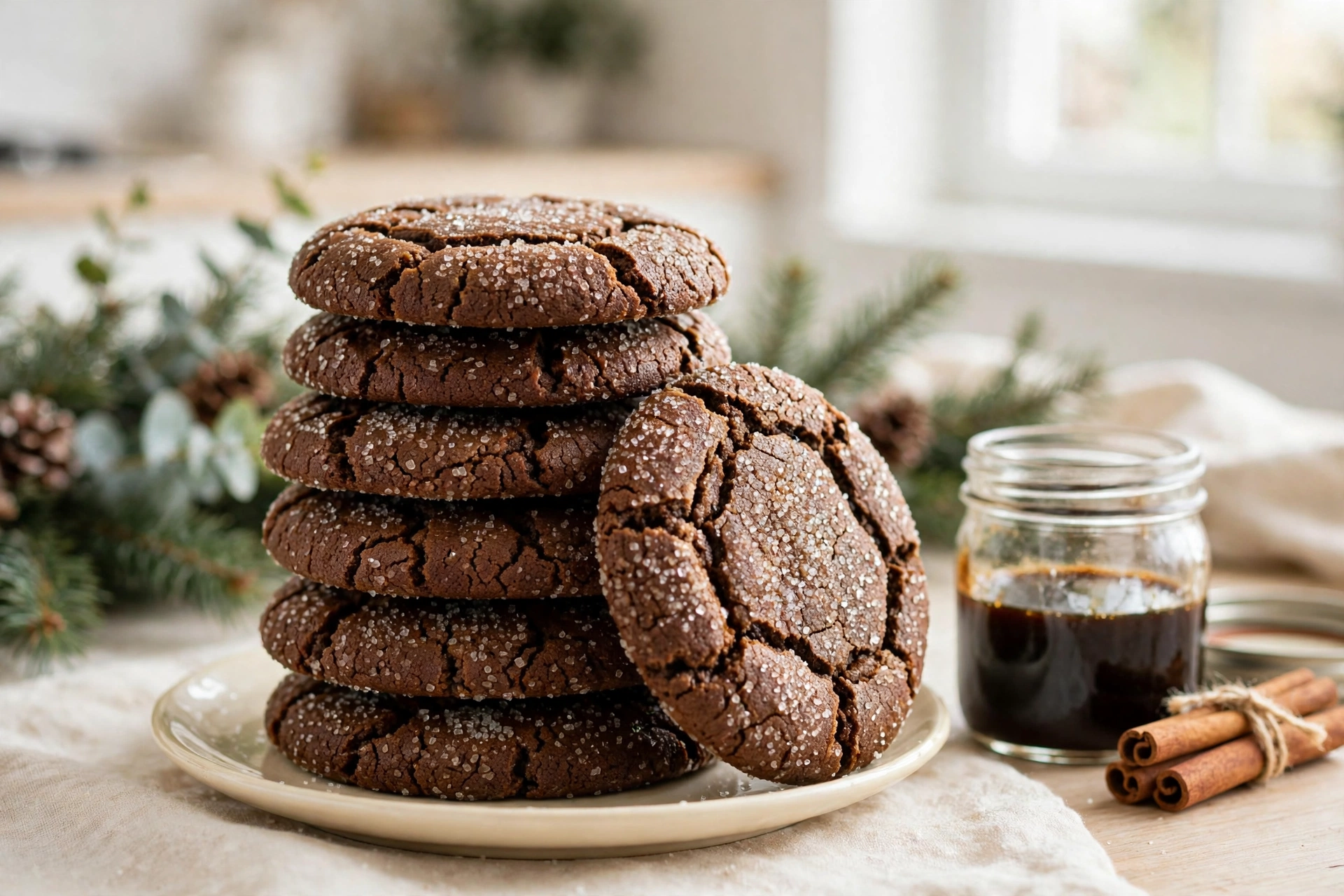
Healthy molasses cookies should come out of the oven the way the old tin cookies did: dark, crackled, sparkling with sugar, and soft enough to bend before they break. This version keeps every bit of that character and rebuilds the fat and sugar underneath it.
The tops split into the familiar deep cracks as they bake, and the coarse sugar catches the light on every ridge. Inside, the crumb stays dense and chewy, closer to a brownie in spirit than to a crisp ginger snap.
The spice is the real signature: ginger first, cinnamon behind it, and a half teaspoon of cloves that deepens the molasses instead of shouting over it. The whole kitchen smells like December within minutes of the first pan.
At about 95 calories a cookie, against roughly 140 for the classic built on butter and a full cup of sugar, these are cookies you can put in the tin and actually hand out freely.
Regular or Blackstrap: the Molasses Decides the Cookie
Healthy molasses cookies begin with a choice most recipes never explain: which molasses. The jar on the shelf comes in two very different forms, and picking the wrong one is the most common reason a batch tastes harsh instead of warm.
Regular unsulphured molasses is the first or second boiling of the cane syrup, and it is the right jar for cookies. Its flavor is round and caramel deep, sweet enough to count as part of the sugar, and gentle enough to let the ginger lead.
Blackstrap is the third boiling, concentrated down to what is left after most of the sugar is gone. It brings real iron and calcium, and it also brings a bitterness and a near black color that take over a cookie instead of seasoning it.
The mineral story is honest but smaller than it sounds. According to USDA FoodData Central, a tablespoon of molasses carries small amounts of iron, calcium, potassium, and magnesium; in a batch of twenty four cookies, that is a pleasant bonus, not a supplement.
This recipe therefore uses regular molasses for flavor and lets the flour do the nutritional work. If blackstrap is what you own, swap half the measure for honey or maple syrup and the balance comes back.
Whatever the jar, measure molasses in a cup you have oiled or rinsed with hot water. It slides out in one pour instead of leaving a third of itself behind on the glass, which matters when the recipe only calls for a quarter cup.
Soft Centers Are a Clock and a Chill, Not a Secret Ingredient
The softness of a molasses cookie is decided by two plain controls: a full hour of chilling before the pan, and a bake that ends while the centers still look underdone. No rare ingredient does this work; time and temperature do.
The chill matters twice in this dough. The fat here is coconut oil, which melts far faster than butter in a warm kitchen, and an unchilled scoop would spread into a lacy wafer before it set. One hour in the refrigerator firms the dough into balls that hold their shape.
Cold dough also bakes thicker. A chilled ball enters the oven as a mound, melts from the outside in, and keeps a plump center; a warm ball slumps early and bakes through, which is how the same recipe produces crisp cookies one day and soft ones the next.
The clock is the second control. At nine to eleven minutes, the edges are set and the tops have crackled, but the centers are still glossy and soft. Pull the pan then. The cookies finish on the hot sheet during their five minute rest and settle into chew as they cool.
Two minutes too long is the whole difference between the cookie in the photograph and a firm, cakey one. Molasses cookies forgive many things; an extra two minutes in the oven is not one of them.
The Cookie Math: About 95 Against About 140
The classic soft molasses cookie is built on three quarters of a cup of butter or shortening and a full cup of sugar, rolled in more sugar before baking. It lands near 140 calories a cookie, with fat in the high single digits and very little fiber.
These healthy molasses cookies land near 95 calories each, and the savings are placed, not wished for. The butter becomes a third of a cup of coconut oil, and a quarter cup of unsweetened applesauce takes over the rest of the moisture work.
The sugar line changes twice. The cup of white sugar becomes half a cup of coconut sugar, and the rolling sugar is measured at two tablespoons for the whole batch of twenty four, which comes to about 4 calories of sparkle per cookie.
The flour swap is the quiet one: white whole wheat flour in place of all purpose, the same tender crumb with about a gram of fiber in every cookie. The USDA guidance at MyPlate is to make at least half your grains whole grains, and a Christmas cookie is a painless place to collect on that advice.
Sodium sits near 105 milligrams, from the baking soda and a measured half teaspoon of salt. Nothing in the cookie is a fat free imitation of itself; the molasses, spices, egg, and oil are all the real thing, in smaller, deliberate amounts.
Ingredients for Healthy Molasses Cookies
The list reads like the classic it descends from, with three deliberate changes: white whole wheat flour, coconut oil with applesauce beside it, and coconut sugar in a smaller measure. The spices stay at full strength.
- 2 1/4 cups white whole wheat flour
- 2 teaspoons baking soda
- 2 teaspoons ground ginger
- 1 1/2 teaspoons ground cinnamon
- 1/2 teaspoon ground cloves
- 1/2 teaspoon fine sea salt
- 1/3 cup coconut oil, melted and cooled slightly
- 1/4 cup unsweetened applesauce
- 1/2 cup coconut sugar (or lightly packed brown sugar)
- 1/4 cup unsulphured molasses (not blackstrap)
- 1 large egg, at room temperature
- 1 teaspoon vanilla extract
- 2 tablespoons coarse sugar, for rolling
Whisk, Chill, Roll, Bake: Molasses Cookies in Four Moves
The dough takes fifteen minutes to mix and then asks for patience. Everything after the chill is quick: scoop, roll in sugar, bake one sheet at a time, and watch the clock like it matters, because it does.
- Whisk the flour, baking soda, ginger, cinnamon, cloves, and salt in a medium bowl until the spices are evenly distributed and no pockets of white remain.
- In a large bowl, whisk the melted coconut oil, applesauce, coconut sugar, molasses, egg, and vanilla until smooth and glossy, about a minute of steady whisking.
- Add the dry ingredients to the wet and stir with a spatula just until no streaks of flour remain. The dough will be soft and sticky; that is correct.
- Cover the bowl and refrigerate the dough for 1 hour, until firm enough to scoop cleanly. The dough keeps, covered, up to 3 days, and the spice flavor deepens overnight.
- Heat the oven to 350 degrees F and line two baking sheets with parchment paper. Put the coarse sugar in a small shallow bowl.
- Scoop the chilled dough into balls of about 1 1/2 tablespoons, roll each ball in the coarse sugar until coated, and set them 2 inches apart on the sheets.
- Bake 9 to 11 minutes, one sheet at a time, until the edges are set, the tops are crackled, and the centers still look slightly soft and glossy.
- Cool on the pan for 5 minutes, then move the cookies to a rack. They firm up as they cool and soften further by the second day in the tin.
Built for the Cookie Tin: Gifting, Shipping and Freezing the Dough
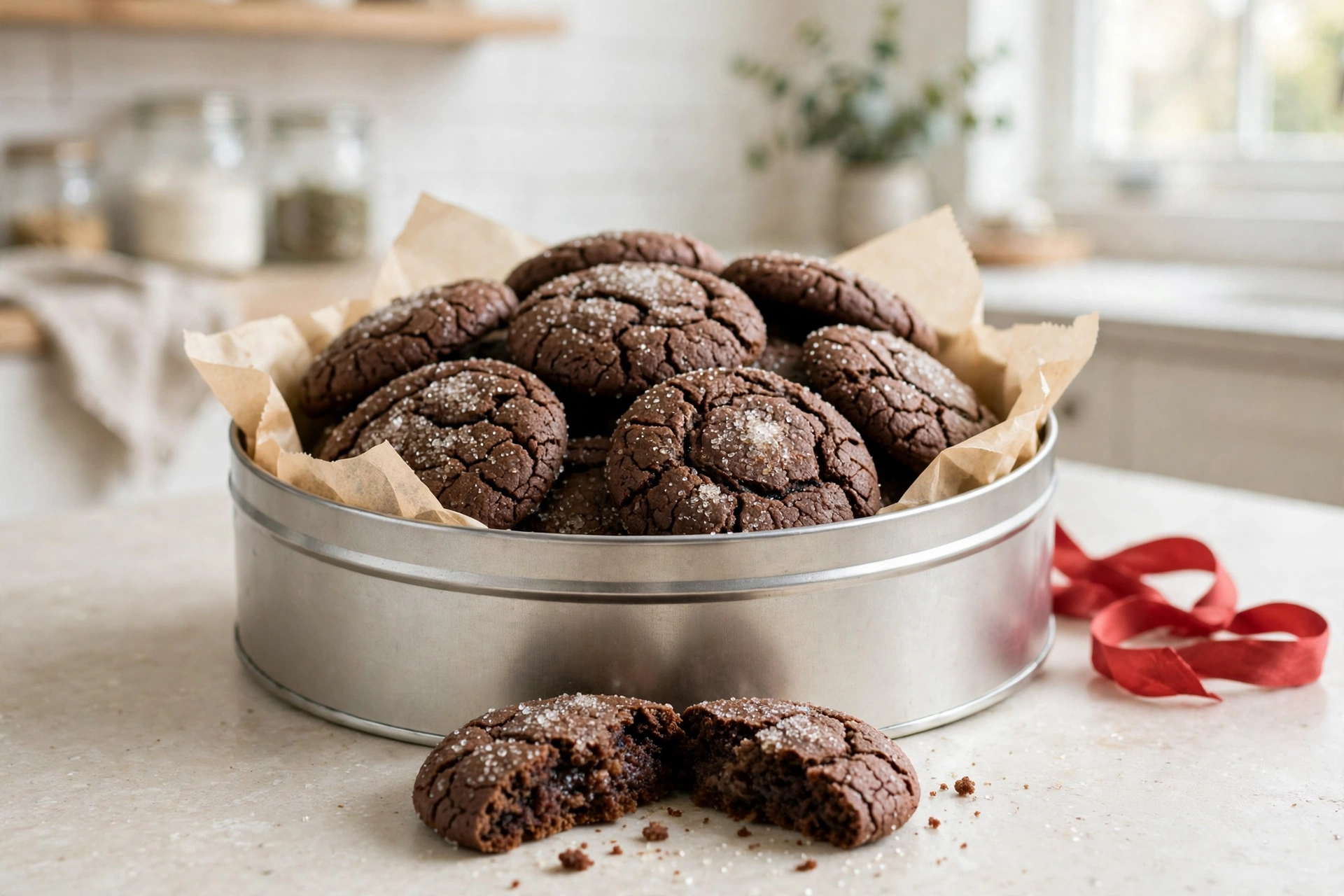
Healthy molasses cookies are the Christmas cookie built for the tin, and it is worth saying why plainly. There is no glaze to shatter, no frosting to smear, and no delicate edge to snap; the cookie that goes into the box is the cookie that comes out of it.
Pack them in a metal tin with parchment between the layers, six to eight cookies a layer. The coarse sugar survives the trip intact, and the crackled tops do not stick to the paper the way a soft frosted cookie would.
They also improve on the road. A molasses cookie is better on day two than on day one, as the spices settle and the crumb turns chewier, so a tin mailed on Monday arrives on Thursday at its peak rather than past it.
For the home tin, they sit naturally beside our healthy gingerbread cookies, and a mixed box with our healthy christmas sugar cookies covers the dark and the bright ends of the season. Our healthy snickerdoodles are the third tin to fill when the baking day runs long.
The dough itself freezes in portioned balls for three months. Freeze the sugared balls on a tray, bag them, and bake from frozen at 350 degrees F with one to two extra minutes; a warm pan of cookies is then never more than a quarter hour away, which is the real gift of the recipe. A mug of our healthy eggnog beside the tin finishes the picture.
Flat, Puffy or Tough: the Three Molasses Cookie Failures
Flat, greasy cookies mean the dough went in warm or the coconut oil was hot when it met the egg. The oil should be melted and then left five minutes; it should pour like water and feel barely warm. Chill the scooped balls for fifteen minutes if the kitchen is hot.
Puffy, cakey cookies that never crackle were usually measured with a heavy hand on the flour. White whole wheat flour scooped from the bag packs down; spoon it into the cup and level it, or weigh 270 grams. Too much flour is also the first suspect when the crumb tastes bready.
Tough cookies were stirred too long or baked too long, and the second is far more common. Gluten needs only a dozen strokes to develop past tender in this dough, and the oven needs only its nine to eleven minutes; a cookie that looks fully baked in the oven will be firm by evening.
A batch that tastes of little but sweetness has tired spices. Ground ginger loses its fire within a year of opening, and molasses cookies lean on ginger harder than any other cookie in the tin. Smell the jar; if it does not bite back, replace it.
And a batch that tastes bitter almost always traces to the jar, not the baker: blackstrap molasses in a recipe written for regular. The fix for the next batch is in the molasses section above; this batch improves under a dusting of the coarse sugar and a day of rest.
Orange Zest, Espresso Depth, or a Sandwich Cookie
Orange zest is the brightest variation: a teaspoon of finely grated zest whisked into the wet ingredients wakes up the molasses and points the cookie toward the fruitcake end of Christmas. It costs nothing in calories and changes the whole first bite.
For espresso depth, dissolve a teaspoon of instant espresso in the vanilla before whisking. The coffee never reads as coffee; it reads as more molasses, darker and longer, and it is the version adults ask about.
A sandwich version spreads two cookies with a thin layer of cream cheese softened with a spoon of maple syrup. It doubles the calories of the pair, so it belongs in the honest treat category, but for a cookie exchange it is the plate that empties first.
For a snap instead of a chew, bake the same dough two minutes longer and let the cookies cool completely on the rack. The crackle deepens, the centers set firm, and the cookie becomes the dunker that tea and coffee ask for.
A Week Soft in the Tin, Three Months in the Freezer
The cookies keep a week at room temperature in a sealed tin, and they stay soft by one old trick: a small piece of plain bread tucked into the tin with them. The cookies draw moisture from the bread and hold their chew while the bread goes stale in their place.
If a batch has already firmed up, the rescue is gentle heat. Ten seconds in the microwave returns a cookie to near fresh softness, and five minutes in a 300 degrees F oven does the same for a whole plate, with the sugar sparkle intact.
Baked cookies freeze for two months, layered with parchment in a hard container so the crackled tops survive. They thaw on the counter in about twenty minutes and lose nothing that matters.
The dough is the better freezer resident: three months as portioned, sugared balls, ready to bake from frozen through the whole holiday season. One tray at a time keeps the supply of warm cookies ahead of the supply of guests.
The Cookie That Smells Like December
Healthy molasses cookies succeed by respecting what the classic actually is: a dark, spiced, chewy cookie whose richness comes from molasses and spice, not from the size of the butter measure. Nothing essential was traded away to get the number down.
At about 95 calories each, with a tin that travels and a dough that waits in the freezer, they are the cookies to bake first in December and the ones still being eaten, softly and happily, at the end of it.
Questions Bakers Ask About Healthy Molasses Cookies
Can I use blackstrap molasses in these cookies?
Not as a straight swap. Blackstrap is the third boiling of the syrup, far less sweet and noticeably bitter, and a full quarter cup will dominate the batch. If it is the jar you own, use half blackstrap and half honey or maple syrup, and expect a darker cookie with a stronger mineral edge.
Why does the dough have to chill for a full hour?
Two reasons. The fat is coconut oil, which melts quickly, and soft dough spreads into thin, crisp wafers before it can set. Chilled, the balls hold their shape and bake up thick with soft centers. The hour also lets the flour hydrate, which deepens the spice flavor; overnight is even better.
How do I know the cookies are done if the centers look raw?
Judge by the edges and the tops, not the centers. At 9 to 11 minutes the edges should be set, the tops crackled and matte at the ridges, while the centers still look glossy and slightly sunken. They finish on the hot pan during the 5 minute rest; a cookie that looks fully baked in the oven will be firm by evening.
Can I freeze the dough and bake the cookies later?
Yes, and it is the best way to run a holiday tin. Portion the chilled dough into balls, roll them in the coarse sugar, freeze them solid on a tray, and bag them for up to 3 months. Bake from frozen at 350 degrees F and add 1 to 2 minutes to the time.
Why did my molasses cookies come out flat?
Warm dough is the usual cause: coconut oil melts fast, and scoops made from soft dough slump before the edges can set. Melted oil that was still hot when it met the egg, and a skipped chill, are the two fixes to check. Scooped balls can also go back into the refrigerator for 15 minutes before baking on a warm day.