Healthy Roasted Pumpkin Soup with Apple and Crispy Sage, Silky and Light at About 165 Calories a Bowl
In this article:
- Why This Healthy Roasted Pumpkin Soup Works
- Roasted Pumpkin, Warm Spice and a Cool Yogurt Swirl
- The Roasted Apple Does the Sweetening
- Ingredients for the Healthy Roasted Pumpkin Soup
- How to Make the Healthy Roasted Pumpkin Soup
- The Yogurt Finish, Without the Curdle
- A Thanksgiving Week Timeline
- Butternut, Kabocha and Other Easy Turns
- Storage, Freezing and Reheating
- FAQ
Healthy roasted pumpkin soup is the first course that sets the tone for the whole Thanksgiving table: deep orange, silky, warmly spiced, and light enough to leave everyone hungry for what follows. It tastes like the season before the turkey even appears.
Each bowl lands at about 165 calories. The classic cream versions at the top of every search run 290 to 357 calories, sweetened with up to a quarter cup of maple syrup and finished with heavy cream. This one keeps the silk and loses the weight.
The work splits calmly across the week. The pumpkin roasts whenever the oven is already on, the soup blends in minutes, and a bowl reheats like it was made that hour. It is a starter that behaves like a gift to the cook.
Why This Healthy Roasted Pumpkin Soup Works
Healthy roasted pumpkin soup works because roasting does the flavor building before the pot is even warm. A raw pumpkin simmered in broth tastes flat and watery. The same pumpkin, roasted until its edges caramelize, arrives at the blender already sweet, deep and concentrated.
The apple is the second quiet move. Roasted beside the pumpkin, it softens into the soup and brings a natural, fruity sweetness, so the maple syrup drops to a single tablespoon for the whole pot. Nobody tastes apple. Everybody tastes balance.
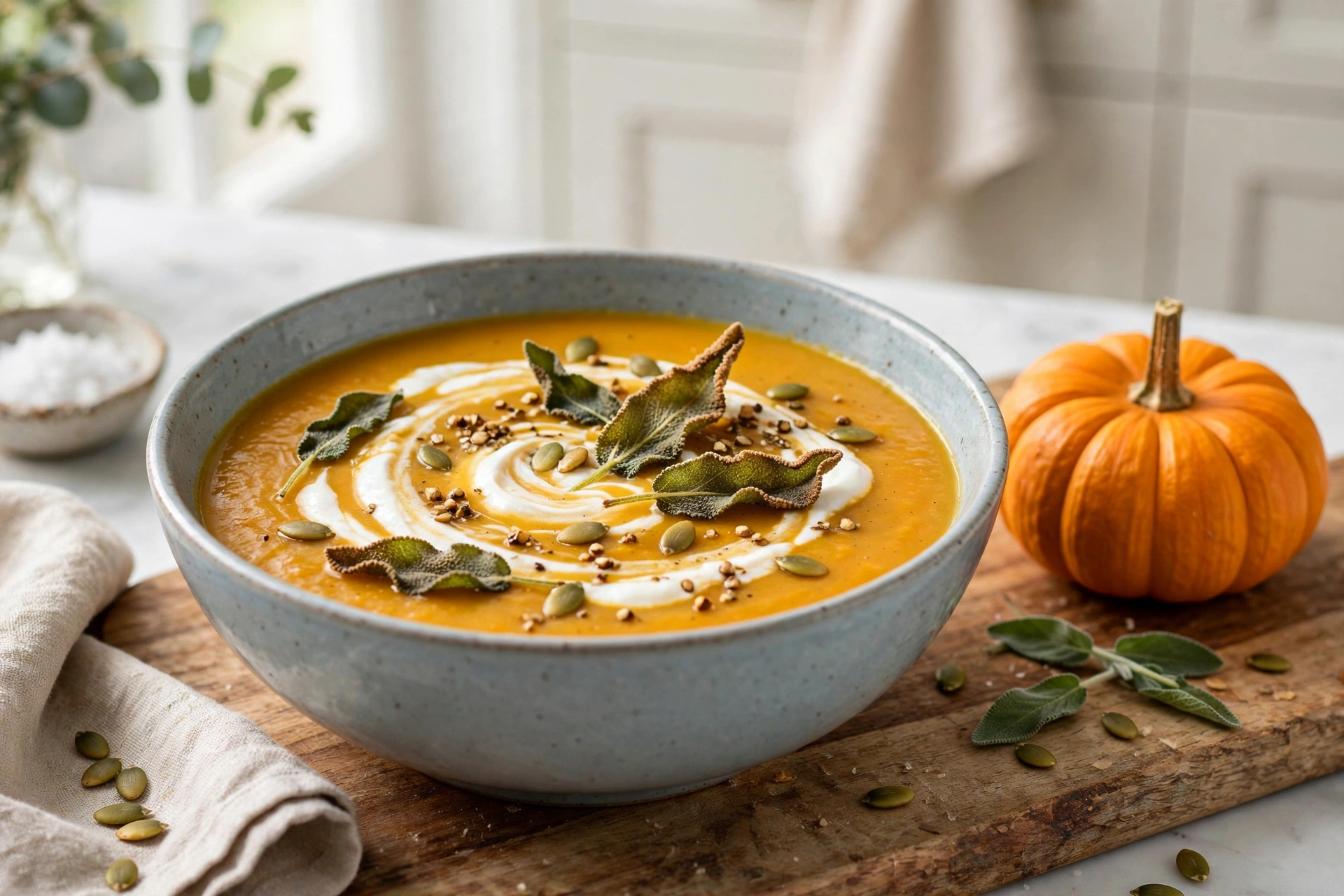
The finish is the third. Greek yogurt stirred in off the heat gives the tang and body that cream gives, with protein instead of saturated fat. A swirl of the same yogurt on top, plus crispy sage and toasted pepitas, makes the bowl look like it came from a restaurant kitchen.
There is a full pumpkin in this pot, and that matters for more than flavor. Pumpkin brings fiber, potassium and the deep orange carotenoids behind its color, which is why a bowl this light still eats like real food and not like a diet gesture.
Roasted Pumpkin, Warm Spice and a Cool Yogurt Swirl
The first spoonful is smooth all the way through. Roasted pumpkin blends into a puree with no strings and no grain, especially when the flesh is scooped while still warm and blended a full minute longer than instinct suggests.
Cinnamon leads the spice, with nutmeg and a whisper of clove behind it. The ginger is fresh, not powdered, and it lifts the whole bowl the way lemon lifts a sauce: quietly, and mostly noticed when it is missing. A pinch of cayenne warms the back of the throat without ever reading as heat.
Against all that warmth, the yogurt swirl stays cool and tangy. The contrast is the pleasure of the bowl, the same reason a cool spoon of yogurt belongs on any spiced soup. The pepitas crack between the teeth, and the sage, fried for half a minute, tastes like November itself.
Serve it in warm bowls, in modest portions. As a first course before a rich dinner, about a cup per person is the right measure, and the pot stretches to eight bowls without anyone feeling shorted.
The Roasted Apple Does the Sweetening
Most pumpkin soups lean on maple syrup or brown sugar, and the sweetness flattens everything else. One roasted apple changes the math. Its sugars concentrate in the oven, its pectin adds body, and its gentle acidity keeps the pumpkin bright instead of dull.
A sweet, firm apple is the right choice: Honeycrisp, Gala or Fuji all roast well and hold their flavor. A tart Granny Smith works too, in a sharper direction, and is a good pick if your pumpkin is very sweet on its own.
The apple also solves a texture problem. Pumpkin puree can blend up a little thin when the pumpkin is watery, and the apple’s pectin quietly thickens the soup back to a spoon coating consistency without flour, cornstarch or cream.
If your pumpkin turns out exceptionally sweet, you can drop the maple syrup entirely. Taste the blended soup first, then decide. The recipe is written for the average sugar pie pumpkin, which wants that single tablespoon for balance.
Ingredients for the Healthy Roasted Pumpkin Soup
A sugar pie pumpkin is the one firm requirement. Carving pumpkins are watery and stringy, and no amount of roasting fixes them. Everything else on this list is a pantry staple in November, and the broth should be low sodium so you control the salt yourself.
- 1 sugar pie pumpkin, about 4 pounds (1.8 kg)
- 1 medium sweet apple, such as Honeycrisp or Gala (about 180 g), quartered and cored
- 2 tablespoons plus 1 teaspoon olive oil (35 ml), divided
- 1 large yellow onion (150 g), chopped
- 4 garlic cloves (12 g), minced
- 1 tablespoon fresh ginger (6 g), grated
- 1 teaspoon ground cinnamon (2.5 g)
- 1/2 teaspoon ground nutmeg (1 g)
- 1/8 teaspoon ground cloves (0.3 g)
- 1 pinch cayenne pepper (0.2 g)
- 4 cups low sodium vegetable broth (960 ml)
- 1 tablespoon maple syrup (15 ml)
- 1 teaspoon fine sea salt (6 g), plus more to taste
- 1/2 teaspoon black pepper (1 g)
- 3/4 cup plain nonfat Greek yogurt (180 g), divided
- 12 fresh sage leaves, for the crispy topping
- 1/4 cup pepitas (30 g), toasted
The yogurt must be Greek and thick. A pourable yogurt thins the soup and can split in the heat. Full fat Greek yogurt also works and adds about 10 calories a bowl; the nonfat version keeps the count where the introduction promised it.
How to Make the Healthy Roasted Pumpkin Soup
The order is roast, simmer, blend, temper. Work in that sequence and the soup is nearly impossible to get wrong, even on a busy holiday week.
- Heat the oven to 425 degrees F (220 degrees C). Line a large rimmed baking sheet with parchment. Halve the pumpkin, scoop out the seeds and strings, and cut each half into 2 wedges.
- Rub the pumpkin wedges and apple quarters with 1 tablespoon of the olive oil, set them cut side down on the sheet, and roast for 35 to 40 minutes, until the flesh is deep golden at the edges and a fork slides through with no resistance.
- Cool for 10 minutes, then scoop the pumpkin flesh from the skin, about 4 cups (980 g), and scrape the soft apple from its skin. Set aside.
- Heat 1 tablespoon of the olive oil in a large pot over medium heat. Cook the onion for 6 to 7 minutes, until soft and sweet, then stir in the garlic and ginger for 30 seconds.
- Add the cinnamon, nutmeg, cloves and cayenne and stir for 30 seconds, until fragrant. Add the roasted pumpkin and apple, the broth (960 ml), the maple syrup (15 ml), the salt and the pepper.
- Simmer gently for 15 minutes, so the flavors settle together. Take the pot off the heat.
- Blend until completely smooth with an immersion blender, or in batches in a countertop blender. The soup should pour like thin cream; add a splash of broth if it stands up on the spoon.
- Temper the yogurt: whisk 1/2 cup of the yogurt (120 g) with a ladle of hot soup in a small bowl, then stir it back into the pot. Warm through on the lowest heat for 2 minutes without letting it boil.
- For the topping, heat the remaining 1 teaspoon of olive oil in a small skillet and fry the sage leaves for 20 to 30 seconds, until crisp; drain on a paper towel. Toast the pepitas (30 g) in the same dry skillet for 2 to 3 minutes, until they pop.
- Ladle into warm bowls, swirl with the remaining yogurt, and finish with the crispy sage and pepitas. Serve at once.
The Yogurt Finish, Without the Curdle
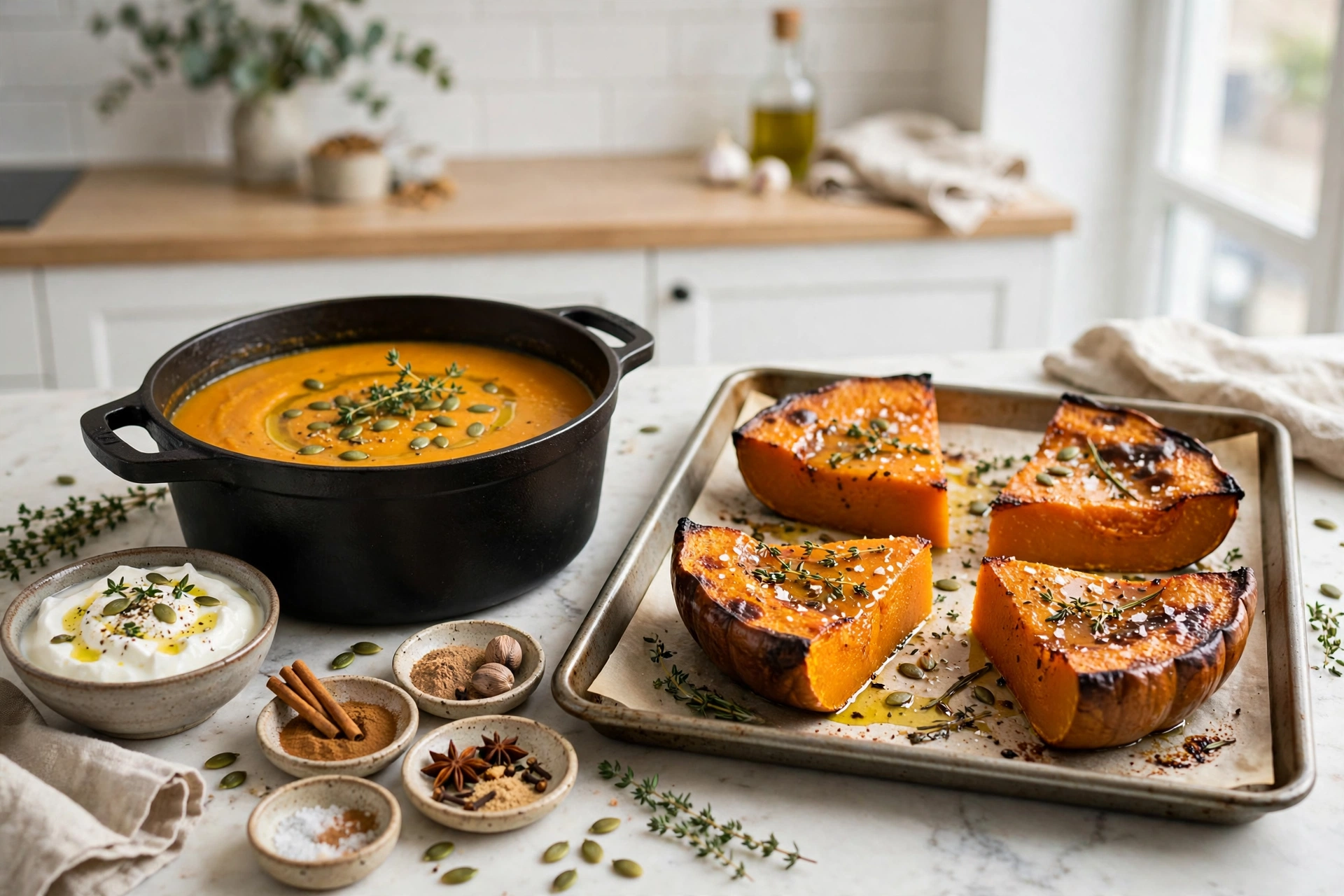
Yogurt curdles when it boils, and a curdled soup looks grainy no matter how good it tastes. Two habits prevent it completely. First, the pot comes off the heat before any yogurt goes near it. Second, the yogurt is tempered, warmed gently with a ladle of soup before it joins the pot.
Tempering sounds fussy and takes twenty seconds. It is the same technique used for egg sauces, and it works for the same reason: a gradual temperature change instead of a shock. Once the tempered yogurt is in, the soup can warm through on the lowest heat, but it must never bubble.
If you plan to freeze the soup, leave the yogurt out entirely and stir it in after reheating. Dairy finishes and freezing do not get along, and the soup base itself freezes beautifully for a month. The swirl on top is added at serving either way, so nothing is lost.
Cream is the obvious swap if yogurt is not your thing, and the soup will still be good. It will also land near 250 calories a bowl, which is exactly the trade this healthy roasted pumpkin soup was built to avoid.
A Thanksgiving Week Timeline
This soup is at its best made ahead, which makes it the easiest course on the table to schedule. The flavors deepen overnight, the spices settle, and the color stays a deep, confident orange.
Roast the pumpkin and apple up to 3 days ahead, scoop the flesh into a container and refrigerate. The roasted flesh also freezes well if your oven time opens up even earlier in the month.
Make the full soup, without the yogurt finish, 1 to 2 days before Thanksgiving. Cool it quickly, refrigerate it covered, and reheat it gently on the day, stirring in the tempered yogurt at the end. Fry the sage and toast the pepitas while the soup warms; both take under five minutes and smell wonderful as guests arrive.
On the day itself, the soup asks for one burner and fifteen quiet minutes. Serve it as a first course alongside the healthy mushroom wellington crowd, or set it out in small cups for people to hold while the turkey rests. A spoonful of healthy cranberry sauce swirled into a bowl is a festive turn worth trying once.
Butternut, Kabocha and Other Easy Turns
Butternut squash is the reliable stand in: one large squash, about 3 pounds (1.4 kg), roasted the same way, gives a slightly sweeter soup that needs no maple at all. Our healthy butternut squash soup takes that squash in a different, curry leaning direction if you want to compare.
Kabocha squash makes the thickest version, dense and almost chestnut sweet. It may need an extra splash of broth at blending. Red kuri squash behaves like kabocha and keeps its deep color.
For a curry turn, swap the cinnamon, nutmeg and cloves for 2 teaspoons of curry powder and a pinch of turmeric, and finish with lime juice instead of extra salt. For a smoky turn, add 1/2 teaspoon of smoked paprika with the spices and skip the cayenne.
The canned shortcut is honest too: 2 cans (15 ounces each) of plain pumpkin puree, not pie filling, replace the roasted pumpkin and apple roasting step. The soup loses a layer of caramel depth and gains back forty minutes, which on Thanksgiving week is sometimes the right trade.
Storage, Freezing and Reheating
The finished soup keeps for 4 days in the fridge, covered. It thickens as it sits; loosen it with a splash of broth or water when you reheat, and taste the salt again after loosening, since dilution dulls it.
Freeze the soup base, without yogurt, for up to 1 month in flat bags or containers with headroom. Thaw overnight in the fridge and reheat gently, then temper in the yogurt as if the soup were fresh. Per the FDA holiday food safety guide, soups left out at a party should not sit beyond 2 hours, so serve from a warm stove rather than a cooling pot on the table.
Pumpkin itself is worth the freezer space this month: USDA FoodData Central lists pumpkin at about 26 calories per 100 grams raw, with meaningful fiber and potassium, which is the quiet reason this whole bowl works at 165.
Healthy roasted pumpkin soup has become our default first course for the whole season, not just the holiday. It opens a heavy meal with color and warmth, asks almost nothing of the cook on the day, and sends nobody to the main course already full.
FAQ
Can I use canned pumpkin puree instead of roasting a pumpkin?
Yes, and it is a fair trade on a busy week. Use 2 cans (15 ounces each) of plain pumpkin puree, never pie filling, skip the roasting step, and add the puree with the broth. The soup loses some caramel depth, so keep the roasted apple, which does much of the same work.
Why did my Greek yogurt curdle in the soup?
It boiled, or it went in cold and shocked. Yogurt must be tempered: whisk it with a ladle of hot soup first, stir it back in off the heat, and warm the soup through without ever letting it bubble. Thick Greek yogurt also curdles far less than pourable styles.
Can I make this pumpkin soup ahead for Thanksgiving?
It is better made ahead. Roast the pumpkin up to 3 days early, or finish the soup without the yogurt 1 to 2 days early and refrigerate it. Reheat gently, temper in the yogurt, and fry the sage and toast the pepitas just before serving.
Can I freeze healthy roasted pumpkin soup?
Yes, for up to 1 month, but freeze the base without the yogurt finish. Thaw overnight in the fridge, reheat gently until steaming, then temper in fresh yogurt and add the toppings. The texture comes back fully; frozen yogurt in the soup does not.
What can I serve this soup in for a holiday first course?
Warm bowls are classic, and small roasted sugar pumpkins are the showpiece version: choose pumpkins about 5 inches wide, roast them 25 minutes until just tender, and fill with hot soup. The flesh scoops into each spoonful. Keep portions near 1 cup so the main course still has room.
Healthy Roasted Pumpkin Soup with Apple and Crispy Sage, Silky and Light at About 165 Calories a Bowl
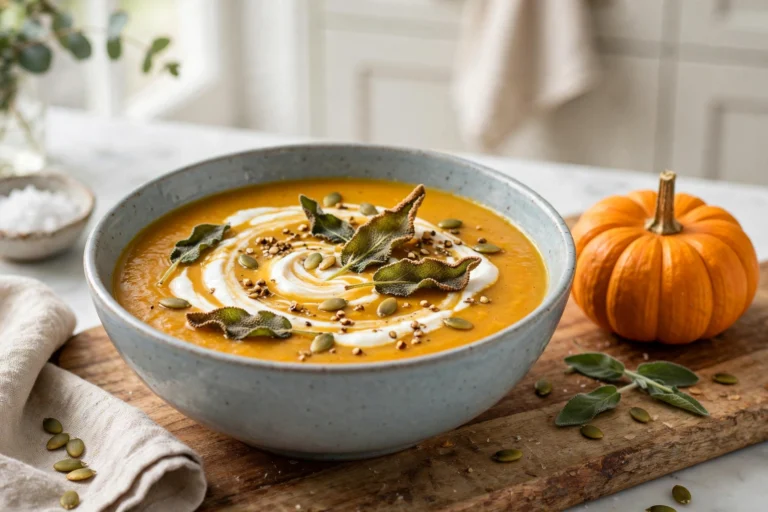
Sugar pie pumpkin and apple roasted until caramelized, blended with warm spices and vegetable broth, finished with a Greek yogurt swirl, crispy sage and toasted pepitas. About 165 calories a bowl, against about 290 to 357 for the classic cream versions.
- Total Time: 1 hour
- Yield: 8 bowls 1x
Ingredients
1 sugar pie pumpkin, about 4 pounds (1.8 kg)
1 medium sweet apple, such as Honeycrisp or Gala (about 180 g), quartered and cored
2 tablespoons plus 1 teaspoon olive oil (35 ml), divided
1 large yellow onion (150 g), chopped
4 garlic cloves (12 g), minced
1 tablespoon fresh ginger (6 g), grated
1 teaspoon ground cinnamon (2.5 g)
1/2 teaspoon ground nutmeg (1 g)
1/8 teaspoon ground cloves (0.3 g)
1 pinch cayenne pepper (0.2 g)
4 cups low sodium vegetable broth (960 ml)
1 tablespoon maple syrup (15 ml)
1 teaspoon fine sea salt (6 g), plus more to taste
1/2 teaspoon black pepper (1 g)
3/4 cup plain nonfat Greek yogurt (180 g), divided
12 fresh sage leaves, for the crispy topping
1/4 cup pepitas (30 g), toasted
Instructions
Heat the oven to 425 degrees F (220 degrees C). Line a large rimmed baking sheet with parchment. Halve the pumpkin, scoop out the seeds and strings, and cut each half into 2 wedges.
Rub the pumpkin wedges and apple quarters with 1 tablespoon of the olive oil, set them cut side down on the sheet, and roast for 35 to 40 minutes, until the flesh is deep golden at the edges and a fork slides through with no resistance.
Cool for 10 minutes, then scoop the pumpkin flesh from the skin, about 4 cups (980 g), and scrape the soft apple from its skin. Set aside.
Heat 1 tablespoon of the olive oil in a large pot over medium heat. Cook the onion for 6 to 7 minutes, until soft and sweet, then stir in the garlic and ginger for 30 seconds.
Add the cinnamon, nutmeg, cloves and cayenne and stir for 30 seconds, until fragrant. Add the roasted pumpkin and apple, the broth (960 ml), the maple syrup (15 ml), the salt and the pepper.
Simmer gently for 15 minutes, so the flavors settle together. Take the pot off the heat.
Blend until completely smooth with an immersion blender, or in batches in a countertop blender. The soup should pour like thin cream; add a splash of broth if it stands up on the spoon.
Temper the yogurt: whisk 1/2 cup of the yogurt (120 g) with a ladle of hot soup in a small bowl, then stir it back into the pot. Warm through on the lowest heat for 2 minutes without letting it boil.
For the topping, heat the remaining 1 teaspoon of olive oil in a small skillet and fry the sage leaves for 20 to 30 seconds, until crisp; drain on a paper towel. Toast the pepitas (30 g) in the same dry skillet for 2 to 3 minutes, until they pop.
Ladle into warm bowls, swirl with the remaining yogurt, and finish with the crispy sage and pepitas. Serve at once.
- Prep Time: 15 minutes
- Cook Time: 45 minutes
Nutrition
- Calories: 165
- Sugar: 10
- Sodium: 370
- Fat: 6
- Saturated Fat: 1
- Trans Fat: 0
- Carbohydrates: 18
- Fiber: 4
- Protein: 4
- Cholesterol: 0