
Healthy Candied Pecans, Crisp and Glossy With Half the Sugar of the Classic
Healthy Candied Pecans, Crisp and Glossy With Half the Sugar of the Classic
In this article:
- A Crisp Shell Without Butter: the Egg White Does the Work
- Half the Sugar, All of the Snap
- Ingredients for Healthy Candied Pecans
- Whip, Fold, Bake Low: Candied Pecans in Three Moves
- The Cooling Rule: Twenty Quiet Minutes Between Oven and Jar
- Sticky, Soft or Grainy: Fixing the Three Pecan Failures
- On the Salad, On the Casserole, In the Gift Jar
- Cinnamon Classic, Cocoa Dust, or a Little Chili Warmth
- Two Weeks in the Jar, Three Months in the Freezer
- The Sweet Crunch That Asks for a Small Handful
- Questions Cooks Ask About Healthy Candied Pecans
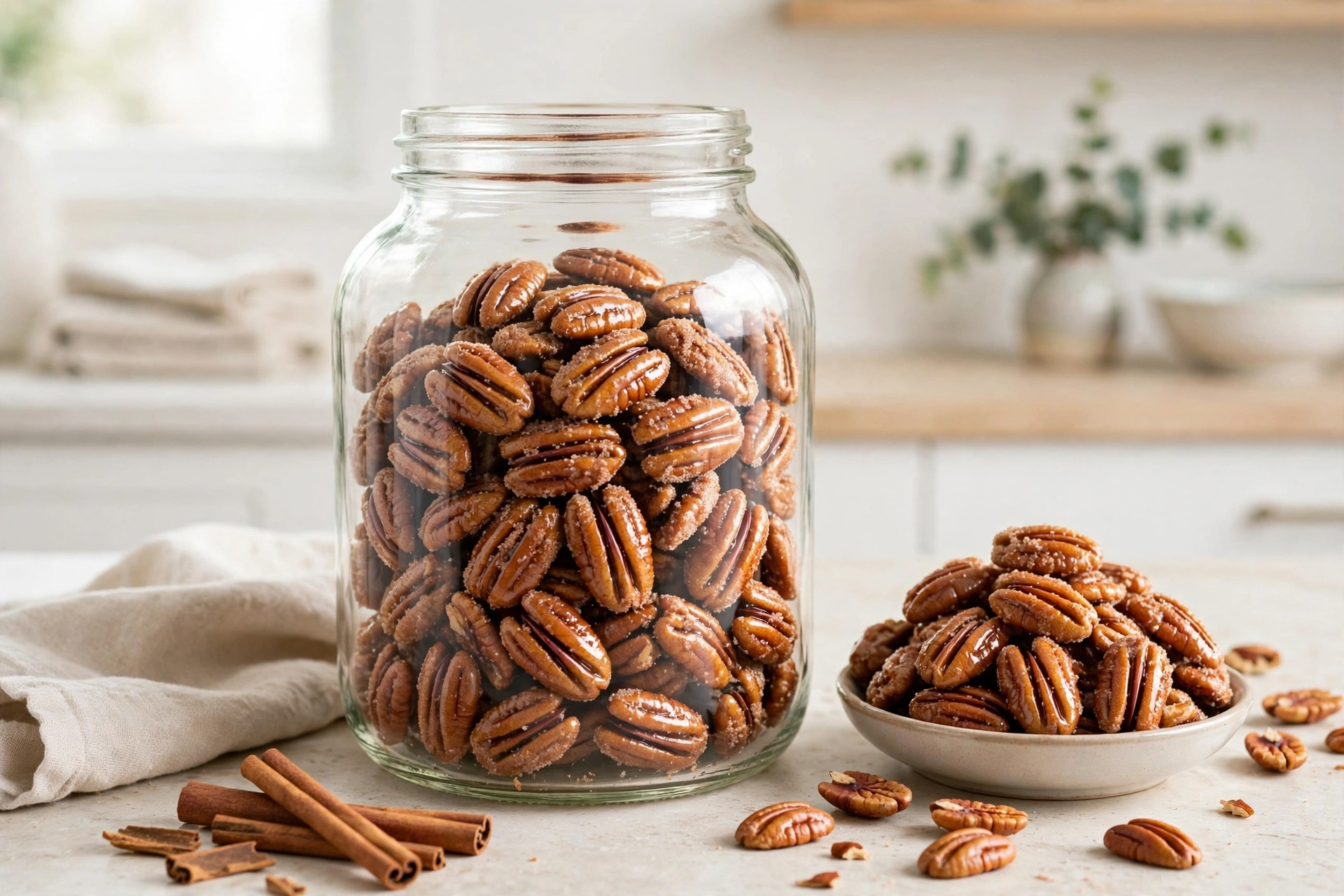
Healthy candied pecans should still snap. The pleasure of the classic is a thin, crisp shell of cinnamon sugar around a buttery nut, and nothing about that pleasure requires a full cup of sugar or a knob of butter.
These come out glossy and deeply scented, with a coating that shatters lightly instead of sticking to your teeth. The cinnamon leads, the vanilla warms it, and a pinch of nutmeg keeps the whole jar smelling like December.
The method is a quiet one: egg white foam, half the sugar, a low oven, and a pan left alone to cool. No stovetop syrup, no candy thermometer, no sticky skillet waiting in the sink.
At about 210 calories and 7 grams of sugar per quarter cup, against roughly 250 calories and 13 grams in the classic, they stay a treat. They just stop being a sugar delivery system with a nut attached.
A Crisp Shell Without Butter: the Egg White Does the Work
Healthy candied pecans get their shell from egg white foam, the oldest trick in the candied nut trade. Whipped with a spoon of water, the white turns to a fine foam that clings to every ridge of every half.
In the oven, that foam dries into a thin, crisp casing, and the sugar melts into the casing instead of pooling into caramel. The result eats like candy and behaves like a roasted nut, which is the whole assignment.
Butter, by contrast, fries the coating. Stovetop versions melt butter and sugar around the nuts, and the shell they produce is rich but soft, closer to a praline that never quite sets.
The low oven matters as much as the foam. At 300 degrees F the coating dries and sets before the natural oils in the pecans can turn bitter, so the nuts taste toasted rather than scorched.
One stir, halfway through, is all the attention the pan wants. Every extra stir risks breaking shells that have not finished setting, so this recipe builds the patience straight into the timing.
The vanilla and nutmeg are not passengers here. Vanilla rounds off the cinnamon’s sharp edge, and nutmeg, used with restraint, is the note people cannot name that makes a candied nut taste like the holidays instead of a bake sale.
Half the Sugar, All of the Snap
The classic recipe spends a full cup of sugar on a pound of pecans, and most of that cup is habit rather than need. The foam spreads a coating so thin that half a cup of sugar covers the same nuts completely.
Coconut sugar does the work with a warmer flavor than white sugar, a faint caramel note that suits pecans particularly well. Brown sugar or maple sugar can stand in at the same measure, with small shifts in color and depth.
The nut itself is the substance here: pecans bring about 20 grams of mostly unsaturated fat, 3 grams of fiber, and real staying power per quarter cup, values listed in the USDA FoodData Central database.
Run the comparison honestly and the lighter jar wins on the line that matters most. Sugar falls from about 13 grams a serving to about 7, and calories ease from roughly 250 to about 210, with no sweetener aftertaste anywhere in the jar.
The USDA MyPlate protein foods guidance counts nuts and seeds among its protein choices, which is a fair way to think of these: a small, satisfying handful, not an open bowl grazing on the counter.
There is also a texture argument for less sugar. A thinner coating shatters instead of crunching, and the pecan’s own buttery flavor gets through, where the classic shell can taste like cinnamon candy that merely happens to contain a nut.
Ingredients for Healthy Candied Pecans
Eight ingredients, and the longest one is the pound of pecans itself. The spice blend is where the December flavor lives; measure it before the foam goes up, because the foam waits for no one.
- 1 large egg white
- 1 tablespoon water
- 1 teaspoon vanilla extract
- 4 cups pecan halves (about 1 pound)
- 1/2 cup coconut sugar
- 1 1/2 teaspoons ground cinnamon
- 1/2 teaspoon fine sea salt
- 1/4 teaspoon ground nutmeg
Whip, Fold, Bake Low: Candied Pecans in Three Moves
The foam takes a minute, the oven takes twenty five, and the cooling takes twenty more of doing nothing at all. That last stretch is an ingredient in its own right.
- Heat the oven to 300 degrees F. Line a large rimmed sheet pan with parchment paper.
- Whisk the egg white, water, and vanilla in a large bowl until the foam holds soft peaks, about 1 minute of steady whisking.
- Fold the pecan halves into the foam until every half is wet and shiny on all sides.
- Stir the coconut sugar, cinnamon, salt, and nutmeg together, then sprinkle half over the pecans and toss. Sprinkle the rest and toss again until the coating looks even.
- Spread the pecans on the pan in a single layer, separating any that clump together.
- Bake for 12 minutes, then stir and turn the pecans with a spatula, spreading them back into one layer.
- Bake 13 minutes more, until the coating looks dry, matte, and deep golden. The pecans will still feel slightly soft; they crisp as they cool.
- Cool the pan on a rack for 20 minutes without touching the pecans. Break apart any clusters and transfer the pecans to a jar only when they are fully cool and crisp.
The Cooling Rule: Twenty Quiet Minutes Between Oven and Jar
The pecans that come out of the oven are not finished, whatever they look like. The coating arrives matte and set but still tender, and the crisp snap everyone is after forms only as the pan cools.
Give the pan twenty minutes on a rack and touch nothing. Stirring warm pecans smears their shells, and two nuts resting against each other will glue themselves into a cluster as the sugar sets around them.
Warm nuts sealed into a jar steam themselves soft by morning. If one rule in this recipe decides how the batch tastes a week later, it is this one: the jar waits until the pecans are completely cool.
Break up any true clusters only after the twenty minutes, with your fingers, and accept a few stuck pairs as the cook’s tax. They are, without exception, the first pieces eaten out of the finished jar.
Sticky, Soft or Grainy: Fixing the Three Pecan Failures
Sticky pecans were jarred warm or pulled from the oven early. Spread them back on a pan and give them ten minutes at 300 degrees F, then cool them fully on the rack; the shells reset as they cool.
Pecans that go soft a few days later usually met humidity, not underbaking. A steamy kitchen softens the shells through the best jar lid, and the same short return to the oven restores their snap.
A grainy coating means the sugar met the foam all at once, or the foam was whipped to stiff, dry peaks. Soft peaks, sugar added in two additions, and gentle tossing keep the finished shell smooth and glassy.
On the Salad, On the Casserole, In the Gift Jar
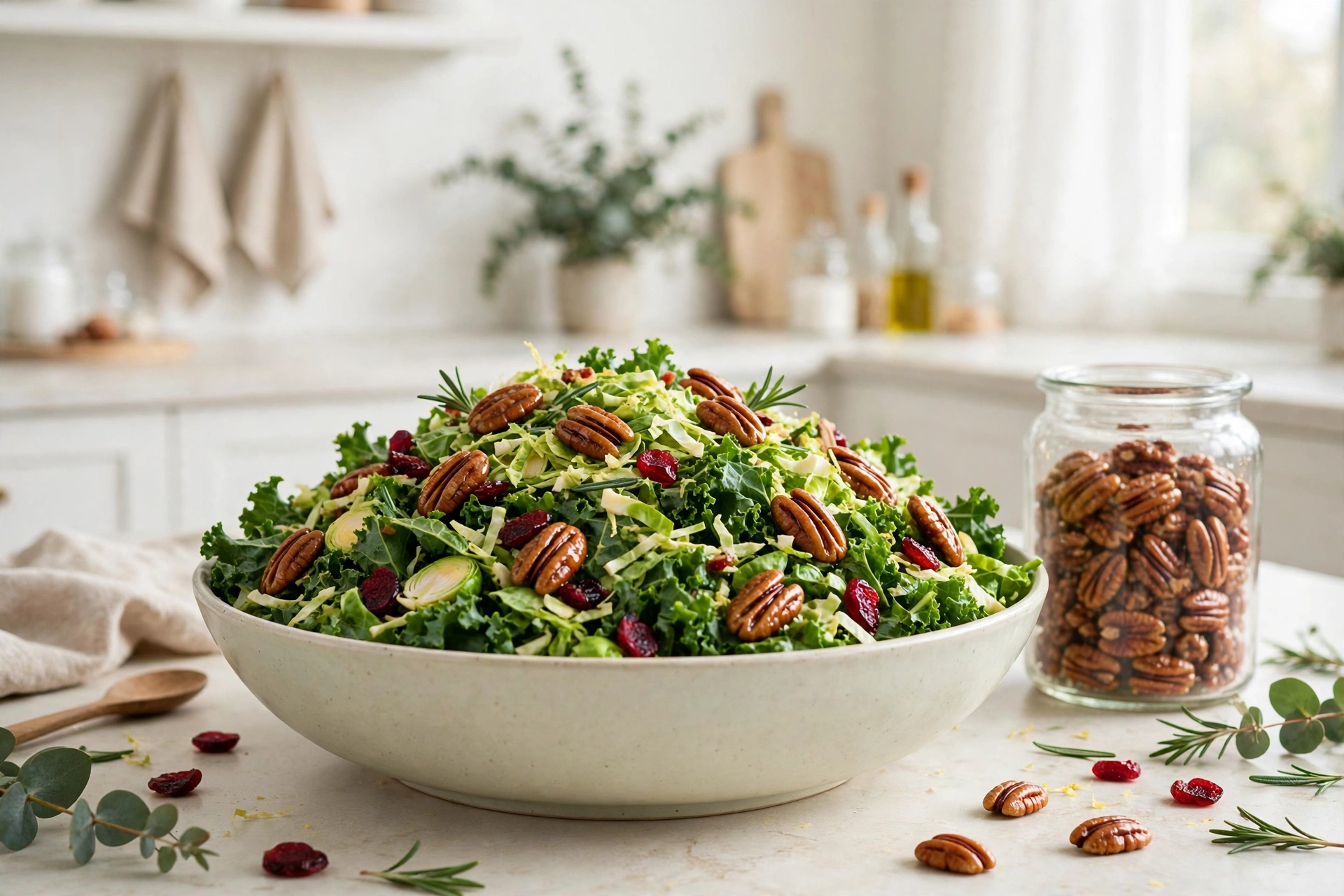
A quarter cup scattered over greens is the fastest way to make a winter salad feel planned. They bring crunch and a sweet note to our healthy Christmas salad and to our healthy harvest kale salad, whose sturdy leaves carry a glossy nut without wilting under it.
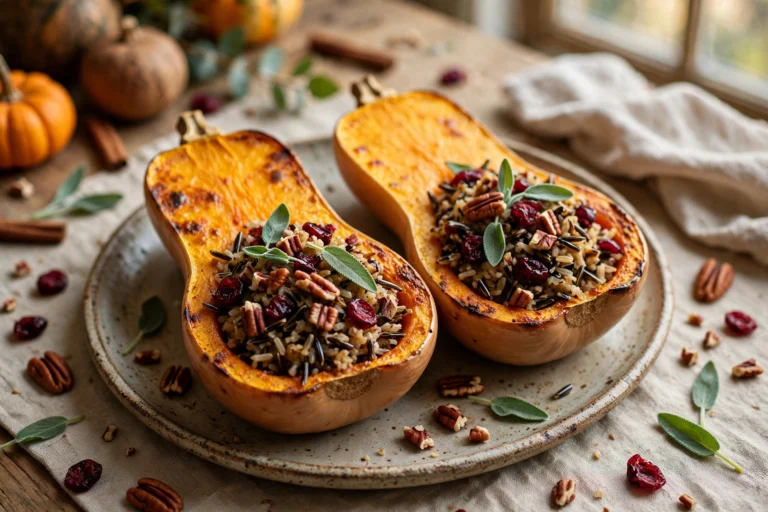
On the Thanksgiving side of the calendar, a handful crushed over our healthy sweet potato casserole replaces the marshmallow habit with something better: crunch, cinnamon, and a measured amount of sweet.
The gift jar is where a December batch earns its keep. One cup in a small jar, a ribbon, and the date on the label sits happily beside a tin of our healthy peppermint bark, and the two together make the box people remember.
Leave the last cup for the house: a small handful with cheese and apple slices, or chopped over oatmeal and yogurt in the morning. Measured out, the jar lasts the month; left open on the counter, it will not survive the weekend.
One more use, and an honest one: these are the nuts that make a plain bowl of popcorn or a simple cheese plate feel like an occasion in the quiet week between Christmas and the New Year.
Cinnamon Classic, Cocoa Dust, or a Little Chili Warmth
For a cocoa batch, whisk a tablespoon of cocoa powder into the sugar and finish the cooled pecans with the smallest pinch of flaky salt. The jar reads like the crunchy cousin of a truffle.
For gentle heat, add a quarter teaspoon of chili powder and a small pinch of cayenne to the spice mix. The warmth arrives a breath after the sweet, which makes these the handful the adults reach for twice.
For a brighter jar, add the finely grated zest of one orange to the sugar blend. Orange and pecan are old friends, and the zest perfumes the whole batch without a single drop of extra liquid.
Walnuts and almonds take the same foam and the same timing, though almonds want five extra minutes in the oven. A mixed nut batch is charming and slightly uneven, which some of us count as a feature.
A savory leaning batch, with the sugar cut to a third of a cup and smoked paprika standing in for the nutmeg, belongs on a cheese board more than on a dessert plate. It is the same method wearing a different coat.
Two Weeks in the Jar, Three Months in the Freezer
Sealed in a jar at room temperature, the pecans keep their snap for two weeks, stored away from the steam of the kettle and the heat of the stove. A cool, dark cupboard is the right address.
The refrigerator stretches them to a month, though the shells may pick up a whisper of moisture there; ten minutes in a 300 degree F oven restores them. The freezer holds them three months, and they thaw crisp at room temperature in about twenty minutes.
If you are gifting from a batch held longer than a week, that short oven refresh is worth it on packing day. The jars go out tasting like the afternoon they were made, and the date on the label is the packing date, not the baking one.
The Sweet Crunch That Asks for a Small Handful
Healthy candied pecans make the point this whole kitchen is built on: the lighter version of a beloved thing should still be the thing itself, only measured with more care.
Crisp shell, warm spice, a real nut underneath, and half the sugar standing guard between you and a second handful you would regret. The December jar stops being a test of willpower.
Make a batch for the salads and the gift jars, and keep one small bowl for the cook. Some recipes feed a crowd; this one quietly upgrades a month of meals.
Questions Cooks Ask About Healthy Candied Pecans
Why did my candied pecans turn sticky instead of crisp?
Almost always, the healthy candied pecans were jarred warm or pulled early. Warm pecans steam inside a sealed jar and soften their own shells. Spread them on a pan, give them 10 minutes at 300 degrees F, then cool them a full 20 minutes before the jar this time.
Can I swap the coconut sugar for brown sugar or maple sugar?
Yes, at the same half cup measure. Brown sugar gives a deeper, slightly softer shell and maple sugar the brightest flavor of the three, though it costs more. White sugar also works, but the coating tastes flatter without the caramel notes.
What does the egg white do, and can I leave it out?
The whisked white is the shell itself: it foams around each half, carries the sugar into every ridge, and dries crisp in the oven. Without it, the sugar slides off in the heat. For an egg free batch, 2 tablespoons of aquafaba whip and behave the same way.
How far ahead can I make these for Christmas gifts?
Two weeks ahead is the sweet spot: the shells stay fully crisp in a sealed jar at room temperature. Jar them in 1 cup portions with the date on the label, keep the jars in a cool cupboard, and they will taste freshly made when they are opened.
My coating looks grainy and rough instead of smooth. What went wrong?
The foam was likely whipped past soft peaks to a stiff, dry stage, or the sugar went in all at once and could not dissolve into it. Whip just to soft peaks, add the sugar blend in two additions, and toss gently rather than stirring hard.



One Comment
Comments are closed.