Healthy Wild Rice Cranberry Stuffed Butternut Squash, Caramelized and Hearty
In this article:
- A Squash That Earns the Center of the Table
- Caramelized Edges, Chewy Grains, Tart Little Bursts
- Cutting a Butternut Without the Wrestling Match
- What Goes Into the Wild Rice Filling
- How to Make Healthy Wild Rice Cranberry Stuffed Butternut Squash
- Pure Wild Rice or a Blend: the Honest Difference
- Lighter Than the Classic, by the Numbers
- Swaps for the Filling You Already Have
- Stuff Today, Roast Tomorrow: the Thanksgiving Plan
- FAQ
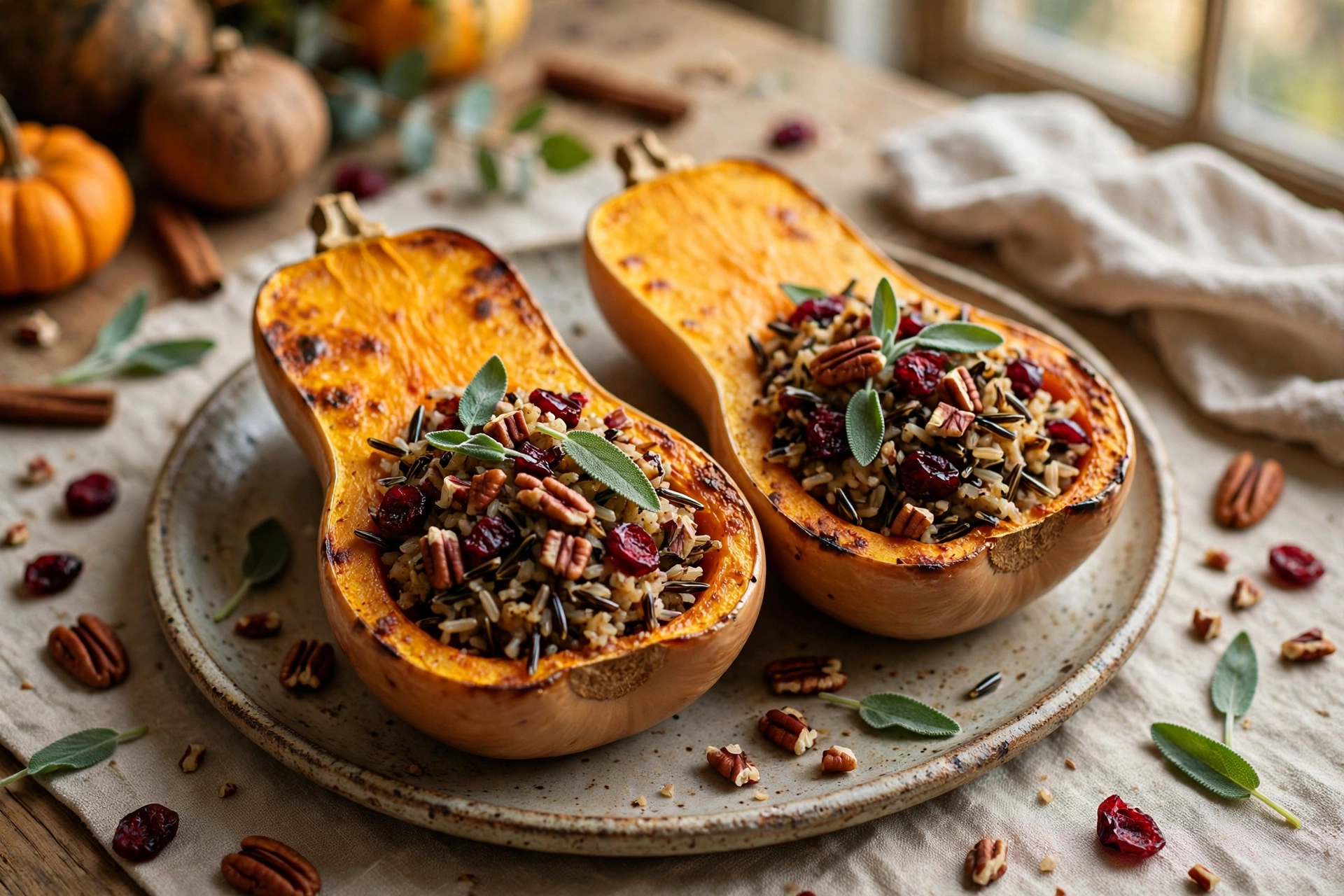
Healthy wild rice cranberry stuffed butternut squash is the vegetarian main that stops looking like a side note. Each roasted half arrives at the table burnished and deep gold, filled with dark grains, ruby cranberries and toasted pecans. It eats like a centerpiece, not a compromise.
The light part is structural, not cosmetic. There is no sausage and no butter anywhere in this healthy wild rice cranberry stuffed butternut squash. Olive oil does the sauteing, vegetable broth cooks the rice, and the squash itself brings the richness that cream usually fakes.
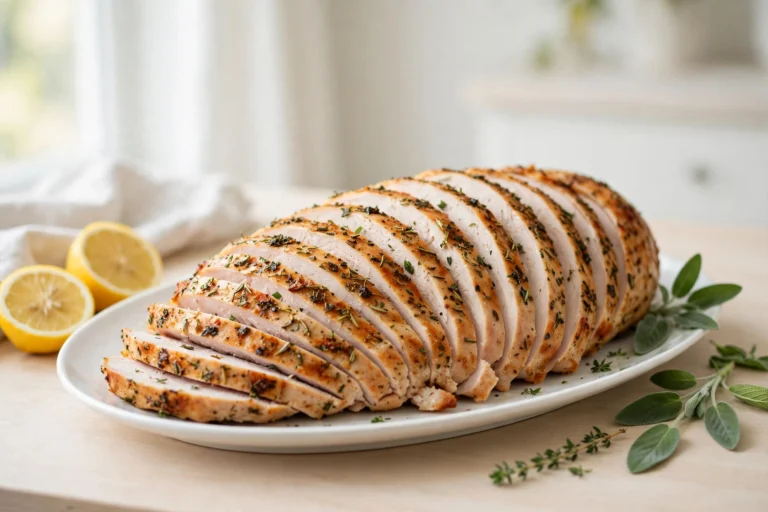
One generous half lands at about 410 calories, with 8 grams of fiber and 10 grams of protein. Set beside healthy roasted turkey breast, this healthy wild rice cranberry stuffed butternut squash holds its own on the plate and in the conversation.
A Squash That Earns the Center of the Table
Healthy wild rice cranberry stuffed butternut squash works because every component covers another one’s weakness. The squash is sweet and soft, so the filling leans chewy and tart. The rice is earthy and plain, so the apple, sage and cranberry arrive with brightness and perfume.
Roasting the halves cut side down is the technique that changes everything. The flat flesh presses against the hot pan and caramelizes instead of steaming in its own moisture. Those browned edges taste concentrated, almost like the squash was glazed, though nothing sweet touched it.
The filling is built in the same pan the aromatics cooked in, so no flavor gets left behind. Onion and celery soften in olive oil, the apple keeps a little bite, and the cooked rice drinks up whatever the vegetables released. Nothing is wasted and nothing tastes flat.
Portion logic is built into the vegetable itself. One half is one serving, with the shell acting as its own bowl and its own boundary. On a holiday table where everything else is scooped and estimated, that quiet precision is worth a lot.
Caramelized Edges, Chewy Grains, Tart Little Bursts
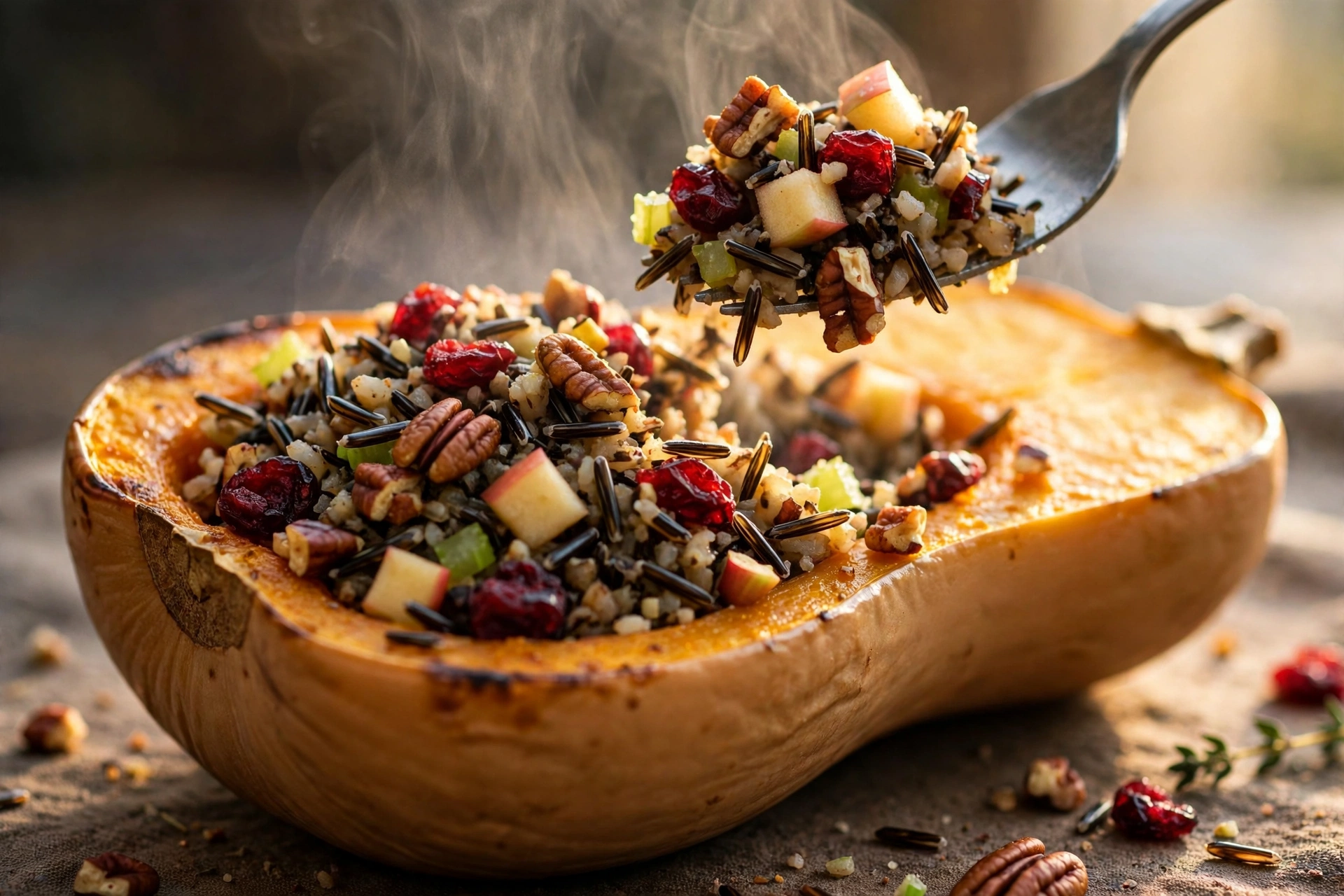
The first bite is all contrast. The squash flesh gives way like a custard, dense and silky, while the wild rice blend keeps a gentle chew that slows the bite down. Pecans add a buttery crunch at the top, toasted enough to perfume the whole half.
Cranberries do the bright work. Dried cranberries (40 g) soften in the warm filling and turn jammy at the edges, so every few bites land a tart, concentrated pop. The diced apple echoes that tartness with freshness instead of sweetness, and it keeps the filling from reading as heavy.
Sage is the flavor that makes the dish taste like Thanksgiving rather than like a grain bowl. One tablespoon of fresh sage (3 g), chopped fine, threads through the rice with thyme and black pepper.
The maple syrup is measured at a single teaspoon (7 g), just enough to round the edges without glazing anything.
Temperature matters here too. Served hot, the filling steams faintly and the pecans stay crisp for the first minutes on the plate. As the half cools toward warm, the squash firms slightly and the flavors merge, which is why leftovers taste so composed the next day.
One small serving note: skip the gravy boat for this plate. A spoonful of warm cranberry sauce or a drizzle of the pan juices from the roasting tray gives the moisture gravy usually provides, without covering the filling you seasoned on purpose. The half should taste like itself, start to finish.
Cutting a Butternut Without the Wrestling Match
A whole butternut is one of the hardest vegetables in the kitchen, and most stuffed squash recipes skip the part where someone has to cut it safely. Start by trimming a thin slice off each end so the squash stands flat and steady on the board.
Microwaving the whole squash for 2 minutes softens the skin just enough to help the knife bite instead of skid. Work with your largest, heaviest knife, and rock the blade through the stem end first, where the flesh is densest.
Once the squash is in two long halves, a metal spoon scrapes the seed cavity clean in seconds. Score the flesh lightly if you like, though this recipe skips scoring on purpose: an unscored surface caramelizes in one even sheet against the pan.
If cutting a raw butternut truly is not happening on a busy morning, buy the squash halved and seeded at the store and give it the same treatment. The recipe forgives the shortcut completely, because all the technique lives in the roasting, not in the knife work.
What Goes Into the Healthy Wild Rice Cranberry Stuffed Butternut Squash Filling
- 2 medium butternut squash, about 2 pounds each (900 g each), halved lengthwise and seeded
- 1 1/2 tablespoons olive oil (21 g), divided
- 3/4 cup wild rice blend (135 g)
- 1 3/4 cups low sodium vegetable broth (420 ml)
- 1 medium yellow onion, finely diced (150 g)
- 2 celery stalks, finely diced (120 g)
- 1 small apple, peeled and diced small (130 g)
- 2 garlic cloves, minced (6 g)
- 1/3 cup dried cranberries (40 g)
- 1/4 cup chopped pecans, toasted (27 g)
- 1 tablespoon chopped fresh sage (3 g)
- 1 teaspoon fresh thyme leaves (1 g)
- 1 teaspoon apple cider vinegar (5 ml)
- 1 teaspoon maple syrup (7 g)
- 3/4 teaspoon fine sea salt (4.5 g), divided
- 1/2 teaspoon black pepper (1 g)
How to Make Healthy Wild Rice Cranberry Stuffed Butternut Squash
- Heat the oven to 400 F (200 C). Line a large rimmed baking sheet with parchment paper. Brush the cut sides of the squash halves with 1/2 tablespoon of the olive oil (7 g) and season with 1/4 teaspoon of the salt (1.5 g) and half of the black pepper (0.5 g).
- Place the halves cut side down on the sheet. Roast for 35 to 40 minutes, until the flesh is deep gold at the edges and a knife slides through the thickest part with no resistance.
- While the squash roasts, combine the wild rice blend (135 g) with the vegetable broth (420 ml) in a medium saucepan. Bring to a boil, cover, lower the heat and simmer for 25 minutes, until the grains are tender and the liquid is absorbed. Rest off the heat for 5 minutes, then fluff.
- Warm the remaining 1 tablespoon of olive oil (14 g) in a large skillet over medium heat. Cook the onion (150 g) and celery (120 g) for 5 to 6 minutes, until soft and sweet at the edges.
- Add the apple (130 g) and garlic (6 g) and cook for 2 minutes more, until the apple just softens. Take the skillet off the heat.
- Fold the cooked rice into the skillet with the cranberries (40 g), pecans (27 g), sage (3 g), thyme (1 g), apple cider vinegar (5 ml), maple syrup (7 g), the remaining 1/2 teaspoon of salt (3 g) and the remaining black pepper (0.5 g). Toss until the filling is glossy and evenly mixed.
- Turn the roasted halves cut side up. Spoon the filling into the cavities, mounding it generously and pressing it lightly so it holds together.
- Return the stuffed halves to the oven for 10 to 12 minutes, until the filling is heated through and the pecan pieces on top deepen in color. Rest for 5 minutes and serve warm.
Pure Wild Rice or a Blend: the Honest Difference
Most stuffed squash recipes quietly call for a boxed blend, seasoning packet included. That packet is where the sodium hides, and it can push a single serving past 800 milligrams before the cook adds any salt at all.
A wild rice blend without a packet cooks in about 25 minutes and tastes mild and nutty, which suits this filling. Pure wild rice is darker, chewier and more aromatic, but it needs 40 to 45 minutes of simmering and an extra splash of broth.
Nutritionally the two are close cousins. Wild rice is not a true rice but the seed of an aquatic grass, and USDA FoodData Central lists it with more protein and fiber than brown rice at the same weight. Either choice keeps this dish firmly in whole grain territory.
If you use pure wild rice, start it before the squash goes into the oven and keep the rest of the recipe unchanged. The filling holds beautifully either way, because the vegetables and cranberries carry the moisture.
Lighter Than the Classic, by the Numbers
The classic version of this dish, the one with sausage and butter, usually lands between 620 and 700 calories per half. The sausage alone contributes most of the saturated fat, and the butter rides on top of it.
This version keeps the architecture and changes the arithmetic. Olive oil replaces butter at 1 1/2 tablespoons (21 g) for the whole batch. The pecans stay, because their crunch is structural, but they are measured at 1/4 cup (27 g) instead of scattered freely.
The result is about 410 calories per half, with 11 grams of fat, 8 grams of fiber and 10 grams of protein. For a vegetarian main on a holiday table, those numbers hold up well next to a serving of turkey and gravy.
The squash itself does quiet nutritional work. Butternut is rich in vitamin A and potassium, two nutrients the USDA MyPlate vegetable guidance highlights for deep orange vegetables. Eating the shell’s worth of flesh is a feature, not a side effect.
The protein deserves one honest sentence. Ten grams from grains, nuts and vegetables in this healthy wild rice cranberry stuffed butternut squash will not match a turkey serving, and the recipe does not pretend otherwise. Paired with the fiber and the sheer volume of the half, it satisfies the way a main should, which is the standard a holiday centerpiece actually has to meet.
Swaps for the Filling You Already Have
The filling formula tolerates substitution well because its balance is sweet, tart, chewy and crunchy rather than tied to one ingredient. Our healthy wild rice pilaf uses the same grain logic if you want a loose side dish instead of a stuffed main.
Walnuts replace pecans at the same weight (27 g) with a slightly more bitter edge. Pumpkin seeds make the dish nut free and keep the crunch, toasted for the same 5 minutes in a dry pan.
Fresh cranberries can stand in for dried if you simmer them with the onion for the last 2 minutes and add a second teaspoon of maple syrup (7 g) to tame them. They burst and stain the rice a faint, pretty pink.
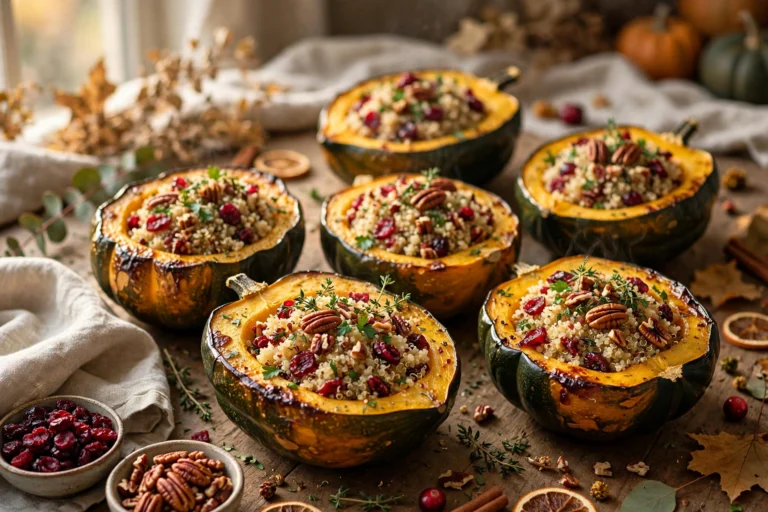
For a fully vegan plate, nothing changes at all: the recipe already contains no dairy or egg. Readers who love the format should also meet our healthy stuffed acorn squash, which fills a smaller squash with quinoa and greens.
Stuff Today, Roast Tomorrow: the Thanksgiving Plan
Thanksgiving morning is the wrong time to discover that a dish needs an hour of oven space. This one is built to be staged: roast the squash and cook the filling a day ahead, then keep them in separate containers in the refrigerator.
On the day, stuff the cold halves with the cold filling, cover the tray loosely with foil and warm everything at 350 F (175 C) for 20 minutes. Uncover for the last 8 to 10 minutes so the tops dry and the pecans crisp again.
Leftovers keep for up to 4 days in the refrigerator, sealed well. Reheat a half of this healthy wild rice cranberry stuffed butternut squash at 350 F (175 C) for 15 minutes, or in the microwave at half power for 3 to 4 minutes when lunch is the goal rather than presentation.
Stuffed halves also freeze respectably for up to 2 months, wrapped tightly once fully cool. Thaw overnight in the refrigerator before reheating. The rice softens a little, but the dish stays honest, which is more than most holiday mains can claim. Serve with healthy cranberry sauce on the side and the plate needs nothing else.
FAQ
How do I cut a butternut squash safely for stuffing?
Trim a thin slice off each end so the squash stands flat, then microwave the whole squash for 2 minutes to soften the skin. Use your heaviest knife and rock it through the stem end first. A stable base and a softened skin remove nearly all of the danger.
Can I use pure wild rice instead of a wild rice blend?
Yes. Pure wild rice needs 40 to 45 minutes of simmering instead of 25, and about 1/4 cup (60 ml) of extra broth. Start it before the squash roasts and keep every other ingredient and quantity the same.
How many calories are in one stuffed butternut squash half?
One half of this healthy wild rice cranberry stuffed butternut squash has about 410 calories, with 8 grams of fiber and 10 grams of protein. Classic sausage and butter versions of the same dish usually run 620 to 700 calories per half.
Can I assemble the stuffed squash the day before Thanksgiving?
Yes, and the recipe is designed for it. Roast the squash and cook the filling a day ahead, store them separately, then stuff and warm the halves at 350 F (175 C) for 20 minutes covered, plus 8 to 10 minutes uncovered.
Do stuffed butternut squash halves freeze well?
They freeze well for up to 2 months once fully cool and tightly wrapped. Thaw a half overnight in the refrigerator and reheat at 350 F (175 C) for about 15 minutes. The rice softens slightly, but the flavor stays balanced.
Healthy Wild Rice Cranberry Stuffed Butternut Squash, Caramelized and Hearty
Butternut halves roasted cut side down until caramelized, then filled with a wild rice blend tossed with cranberries, toasted pecans, apple, sage and a single teaspoon of maple. No sausage and no butter, about 410 calories a half with 8 grams of fiber.
- Total Time: 1 hour 25 minutes
- Yield: 4 servings (1 stuffed half each) 1x
Ingredients
2 medium butternut squash, about 2 pounds each (900 g each), halved lengthwise and seeded
1 1/2 tablespoons olive oil (21 g), divided
3/4 cup wild rice blend (135 g)
1 3/4 cups low sodium vegetable broth (420 ml)
1 medium yellow onion, finely diced (150 g)
2 celery stalks, finely diced (120 g)
1 small apple, peeled and diced small (130 g)
2 garlic cloves, minced (6 g)
1/3 cup dried cranberries (40 g)
1/4 cup chopped pecans, toasted (27 g)
1 tablespoon chopped fresh sage (3 g)
1 teaspoon fresh thyme leaves (1 g)
1 teaspoon apple cider vinegar (5 ml)
1 teaspoon maple syrup (7 g)
3/4 teaspoon fine sea salt (4.5 g), divided
1/2 teaspoon black pepper (1 g)
Instructions
Heat the oven to 400 F (200 C). Line a large rimmed baking sheet with parchment paper. Brush the cut sides of the squash halves with 1/2 tablespoon of the olive oil (7 g) and season with 1/4 teaspoon of the salt (1.5 g) and half of the black pepper (0.5 g).
Place the halves cut side down on the sheet. Roast for 35 to 40 minutes, until the flesh is deep gold at the edges and a knife slides through the thickest part with no resistance.
While the squash roasts, combine the wild rice blend (135 g) with the vegetable broth (420 ml) in a medium saucepan. Bring to a boil, cover, lower the heat and simmer for 25 minutes, until the grains are tender and the liquid is absorbed. Rest off the heat for 5 minutes, then fluff.
Warm the remaining 1 tablespoon of olive oil (14 g) in a large skillet over medium heat. Cook the onion (150 g) and celery (120 g) for 5 to 6 minutes, until soft and sweet at the edges.
Add the apple (130 g) and garlic (6 g) and cook for 2 minutes more, until the apple just softens. Take the skillet off the heat.
Fold the cooked rice into the skillet with the cranberries (40 g), pecans (27 g), sage (3 g), thyme (1 g), apple cider vinegar (5 ml), maple syrup (7 g), the remaining 1/2 teaspoon of salt (3 g) and the remaining black pepper (0.5 g). Toss until the filling is glossy and evenly mixed.
Turn the roasted halves cut side up. Spoon the filling into the cavities, mounding it generously and pressing it lightly so it holds together.
Return the stuffed halves to the oven for 10 to 12 minutes, until the filling is heated through and the pecan pieces on top deepen in color. Rest for 5 minutes and serve warm.
- Prep Time: 25 minutes
- Cook Time: 55 minutes
Nutrition
- Calories: 410
- Sugar: 16
- Sodium: 520
- Fat: 11
- Saturated Fat: 1.5
- Trans Fat: 0
- Carbohydrates: 68
- Fiber: 8
- Protein: 10
- Cholesterol: 0