
Healthy Roasted Turkey Breast, Juicy and Golden With a Lemon Herb Crust
In this article:
- A Dry Brine Does the Heavy Lifting
- Lemon, Herb and a Little Smoke
- One Pan, One Hour, a Calmer Thanksgiving
- What You Need for the Turkey Breast
- How to Roast Healthy Turkey Breast
- The Thermometer Is the Whole Secret
- Pan Juices, Gravy and What Goes Beside It
- Lighter Swaps for Different Tables
- Leftovers That Stay Juicy
- FAQ
Healthy roasted turkey breast is the answer for a smaller Thanksgiving, or for any table where a whole bird is simply too much. One breast, about three pounds, roasts in about an hour and slices into neat, generous portions. Nothing about it feels like a compromise dish.
The method borrows two quiet tricks from classic roasting and leaves the heavy parts behind. A dry brine seasons the meat all the way through overnight. The skin stays on in the oven, where it bastes and protects, then comes off before slicing, so the plate keeps the light profile of skinless turkey.
What lands on the table is golden, fragrant and genuinely juicy. The lemon and herbs read as holiday cooking, not diet cooking. A serving of about four ounces comes in near 180 calories, with the kind of protein that carries the whole meal.
A Dry Brine Does the Heavy Lifting
Healthy roasted turkey breast works because the seasoning starts a day early. Salt and lemon zest rubbed over the breast draw out a little moisture, dissolve, then pull back in, carrying flavor deep into the meat. By roasting time, the surface is dry, which is exactly what browning wants.
That dry surface matters more than any baste. A wet breast steams in its own juices and stays pale. A brined, air dried breast meets the hot oven with a surface ready to turn golden, and the herb rub clings instead of sliding off into the pan.
The brine also buys forgiveness. Lean breast meat dries out when it overshoots the target temperature, and every cook overshoots sometimes. Salted meat holds on to more of its water, so a few extra minutes cost far less than they would on an unseasoned breast.
There is no butter under the skin here, and none is missed. Most butter basted recipes send a full stick into the roast, half of which ends in the pan juices anyway. One tablespoon of olive oil (14 g) carries the rub, helps it toast, and that is the whole fat budget of the crust.
Lemon, Herb and a Little Smoke
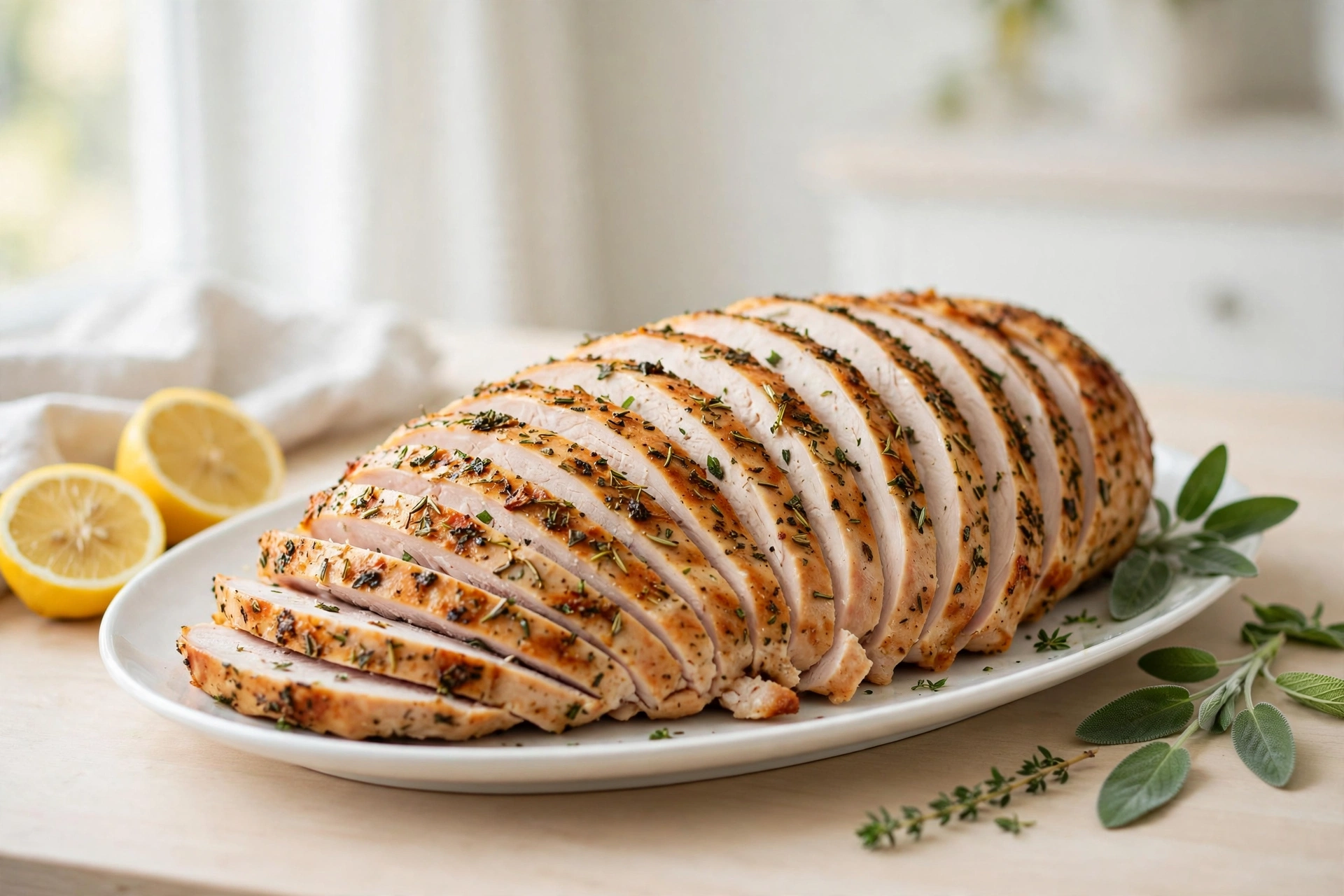
The first flavor is lemon, bright and clean against the mild meat. Garlic powder and onion powder fill in the savory middle, the background warmth you expect from a holiday roast. Sage and thyme bring the familiar Thanksgiving register, the smell that tells the house what day it is.
Smoked paprika is the quiet surprise. Half the rub’s color comes from it, a deep amber that makes the crust look slow roasted. It also adds a faint wood fire note, gentle enough to sit under the herbs without turning the bird into barbecue.
Texture is a study in contrast. The crust is thin, crisp at the edges and flecked with herbs. Underneath, the meat is dense, smooth and moist, slicing into even pieces that hold together on the platter. Served warm, the slices glisten slightly from their own juices.
For the table, a light hand with sides keeps the whole plate in balance. A spoonful of healthy cranberry relish gives the tart, raw crunch that roasted meat loves. The relish is fresh and sharp, the turkey is warm and savory, and the two wake each other up.
One Pan, One Hour, a Calmer Thanksgiving
A whole turkey asks for days of thawing, a huge pan and a morning of arithmetic. This breast asks for a small roasting pan, one hour in the oven and a thermometer. For a table of six to eight, that trade is the difference between hosting and working.
The timing folds neatly around the rest of the meal. The brine happens the day before, in five minutes. The roast itself runs while the sides bake or rest, and the breast rests for fifteen minutes, which is precisely when the gravy gets made and the table gets set.
It also scales without drama. Two breasts side by side roast in about the same time and feed a crowd, still with no carcass to manage. Leftovers slice cleanly the next day, which anyone who has wrestled a picked over bird carcass will appreciate.
Weeknights benefit too. A roasted breast on Sunday becomes salads, soups and sandwiches through Wednesday, all from one hour of oven time. Few single recipes stretch that far with so little attention.
What You Need for the Turkey Breast
- 1 boneless turkey breast, skin on, about 3 pounds (1.4 kg)
- 1 1/2 teaspoons fine sea salt (9 g)
- 1 tablespoon olive oil (14 g)
- 2 teaspoons garlic powder (6 g)
- 1 teaspoon onion powder (3 g)
- 1 teaspoon smoked paprika (2 g)
- 1 teaspoon dried thyme (1 g)
- 1 teaspoon dried rubbed sage (1 g)
- 1/2 teaspoon dried rosemary, finely crushed (1 g)
- 1 teaspoon black pepper (2 g)
- 1 tablespoon lemon zest (6 g)
- 1/2 cup low sodium chicken broth (120 ml)
- 1 small onion, quartered (110 g)
A word on the breast itself. Boneless and skin on is the cut to ask for; the skin is a tool here, not a serving. If only a bone in breast is available, it works the same way and needs about fifteen minutes more in the oven. Frozen breasts thaw in the refrigerator in about twenty four hours for this size.
The FoodSafety.gov safe temperature chart lists 165 F (74 C) as the safe temperature for turkey, and this recipe is built around reaching it gently, after a rest, rather than blasting past it in the oven. A probe thermometer is the one piece of equipment that is not optional.
How to Roast Healthy Turkey Breast
- The day before, pat the turkey breast dry on all sides. Rub the salt (9 g) and lemon zest (6 g) over the whole surface, top and bottom. Set the breast on a rack over a plate, uncovered, and refrigerate for 12 to 24 hours.
- Take the breast out of the refrigerator 30 minutes before roasting. Heat the oven to 375 F (190 C).
- Stir the olive oil (14 g) with the garlic powder (6 g), onion powder (3 g), smoked paprika (2 g), thyme (1 g), sage (1 g), rosemary (1 g) and black pepper (2 g) into a loose paste.
- Rub the paste over the skin and under it where it lifts easily at the edges. Scatter the onion quarters (110 g) in a small roasting pan and set the breast on top, skin side up. Pour the broth (120 ml) around, not over, the breast.
- Roast for 50 to 60 minutes, until a thermometer in the thickest part reads 160 F (71 C). The skin should be deep golden and the juices mostly clear.
- Move the breast to a board and rest it, loosely covered, for 15 minutes. The temperature will climb to 165 F (74 C) as it rests.
- Peel off and discard the skin. Slice the breast across the grain into slices about 1/2 inch (1.25 cm) thick. Spoon a little of the warm pan juice over the slices and serve.
The Thermometer Is the Whole Secret
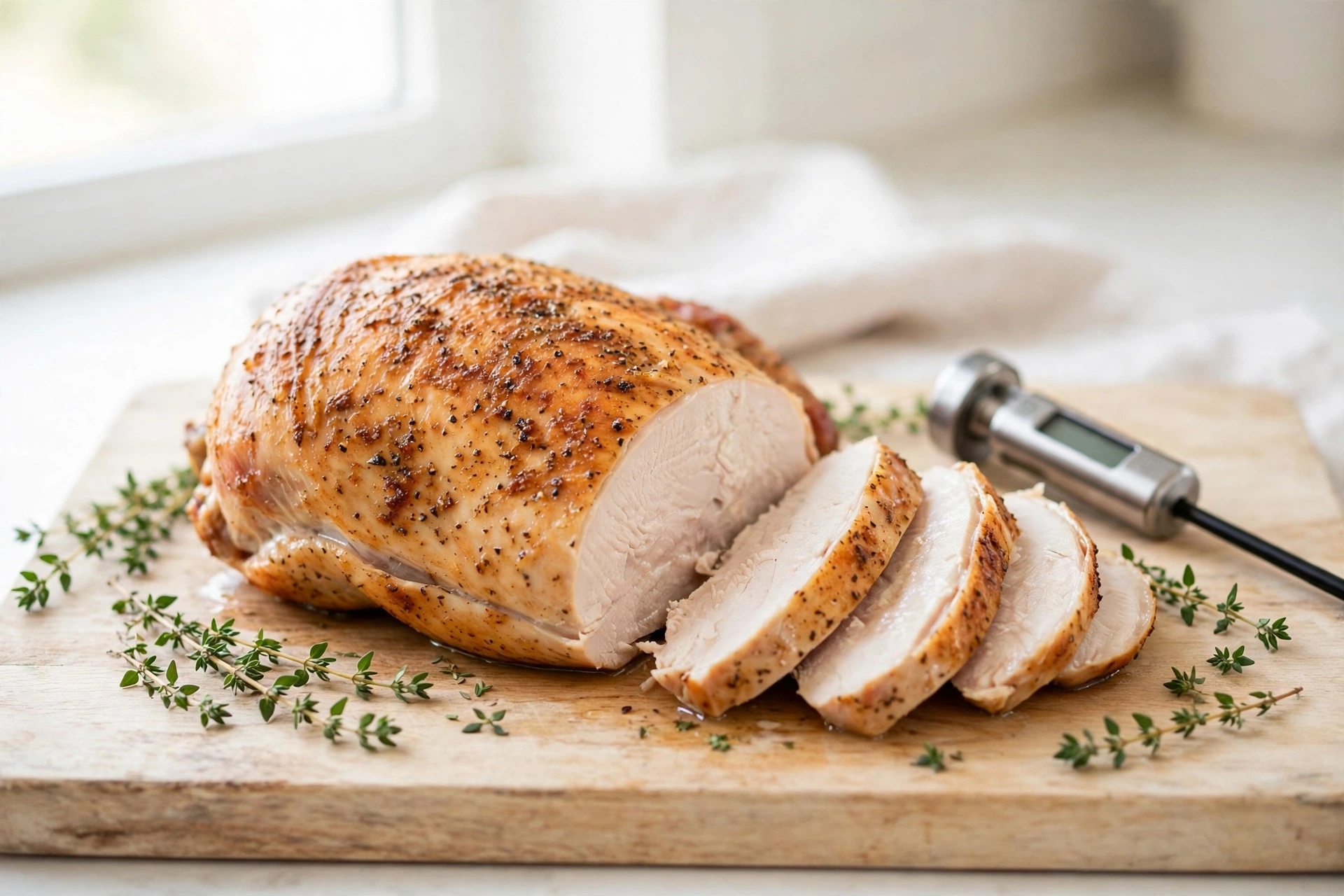
Every dry turkey story ends the same way: the cook followed the clock instead of the temperature. Breasts vary in thickness far more than in weight, and thickness is what decides the cooking time. Two breasts of equal weight can finish twenty minutes apart.
Probe the thickest part, sliding the tip into the center of the meat from the side. Start checking at forty five minutes for a three pound breast. Pulling at 160 F (71 C) and resting to 165 F (74 C) is the single habit that keeps this healthy roasted turkey breast juicy.
Resting is not dead time. The juices that the oven pushed toward the center drift back out through the meat, so a rested slice stays moist on the plate instead of flooding the board. Cut too early and that moisture is lost in one pour.
If the skin browns faster than the meat cooks, lay a loose sheet of foil over the top for the last stretch. The skin is coming off anyway, so its color matters less than the temperature inside, but a gentle finish keeps the outer meat from drying.
Pan Juices, Gravy and What Goes Beside It
The pan gives you a light sauce for free. Strain the juices, let them stand for five minutes, and skim the thin layer of fat that rises. What remains is a clear, savory jus that spoons over the slices like a glaze. It tastes like the roast itself, concentrated.
For guests who expect a proper gravy, the site already has a healthy turkey gravy built for exactly this bird. Making it while the breast rests keeps both options on the table without extra work. A spoonful of each, jus on the meat and gravy for the potatoes, pleases everyone.
On the plate, the breast loves the classic sides in their lighter forms. Healthy sweet potato casserole brings the sweet, spiced contrast, and healthy green bean almondine brings the green crunch. The whole plate stays generous while the numbers stay calm.
Now the honest comparison. A classic butter basted breast served with its skin runs about 280 calories and 12 g of fat for the same four ounce portion. This version, skin removed and no butter anywhere, lands near 180 calories and 4 g of fat. The protein, about 34 g, is identical, because the meat never changed, only the coating did.
Lighter Swaps for Different Tables
The rub is a template, not a rule. For a warmer, autumn register, trade the smoked paprika for sweet paprika and add 1/2 teaspoon of ground cumin (1 g). For a Mediterranean table, swap the sage for oregano (1 g) and serve the slices with lemon wedges and a green salad.
Sodium is the number most worth knowing how to move. The dry brine uses 1 1/2 teaspoons of salt (9 g) for the whole breast, which lands near 430 mg of sodium in a serving once the skin comes off. If your table cooks low sodium, cut the salt to 1 teaspoon (6 g) and lean harder on the lemon zest and herbs; the flavor holds up well.
A skinless breast also works if that is what the shop has. Skip nothing else, but roast it on the onion quarters with the broth in the pan and cover it loosely with foil for the first thirty minutes. Without its skin shield it dries faster, so start checking the temperature ten minutes earlier.
For a smaller household, a half breast of about 1 1/2 pounds (680 g) takes the same rub at half the amounts and roasts in about 35 to 40 minutes. The method, the brine and the rest stay exactly the same.
Leftovers That Stay Juicy
Slice only what the table needs and keep the rest of the breast in one piece. A whole piece reheats far better than slices, because there is less cut surface to dry out. Wrapped tightly, the cooked breast keeps 3 days in the refrigerator.
To reheat, set slices in a small dish with 2 tablespoons of broth (30 ml), cover, and warm at 300 F (150 C) for about 10 minutes. The gentle heat and the steam bring the meat back to tender. The microwave works in short bursts, but the oven method is kinder to the texture.
For freezing, slice the breast, lay the slices in a single layer in a sealed bag with a spoonful of pan juice, and freeze for up to 3 months. Thaw overnight in the refrigerator. The slices come back ready for soup, salads and sandwiches, still tasting like the roast.
Healthy roasted turkey breast earns its place well past one holiday. It is a calm centerpiece on the day, an easy protein all week, and a plate that stays light without ever feeling like one. Make it once and the whole bird may start to feel optional.
FAQ
How long does a frozen 3 pound turkey breast take to thaw?
About 24 hours in the refrigerator for a breast of 3 pounds (1.4 kg). Set it on a rimmed plate on the lowest shelf. If time runs short, a cold water bath with the water changed every 30 minutes thaws it in about 2 hours.
Can I shorten the 12 hour dry brine on this turkey breast?
Yes, 4 hours is the useful minimum and still seasons the surface well. The full 12 to 24 hours gives deeper flavor and a drier skin that browns better. Do not skip the brine entirely, or the lean meat will taste flat and dry faster.
Why remove the skin after roasting instead of before?
The skin shields the lean meat from the oven heat and bastes it as it renders, so the breast stays juicy. Removing it after the rest keeps those juices in the meat while the serving stays skinless, which is where the calorie saving comes from.
My turkey breast reached 165 F in the oven. Is it ruined?
Not ruined, but rest it the full 15 minutes and slice it a little thicker, then spoon warm pan juice over each slice. The dry brine holds extra moisture, so a brined breast at 165 F still eats far better than an unbrined one at the same temperature.
How do I reheat leftover slices without drying them out?
Lay the slices in a covered dish with 2 tablespoons of broth (30 ml) and warm at 300 F (150 C) for about 10 minutes. The covered, gentle heat steams the meat back to tender. Avoid long microwave runs, which toughen the edges first.
When the meal is over, the bird keeps working. Our collection of healthy leftover turkey recipes turns the rest of the breast into lighter plates for the whole weekend, starting with a smoky healthy turkey chili and a crisp healthy Waldorf salad folded with diced turkey.
Print
Healthy Roasted Turkey Breast, Juicy and Golden With a Lemon Herb Crust
A boneless turkey breast dry brined overnight with salt and lemon zest, rubbed with herbs and smoked paprika in a single tablespoon of olive oil, roasted under its skin for juiciness, then sliced skinless. About 180 calories and 34 g of protein per serving, with no butter anywhere.
- Total Time: 13 hours 25 minutes
- Yield: 8 servings of about 4 ounces (113 g) cooked turkey each 1x
Ingredients
1 boneless turkey breast, skin on, about 3 pounds (1.4 kg)
1 1/2 teaspoons fine sea salt (9 g)
1 tablespoon olive oil (14 g)
2 teaspoons garlic powder (6 g)
1 teaspoon onion powder (3 g)
1 teaspoon smoked paprika (2 g)
1 teaspoon dried thyme (1 g)
1 teaspoon dried rubbed sage (1 g)
1/2 teaspoon dried rosemary, finely crushed (1 g)
1 teaspoon black pepper (2 g)
1 tablespoon lemon zest (6 g)
1/2 cup low sodium chicken broth (120 ml)
1 small onion, quartered (110 g)
Instructions
The day before, pat the turkey breast dry on all sides. Rub the salt (9 g) and lemon zest (6 g) over the whole surface, top and bottom. Set the breast on a rack over a plate, uncovered, and refrigerate for 12 to 24 hours.
Take the breast out of the refrigerator 30 minutes before roasting. Heat the oven to 375 F (190 C).
Stir the olive oil (14 g) with the garlic powder (6 g), onion powder (3 g), smoked paprika (2 g), thyme (1 g), sage (1 g), rosemary (1 g) and black pepper (2 g) into a loose paste.
Rub the paste over the skin and under it where it lifts easily at the edges. Scatter the onion quarters (110 g) in a small roasting pan and set the breast on top, skin side up. Pour the broth (120 ml) around, not over, the breast.
Roast for 50 to 60 minutes, until a thermometer in the thickest part reads 160 F (71 C). The skin should be deep golden and the juices mostly clear.
Move the breast to a board and rest it, loosely covered, for 15 minutes. The temperature will climb to 165 F (74 C) as it rests.
Peel off and discard the skin. Slice the breast across the grain into slices about 1/2 inch (1.25 cm) thick. Spoon a little of the warm pan juice over the slices and serve.
- Prep Time: 15 minutes
- Cook Time: 55 minutes
Nutrition
- Calories: 180
- Sugar: 0
- Sodium: 430
- Fat: 4
- Saturated Fat: 1
- Trans Fat: 0
- Carbohydrates: 1
- Fiber: 0
- Protein: 34
- Cholesterol: 85


2 Comments
Comments are closed.