
Healthy Cranberry Orange Scones, Tender and Bright With Greek Yogurt
Dans cet article :
- What Makes These Healthy Cranberry Orange Scones Lighter
- The Zest Trick That Carries the Orange Flavor
- Ingredients for Healthy Cranberry Orange Scones
- Why Greek Yogurt Works So Well in This Dough
- Mixing, Cutting and Chilling the Dough
- Baking Until Golden Without Drying Them Out
- Glaze or No Glaze: Two Ways to Finish
- Fresh Cranberries Versus Dried, Honestly Compared
- Serving a Christmas Morning Tray
- Freezing Scones Before or After Baking
- FAQ
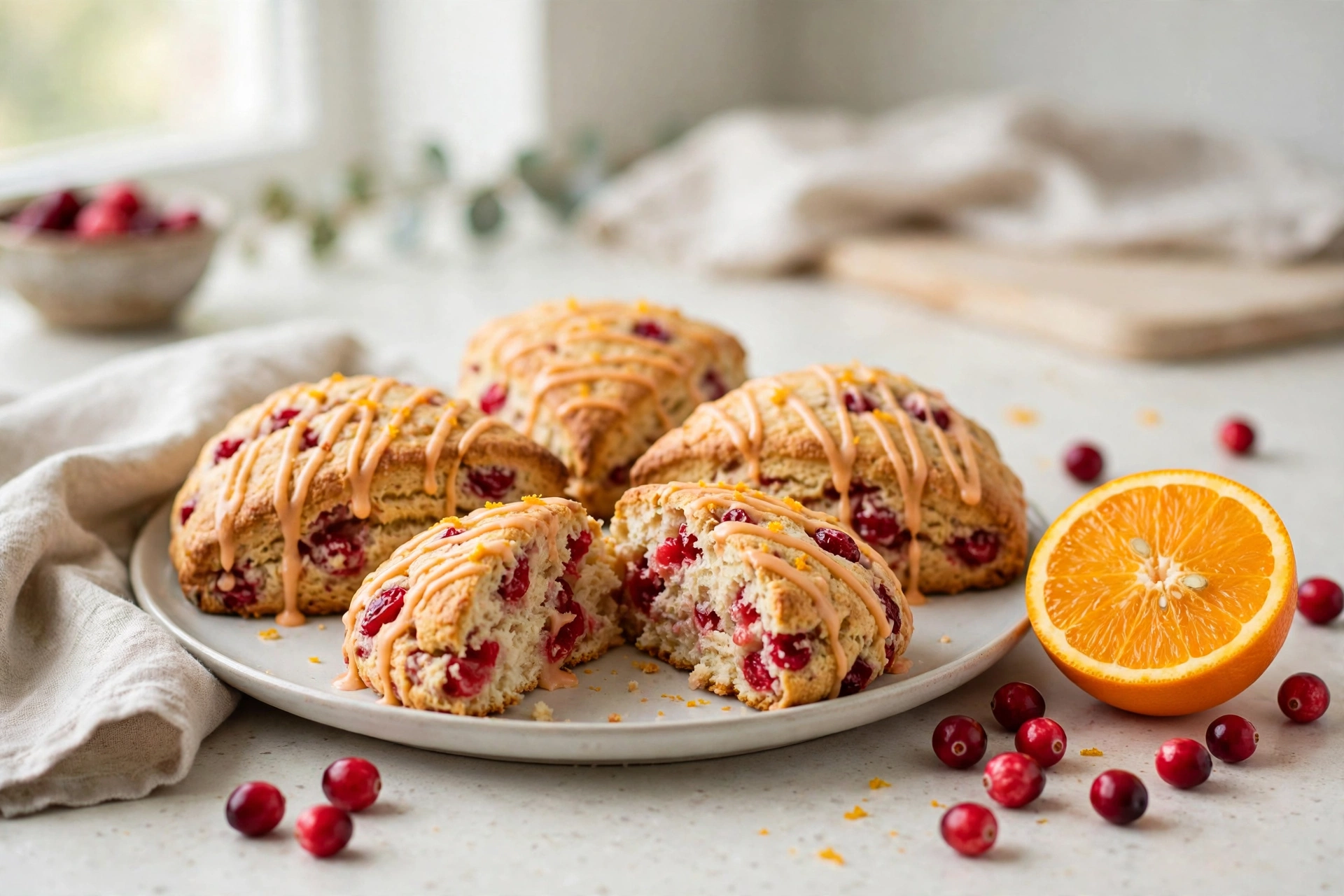
What Makes These Healthy Cranberry Orange Scones Lighter
Healthy Cranberry Orange Scones start from the classic formula and adjust three levers instead of rebuilding the recipe. The butter drops from the usual 8 to 10 tablespoons down to 6 tablespoons (85 g). The crumb stays tender because cold butter still does its layering work, just in a slightly leaner amount. The cream disappears entirely. Plain Greek yogurt brings the same tang and moisture with protein instead of fat, and a little milk loosens the dough to the right softness. The flour splits evenly: 1 cup all-purpose (125 g) for tenderness and 1 cup whole wheat (120 g) for fiber and a gentle nutty depth. Sugar stays modest at 1/4 cup (50 g), because the orange zest does heavy lifting on flavor. Most of the perceived sweetness in a cranberry orange scone comes from aroma, not from the sugar bowl. That is why the next section matters more than any single ingredient.The Zest Trick That Carries the Orange Flavor
Before anything else happens, the orange zest gets rubbed into the sugar with your fingertips for about 30 seconds. The sugar crystals scrape the oils out of the zest, and the mixture turns pale orange and intensely fragrant. Those oils carry through the whole bake instead of sitting in one corner of it. The difference is easy to test. A scone with zest simply stirred in tastes faintly of orange near the top. A scone built on zest rubbed sugar tastes of orange in every bite, which is what lets this recipe keep the sugar at 1/4 cup (50 g) without tasting plain. Use a fresh, firm orange and zest only the colored part. The white pith underneath is bitter, and bitterness reads as harshness against tart cranberries. One large orange gives about 1 tablespoon (6 g) of zest, which is exactly what this dough wants.Ingredients for Healthy Cranberry Orange Scones
Every spoon and cup carries its grams, so the dough can be weighed from start to finish. – 1 cup all-purpose flour (125 g), plus a little more for dusting – 1 cup whole wheat flour (120 g) – 1/4 cup granulated sugar (50 g) – Zest of 1 large orange, about 1 tablespoon (6 g) – 1 tablespoon baking powder (12 g) – 1/2 teaspoon fine sea salt (3 g) – 6 tablespoons cold unsalted butter (85 g), cut into small cubes – 3/4 cup fresh cranberries (75 g), roughly chopped – 1/3 cup plain Greek yogurt, 2 percent (80 g) – 1/4 cup low fat milk (60 ml), plus 1 tablespoon (15 ml) for brushing – 1 large egg – 1 teaspoon vanilla extract (5 ml) – Optional glaze: 1/4 cup powdered sugar (30 g) and 2 teaspoons orange juice (10 ml) The Whole Grains Council notes that white whole wheat flour keeps the fiber of whole grains with a milder flavor, and it works beautifully here if regular whole wheat tastes too hearty to your family.Why Greek Yogurt Works So Well in This Dough
Greek yogurt is strained, which means it brings moisture without the water load of regular yogurt or cream. That thickness matters in a scone: the dough hydrates enough to hold together, yet stays firm enough to pat into a round without sticking to everything it touches. Its gentle acidity helps too. Acid reacts with the baking powder and softens the flour proteins at the same time, so the crumb bakes tender rather than bready. You taste a faint tang that flatters the cranberries, never a yogurt flavor that announces itself. Fat free yogurt works in a pinch, but the 2 percent version gives a crumb that stays moist into the second day. The small amount of fat it carries stands in quietly for the 2 tablespoons of butter this recipe leaves out.Mixing, Cutting and Chilling the Dough
Cold ingredients and a short rest do more for height than any extra leavening. Work steadily, keep the butter cold, and let the fridge finish the job. 1. Put the sugar in a large bowl and add the orange zest. Rub them together with your fingertips for about 30 seconds, until the sugar looks pale orange and smells strongly of orange. 2. Whisk in both flours, the baking powder and the salt until evenly combined. 3. Add the cold butter cubes. Cut them in with a pastry cutter or your fingertips until the mixture looks like coarse crumbs with some pea sized pieces of butter still visible. 4. Toss the chopped cranberries with 1 teaspoon of flour taken from the bowl, then stir them through the crumbs. The light flour coat keeps their juice from streaking the dough. 5. In a separate bowl, whisk the Greek yogurt, milk, egg and vanilla until smooth. 6. Pour the wet mixture over the dry and stir with a fork just until a soft, shaggy dough forms. A few dry streaks are fine; overmixing makes scones tough. 7. Tip the dough onto a floured surface and pat it into a round about 8 inches (20 cm) across and 1 inch (2.5 cm) thick. Avoid a rolling pin, which compresses the layers. 8. Cut the round into 8 wedges with a sharp knife, pressing straight down rather than sawing. 9. Set the wedges on a parchment lined baking sheet with space between them, and chill the whole sheet in the fridge for 15 minutes. This rest firms the butter and is counted in the total time. 10. Brush the tops lightly with the remaining 1 tablespoon (15 ml) of milk while the oven heats.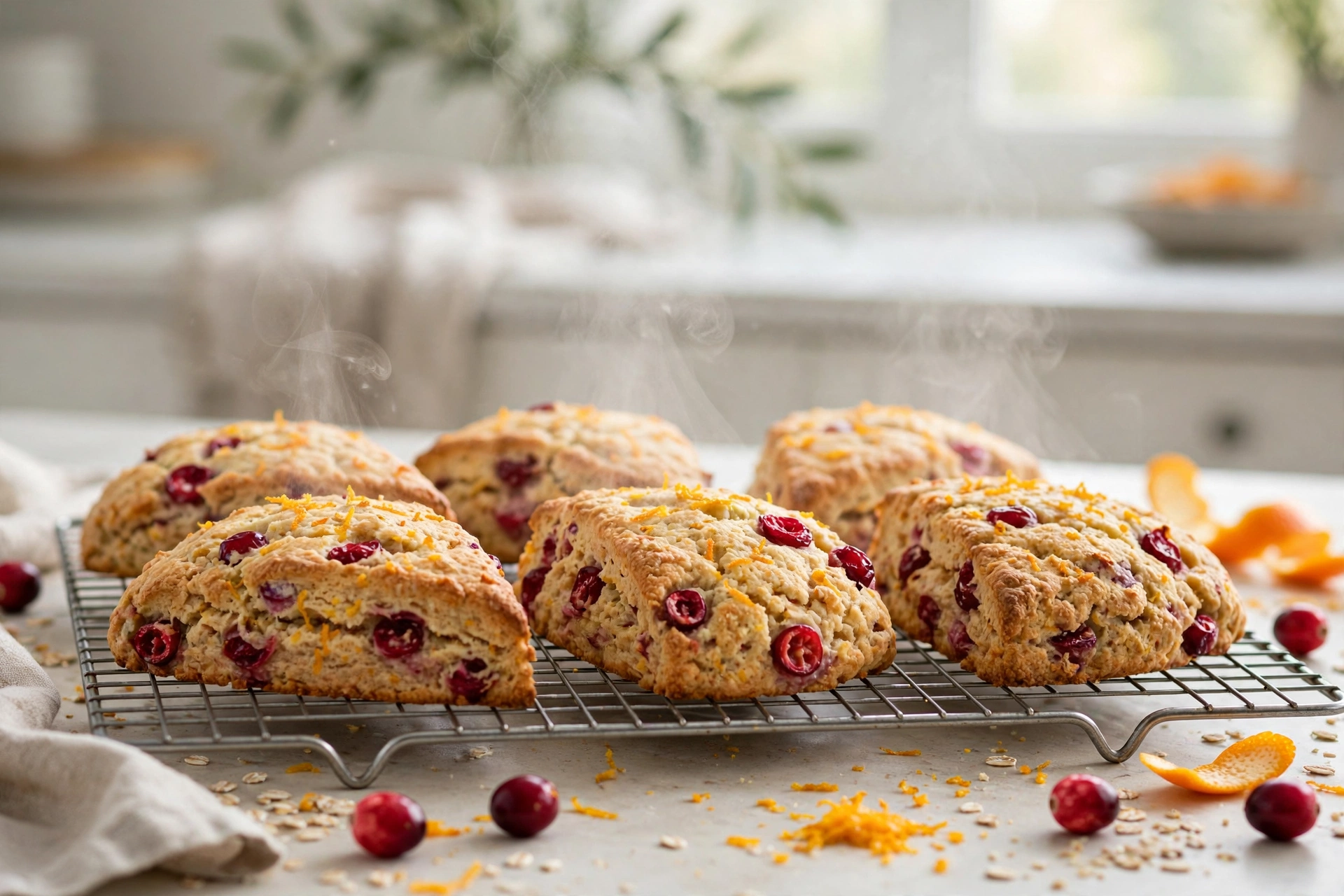
Baking Until Golden Without Drying Them Out
Heat the oven to 400°F (200°C) while the wedges chill, so the cold dough meets a fully hot oven. That blast of heat melts the butter into steam quickly, and the steam is what lifts the wedges and opens the crumb. A slow oven gives squat, dense scones. Bake 18 to 20 minutes, until the tops are golden at the edges and a wedge feels light for its size when lifted. The cranberry spots will look juicy and slightly jammy, which is right. If the bottoms brown faster than the tops, move the sheet to a higher rack for the last 5 minutes. Let the scones rest on the sheet for 5 minutes before moving them. They are fragile while the butter is still liquid inside, and a short rest lets the crumb set. Serve them warm if you can; the orange aroma is strongest in the first hour. A bench scraper is the quiet hero of this recipe. It lifts the sticky dough off the counter in one motion, cuts the wedges cleanly without dragging, and helps move them to the sheet without stretching. A long thin knife does the same work if the scraper lives in someone else’s kitchen.Glaze or No Glaze: Two Ways to Finish
Unglazed, these scones are a breakfast pastry, ready for butter, jam or a swipe of the healthy cranberry sauce from the same kitchen. The nutritional count in the recipe card is for the unglazed wedge, so weekday baking stays honest. Glazed, they turn into a gift tray item. Whisk 1/4 cup powdered sugar (30 g) with 2 teaspoons orange juice (10 ml) and drizzle thin lines over fully cooled scones. The glaze adds roughly 15 calories per wedge and a bakery shine that photographs beautifully. A middle path also works: brush the warm tops with a teaspoon of honey thinned with orange juice. It gives gloss without a sugar crust, and it keeps the crumb the main event.Fresh Cranberries Versus Dried, Honestly Compared
Fresh cranberries give sharp, juicy pops that balance the sweet dough, and they are easy to find from October through the holidays. Their one flaw is juice: chopped fresh berries bleed a little into the crumb, which is why the flour toss in the method matters. Dried cranberries behave better and streak less, but most are sweetened, which quietly adds back the sugar this recipe saves. If you use them, choose 1/2 cup (60 g), soak them 10 minutes in warm orange juice, drain well, and cut the granulated sugar in the dough to 3 tablespoons (38 g). Frozen fresh cranberries split the difference. Chop them straight from frozen, toss them in flour, and add them without thawing. The dough stays colder, which your butter will thank you for. One more option hides in the zested orange itself. A tablespoon of finely chopped orange flesh, patted dry, can join the berries for a marmalade effect inside the crumb. Keep the amount small: extra juice is the enemy of a clean rise, and the zest already carries most of the orange perfume this recipe needs.Serving a Christmas Morning Tray
A warm tray of these scones anchors a holiday breakfast without cooking anyone into exhaustion. Pair them with healthy eggnog for the traditionalists and healthy peppermint mocha for the coffee drinkers, and the table feels complete. Set out a small bowl of healthy cranberry orange bread slices beside them for anyone who wants seconds in another form, plus soft butter and orange marmalade. The scones themselves carry the same flavors, so the whole tray tastes coordinated rather than random. For a gift box, wrap cooled glazed wedges in parchment and tie them in fours. They travel better than frosted cookies and keep their shape in a tin for two days. A hand written card with the baking time and temperature turns the box into a small recipe gift as well.Freezing Scones Before or After Baking
Unbaked wedges freeze beautifully. Freeze them on the sheet until solid, move them to a bag, and keep them up to a month. Bake from frozen at the same temperature, adding 4 to 5 minutes, and the morning smells like you started at dawn. Baked scones keep 2 days in an airtight container at room temperature and refresh in a 350°F (175°C) oven for 6 minutes. The fridge dries them out faster than the counter does, so only refrigerate in very warm weather. Healthy Cranberry Orange Scones hold their own next to richer holiday baking, including a plate of healthy Christmas sugar cookies. Bright orange, tart berries and a crumb that stays tender: this is the lighter bake that never tastes like one.FAQ
Why did my cranberry orange scones spread flat instead of rising?
The butter was too warm or the chill was skipped. The wedges need their 15 minutes in the fridge so the butter firms up; warm butter melts before the dough sets, and the scones slump sideways instead of lifting.
Can I make these scones with all white flour instead of the whole wheat split?
Yes, use 2 cups all-purpose flour (250 g) in total. The scones come out paler and a little softer, with about 1 gram less fiber per wedge, and every other step stays the same.
My fresh cranberries burst and stained the dough pink. Is that a problem?
It is only a color question, not a flavor one. Chopping the berries more coarsely and tossing them in 1 teaspoon of flour before mixing keeps most of the juice inside the berries instead of in the crumb.
Can I replace the Greek yogurt with sour cream or buttermilk?
Sour cream works cup for cup (80 g) and gives a richer scone closer to the classic. Buttermilk is thinner, so use 1/4 cup (60 ml) and leave out the milk, or the dough will be too wet to pat into a round.
How far ahead can I shape the wedges for Christmas morning?
Shape and cut them the night before, cover the sheet and refrigerate up to 12 hours. Bake them straight from the fridge in the morning; the long cold rest actually improves the rise.

Healthy Cranberry Orange Scones
A classic cranberry orange scone made lighter without tasting like it: Greek yogurt replaces the cream, the flour is half whole wheat, the butter drops to 6 tablespoons, and the orange zest is rubbed into the sugar so a modest amount of sugar still tastes bright. The wedges chill 15 minutes before baking for a tall, tender crumb. About 230 calories a scone, unglazed.
- Total Time: 55 minutes
- Yield: 8 scones 1x
Ingredients
1 cup all-purpose flour (125 g), plus a little more for dusting
1 cup whole wheat flour (120 g)
1/4 cup granulated sugar (50 g)
Zest of 1 large orange, about 1 tablespoon (6 g)
1 tablespoon baking powder (12 g)
1/2 teaspoon fine sea salt (3 g)
6 tablespoons cold unsalted butter (85 g), cut into small cubes
3/4 cup fresh cranberries (75 g), roughly chopped
1/3 cup plain Greek yogurt, 2 percent (80 g)
1/4 cup low fat milk (60 ml), plus 1 tablespoon (15 ml) for brushing
1 large egg
1 teaspoon vanilla extract (5 ml)
Optional glaze: 1/4 cup powdered sugar (30 g) and 2 teaspoons orange juice (10 ml)
Instructions
Put the sugar in a large bowl, add the orange zest and rub them together with your fingertips for about 30 seconds, until the sugar looks pale orange and smells strongly of orange.
Whisk in both flours, the baking powder and the salt until evenly combined.
Cut in the cold butter with a pastry cutter or your fingertips until the mixture looks like coarse crumbs with some pea sized pieces still visible.
Toss the chopped cranberries with 1 teaspoon of flour taken from the bowl, then stir them through the crumbs.
In a separate bowl, whisk the Greek yogurt, milk, egg and vanilla until smooth.
Pour the wet mixture over the dry and stir with a fork just until a soft, shaggy dough forms. A few dry streaks are fine.
Tip the dough onto a floured surface and pat it into a round about 8 inches (20 cm) across and 1 inch (2.5 cm) thick.
Cut the round into 8 wedges with a sharp knife, pressing straight down rather than sawing.
Set the wedges on a parchment lined baking sheet and chill in the fridge for 15 minutes while the oven heats to 400 degrees F (200 degrees C).
Brush the tops lightly with the remaining 1 tablespoon (15 ml) of milk and bake 18 to 20 minutes, until golden at the edges. Rest 5 minutes on the sheet before serving.
Notes
The 15 minute chill is counted in the total time and is what keeps the wedges tall: cold butter meets a fully hot oven and lifts the dough before it can melt sideways. Shaped wedges keep overnight in the fridge and bake straight from cold in the morning. Unbaked wedges freeze up to 1 month; add 4 to 5 minutes to the baking time from frozen. The optional glaze adds about 15 calories per scone.
- Prep Time: 20 minutes
- Cook Time: 20 minutes
Nutrition
- Serving Size: 1 scone
- Calories: 230
- Sugar: 7
- Sodium: 290
- Fat: 10
- Saturated Fat: 6
- Unsaturated Fat: 4
- Trans Fat: 0
- Carbohydrates: 31
- Fiber: 2
- Protein: 6
- Cholesterol: 47

One Comment
Comments are closed.