Healthy Gingerbread Cookies
In this article:
Why You Will Love These Healthy Gingerbread Cookies
Healthy gingerbread cookies earn their spot on the Christmas tray because they deliver everything you love about the classic, deep molasses warmth, bold spice, and chewy centers. Whole grain flour and coconut sugar keep them hearty, with far less sugar and no butter at all.
The contrast is what hooks you, crisp edges giving way to a soft, almost fudgy middle that tastes like December in a single bite. Molasses brings an iron rich depth that white sugar never could, so each cookie feels like a treat and fuels like real food.
The method is the quiet hero here. Melting the coconut oil and warming it with the molasses blooms the spices before they ever meet the flour, which is why the flavor tastes steeped rather than dusted on.
The spice ratio took a dozen test batches to nail, a full tablespoon of ginger against gentler cinnamon and clove. Too much clove turns medicinal, too little ginger tastes like a spice cake in disguise. This balance keeps every cookie bold but never harsh, the kind of flavor that deepens as the tin sits.
A full hour of chilling firms the dough so your gingerbread people keep their arms and legs in the oven. That single pause is the difference between sharp cutout shapes and sad blobs, and it asks nothing of you but patience.
Healthy gingerbread cookies smell like December the moment the oven door opens, all dark molasses, ginger, and clove. This is the Christmas cookie that converts skeptics, the one people reach for before the frosted sugar cookies.
They bake up soft and chewy with burnished edges, sturdy enough to hang on the tree yet tender enough to eat warm. Kids love cutting the shapes, adults love that one cookie does not demand a second to feel satisfied. They are the kind of treat you share proudly.
Best of all, the dough is endlessly forgiving and the ingredient list reads like a pantry, not a chemistry set. If your December needs a cookie that looks festive, tastes nostalgic, and still fits the way you eat now, this is it.
Taste and Texture Profile
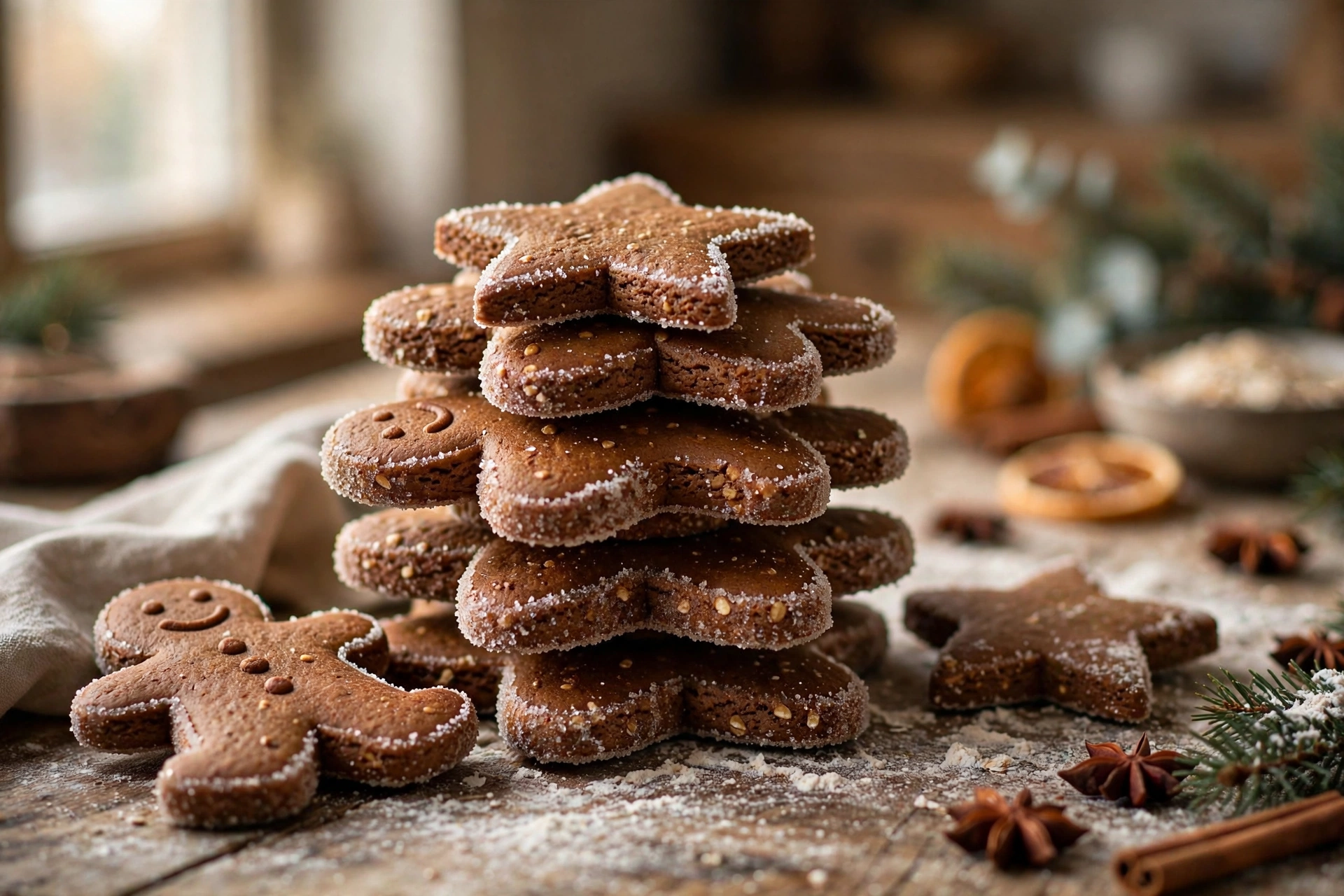
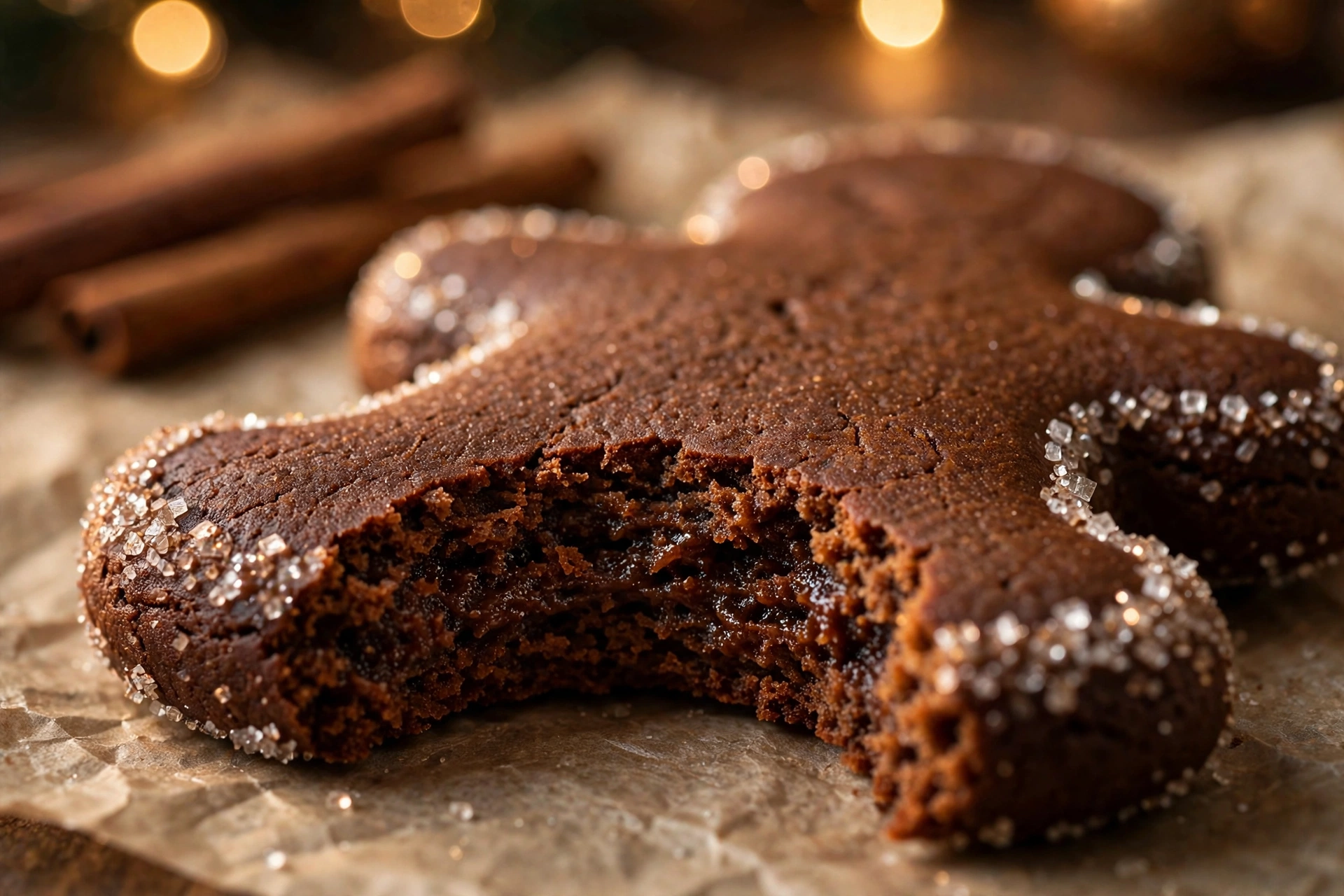
The first bite lands in layers. You get the snap of the sugared edge, then the chew of the center, then the slow bloom of ginger heat that warms the back of your throat.
Molasses is the soul of the flavor, dark, almost smoky, with notes of toffee and rye bread. Coconut sugar keeps the sweetness round rather than sharp, so the spices can speak. Ginger leads, cinnamon follows, and clove and nutmeg hum underneath like a choir.
The crumb stays tender for days because molasses is hygroscopic, a fancy way of saying it holds onto moisture. White whole wheat flour adds a nutty backbone without tasting wheaty, and the melted coconut oil coats every particle for a short, rich bite. Roll them thick for bakery style chew, or thin for a crisp snapper that dunks beautifully.
Not all molasses behaves the same, so reach for unsulphured, never blackstrap. Unsulphured molasses tastes round and sweet with toffee notes, while blackstrap brings a bitter, almost burnt edge that bullies the spices. That single grocery choice decides whether your cookies taste like Christmas or like a health food experiment.
Once you taste how deeply spiced these cookies can be without a stick of butter, the classic recipe starts to feel like overkill. The aroma does half the entertaining for you, guests follow their noses to the kitchen before the timer dings.
Visually, they are pure Christmas, deep mahogany with pale sugared edges, especially handsome against a snowy dusting of coconut flour. A simple dark chocolate drizzle or a yogurt glaze turns them gift worthy. They photograph like a magazine and disappear like popcorn.
Quick and Easy Preparation
From measuring cup to cooling rack, the hands on work takes about twenty minutes. One bowl, one whisk, one spatula, and you are done with dishes before the oven finishes preheating.
The only waiting is the chill, a full hour that you can stretch to overnight if December gets busy. Chilled dough rolls cleanly, cuts sharply, and bakes without spreading into blobs. Use that hour to wrap gifts or deck the halls, the dough will not mind.
Baking is fast, eight to ten minutes a tray, and the cookies firm up as they cool. Pull them when the edges look set but the centers still seem soft, carryover heat finishes the job.
Christmas Eve bakers can mix the dough in the morning and bake after lunch. The whole batch is cooling by mid afternoon, right when the house starts smelling like pine and anticipation. Few holiday tasks deliver this much atmosphere for twenty minutes of actual work.
This is a perfect kid project, little hands cut shapes while you manage the oven. It also scales beautifully, double the batch and your cookie tins fill fast for neighbors and teachers. For the savory side of your holiday table, our maple roasted Brussels sprouts with cranberries roast while the cookies cool.
Lighter and Diet Adaptations
These cookies skip the butter and refined sugar without tasting like a compromise. Coconut oil replaces butter one for one, coconut sugar replaces brown sugar, and molasses does the heavy lifting for flavor. Per the USDA FoodData Central database, molasses even contributes iron and calcium in small amounts.
The recipe is naturally dairy free and easily made vegan with a flax egg. For gluten free bakers, a one to one gluten free flour blend swaps in cleanly, though the cookies bake up slightly more delicate.
Each cookie lands around 110 calories with real staying power from whole grains and healthy fats. Healthline notes that ginger has been studied for its warming, soothing properties, which makes these taste like self care. If you are building a whole lighter holiday menu, our healthy green bean casserole proves classics can slim down without losing their soul.
Ingredients
- 2 1/4 cups white whole wheat flour, plus more for rolling
- 1 tbsp ground ginger
- 1 1/2 tsp ground cinnamon
- 1/2 tsp ground cloves
- 1/4 tsp ground nutmeg
- 1 tsp baking soda
- 1/2 tsp fine sea salt
- 1/2 cup coconut oil, melted and slightly cooled
- 1/2 cup unsulphured molasses
- 1/2 cup coconut sugar
- 1 large egg, at room temperature
- 1 tsp pure vanilla extract
- 2 tbsp coarse turbinado or coconut sugar, for sprinkling (optional)
Step by Step Instructions
- In a large bowl, whisk together the flour, ground ginger, cinnamon, cloves, nutmeg, baking soda, and salt until evenly blended. Whisking well now means no pockets of bitter baking soda later. Set the bowl aside while you mix the wet ingredients.
- In a second large bowl, whisk the melted coconut oil, molasses, and coconut sugar until smooth and glossy. Add the egg and vanilla and whisk again until the mixture looks like dark caramel. The warmth of the oil helps the sugar dissolve, which gives the cookies their chewy texture.
- Pour the dry ingredients into the wet ingredients and stir with a sturdy spatula until a soft, dark dough forms. Stop as soon as no flour streaks remain, since overmixing develops toughness even in whole grain dough. The dough will feel soft and slightly sticky, which is exactly right.
- Divide the dough in half and flatten each half into a thick disc. Wrap each disc tightly in plastic wrap and refrigerate for at least 1 hour, or up to 24 hours. Chilling firms the coconut oil so the dough rolls cleanly and the cut shapes hold their edges in the oven.
- When ready to bake, position racks in the upper and lower thirds of the oven and preheat to 350°F (175°C). Line two large baking sheets with parchment paper. A fully preheated oven sets the cookie edges fast, which prevents spreading.
- Working with one disc at a time, roll the dough on a lightly floured surface to a full 1/4 inch thickness. Dip your cookie cutter in flour between cuts, press straight down without twisting, and transfer the shapes to the prepared sheets about 1 inch apart. Gather the scraps, re roll once, and cut again.
- Sprinkle the cookies with the coarse turbinado sugar if you like a sparkly finish. Bake for 8 to 10 minutes, until the edges look set and the centers still seem slightly soft. The cookies will firm up as they cool, so resist the urge to wait for browning.
- Cool the cookies on the baking sheets for 5 minutes, then transfer to a wire rack to cool completely. They are delicious warm, but they slice cleanly for decorating only once fully cool. Store as directed below, or decorate right away.
Pro Tips for Perfect Healthy Gingerbread Cookies
Roll to a full quarter inch for soft, chewy centers, or go an eighth inch for crisp dunkers. Thicker cookies need the full ten minutes, thinner ones are done at eight. The visual cue never lies, set edges with centers that still look slightly underdone.
Dip your cookie cutter in flour between every cut for razor sharp edges. Roll the dough between two sheets of parchment to skip the floury mess entirely, then peel the top sheet and cut. Slide the whole parchment onto the baking sheet so delicate shapes never stretch.
The number one gingerbread tragedy is overbaking. These cookies continue cooking on the hot pan, so pulling them early is the whole secret to chewiness.
For picture perfect cutouts, roll the dough slightly thicker than you think, a generous quarter inch. Thin cookies look elegant but bake unevenly at the edges, while thick ones stay tender for days. If you want both styles from one batch, bake the thin and thick shapes on separate trays.
Decorate with icing only once the cookies are stone cold, warm cookies melt every design into a blur. Pipe simple dots and squiggles rather than intricate scenes, restraint photographs better. Let the icing set two hours before stacking, or store the layers with parchment between them.
Once you have baked these at home, the store bought kind tastes flat and one dimensional. Your kitchen will smell like a Christmas market, and that is worth the hour of chilling alone.
Easy Swaps and Tasty Variations
No white whole wheat flour? Regular whole wheat works but bakes a touch denser, while all purpose flour makes them paler and milder. A fifty fifty mix of oat flour and almond flour goes gluten free and adds lovely richness. Whatever you choose, measure by spooning flour into the cup, packed flour makes tough cookies.
Out of molasses? Dark honey or sorghum syrup steps in, though you will lose some of that dark depth. For extra fire, add a quarter teaspoon of black pepper or cayenne, an old fashioned trick that makes the ginger sing. Orange zest folded into the dough gives a bright, festive lift that loves the clove.
Skip the powdered sugar royal icing and drizzle with melted dark chocolate instead, it hardens into a snappy shell. Or whisk plain Greek yogurt with maple syrup for a tangy white glaze that pipes beautifully. For a full holiday dessert spread, pair these with our spiced pumpkin baked oatmeal, Christmas morning will taste like a bakery.
Kids who find ginger too fiery will prefer half the ginger and an extra quarter teaspoon of cinnamon. The cookies still read as gingerbread, just gentler, and little ones actually finish them. Save the full strength batch for the adults who want that slow throat warmth.
How to Store and Make Ahead
Baked cookies keep five days in an airtight container at room temperature, staying soft thanks to the molasses. Tuck a slice of fresh bread in the tin, an old baker’s trick that keeps them chewy.
The dough is a make ahead dream, it rests beautifully in the refrigerator for up to three days. You can also freeze the discs for three months, then thaw overnight in the fridge before rolling.
Baked undecorated cookies freeze just as well, layered between parchment for up to two months. The same freeze ahead logic works for our quinoa stuffed acorn squash, a lifesaver when vegetarian guests are coming.
For gifting, stack cooled cookies in a tin with parchment between layers and tie with twine. They travel well and taste even better on day two, when the spices have fully settled in.
Conclusion
Healthy gingerbread cookies prove that the most nostalgic Christmas flavors need no apology and no ingredient list full of compromises. They are soft, boldly spiced, and beautiful enough for the cookie exchange.
They belong in the permanent rotation, not just December. The method works year round, and a batch of round spice cookies in October tastes like a preview of the holidays.
Bake a batch this weekend and watch them vanish before the tree is even trimmed. Some recipes feed people, this one makes the season. Your future self will thank you when the tins are already full.
FAQ
Why did my gingerbread cookies spread and lose their shape?
Warm dough is almost always the culprit, so chill it a full hour and work quickly in a warm kitchen. Roll the dough to a full quarter inch, since a thin sheet spreads faster, and make sure your baking sheets are cool between batches. If your kitchen runs hot, chill the cut shapes on the tray for ten minutes before baking.
Can I freeze gingerbread cookie dough ahead of Christmas?
Yes, and it freezes beautifully for up to three months. Flatten the dough into discs, wrap tightly in plastic, then seal in a freezer bag to prevent freezer burn. Thaw overnight in the refrigerator before rolling, and the dough will handle exactly like fresh.
How do I keep healthy gingerbread cookies soft for days?
Slightly underbake them, pulling the tray when the centers still look soft, since carryover heat finishes the job without drying. Store in an airtight container with a slice of fresh bread, which shares its moisture with the cookies. The molasses helps too, it is naturally hygroscopic and keeps the crumb tender.
Can I make these cookies without molasses?
You can substitute dark honey or sorghum syrup cup for cup, but the flavor will be milder and less complex. Avoid blackstrap molasses, since its bitter edge overwhelms the spices. For true gingerbread character, unsulphured molasses is worth the grocery trip.
How can I decorate gingerbread cookies without powdered sugar icing?
Melted dark chocolate makes a gorgeous drizzle that hardens with a snap and adds antioxidants. For a white glaze, whisk plain Greek yogurt with a spoonful of maple syrup until pipeable, then let it set in the refrigerator. Both options taste better than royal icing and keep the cookies firmly in healthy territory.

Healthy Gingerbread Cookies
Soft, chewy healthy gingerbread cookies made with whole-food swaps: coconut sugar, applesauce, and molasses. Boldly spiced, kid-approved, and perfect for Christmas.
- Total Time: 1 hour 35 minutes
- Yield: 24 cookies 1x
Ingredients
- 2 1/4 cups all-purpose flour (or half whole wheat pastry flour)
- 2 tsp ground ginger
- 1 tsp ground cinnamon
- 1/4 tsp ground cloves
- 1/4 tsp ground nutmeg
- 1 tsp baking soda
- 1/2 tsp fine sea salt
- 3/4 cup unsalted butter, softened
- 1/2 cup coconut sugar (or packed brown sugar)
- 1/4 cup unsweetened applesauce
- 1/3 cup unsulphured molasses
- 1 tsp pure vanilla extract
- 1/4 cup coarse turbinado sugar, for rolling
Instructions
- Whisk the flour, ginger, cinnamon, cloves, nutmeg, baking soda, and salt together in a medium bowl until evenly combined.
- In a large bowl, beat the softened butter and coconut sugar with a hand mixer on medium speed for 2 to 3 minutes, until light and fluffy.
- Beat in the applesauce, molasses, and vanilla extract until smooth, scraping down the sides of the bowl as needed.
- Add the dry ingredients to the wet mixture and stir on low speed just until a soft dough forms. Do not overmix.
- Cover the dough and refrigerate for at least 1 hour, or up to 24 hours, until firm enough to scoop.
- Preheat the oven to 350°F (175°C) and line two baking sheets with parchment paper. Place the turbinado sugar in a shallow bowl.
- Scoop tablespoon-sized balls of dough, roll each in the turbinado sugar to coat, and arrange 2 inches apart on the prepared sheets.
- Bake for 10 to 12 minutes, until the edges are set and the centers look just slightly underdone. They will firm up as they cool.
- Cool on the baking sheet for 5 minutes, then transfer to a wire rack to cool completely. Store in an airtight container for up to 5 days.
- Prep Time: 20 minutes
- Cook Time: 12 minutes