Healthy Fruitcake, Honest Fruit, Less Sugar and About 260 Calories a Slice
Healthy Fruitcake, Honest Fruit, Less Sugar and About 260 Calories a Slice
In this article:
- The Juice and Tea Soak: Plump Fruit With No Spirits and No Syrup
- The Fruitcake Math: 260 Against 390
- Choosing the Fruit: Dried, Honest and Uncandied
- Ingredients for Healthy Fruitcake
- Simmer, Stir, Bake Low: the Loaf in Five Moves
- Keeping It Honestly: Two Good Weeks, Not a Year
- Wrapped and Given: a Small December Baking Calendar
- Dry, Sinking or Heavy: the Three Fruitcake Fixes
- With Coffee, With Pecans, or Nut Free
- The Slice That Earns Its Place Back
- Questions Cooks Ask About Healthy Fruitcake
Healthy fruitcake is an attempt to save a good idea from its own reputation. Under the jokes sits a genuinely lovely thing: a spiced, fruit dense loaf meant to be sliced thin, shared slowly and kept through the darkest weeks of the year.
The classic construction is what sank it. Fruit candied in syrup, a cup and a half of sugar, and weeks of feeding with spirits push a single slice toward 390 calories and 45 grams of sugar, most of it added rather than grown.
This version keeps the structure and changes the sources. Real dried fruit, simmered plump in orange juice and hot tea. A third of a cup of brown sugar instead of a small mountain. No candied peel, no spirits, nothing dyed.
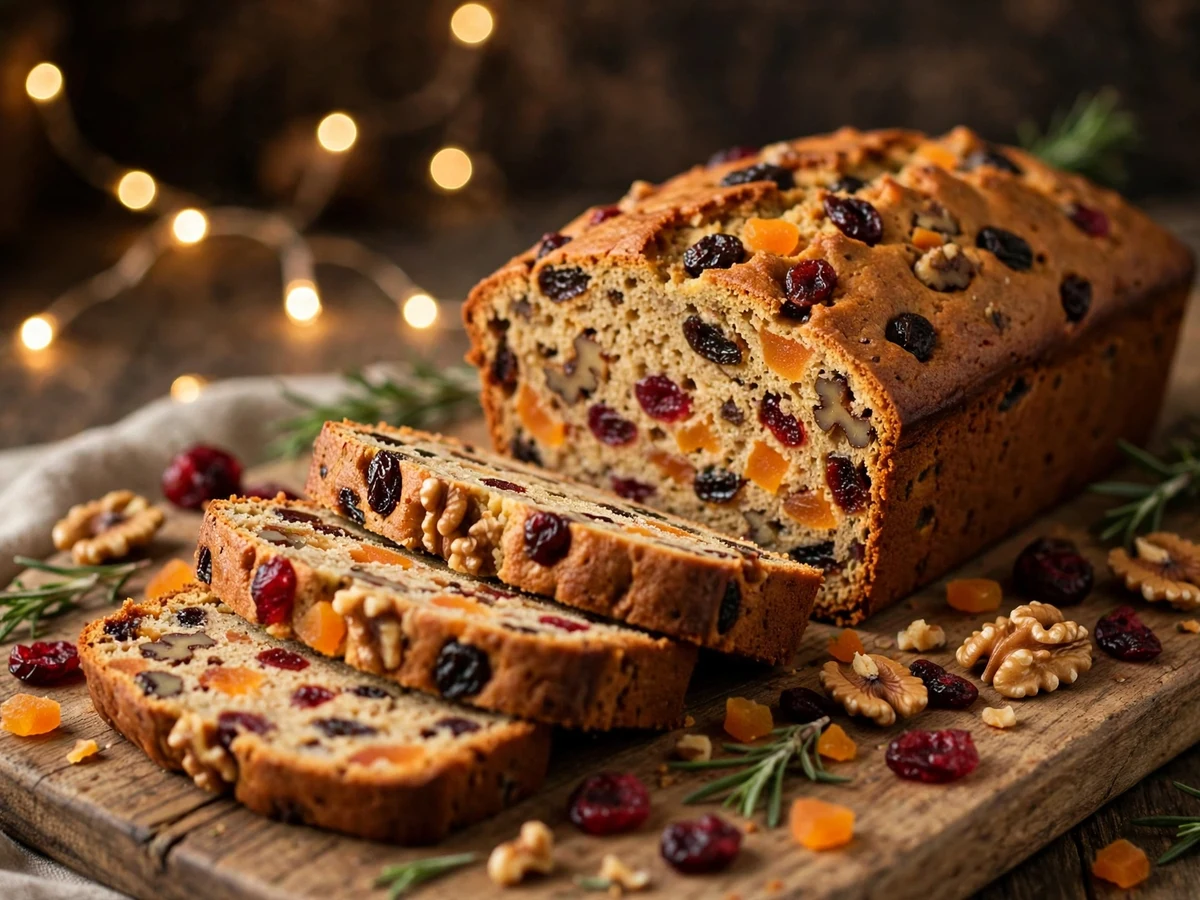
The result is a slice at about 260 calories and 25 grams of sugar, and most of that sugar arrives inside the fruit itself, where it comes with fiber, color and actual flavor. The crumb is moist, the spice is warm, the slices cut clean.
It will not keep for a year, and this article will not pretend otherwise. It keeps beautifully for two weeks in the refrigerator, which is exactly the window a Christmas loaf actually needs.
The Juice and Tea Soak: Plump Fruit With No Spirits and No Syrup
Healthy fruitcake begins the night, or at least the hour, before the batter exists. The dried fruit simmers for five minutes in orange juice and strong black tea, then steeps until every raisin is swollen and the liquid is nearly gone.
The classic soak exists to plump the fruit and preserve the loaf, and the spirits in it were always doing two jobs. The juice and tea do the first job completely: heat opens the fruit, the liquid goes in, and the crumb around each piece stays moist for days.
Tea is the quiet stroke here. Its tannins give the loaf the faint, grown up bitterness that a spirit soak used to provide, so the sweetness reads layered instead of flat. Brew it strong, stronger than you would drink, because the batter will dilute it.
Orange does double duty too. The juice brings acidity that lifts the dried fruit’s concentrated sugar, and a tablespoon of zest stirred in at the end restores the bright top note that long baking always takes away.
Drain nothing. Whatever liquid the fruit has not absorbed goes into the batter, carrying dissolved fruit sugars and spice with it. That is moisture the loaf keeps, not sweetness you have to add back from a measuring cup.
What the soak cannot do is preserve. Without spirits and a heavy sugar load, this loaf lives by the refrigerator’s rules, and the keeping section below gives them plainly. Plump, yes. Immortal, no, and it does not need to be.
The Fruitcake Math: 260 Against 390
The classic fruitcake earns its numbers honestly enough: candied fruit is roughly half sugar by weight, the batter adds a cup and a half more, and the finished loaf is so dense that a modest slice still weighs like a brick.
This version attacks the total at three points. The fruit is dried, not candied, so its sugar arrives with fiber and without a syrup coat. The added sugar is a third of a cup of brown sugar across twelve slices. The butter is three tablespoons, there for flavor and crumb, not for structure.
The flour splits its allegiance. Half all purpose for tenderness, half whole wheat for the fiber and the faint nuttiness that stands up to warm spice, a trade the listings at USDA FoodData Central support without any cost to how the loaf slices.
What the numbers buy is a second slice that makes sense. At about 260 calories, this loaf can appear beside our healthy almond snowball cookies on the same dessert plate without the plate becoming the whole day’s story. The classic, at 390, allows no such company.
Choosing the Fruit: Dried, Honest and Uncandied
Read the fruit list like a label detective. Raisins, cranberries, apricots and cherries should be fruit, with at most a light touch of oil to keep them free flowing. If the first ingredient after the fruit is syrup or sugar, it is candy wearing a fruit costume.
Golden raisins bring the base sweetness and the pale gold color that makes the crumb look festive when sliced. Regular raisins work in the same weight; the loaf simply reads darker and a shade more caramel.
Dried cranberries are the tart counterweight, and they matter more here than in the classic, because the reduced sugar needs something to push against. Unsweetened cranberries are very tart and very good in this loaf; lightly sweetened ones are fine and need no adjustment elsewhere.
Apricots, chopped to raisin size, give the orange flecks and a gentle acidity, and dried cherries bring the deep red that candied cherries used to fake. Chop anything larger than a raisin to the same size, so every slice distributes evenly and no bite is a single fruit’s solo.
The walnuts are not decoration. Three quarters of a cup, toasted before they go in, gives the dense crumb its one contrast of texture, and their fat is part of why a lean batter still tastes rich. Toast them until fragrant and let them cool before folding, or they will steam in the batter.
Ingredients for Healthy Fruitcake
Everything here is a December supermarket staple, and the spice list is short on purpose: cinnamon, ginger and nutmeg, the warm trio a fruit loaf actually needs.
- 1 1/2 cups golden raisins
- 1 cup dried cranberries
- 3/4 cup chopped dried apricots
- 1/2 cup dried cherries
- 1 cup orange juice
- 1/2 cup hot strong black tea
- 1 tablespoon finely grated orange zest
- 3 tablespoons unsalted butter, melted
- 1/3 cup packed brown sugar
- 2 large eggs, at room temperature
- 1 teaspoon vanilla extract
- 1 cup all purpose flour
- 3/4 cup whole wheat flour
- 1 teaspoon baking powder
- 1/2 teaspoon baking soda
- 1 teaspoon ground cinnamon
- 1/2 teaspoon ground ginger
- 1/4 teaspoon ground nutmeg
- 1/2 teaspoon fine sea salt
- 3/4 cup chopped walnuts, toasted
Simmer, Stir, Bake Low: the Loaf in Five Moves
Fruitcake rewards a slow oven and a little patience at three points: the steep, the low bake, and the full cool before slicing. Rush any of them and the loaf will tell on you.
- Combine the raisins, cranberries, apricots and cherries in a medium saucepan with the orange juice and hot tea. Bring to a gentle simmer and cook 5 minutes. Remove from the heat, cover, and steep 30 minutes, until the fruit is plump and nearly all the liquid is absorbed.
- Heat the oven to 300 degrees F. Line a 9 by 5 inch loaf pan with a parchment sling, leaving the long sides overhanging so the baked loaf lifts out cleanly.
- In a large bowl, whisk the melted butter, brown sugar, eggs, vanilla and orange zest until smooth and glossy. Stir in the steeped fruit with every drop of its remaining liquid.
- In a second bowl, whisk the all purpose flour, whole wheat flour, baking powder, baking soda, cinnamon, ginger, nutmeg and salt. Fold the dry mixture into the fruit mixture just until no dry flour shows, then fold in the toasted walnuts.
- Scrape the batter into the pan and smooth the top; it will be thick and densely packed with fruit. Bake 1 hour 10 minutes to 1 hour 20 minutes, until deep golden and a tester inserted in the center comes out with moist crumbs. Tent loosely with foil at 50 minutes if the top is browning quickly.
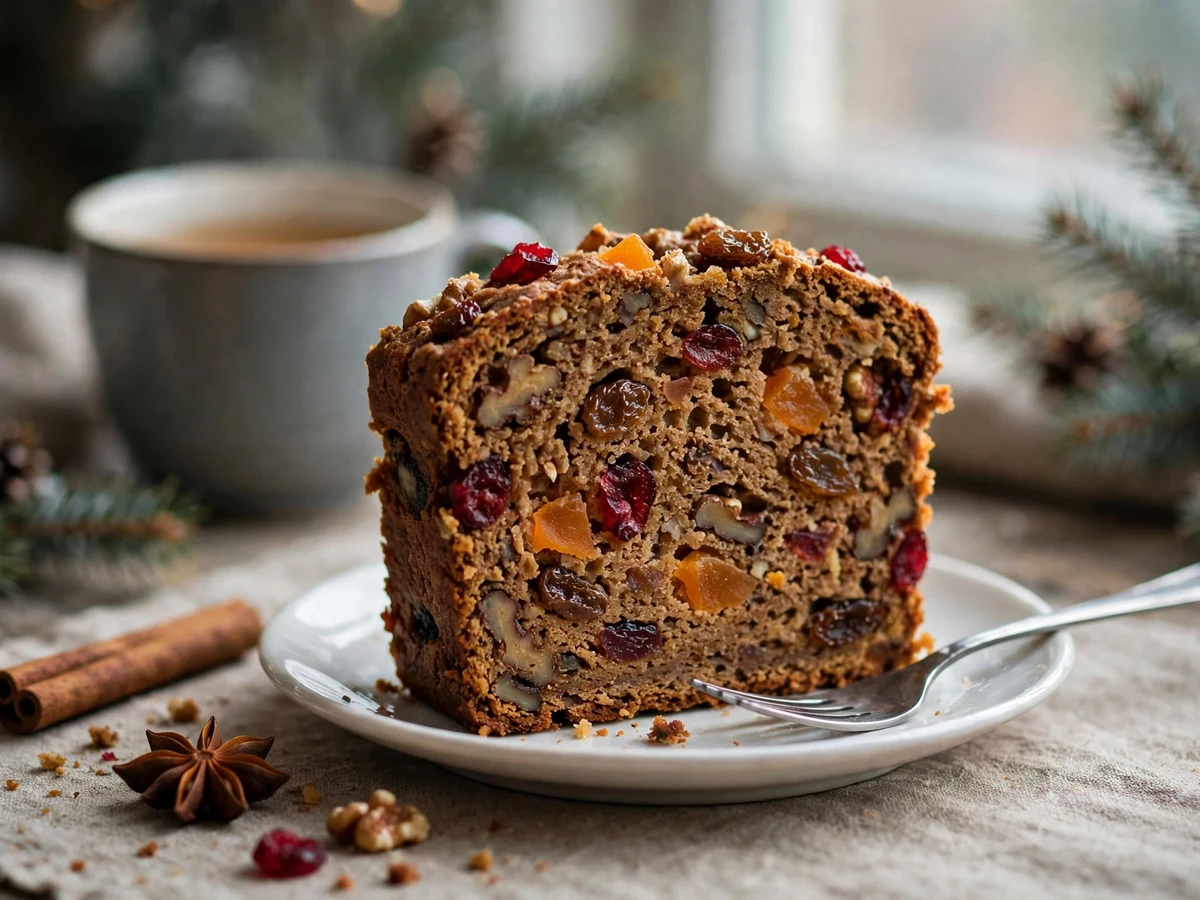
- Cool in the pan for 30 minutes, then lift the loaf out and cool completely on a rack, at least 2 hours, before slicing into 12 slices. The crumb sets as it cools and cuts clean only when fully cold.
Keeping It Honestly: Two Good Weeks, Not a Year
The sugar and spirits in a classic fruitcake are preservatives, and removing most of both changes the storage contract. Say it plainly: this loaf keeps about two weeks in the refrigerator, wrapped tightly, and the slices freeze for up to three months.
Within that window it does something generous. Like its classic ancestor, the crumb settles and the spice rounds out over the first three or four days, so a loaf baked on a Sunday genuinely tastes better by Thursday. Bake it ahead for Christmas week with confidence.
Freeze it sliced, with parchment between the slices, and one piece can thaw on the counter in twenty minutes for tea. It is the same planning logic we use for our healthy gingerbread cookies: the freezer holds the holiday, the calendar stays calm.
What not to do is feed it. Brushing a low sugar loaf with juice week after week, in imitation of the spirit fed classics, only makes the surface wet and shortens its life. Slice it, wrap it, chill it, and let it be what it is.
Wrapped and Given: a Small December Baking Calendar
A loaf this size is a gift by design. Bake two on the first or second weekend of December, keep one for the house, and give one whole, wrapped in parchment and tied, with the honest instruction attached: refrigerate, slice thin, finish within two weeks.
For smaller gifts, slice the second loaf before wrapping. Pairs of slices in parchment, stacked four high, make the kind of package that travels to neighbors and teachers without fuss, and a slice is the right unit for a cake this dense and fruity.
Set the loaf beside the season’s other keepers when you plan the month: a batch of healthy yule log for the day itself, this loaf for the weeks around it. December desserts stop being a scramble when each one has a defined window and a defined job.
A last kindness to the receiver: this fruitcake needs no warming, no sauce and no apology. It slices at refrigerator temperature, holds on a cheese board beside sharp cheddar for those who like the old pairing, and finishes a meal at two bites when the meal was large.
Dry, Sinking or Heavy: the Three Fruitcake Fixes
A dry loaf was under soaked or over baked. The fruit must go in visibly plump, with its liquid, and the loaf should come out when the tester carries moist crumbs, not when it comes out clean and dry. In a loaf this dense, clean is already too far.
Fruit sinking to the bottom means the batter was too loose or the fruit went in wet and heavy from a cold soak that never thickened. The simmer fixes both: warm fruit absorbs its liquid, and tossing the chopped apricots through the flour mixture before folding gives every piece a light coat that helps it hang in the crumb.
A heavy, gummy center is a slicing problem as often as a baking one. Cut before the full cool and the crumb compresses into paste under the knife. Wait the two hours, use a serrated knife with a gentle sawing motion, and the same loaf shows an open, even crumb.
A pale, flat tasting slice needs spice courage next time. Warm spices fade in a low, long bake, so measure them level and fresh; a jar of cinnamon that has lost its smell on the shelf will not find it again in the oven.
With Coffee, With Pecans, or Nut Free
Swap the tea for strong coffee and the loaf turns darker and moodier, a good direction for gifts to people who like their Christmas flavors grown up. The method does not change; brew it strong and use it hot, exactly as written for the tea.
Pecans replace the walnuts one to one and push the crumb sweeter and more Southern, the same trade our healthy cranberry orange bread makes at this time of year. Toast them a minute less than walnuts; their higher sugar content colors them quickly.
For a nut free loaf, leave the walnuts out and add a quarter cup of sunflower seeds or simply an extra quarter cup of chopped apricots. The crumb loses its crunch but keeps its balance, and the calories dip slightly rather than rising.
For a citrus forward version, add the zest of one lemon alongside the orange and swap half the raisins for more dried cherries. The loaf reads brighter and a little more modern, and it is the version to serve with afternoon tea rather than after a heavy dinner.
The Slice That Earns Its Place Back
Healthy fruitcake asks for one saucepan, one bowl and the patience to let fruit drink and crumb cool. What it returns is the Christmas loaf as it was meant to be: dense with real fruit, warm with spice, sweet in the way fruit is sweet.
Bake it in December and slice it slowly. Some traditions survive by being lightened with respect. This one keeps its ritual, loses its syrup, and earns its place back on the table.
Questions Cooks Ask About Healthy Fruitcake
How long does healthy fruitcake actually keep without alcohol or heavy sugar?
About 2 weeks in the refrigerator, wrapped tightly, and up to 3 months in the freezer, best frozen in slices with parchment between them. It will not keep for months at room temperature like a classic spirit fed fruitcake; the reduced sugar and the juice soak are not preservatives.
What can I soak the fruit in if I do not want to use alcohol?
Orange juice with strong hot black tea, as in this recipe. Simmer the fruit 5 minutes and steep 30 minutes, and it comes out plump and flavorful. The tea adds the gentle bitterness a spirit soak used to give, and all the soaking liquid goes into the batter, so nothing is wasted.
Why did all the fruit sink to the bottom of my fruitcake?
Usually the fruit went in cold and wet and the batter was loose. Simmer the fruit so it absorbs its liquid instead of carrying it, chop large pieces to raisin size, and toss the apricots through the flour before folding. A thick batter with evenly sized fruit holds its distribution through the bake.
Can I bake healthy fruitcake ahead for Christmas gifts?
Yes, and it improves for the first 3 to 4 days as the spice settles into the crumb. Bake in the first half of December, refrigerate the wrapped loaf, and give it with a simple note: keep refrigerated and finish within 2 weeks. Slices also freeze well if your gift calendar runs longer.
Can I use a different dried fruit mix in this fruitcake?
Yes, keep the total weight the same, about 3 3/4 cups of chopped dried fruit, and keep a tart element in the mix so the reduced sugar stays balanced. Dried figs, dates or sour cherries all work; avoid candied peel and syrup packed fruit, which quietly put the sugar back.